
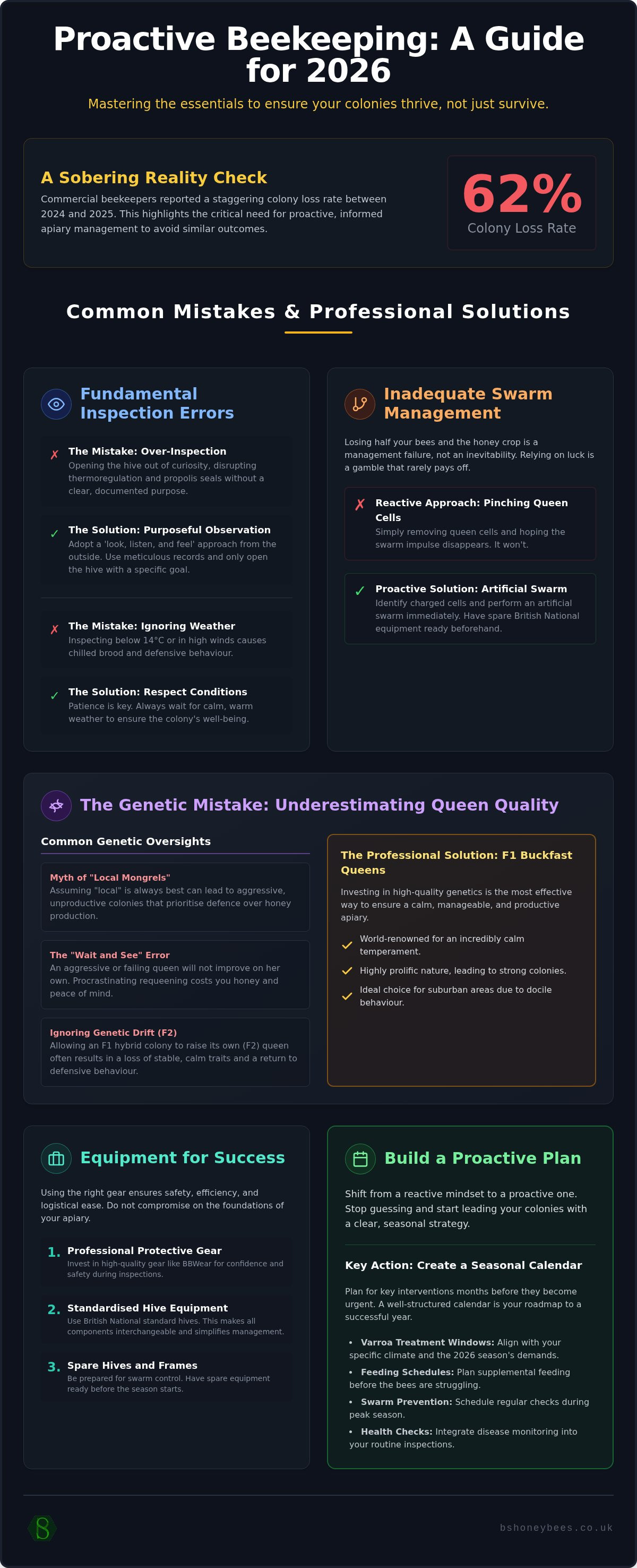
Did you know that commercial beekeepers reported a 62% colony loss rate between 2024 and 2025? It's a sobering statistic that proves even experienced hands can struggle in the face of shifting climates and evolving pests. This level of loss isn't just an industry trend; it's a clear call to action for every apiarist who wants to see their bees thrive rather than just survive in the coming season.
You likely started beekeeping for the joy of the craft, but the reality often involves swarm management anxiety and the confusion of Varroa treatment windows. It's disheartening to watch a colony's temperament turn aggressive or to lose a hive whilst prepping for a harsh winter. Understanding the specific beekeeping mistakes to avoid is the first step toward reclaiming your confidence in the apiary and ensuring your bees are protected by high standards of care.
We'll help you master proactive management so you can enjoy consistent honey yields and healthy, calm bees. This guide provides a clear roadmap for 2026, covering everything from the importance of F1 Buckfast genetics to timing your treatments with precision. You'll learn to stop guessing and start leading your colonies toward a successful overwintering and a productive season ahead.
Key Takeaways
- Learn how to time your inspections to maintain hive thermoregulation and accurately distinguish between healthy brood and early disease signs.
- Discover why prioritising high-quality genetics like F1 Buckfast queens is the most effective way to eliminate aggressive behaviour and unproductive colonies.
- Master the critical beekeeping mistakes to avoid by aligning your Varroa treatment windows with the specific climate demands of the 2026 season.
- Ensure inspection confidence and logistical ease by investing in professional BBWear protective gear and standardised British National hive equipment.
- Shift to a proactive management model by establishing a seasonal calendar that plans for feeding and health interventions months before they become urgent.
Fundamental Inspection Errors: Timing and Technique
Successful Beekeeping (or apiculture) requires a delicate balance between oversight and interference. One of the most significant beekeeping mistakes to avoid is treating your hive like a hobbyist's curiosity rather than a complex biological system. Every time you lift the crown board, you break the propolis seal and release the heat the colony has worked tirelessly to generate. If you don't have a specific, documented reason for opening the hive, you shouldn't be in there.
The Over-Inspection Trap
New apiarists often fall into the "curiosity gap," opening hives every few days to "check on the queen." This is a mistake. A full inspection can set a colony back by several hours, or even a full day, as they focus on repairing the propolis and restoring the brood nest temperature. Instead, adopt a "look, listen, and feel" approach from the outside. Observe the entrance for pollen loads and flight patterns. Listen for the steady, contented hum of a healthy queen-right colony. Use meticulous record-keeping to track progress so you aren't opening the hive simply because you've forgotten what you saw last week.
Weather is another non-negotiable factor that many ignore. Opening a hive in temperatures below 14°C, or during high winds, is a recipe for chilled brood and defensive behaviour. You must also be prepared. Failing to have a clear goal before you even light your smoker leads to aimless frame-fiddling. Before you start, ask yourself: Am I looking for the queen, checking for disease, or assessing space? If you can't answer that, leave the bees in peace.
Technical proficiency in the brood nest is equally vital. Healthy larvae should be pearly white, glistening, and C-shaped. If you spot discoloured, slumped, or "melting" larvae, you're likely seeing the early signs of disease. Misidentifying these symptoms or assuming everything is "fine" because you see bees moving is a dangerous oversight that leads to total colony loss.
Inadequate Swarm Management
Swarming is a natural urge, but losing half your bees and your entire honey crop is a management failure. A common error is ignoring queen cells or "pinching" them out whilst hoping the impulse will simply vanish. It won't. You must be proactive. Ensure you have spare British National hives and frames ready at the start of the season. When you identify charged queen cells, you need to perform an artificial swarm immediately. Relying on luck is not a strategy; it's a gamble that usually results in an empty hive and a frustrated beekeeper.
The Genetic Mistake: Underestimating Queen Quality
Many apiarists assume that "local bees" are inherently superior due to regional acclimatisation. This is one of the most common beekeeping mistakes to avoid. Whilst local adaptation matters, the reality in many parts of the UK is a mix of unknown genetics that result in "followy," aggressive colonies. These "local mongrels" frequently prioritise defensive behaviour over honey production. This makes hive inspections a chore rather than a pleasure and can quickly alienate your neighbours.
The "wait and see" error is another trap for the unwary. You shouldn't wait for an aggressive or unproductive colony to calm down on its own. It won't. A queen's pheromones and genetics dictate the entire temperament of the hive. If she is failing or producing defensive offspring, the only professional solution is to requeen. Procrastinating this decision leads to lost honey yields and a miserable beekeeping experience. Understanding these Beekeeping Basics guide principles ensures you prioritise temperament as much as productivity.
Genetic drift is a subtle but critical issue. If you start with high-quality F1 hybrids, they are often exceptionally calm and productive. However, if you allow the colony to raise a new queen from their own larvae (an F2 generation), those stable traits often disappear. The resulting bees can be unpredictable and far more defensive. To maintain a manageable apiary, you must manage your queen genetics with the same precision you use for Varroa treatments.
F1 Buckfast vs. Carniolan: Making an Informed Choice
Choosing the right breed is a foundational decision. F1 Buckfast queens UK are world-renowned for their prolific nature and incredibly calm temperament; they are often the best choice for those in suburban areas. Conversely, when comparing buckfast vs carniolan bees, Carniolans are often favoured for their rapid spring buildup and excellent overwintering capabilities. Both options are vast improvements over random genetics. If you want a more enjoyable season, consider upgrading your stock through BS Honey Bees.
Botched Queen Introduction
Introducing a new queen is a high-stakes moment. A common error is rushing the process or failing to ensure the colony is truly queenless. You must check every frame for "stealth" queen cells; if the bees have even one cell started, they will likely kill the new arrival. The candy-release method is the safest standard for introducing mated queen bees UK, as it allows the colony time to habituate to her pheromones whilst they chew through the sugar plug. Slow and steady wins the race here.
The Varroa and Health Oversight
Varroa destructor remains the single greatest challenge to honeybee survival in 2026. One of the most catastrophic beekeeping mistakes to avoid is assuming your colony is healthy simply because you cannot see mites on the bees. This "invisible threat" is deceptive; by the time you spot a mite on a worker's back, the infestation level has usually surpassed the economic injury threshold. Mites spend the majority of their lifecycle hidden within capped brood cells, where they feed on developing larvae and vector lethal pathogens like Deformed Wing Virus (DWV).
Treating too late in the season is a common pitfall. If you delay your autumn intervention until October, the "winter bees" responsible for keeping the queen warm until spring will have already been compromised by viruses during their larval stage. These bees will have shorter lifespans, leading to a "spring dwindle" or total colony collapse in February. Additionally, failing to rotate your chemical treatments is a serious oversight. Relying solely on one active ingredient encourages resistance. You must employ a strategic rotation of organic acids and essential oils to maintain a high kill rate and ensure your treatments remain effective year after year.
The Autumn Treatment Deadline
Timing your health interventions is just as important as the treatment itself. Follow this three-step protocol to ensure your colony enters the winter in peak condition:
- Step 1: Monitor mite drop levels throughout July and August using an alcohol wash or a sticky board to establish a clear baseline.
- Step 2: Ensure all primary treatments are completed whilst the weather is still warm enough for evaporation-based products, such as thymol or formic acid, to disperse correctly through the hive.
- Step 3: Verify the efficacy of the treatment with a post-treatment count. You shouldn't assume a product has worked perfectly without data to prove the mite population has actually dropped.
Starvation: The Great Winter Error
Starvation is an entirely preventable cause of colony loss. The mistake often begins in late summer when a beekeeper harvests too much honey, leaving the bees with insufficient stores for a long, damp winter. A standard British National hive typically requires at least 18 to 22kg of stores to survive. Even with plenty of food in the hive, colonies can succumb to "isolation starvation." This occurs during prolonged cold snaps when the cluster becomes too lethargic to move even two inches to reach adjacent frames of honey. To prevent this, you must heft your hives regularly. If the hive feels light when lifted from the back, provide fondant immediately to bridge the gap until the first spring forage appears.
Equipment Errors: Choosing the Wrong Gear
Selecting the wrong hardware is a fast track to frustration and failed colonies. A primary beekeeping mistakes to avoid is mixing hive standards within a single apiary. In the UK, the British National hive is the gold standard for a reason. Attempting to force Commercial or Langstroth components into a National setup creates irregular gaps. The bees will inevitably fill these spaces with propolis or bridge comb, making it nearly impossible to lift frames without damaging the brood or crushing the queen.
Hygiene is another area where shortcuts lead to disaster. Failing to clean your hive tool or wash your suit between visits to different apiaries is a major oversight. This lack of discipline facilitates the spread of devastating diseases like American Foul Brood (AFB) and European Foul Brood (EFB). Professionalism starts with clean gear. Similarly, ignoring frame spacing is a technical error that leads to "wild" comb. Without the correct use of spacers, bees build comb outside the frames, which destroys the modular nature of the hive and prevents thorough inspections.
The Importance of Professional Protection
Your confidence during an inspection is directly tied to the quality of your protective gear. Professional beekeepers choose BBWear bee suits for their durability and secure fit. A cheap, poorly fitting suit with a thin veil that flaps against your skin is a liability. It leads to "sting-shyness," causing you to move too quickly or clumsily. A robust, comfortable suit allows for the slow, methodical movements that keep a colony calm. You should also avoid dark, fuzzy clothing; these textures mimic the coat of a predator and can trigger a defensive response from even the gentlest bees.
Starting with the Right Colony Size
Many beginners make the mistake of trying to "catch" a wild swarm to save on initial costs. This is a significant gamble. Swarms often carry unknown genetics, high mite loads, or aggressive temperaments that can quickly overwhelm a novice. It is far more effective to invest in honey bee nucs for sale UK. A 5 or 6 frame nucleus colony provides a balanced, established population that is much easier to manage. The key is timing the transfer to a full hive; doing this too early during a cold snap can chill the brood, whilst waiting too long leads to overcrowding and an immediate swarm impulse.
To ensure your apiary is built on a foundation of quality and compatibility, explore our range of British National Hives and Frames today.
Moving Forward: Building a Proactive Management Plan
Transitioning from a reactive to a proactive apiarist is the most significant step you can take toward colony survival. One of the primary beekeeping mistakes to avoid is waiting for a problem to manifest before taking action. By the time you notice a starving colony or a mite-ridden hive, the damage is often irreversible. A professional management plan shifts the focus toward prevention, ensuring your bees have the resources they need months before they actually require them.
Developing a detailed seasonal calendar is essential. You should plan your Varroa treatment windows and winter feeding schedules during the quiet months of January and February. This foresight prevents the panic-buying of supplies or missing critical weather windows for treatments. Mentorship also plays a vital role. Whilst books provide a foundation, joining a local association connects you with experienced keepers who understand regional forage patterns and climate shifts. Don't make the mistake of going it alone; the collective wisdom of a local group is an invaluable asset.
The Proactive Beekeeper’s Checklist
Maintaining a disciplined schedule ensures nothing slips through the cracks. Your weekly and monthly tasks should include checking entrance activity, monitoring forage availability, and assessing hive weight. We strongly recommend the "Two-Hive Rule." Keeping at least two colonies allows you to identify issues through direct comparison; if one hive is thriving whilst the other is lethargic, you know immediately that the problem is colony-specific rather than environmental. Ultimately, colony health is a balance between nutrition, genetics, and pest management.
Sourcing Your Success
Success in the apiary begins with high-quality stock. Investing in the best genetics and equipment is a long-term strategy that pays dividends in honey yields and colony temperament. Choosing a specialist breeder like BS Honey Bees Ltd ensures that your journey starts with bees bred to the highest British standards. Our commitment to excellence includes reliable live bee delivery UK, which allows beekeepers across the country to access superior genetics without the risks associated with local mongrel bees.
Stop guessing and start managing your apiary with confidence. Browse our range of F1 Buckfast Queens and Nucleus Colonies to secure the future of your colonies today.
Securing Your Apiary's Future in 2026
Mastering the craft of beekeeping requires a shift from reactive problem-solving to disciplined, proactive management. By prioritising high-quality genetics and adhering to standardised British National equipment, you eliminate the most common hurdles that lead to colony loss. Understanding the critical beekeeping mistakes to avoid, such as misjudging Varroa treatment windows or settling for aggressive mongrel bees, ensures your hives remain productive and manageable throughout the season.
As specialist F1 Buckfast and Carniolan breeders, we know that success starts with the right foundation. Whether you're upgrading your protective gear with premium BBWear suits or expanding your apiary with standard-setting British National Hives, your focus should always be on quality and consistency. These professional standards protect your investment and foster a rewarding environment for both beekeeper and bee alike. High standards in the apiary lead to calm bees and bountiful honey crops.
Don't leave your colony survival to chance this season. Start your beekeeping journey with a professional Nucleus Colony from BS Honey Bees Ltd and experience the difference that expert breeding makes. Your bees are a vital part of our ecosystem; give them the professional start they deserve.
Frequently Asked Questions
What is the most common reason for honey bee colonies to die in the UK?
The primary cause of colony loss in the UK is the Varroa destructor mite, specifically the lethal viruses it transmits, such as Deformed Wing Virus. Whilst starvation during the "June Gap" or winter cold snaps is a secondary factor, untreated mite populations are the most common driver of hive collapse. Managing hive health through proactive monitoring is one of the essential beekeeping mistakes to avoid if you want your colonies to survive into the next season.
How often should I inspect my beehive during the summer months?
You should inspect your colonies every 7 to 10 days during the peak summer months. This schedule aligns with the development cycle of a queen bee and allows you to intervene before a swarm departs. However, you must avoid the "curiosity gap" of daily inspections, which stresses the queen and disrupts the hive's internal temperature. Always have a clear goal before lifting the crown board to ensure your presence is purposeful and efficient.
Can I start beekeeping by just catching a swarm in my garden?
Whilst catching a swarm is a traditional method, it is often a mistake for beginners. Swarms come with unknown genetics, potentially aggressive temperaments, and high mite loads that can quickly discourage a new apiarist. Starting with a 5 or 6 frame nucleus colony from a specialist breeder ensures you begin with healthy bees, a known queen, and a manageable population. This professional start is much easier to inspect and maintain for long-term success.
Is it a mistake to use second-hand beekeeping equipment?
Using second-hand equipment is a significant risk because it can harbour resilient pathogens like American Foul Brood (AFB) or European Foul Brood (EFB). These spores can survive on wooden hive parts for decades. To ensure your apiary stays healthy, it is far safer to invest in new British National hives and frames. This ensures compatibility across your apiary and eliminates the danger of introducing devastating diseases that could destroy your entire bee population.
When is the best time of year to treat for Varroa mites?
The most critical time to treat for Varroa mites is late summer, typically August or early September, immediately after the honey harvest. This intervention ensures that the "winter bees" being raised are healthy and virus-free. A secondary treatment, often using oxalic acid, is usually applied in mid-winter during a broodless period. Aligning your treatment windows with the specific 2026 climate trends is vital for maintaining a low mite count and ensuring colony survival.
Why are my bees becoming more aggressive as the season progresses?
Increasing aggression is often caused by a change in queen genetics or environmental stress. If your queen has been superseded by a "local mongrel" daughter, the resulting workers often exhibit more defensive behaviour. Other factors include a sudden lack of nectar or high Varroa levels. Identifying and correcting these beekeeping mistakes to avoid, such as keeping a defensive queen for too long, is key to maintaining a calm and enjoyable garden apiary for you and your neighbours.
What happens if I forget to feed my bees in the autumn?
If you fail to provide adequate stores in the autumn, your colony will likely succumb to starvation before the first spring forage appears. A colony typically requires approximately 20kg of honey or heavy syrup to survive a UK winter. Without this, the bees will run out of fuel to heat the cluster. If you discover a light hive in mid-winter, you must provide emergency fondant immediately to bridge the gap and prevent a total loss.
Should I choose Buckfast or Carniolan bees for a small garden apiary?
F1 Buckfast bees are generally the superior choice for small garden apiaries due to their exceptionally calm temperament and low swarming drive. This makes them ideal for beekeepers with close neighbours. Carniolan bees are also excellent but are known for a more rapid spring buildup, which requires very diligent swarm management. Both breeds represent a significant upgrade over random local genetics and will provide a much more professional and productive beekeeping experience.