

Can a box containing 12,000 live insects really travel hundreds of miles overnight and arrive ready to thrive? It's a question that defines the start of every season. When you arrange a live bee delivery UK, you likely feel a mix of excitement and genuine anxiety about the safety of your insects during transit. The fear of opening a travel box to find stressed or lifeless bees is a common concern amongst hobbyists and professionals alike.
We understand that a successful arrival relies on a precise partnership between the breeder's logistical expertise and your own apiary preparation. This 2026 guide provides the reassurance you need by detailing our professional shipping standards and DASH-accredited welfare protocols. We'll demystify the delivery windows for the upcoming season and explain how next-day services maintain the health of our F1 Buckfast and Carniolan stock.
You will learn exactly how to prepare your site for a seamless arrival. From selecting the right hardware, such as 2-in-1 poly nucs, to the critical first hour of handling, we provide a clear timeline to ensure your colony doesn't just survive the journey but immediately begins to flourish. Let's get your apiary ready for its most successful season yet.
Key Takeaways
- Understand how DASH accreditation guarantees high health and welfare standards for your bees throughout the nationwide shipping process.
- Decide between a single mated queen or a 5 or 6 frame nucleus colony based on your experience level and current apiary goals.
- Navigate the 2026 seasonal windows to ensure your live bee delivery UK arrives at the optimal time for colony development.
- Prepare your British National Hives and site layout in advance to provide a stress-free environment for your new arrivals.
- Implement a precise first-day care routine to help your colony settle into their new environment safely and efficiently.
Understanding the Logistics of Live Bee Delivery in the UK
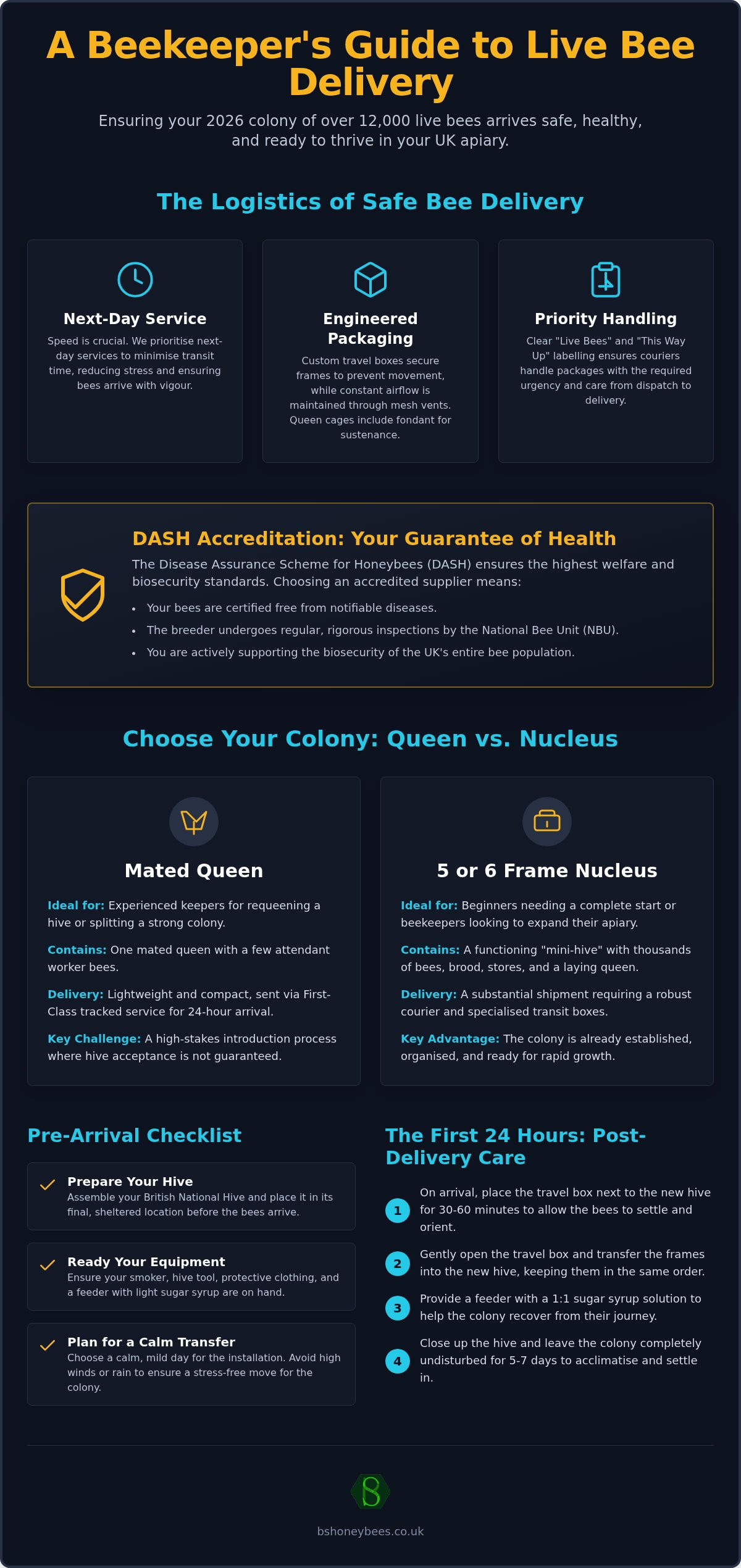
Live bee delivery UK is a sophisticated logistical operation. It's not a standard courier service; it's a specialised welfare process designed to transport living colonies with minimal stress. We treat every shipment as a biological priority. By using temperature-controlled sorting centres and dedicated transit routes, we ensure the bees remain calm and viable. You should always prioritise providers who offer next-day services. Speed is the most effective way to reduce transit stress. It ensures your bees spend the least amount of time possible in a dark container and arrive with the same vigour they had when they left our apiary.
Specialised Packaging and Welfare Standards
We don't leave safety to chance. Our packaging is engineered to provide a self-contained ecosystem. Queen cages include a precise supply of fondant to sustain the queen and her attendant bees throughout the journey. For larger shipments, such as our 5 or 6 frame nucs, the travel boxes feature internal slots that lock frames firmly in place. This prevents lateral movement that could crush the bees or the queen during transit. Ventilation is the most critical factor. We use mesh-lined containers that allow constant airflow whilst preventing escapes. Clear "This Way Up" labelling and "Live Bees" identifiers ensure that courier staff handle the packages with the necessary care and urgency.
The Importance of DASH Accreditation
Trust in this industry is built on verification. As a DASH (Disease Assurance Scheme for Honeybees) accredited breeder, our operations undergo rigorous scrutiny. This scheme is vital for maintaining the health of Beekeeping in the United Kingdom, as it ensures that every colony shipped is free from notified diseases. Regular inspections by the National Bee Unit (NBU) validate our welfare standards and biosecurity protocols. When you arrange a live bee delivery UK through an accredited supplier, you aren't just buying insects. You're supporting the biosecurity of the entire national bee population. This professional oversight guarantees that the bees arriving at your site are healthy, productive, and ready to thrive in their new environment.
Choosing Between Queen Bees and Nucleus Colony Delivery
Deciding on the format of your live bee delivery UK is your first major decision of the season. It depends entirely on your current apiary status and your specific goals for 2026. Whilst a single queen is a precision tool for the experienced keeper, a nucleus colony is a robust, functioning unit that provides an immediate start for beginners or those expanding their operations. You must match the delivery type to your technical ability and the equipment you have ready on the ground.
Delivering Mated Queen Bees
Mated queens are the elite travellers of the beekeeping world. Because they are lightweight and compact, they are often sent via first-class tracked services to ensure they arrive within 24 hours. This speed is essential for maintaining the queen's vitality. Experienced keepers choose this option to requeen a failing hive or to split an existing strong colony. However, the logistical simplicity of the delivery is followed by a high-stakes introduction process. Hive acceptance is never guaranteed, so you must follow a strict protocol once she arrives. For a deeper look at this process, read our Mated Queen Bees UK: The Complete Guide to ensure you're prepared for the critical introduction window.
Nucleus Colony Shipping Requirements
Shipping a nucleus colony is a far more substantial undertaking. Unlike a lone queen, a nuc is a functioning "mini-hive" that includes several thousand worker bees, honey stores, and established brood. This format is the gold standard for those looking for honey bee nucs for sale UK because the colony is already organised and growing. Because of the weight and bulk of a 5 or 6 frame delivery, these require robust courier arrangements and specialised transit boxes that prevent frames from shifting.
The success of your new arrival is also heavily tied to genetics. Selecting F1 Buckfast queens UK ensures your colony starts with a calm temperament, which makes the hiving process much safer for you and the bees. We adhere to the highest welfare standards for domestic transport, mirroring the biosecurity spirit found in the official government guidance on bee imports. This ensures every consignment meets the health benchmarks necessary for a thriving UK apiary. If you're ready to start your journey, consider securing one of our high-quality nucleus colonies for the upcoming spring window.
Seasonal Timing: When to Order Your Bees for 2026
Timing isn't just a logistical detail; it's the foundation of your colony's success. In the United Kingdom, the window for a safe live bee delivery UK is dictated entirely by the biological calendar and the unpredictability of the British weather. If you want a productive 2026 season, you must plan months in advance. Most reputable breeders open their order books as early as October, and the most sought-after stock often sells out long before the first blossoms appear in spring. Securing your slot early ensures you aren't left waiting whilst the peak forage season passes you by.
Spring vs Summer Deliveries
You need to choose between an overwintered nucleus and a new season colony. Overwintered nucs are available earliest, typically in April or May. These colonies have already survived a UK winter with their queen, giving you a massive head start on honey production. In contrast, new season nucs are raised in the spring and are usually ready for delivery from mid-June onwards. These are excellent for expanding an apiary or replacing winter losses. Summer deliveries are also the primary solution for mid-season emergencies, such as identifying drone laying queen symptoms UK. Availability of mated queens depends heavily on the "drone season," as successful mating requires warm temperatures and a high density of drones in the area.
Managing Delivery Expectations
We prioritise the safety of the insects above all else. This means every live bee delivery UK is weather permitting. We won't dispatch bees during periods of extreme cold, heavy rain, or heatwaves. Such conditions increase transit stress and can jeopardise the queen's health. We communicate clear delivery windows, but you must remain flexible. When the weather breaks and we confirm a dispatch date, you need to be ready. Ensure you are available to receive the package on the first delivery attempt. A box of bees left in a sorting office or on a doorstep is a significant welfare risk. Precision in your schedule is just as important as precision in our logistics.
Preparing Your Apiary for a Live Arrival
A successful live bee delivery UK begins long before the courier arrives at your gate. Preparation is the hallmark of a professional beekeeper. If you wait until the bees are on your doorstep to start assembling equipment, you're already behind. A colony that has just travelled across the country needs immediate stability. Your goal is to move them into their new environment with zero delays. This requires a methodical approach to your hardware, site selection, and protective equipment.
Hardware and Hive Readiness
Your primary task is the assembly of your British National Hives and Frames. Ensure the hive stand is level and situated in a sheltered spot away from high winds. A stable floor and a clear entrance are essential. Whilst many beekeepers use full-sized hives immediately, we highly recommend using 2 in 1 Poly Nucs for the initial establishment phase. These units provide superior thermal regulation, which is vital for a small colony trying to maintain brood temperatures after the stress of transit. Check that your frames and foundation are correctly fitted and ready to receive the bees. There should be no gaps where bees could become trapped or crushed during the transfer.
Protective Gear and Tools
Confidence is key when handling a new delivery. If you're nervous, the bees will sense it. Invest in a professional BBWear bee suit to ensure you are fully protected. Before the arrival day, inspect your suit for any tears or gaps in the veil. Test your smoker to ensure it stays lit and produces a cool, thick smoke. You'll also need a clean hive tool to separate frames without jarring the colony. Being well-prepared physically and mentally allows you to work calmly, which is the best way to keep your new bees settled.
Finally, organise your feeding station. Travelling is hungry work for bees. Have a supply of sugar syrup or fondant ready to go. Feeding your new colony immediately helps them recover from the journey and encourages them to start drawing out comb. If your equipment isn't up to standard yet, browse our range of British National Hives and Frames to ensure your apiary is ready for the 2026 season.
Post-Delivery Care: The First 24 Hours
The arrival of your live bee delivery UK marks the transition from preparation to action. Once the courier hands over the package, your priority is to reduce the stress of the journey. Move the bees immediately to a quiet, shaded area within your apiary. Don't be tempted to open the travel box in direct sunlight or high-traffic areas. If you've received a nucleus colony, place the box exactly where the permanent hive will stand. Open the entrance and let the bees fly. This "settling period" is vital. It allows the bees to perform orientation flights and clear the box of any waste accumulated during transit. Wait at least 24 to 48 hours before transferring frames to a full hive.
Observing the entrance is your best diagnostic tool. Within an hour, you should see bees exploring the immediate surroundings. If you notice foragers returning with pollen, it's a definitive sign of recovery. You can check the queen's status without fully dismantling the travel box. In a queen cage, look for worker bees clustered around her in a calm, attentive manner rather than attacking the cage. This behaviour indicates that the colony is already beginning to accept her pheromones.
Introducing Your New Queen
Introducing a new queen requires patience. Use the slow-release method by allowing the colony to eat through the candy plug. This process usually takes two to three days; it's the perfect amount of time for the hive's scents to synchronise. Resist the urge to open the hive for a full inspection for at least seven days after she's released. Disrupting the colony too early can lead to the bees rejecting her. If you are still deciding on the right genetics for your site, our guide on Buckfast vs Carniolan Bees: Which Breed is Best? explains the specific behaviours and temperaments of each breed.
Troubleshooting Common Arrival Issues
It's normal to see a small number of dead bees at the bottom of a transport box after a live bee delivery UK. This is a natural result of the bees' short lifespan and the vibration of travel. However, if you see a significant carpet of dead bees or a lifeless queen, take clear photographic evidence immediately. Contact us before you attempt to hive the colony. Providing photos allows us to validate the welfare standards of the transit and provide immediate advice. Finally, start feeding your new nuc immediately. They need a consistent supply of 1:1 sugar syrup to stimulate wax production and help them build out their new frames quickly.
Secure Your 2026 Season with Professional Logistics
Successful beekeeping begins with a commitment to quality and logistical precision. By understanding the specialised welfare standards behind every live bee delivery UK, you can approach the 2026 season with total confidence. Whether you choose the immediate strength of a nucleus colony or the targeted genetics of a mated queen, your site preparation remains the deciding factor for survival. Ensure your British National Hives are ready and your apiary is sheltered before the delivery window opens.
As a DASH Accredited Breeder, BS Honey Bees Ltd specialise in calm-tempered Buckfast and Carniolan bees. Our nationwide next-day delivery service is designed to minimise transit stress, ensuring your insects arrive in peak condition. Don't leave your spring plans to chance; slots for overwintered and new season bees fill quickly every year. Order your 2026 F1 Buckfast Queens and Nucs today to guarantee your place in our shipping schedule. We look forward to supporting your apiary's growth and helping your colonies thrive throughout the coming year.
Frequently Asked Questions
Is live bee delivery safe during the summer heat in the UK?
Yes, provided the breeder monitors weather forecasts and uses specialised ventilated packaging. We pause all dispatches if temperatures are forecast to exceed safe thresholds. Our mesh-lined travel boxes allow constant airflow to prevent overheating during transit. We prioritise the welfare of the insects above all else, ensuring they remain cool and viable from our apiary to your doorstep.
What happens if my bees arrive dead or the queen is damaged?
You must contact us immediately with clear photographic evidence of any issues. Whilst we take every logistical precaution to ensure a successful live bee delivery UK, transit accidents can occasionally occur. We require these photos before you attempt to hive the colony. This allows us to validate the claim with our couriers and arrange a professional resolution or replacement for you.
Do I need to be at home to sign for my live bee delivery?
Yes, it is vital that someone is available to receive the bees on the first delivery attempt. Live insects cannot be left in sorting offices, depots, or on doorsteps where they are exposed to the elements. We provide specific delivery windows and tracking information so you can ensure you are on-site to move the bees to a quiet, shaded area immediately.
How long can bees stay in their travel box after delivery?
Bees should be moved to their settling position within a few hours of arrival. Whilst travel boxes contain food supplies, they are not designed for long-term housing. You should open the entrance immediately to allow for orientation flights and waste clearing. However, wait at least 24 to 48 hours for the colony to settle before transferring the frames into a full hive.
Can I have bees delivered to a residential address in a town?
Yes, we deliver to residential addresses throughout the UK mainland. You simply need to ensure your apiary site is compliant with local guidelines and considerate of neighbours. Our F1 Buckfast and Carniolan bees are specifically selected for their calm temperament and low swarming instinct, making them the ideal choice for beekeepers in suburban or urban environments where space is limited.
What is the best time of year to order a nucleus colony for delivery?
The best time to place your order is during the winter months, typically between October and January. This secures your slot for an April or May delivery of overwintered bees. If you wait until the spring to order, you may find that the earliest delivery windows are already fully booked. Early planning ensures your colony arrives in time to capitalise on the main nectar flow.
Will the bees be aggressive when I first open the delivery box?
No, our bees are bred for exceptionally docile behaviour and ease of handling. However, any colony can feel slightly defensive after the vibrations and confinement of a journey. Always wear a professional bee suit and use a small amount of cool smoke when first opening the entrance. They usually settle and begin peaceful orientation flights within minutes of being released.
Do you provide a tracking number for live bee shipments?
Yes, we provide full tracking details for every live bee delivery UK. This transparency allows you to monitor the progress of your shipment in real-time as it moves through the network. You will receive a notification the moment the bees leave our facility, giving you ample time to prepare your smoker, tools, and hive for their arrival the next morning.