

Choosing the "best" honey bee for your apiary isn't a simple matter of picking the most popular name on the list. When evaluating buckfast vs carniolan bees, the right choice depends more on your local forage and management style than on any single trait. It's a common frustration to invest in a new colony only to face aggressive F2 behaviour or lose the entire honey crop to excessive swarming. You need a bee that balances high productivity with a calm temperament and the hardiness to survive a damp, unpredictable UK winter.
This article provides the definitive comparison you need to choose the perfect breed for your specific climate and goals. We'll examine the biological differences between these two industry favourites, from their overwintering strategies to their prolificacy in different floral conditions. By focusing on the performance of quality F1 stock, you can ensure your bees remain easy to handle whilst delivering the results you expect from a professional-grade colony.
Key Takeaways
- Identify how to align your choice of bee with your local forage schedule to maximise annual honey yields and colony health.
- Compare the biological differences of buckfast vs carniolan bees to see which breed offers the best balance of winter hardiness for your specific UK location.
- Learn why the Buckfast’s low swarming drive and prolific nature make it the premier choice for high-volume summer honey production.
- Discover how Carniolan bees utilise rapid spring buildup to capitalise on early nectar flows whilst maintaining an exceptionally gentle temperament.
- Understand the critical importance of sourcing F1 queens to guarantee predictable behaviour and avoid the aggression often found in unmanaged F2 generations.
Understanding the Choice: Why Breed Selection Matters in the UK
Successful beekeeping in the United Kingdom requires more than just a hive and a suit. It demands a strategic choice of genetics. The debate regarding buckfast vs carniolan bees represents the two most popular paths for British beekeepers. One is a product of rigorous selective breeding at Buckfast Abbey; the other is a naturally refined subspecies from the mountainous regions of Central Europe. Your decision affects the daily reality of your apiary, from the amount of honey in your supers to the temperament of the colony during a weekly inspection.
Weather is the defining factor for any UK apiary. Our climate is notorious for unpredictable spring showers and lingering, damp winters. These conditions test a colony's resilience. Whilst a Buckfast colony might focus on massive summer expansion, the Carniolan honey bee is famous for its ability to shut down quickly in autumn to conserve stores. Beginners often face a difficult dilemma: do you prioritise the sheer productivity of a high-performance forage machine, or the calm, gentle behaviour that makes learning the craft a pleasure? Getting this balance right is the difference between a thriving hobby and a frustrating struggle against defensive bees.
The Importance of Pedigree and Breeding
Predictability comes from pedigree. An F1 queen is the first-generation daughter of a pure, instrumentally inseminated or isolated-mated breeder queen. When you buy an F1 Buckfast or Carniolan, you're investing in guaranteed traits. If you allow these bees to open-mate with local "mongrel" drones, the resulting F2 generation often loses its docility. This "feisty daughter" effect is a common complaint amongst those who don't refresh their queens regularly. Sourcing from a specialist UK breeder ensures you receive stock adapted to our specific forage cycles whilst maintaining the high standards of temperament required for garden beekeeping.
Setting Your Apiary Goals
Be clear about your objectives before ordering your nucs. If your goal is maximum honey production to sell at local markets, the prolific laying of a Buckfast queen is hard to beat. However, these large colonies require significant space. They often outgrow a standard British National hive and need a "brood and a half" or double-brood setup. If you're beekeeping for relaxation in a smaller garden, the Carniolan’s gentleness and rapid spring buildup may be more suitable. Consider how much time you can dedicate to swarm control, as different breeds have varying triggers for reproduction and colony expansion.
The Buckfast Bee: A Legacy of British Excellence
Brother Adam’s work at Buckfast Abbey remains the gold standard for selective breeding. Starting in the early 20th century, he sought to create a bee that could withstand the devastating "Isle of Wight" disease whilst maintaining high productivity. The result was the Buckfast bee, a strain that combines the best traits of various European and African subspecies. For those comparing buckfast vs carniolan bees, the Buckfast is often viewed as the "industrial worker" of the bee world. It builds massive colonies and maintains a relentless foraging drive throughout the summer months.
Many hobbyists worry about reports of "aggressive" Buckfasts. This reputation is usually the result of poor breeding or neglected queens. A true F1 Buckfast is exceptionally docile. The issues arise in the second generation (F2), where the bees mate with local drones of unknown temperament. To keep your apiary safe and manageable, you must prioritise stock from reputable breeders who maintain strict standards. If you're looking to start with reliable genetics, consider our F1 Buckfast Queens to ensure your colony remains easy to handle.
The Buckfast Temperament
Inspecting a Buckfast colony is often a peaceful experience. These bees are known for being "calm on the comb," meaning they stay put rather than scurrying or flying off when a frame is lifted. This trait makes them ideal for urban beekeepers or those with hives in small gardens where neighbourly relations are a priority. However, this gentleness isn't permanent. You should plan for regular requeening every one to two years. Replacing an ageing queen with fresh F1 genetics prevents the colony from becoming defensive as local genetics begin to dominate the hive.
Productivity and Overwintering
Buckfast colonies are prolific layers. They require a significant amount of space, often necessitating a "brood and a half" or double-brood setup in a British National hive. They manage their stores efficiently, but their large winter clusters mean they can consume food faster than smaller breeds during a mild winter. Their foraging ability is legendary; they'll often continue to work in light drizzle or overcast conditions that would keep other bees inside. The Buckfast bee is engineered for maximum honey production, often outperforming other breeds in areas with diverse and heavy nectar flows.
The Carniolan Bee: The Cold-Weather Specialist
Apis mellifera carnica, or the Carniolan bee, is a natural subspecies originating from the mountainous regions of Slovenia and Austria. For British beekeepers, this breed offers a biological rhythm that is perfectly in sync with early nectar flows. Whilst the Buckfast is a hybrid designed for summer longevity, the Carniolan is a specialist in explosive growth. They react almost instantly to the first signs of spring pollen, building up their numbers with a speed that can catch an unprepared beekeeper off guard. When comparing buckfast vs carniolan bees, the Carniolan is frequently cited as the gentlest breed available, often remaining calm even when weather conditions are less than ideal.
One of their most impressive traits is their frugality. Unlike breeds that maintain a massive brood nest regardless of the forage available, Carniolans are highly sensitive to their environment. If a "June gap" or a prolonged period of rain hits, the queen will proactively reduce her egg-laying to conserve honey stores. This self-regulating behaviour makes them exceptionally resilient. They don't eat themselves out of house and home during a nectar dearth, which provides a significant safety net for beekeepers in more volatile UK climates.
Managing the Carniolan Swarm Drive
Their rapid population growth is a double-edged sword. Because they expand so quickly in April and May, they can easily outgrow their space, triggering a strong swarming instinct. You must be proactive with your swarm control. If you're using a standard British National hive, monitor the brood nest closely for signs of overcrowding. We often recommend starting a new colony in 6-frame nucs rather than 5-frame versions. This extra frame provides the necessary "breathing room" for that initial spring surge, giving you more time to transition them into a full-sized hive without losing half your bees to a nearby hedge.
Winter Survival and Resilience
Carniolans are masters of the winter cluster. They overwinter in a small, tight group that consumes very little food compared to the larger Buckfast colonies. This efficiency makes them a top choice for beekeepers in northerly or exposed locations where winters are long and spring is late. They're also notably hardy and show a strong natural resistance to various brood diseases. If your apiary is situated in a damp or windy part of the UK, the Carniolan’s ability to "shut down" and survive on minimal stores is a major advantage. They'll wait patiently for the first warm day, ready to capitalise on the fruit blossom and oilseed rape whilst other breeds are still waking up.
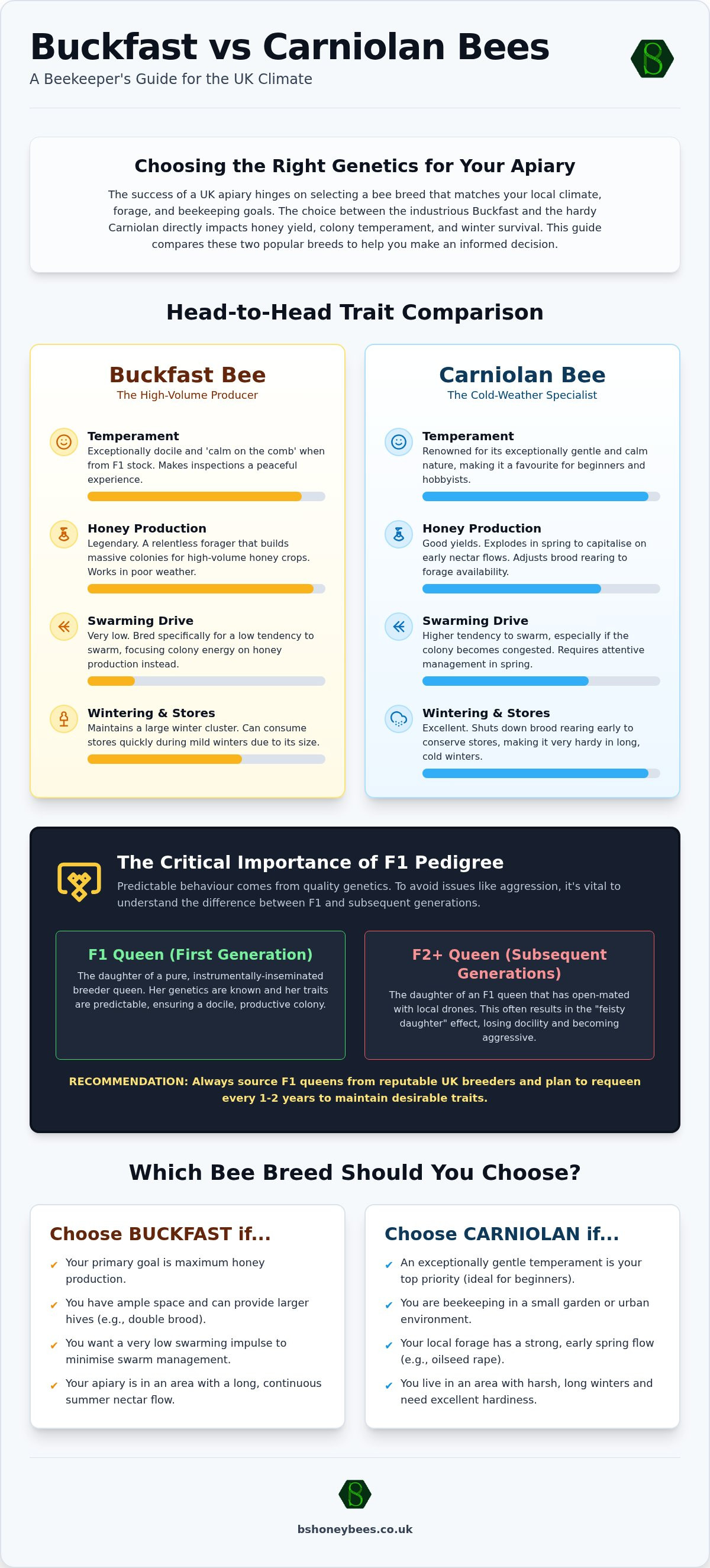
Head-to-Head: Buckfast vs Carniolan Bees
When you weigh up buckfast vs carniolan bees, the decision usually comes down to your honey production cycle and your tolerance for swarm management. Buckfasts are summer specialists. They build huge populations that peak for the main nectar flows in July and August. In contrast, Carniolans are spring specialists. They ramp up early, making them the superior choice for oilseed rape or fruit blossom. If your goal is a massive summer crop, the Buckfast is your tool. If you want early honey and a colony that shuts down during the summer dearth to conserve stores, the Carniolan is the better fit.
Temperament is often the deciding factor for hobbyists. Both breeds are exceptionally gentle as F1 stock, frequently passing the "no veil" test during inspections. However, we always recommend wearing a professional BBWear suit. Professionalism in the apiary prevents accidents, regardless of how calm the bees appear. While Buckfasts are generally low-maintenance regarding swarming, Carniolans require a vigilant eye in April and May. You trade a bit of extra work in the spring for a bee that survives the damp UK winter with much smaller, more efficient clusters.
The "Feisty" Factor: F1 vs F2 Generations
Both breeds can become defensive if you allow them to cross-breed with local "mongrel" drones. This F2 generation often loses the predictable traits of its mother. The drone population in your area will heavily influence the temperament of any queens you raise yourself. Financially, it makes sense to buy a mated F1 queen every one to two years. The cost of a new queen is negligible compared to the potential loss of a honey crop or the stress of managing an aggressive colony that pings your veil the moment you open the hive.
Equipment Compatibility
Your choice of breed should influence your choice of hardware. Prolific Buckfast colonies often feel cramped in a single British National hive. They usually require a "brood and a half" setup or a double-brood chamber to prevent congestion. For Carniolans, the 2 in 1 poly nuc is a game-changer. These insulated units are perfect for overwintering smaller Carniolan clusters, providing the thermal efficiency they need to emerge strong in the early spring. Always ensure you select high-quality frames and foundation that can support the rapid expansion these breeds are capable of. Order your F1 Buckfast and Carniolan Queens today to secure your stock for the upcoming season.
Making Your Decision: Which Bee Should You Buy?
Deciding between buckfast vs carniolan bees depends on your specific apiary goals and the time you can commit to management. If your primary objective is a high-volume honey harvest and you have the space for large colonies, the Buckfast is the logical choice. It is a tireless worker that excels during the peak summer flows. Conversely, if you are a gardener or hobbyist who prioritises an exceptionally gentle bee that capitalises on early spring blossom, the Carniolan is likely your perfect match. Both breeds offer distinct advantages, provided you start with high-quality F1 genetics.
We are now accepting orders for 5 and 6 frame nucs for the 2026 season. When your new mated queen arrives, successful introduction is paramount. Ensure the colony you are requeening is definitively queenless and has had any emergency queen cells removed. Using a protected introduction cage allows the workers to become accustomed to her pheromones, significantly increasing the chances of acceptance. A calm, methodical approach at this stage sets the foundation for a productive season ahead.
Ordering Live Bees Safely in the UK
Buying bees online requires a supplier with robust logistical standards. When you order from BS Honey Bees Ltd, you can expect a professional, nationwide delivery service designed to minimise stress on the bees. We prioritise the health and temperament of our F1 stock because we know that predictable behaviour is non-negotiable for our customers. Before your delivery arrives, ensure your apiary is fully prepared. You should have your British National hives assembled and your BBWear suit ready. Being organised allows you to hived your new arrivals immediately, reducing the time they spend in transit packaging.
Next Steps for Your Apiary
Preparation is the key to a smooth transition. Your British National hive should be clean and positioned in its permanent spot before the bees arrive. When transitioning from a 5 or 6 frame nuc to a full brood box, place the nuc frames in the centre of the new hive. Flank them with fresh foundation and feed the colony a light syrup if the nectar flow is weak. This encourages the bees to draw out the new comb quickly. As the queen expands her laying area, monitor the colony's growth to ensure they always have enough space to prevent early swarming.
Browse our F1 Buckfast and Carniolan Queens to secure the best genetics for your apiary this season.
Secure Your Success for the Upcoming Season
The decision regarding buckfast vs carniolan bees ultimately depends on your specific apiary environment and production targets. Whether you need the prolific summer foraging of the Buckfast or the hardy, early-season resilience of the Carniolan, starting with high-quality genetics is the most important factor for a successful year. By prioritising F1 pedigree stock, you ensure your colonies remain manageable, productive, and well-suited to the unpredictable British climate.
As a specialist UK breeder, we are dedicated to providing beekeepers with the highest standards of live bees and hardware. We offer nationwide delivery on all live bees, ensuring your new queens or nucs arrive in peak condition. We also stock premium BBWear protective gear to ensure your inspections are as safe as they are enjoyable. For those who enjoy pairing their fresh honey with other premium treats, Byron Nuts - all about the flavour provides a range of gourmet roasted snacks that celebrate high-quality natural produce. Take the next step in your beekeeping journey and prepare your apiary for a record-breaking honey crop.
Order your F1 Buckfast or Carniolan Bees from BS Honey Bees Ltd today
Frequently Asked Questions
Is a Buckfast or Carniolan bee better for a beginner beekeeper in the UK?
Both breeds are excellent choices, but Carniolans are often preferred for their extreme gentleness during inspections. Beginners benefit from a bee that remains exceptionally calm on the comb whilst they learn to identify brood and queens. However, Buckfasts are equally docile as F1 stock and possess a lower swarming drive, which can be easier for a novice to manage during their first season.
Do Buckfast bees really get aggressive in the second year?
Aggression is not a trait of the Buckfast breed itself but a consequence of second-generation (F2) cross-breeding with local drones. If you allow a colony to raise its own queen, the resulting offspring may lose the predictable docility of the original F1 stock. To maintain a calm and safe apiary, you should replace your queens every one to two years with fresh pedigree genetics from a reputable breeder.
Which bee breed produces the most honey in British weather?
Buckfast bees generally deliver the highest total honey yields because they maintain large colony sizes and a relentless foraging drive throughout the summer. They are the premier choice for the main July flows. Carniolans are superior for early-season crops like oilseed rape or fruit blossom because they build their populations much faster than other breeds as soon as the spring temperature rises.
Can I keep Carniolan and Buckfast bees in the same apiary?
Yes, you can successfully keep both breeds in the same location without any biological issues. Many UK beekeepers do this to compare the performance of buckfast vs carniolan bees in their specific microclimate. You simply need to manage each colony according to its individual rhythm. Your Carniolans will likely require swarm inspections earlier in the spring than your Buckfast colonies.
Why should I choose an F1 queen rather than a locally mated one?
An F1 queen guarantees the specific traits you are paying for, such as high productivity, disease resistance, and gentleness. Locally mated queens are a genetic lottery. Their offspring often exhibit defensive behaviour or excessive swarming. When you invest in an F1 queen, you are buying the result of decades of professional selective breeding rather than leaving your apiary's success to chance.
What is the best hive type for Carniolan bees?
The British National Hive is the most practical and widely used choice for Carniolans in the UK. Because this breed overwinters in smaller, more efficient clusters, they don't require the massive brood areas that more prolific hybrids might need. For those looking to overwinter smaller colonies or spare queens, the 2 in 1 poly nuc is an excellent piece of hardware that provides superior thermal protection.
How do I stop my Carniolan bees from swarming?
Proactive space management is the only way to control the strong swarm drive of a Carniolan colony. You must inspect your hives every seven days during the peak spring buildup in April and May. If the brood box looks congested, add a second brood chamber or perform an artificial swarm immediately. Providing the queen with ample room to lay is the most effective deterrent.
When is the best time to order a nucleus colony for 2026?
You should place your order as early as possible, ideally during the autumn or winter of 2025. Demand for quality buckfast vs carniolan bees is consistently high across the UK. Securing your nuc early ensures you get a selectable dispatch date. It also gives you plenty of time to ensure your BBWear suit and British National hives are ready for the new arrivals.