

Most beginner beekeepers in the United Kingdom fail before their first honey flow because they invest in incompatible equipment or struggle with aggressive colonies. Choosing the wrong hive standard or low-quality gear isn't just a waste of money; it's the quickest way to lose your confidence amongst the bees. This definitive beekeeping for beginners checklist uk cuts through the noise to provide a professional-grade roadmap for 2026. We've designed this guide to help you launch a successful apiary using the correct British standards and gentle, manageable livestock.
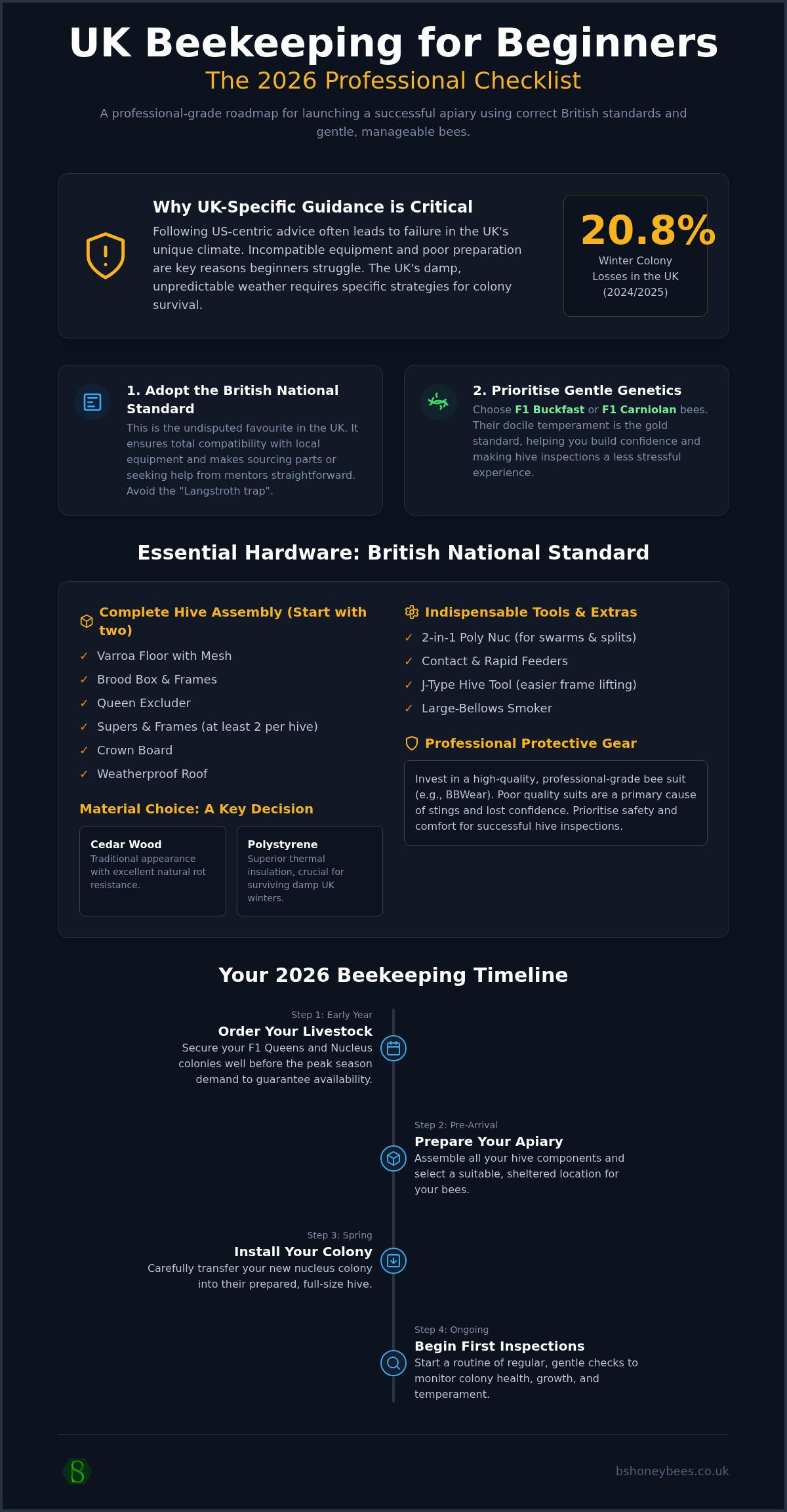
You likely feel a mix of excitement and hesitation, perhaps worrying about winter survival rates which reached 20.8% in the 2024/2025 season, or the fear of being stung due to poor-quality suits. We understand those concerns. This article simplifies the process by providing a clear list of compatible British National equipment and a precise timeline for ordering your bees. You'll learn why F1 Buckfast or Carniolan genetics are the gold standard for temperament. We'll also explain how to prepare your apiary for the unique challenges of the UK climate, ensuring your journey into beekeeping is both rewarding and disciplined.
Key Takeaways
- Adopt the British National standard for your hive to ensure total compatibility with UK equipment and easier colony management.
- Prioritise gentle F1 Buckfast or Carniolan genetics to build confidence during your first season of hive inspections.
- Use this beekeeping for beginners checklist uk to identify the essential hardware and professional BBWear protective gear required for a successful first year.
- Establish a clear procurement timeline to ensure your F1 queens and nucleus colonies are ordered before the peak 2026 demand.
Why a UK-Specific Beekeeping Checklist is Essential
Beekeeping is a discipline that rewards precision. Whilst Beekeeping (or apiculture) is practised globally, the strategies used in the sun-drenched orchards of California or the vast plains of Australia will lead to disaster in a British garden. Beginners often fall into the trap of following US-centric "backyard" guides. These resources frequently recommend Langstroth hives and management styles that ignore our unique environmental pressures. A robust beekeeping for beginners checklist uk must prioritise local standards and climate resilience to prevent colony loss in your first season.
The Impact of the British Climate on Your Hive
The UK climate is notoriously unpredictable. It isn't just the cold that threatens bees; it's the damp. High humidity and driving rain can lead to condensation inside a poorly insulated hive, causing mould and chilling the cluster. Professional-grade hardware is essential for thermal regulation. Cheap, "bargain" hives often use thin, low-quality timber that warps after a single wet winter. This creates gaps that invite draughts and robbing pests. Investing in high-quality British National Hives & Frames ensures your colony remains dry and warm. Successful overwintering depends on equipment that can handle persistent moisture without compromising the internal environment. Winter colony losses in the UK reached 20.8% in the 2024/2025 season, a statistic that underscores the need for gear that can withstand our specific weather patterns.
Compatibility and the UK Beekeeping Community
Standardisation is your greatest ally. The British National hive is the undisputed favourite amongst UK beekeepers for a reason. Its modular design is perfectly suited to the scale of British forage. More importantly, using the National standard connects you to a network of support. If you need an emergency frame of food or a spare brood box, your local mentor will almost certainly use National equipment. Avoiding the "Langstroth trap" is vital. Whilst Langstroth hives are common globally, they are a minority in the UK. Trying to find compatible components or swapping frames with neighbours becomes an expensive logistical nightmare. A proper beekeeping for beginners checklist uk focuses on inter-operability. By sticking to the British National standard, you ensure that every piece of gear you buy remains a long-term asset to your apiary. Professionalism starts with choosing gear that works with the community, not against it.
The Essential Hardware Checklist: British National Standard
Precision is the foundation of successful apiculture. If your equipment doesn't respect the 6mm to 9mm "bee space", your colony will either glue the hive together with propolis or fill every gap with wild comb. This beekeeping for beginners checklist uk prioritises the British National standard because it offers the most reliable dimensions for UK forage conditions. A complete hive assembly must include a Varroa floor, a brood box for the queen to lay in, a queen excluder, at least two supers for honey storage, a crown board, and a weatherproof roof.
Managing colony growth also requires a 2 in 1 Poly Nuc. These smaller units are indispensable for housing a new nucleus colony, catching swarms, or creating an artificial swarm to prevent your bees from leaving. When it comes to feeding, you'll need both contact feeders for precise winter supplementation and rapid feeders for the heavy autumn build-up. Having these tools ready ensures you aren't caught unprepared when the nectar flow stops.
Core Hive Components for the First Year
Your choice of material significantly impacts hive management. Traditionalists often prefer cedar for its natural rot resistance and classic appearance. However, high-density polystyrene (poly) hives offer superior thermal insulation, which can be a decisive factor in colony survival during damp British winters. Many experts recommend that you start with two hives rather than one. This allows you to compare colony progress and, crucially, swap frames of brood or food if one hive becomes weak. You can find a detailed breakdown of these parts in our guide to the British National beehive. Investing in professional-grade British National Hives & Frames from the outset prevents the frustration of mismatched components later.
The Hive Tool and Smoker: Your Daily Essentials
Do not underestimate the importance of your manual tools. A J-type hive tool is generally the best choice for beginners; the integrated hook makes lifting heavy, propolised frames much easier than a standard flat tool. Your smoker should be large enough to hold a decent amount of fuel, as a larger bellows is easier to pump and provides a more consistent, cool smoke. Avoid using synthetic materials for fuel. Instead, use natural options like dried grass, hessian, or rotten wood to produce the thick, cool smoke required to calm the bees. A reliable smoker is your primary safety tool, ensuring inspections remain calm for both you and your livestock.
Livestock Selection: Choosing Your First Colony
Selecting your first colony is the most critical decision on any beekeeping for beginners checklist uk. Whilst catching a swarm might seem cost-effective, it often introduces unpredictable temperament and unknown health statuses into your apiary. Packages of bees are equally risky in the British climate as they lack established brood and must build everything from scratch. For a successful start, a nucleus colony (nuc) is the only professional choice. It provides a balanced population of bees, food stores, and a laying queen, giving you a head start on the season.
Always prioritise mated queens. A mated queen has already proven her ability to lay a solid brood pattern, which ensures immediate colony stability. Buying an unmated queen or relying on the bees to raise their own during your first month is a recipe for failure. You need a colony that is ready to expand as soon as it arrives. High-quality genetics aren't just about honey; they're about the safety of your family and neighbours.
Buckfast vs Carniolan: Which Breed Fits Your Garden?
Temperament is paramount, especially if you have neighbours nearby or small children. F1 Buckfast queens are the gold standard for UK beekeeping. They are specifically bred for docility and high honey production, making them exceptionally easy to handle during inspections. If you live in a cooler, more northern area, you might consider Carniolan queens. These bees are known for their rapid spring buildup, allowing them to capitalise on early forage. Choosing between Buckfast vs Carniolan bees depends on your local environment and your goals for the season. Both breeds offer the gentle genetics required to keep your inspections stress-free and productive.
The Nucleus Colony Advantage
A nucleus colony is a miniature hive that has already passed its first critical tests. When searching for honey bee nucs for sale UK, look for suppliers providing a 5 or 6-frame setup. This size ensures the colony is strong enough to defend itself but small enough to manage. A quality nuc should contain brood at all stages, ample honey and pollen stores, and a prolific queen. Once your nuc arrives, place it in the position where the full hive will stand. Allow the bees to settle for 24 to 48 hours before transferring them into your full British National brood box. This methodical approach is a core part of a reliable beekeeping for beginners checklist uk, ensuring your livestock transitions smoothly into their permanent home.
Protective Gear: The Safety and Comfort Checklist
Confidence in the apiary is a prerequisite for good management. If you are constantly flinching or worrying about stings, you will likely rush your inspections and miss vital signs of colony health. This is why any beekeeping for beginners checklist uk must prioritise high-quality, full-coverage protection. Whilst experienced keepers might occasionally use jackets, a full bee suit is essential for a beginner's peace of mind. It eliminates the risk of bees crawling up your trousers or under a loose hem, allowing you to focus entirely on the frames.
Professional beekeepers across the country trust BBWear for a reason. These British-made suits are designed to withstand the rigours of a full season whilst providing maximum security. You should also consider your veil type carefully. Fencing (or folding) veils are popular for their convenience and ease of storage. However, round veils often provide superior visibility and keep the mesh further from your face; this is a significant advantage in the wind. For your hands, choose gloves that balance protection with manual dexterity. You need to feel the weight of the frames to avoid crushing bees. Pair your suit with sturdy Wellington boots to ensure your ankles are fully protected from any bees on the ground.
Anatomy of a Professional Bee Suit
Essential features define a high-quality suit. Look for heavy-duty zips, elasticated cuffs, and secure velcro seals over every zip end to prevent "bee-leaks". When choosing your material, consider your local climate. Classic polycotton is durable and reliable, but ventilated 3D mesh suits are becoming the preferred choice for warm summer inspections. They allow air to circulate whilst maintaining a thick, sting-proof barrier. Getting the right fit is vital for both safety and comfort. A suit that is too tight will pull the fabric against your skin, making it easier for a bee to sting through. Consult a bee suit sizing guide UK to ensure you have enough room to move freely during hive work. For the best in British-made protection, invest in professional BBWear Bee Suits.
Maintaining Your Protective Equipment
Your safety gear requires regular maintenance to remain effective. Propolis and wax can quickly gum up zips, whilst alarm pheromones from previous stings can linger on the fabric. These pheromones can trigger defensive behaviour in otherwise gentle bees, making your next inspection more difficult. Wash your suit regularly in a non-scented detergent. Always remove the veil before machine washing the main suit body, as the mesh is delicate and can easily snag. Before every visit to the apiary, perform a quick check of all seams and zips. A small hole or a gap in a velcro seal is all a bee needs to find its way inside. Integrating a maintenance routine into your beekeeping for beginners checklist uk ensures your equipment remains a dependable partner for years.
Your 2026 Beekeeping Timeline: From Ordering to Inspection
Successful apiculture is a race against the seasons. You cannot simply decide to start in June and expect a honey crop. A professional beekeeping for beginners checklist uk must align with the biological clock of the colony. During Autumn and Winter, your focus should be on infrastructure. This is the time to research standards and order your British National hives. By having your hardware ready before the first spring blossoms, you avoid the seasonal rush and potential stock shortages.
Late Spring involves physical preparation. Set up your apiary site in a sheltered, south-facing position and begin assembling your frames and foundation. By the time Summer arrives, your primary task is receiving your nuc and performing that first, exhilarating hive inspection. This disciplined approach ensures you aren't scrambling for gear whilst your bees are waiting in a travel box. Proper preparation is also vital to help your bees navigate the "June gap", a period where forage can suddenly disappear in the UK.
When to Buy Your Bees
Timing is everything when securing quality livestock. January to March is the critical window for placing orders. If you wait until May, the best breeders will already be sold out. You must choose between an overwintered nuc, which is available earlier but often costs more, and a spring nuc, which is produced in the current season. High-demand genetics like F1 Buckfast queens UK require early commitment to guarantee delivery for the 2026 season. Reliability in transit is also vital. Ensure your supplier follows strict live bee delivery UK standards to ensure your colony arrives healthy and stress-free.
The First 48 Hours with Your Bees
The arrival of your bees is a high-pressure moment. Once your nuc box arrives, place it directly on its future hive stand and open the entrance. Leave the bees to orient themselves to their new surroundings for at least 24 hours. When you are ready to transfer, move the frames into your full British National brood box in the exact same order they were in the nuc. This preserves the internal structure the bees have already built. Monitor the queen's acceptance over the next week. Look for a steady, concentric brood pattern as a sign that the colony has settled. Avoid over-inspecting in these early days; the bees need quiet time to establish their new home. Following this sequence is the final step in your beekeeping for beginners checklist uk, transitioning you from a student to a practitioner.
Start Your Beekeeping Journey the Professional Way
Success in the apiary depends on the quality of your initial investment. By following this beekeeping for beginners checklist uk, you've established a foundation built on the British National standard and gentle F1 genetics. These choices ensure your hardware is compatible with local equipment and your colonies remain manageable during those first critical inspections. Professionalism starts with the right gear and the right livestock.
We provide everything you need to transition from research to results. As specialist breeders of gentle F1 Buckfast and Carniolan queens, we deliver the temperament and productivity required for successful residential beekeeping. Our 5 and 6-frame nucs, paired with premium BBWear protective suits and industry-standard British National hives, give you a decisive advantage. We offer nationwide delivery on all live bees and equipment to ensure your setup is ready before the spring blossoms appear.
Explore our 2026 Starter Packages and Professional UK Beekeeping Equipment to secure your livestock and hardware today. The 2026 season is approaching fast; take the first step now and enjoy the unique rewards of managing your own healthy, productive colony.
Frequently Asked Questions
How much does it cost to start beekeeping in the UK in 2026?
Costs vary based on the quality of your equipment and livestock. You should budget for a British National hive, a nucleus colony, a professional bee suit, and essential tools like a smoker and hive tool. Additionally, local beekeeping association memberships typically range between £31 and £46.50. This beekeeping for beginners checklist uk helps you avoid wasting money on incompatible gear that often requires expensive replacement in your second season.
Do I need a licence to keep bees in my garden in the UK?
No government licence is currently required for hobbyist beekeepers in the United Kingdom. However, it's highly recommended that you register your apiary with BeeBase, managed by the National Bee Unit. This registration is free and essential for national biosecurity, as it allows officials to notify you of any disease outbreaks in your local area. It remains the most effective way to protect your colonies from notifiable pests.
What is the best month to start a new beehive?
April and May are the ideal months to receive your first nucleus colony. Starting during the spring allows the bees to capitalise on the early nectar flow and build up sufficient stores before winter. Whilst you can start later in the summer, the colony will have less time to establish its brood nest. Always ensure your British National hardware is assembled and your site is prepared well before your bees arrive.
How much space do I need for a British National hive?
A standard British National hive has external dimensions of 460mm x 460mm. Whilst the footprint is small, any comprehensive beekeeping for beginners checklist uk should include at least 1.5 metres of clear space around the hive. This allows you to perform inspections from the side or rear without obstructing the bees' flight path. Positioning the hive against a hedge or fence can also help direct the bees' flight upwards.
Can I keep bees if I have close neighbours?
Yes, keeping bees in residential areas is entirely possible if you prioritise gentle genetics. Choosing F1 Buckfast or Carniolan queens is essential for garden beekeeping because these breeds are selected for their docile temperament. You should also place obstacles like a two-metre high trellis or hedge in front of the hive. This forces the bees to fly high above head height when leaving the apiary, minimising contact with neighbours.
How often do I need to inspect my beehive during the summer?
During the peak swarm season, which typically runs from April to July, you should inspect your hive every seven to ten days. Regular inspections allow you to check for queen cells and ensure the colony has enough space for honey storage. In late summer and autumn, the frequency of inspections decreases as the bees begin preparing for winter. Consistent monitoring is the best way to ensure colony health and prevent swarming.
What happens if my queen bee dies or fails?
If a queen dies or her laying pattern fails, the colony will eventually dwindle and die out without intervention. You'll need to introduce a new mated queen as soon as possible to maintain the population. Using a mated F1 Buckfast or Carniolan queen ensures the colony resumes brood rearing immediately. It's often safer for beginners to purchase a replacement rather than letting the bees raise a new queen with unknown or aggressive genetics.
Is it better to buy a wooden or polystyrene hive for a beginner?
Both materials have distinct advantages for those starting out. Cedar hives are the traditional choice; they're naturally rot-resistant and highly durable in the British climate. Polystyrene (poly) hives offer superior thermal insulation, which can significantly improve overwintering success by keeping the cluster warmer. Many beginners find poly hives lighter and easier to handle, though cedar remains the standard for beekeepers who prefer a classic aesthetic and natural materials.