

If you wait until the first spring blossoms appear to order your bees, you have already missed the season. Many UK beginners assume beekeeping starts when the sun comes out, but successful apiaries are actually built during the frost of midwinter. You might feel anxious about missing ordering deadlines or confused by how our unpredictable British weather impacts hive setup. It's a common concern, especially when you're trying to figure out exactly When Is The Best Time To Start Beekeeping? to ensure a productive first year.
We understand that logistical precision is the difference between a thriving colony and a wasted summer. This article provides the definitive seasonal roadmap for your first apiary, moving you from winter planning to a confident spring installation. You'll discover how to synchronise your equipment assembly with bee delivery schedules so you're never caught unprepared. Our goal is to replace that initial uncertainty with the assertive confidence of a prepared specialist.
We will provide a clear month-by-month checklist to keep your project on track. You'll learn the vital differences between overwintered and spring nucs, ensuring you choose the right genetics and temperament for your garden. By the time April arrives, you'll have a ready-to-go British National hive and the peace of mind that comes from professional preparation.
Key Takeaways
- Align your start with the UK's active season, typically April to September, to ensure your bees have sufficient forage for a strong buildup.
- Identify exactly When Is The Best Time To Start Beekeeping? by following a strategic timeline that begins with winter planning and gear procurement.
- Understand the distinct advantages of overwintered nucleus colonies and why they offer superior spring vigour for UK beginners.
- Prepare your apiary by assembling your British National hive and organising your protective gear well before the critical March ordering deadline.
- Learn why securing F1 Buckfast or Carniolan genetics during the winter months is essential for a productive first honey harvest.
Understanding the UK Beekeeping Season: Why Timing is Everything
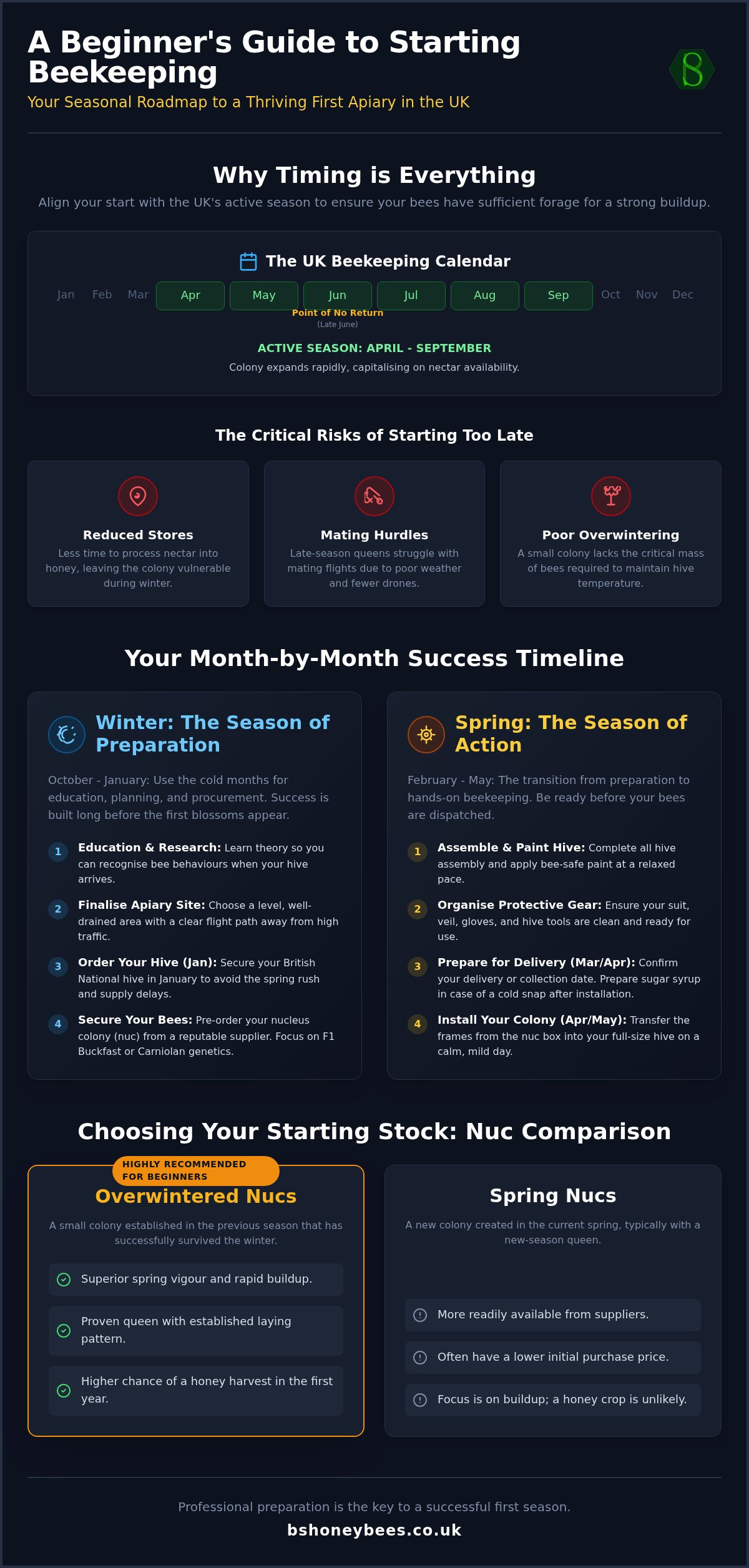
The UK beekeeping calendar is a rigid cycle dictated by temperature and nectar availability. For a beginner, understanding When Is The Best Time To Start Beekeeping? is not just about convenience; it is a biological requirement. The active season typically spans from April to September. During these months, the colony expands rapidly to capitalise on the brief windows of abundance provided by the British landscape. Our climate is notoriously unpredictable, meaning the window for a colony to build up its strength is often narrower than people realise.
Success depends on your bees becoming established whilst forage is increasing. If you miss the early window, your colony will spend the rest of the year playing catch-up. The "point of no return" for establishing a new colony from a nucleus usually falls in late June. Beyond this date, the bees lack sufficient time to build the wax comb and store the honey reserves needed to survive the damp, cold months ahead. Precision in your timing ensures the bees work with nature rather than against it.
The Biological Clock of the Honey Bee
A honey bee colony is a living organism that tracks the environment with incredible precision. Expansion begins as soon as early forage like willow and crocus appear. These provide the essential pollen needed for the queen to ramp up egg-laying. A new colony must be in place to catch the "May flow." This is a critical period where nectar is plentiful, allowing bees to draw out fresh foundation in your British National hive. If bees are introduced too early during a particularly cold spring, they face a high risk of starvation. Without enough foragers or warm enough weather to fly, the colony cannot access external food sources to support their growing brood.
The Risks of Starting Too Late
Delaying your start until the height of summer is a common mistake that often leads to winter losses. If you miss the main honey flow in June and July, your bees will struggle to gather enough stores. Establishing a colony in late summer presents several significant challenges:
- Reduced Stores: Bees have less time to process nectar into honey, leaving them vulnerable during the winter.
- Mating Hurdles: Late-season queens often struggle with mating flights due to unpredictable weather and a decline in the drone population.
- Poor Overwintering: A small, late-season colony often lacks the critical mass of bees required to maintain hive temperature during a freeze.
To give your bees the best chance of survival, aim for a spring installation. This ensures they have a full six months to stabilise, grow, and prepare for the following year. Professional beekeeping requires a proactive approach to these seasonal shifts.
The Beginner’s Timeline: A Month-by-Month Guide for 2026
Establishing a successful apiary requires more than just enthusiasm; it demands a disciplined approach to the calendar. Understanding When Is The Best Time To Start Beekeeping? means looking past the warm days of summer and focusing on the cold months of preparation. If you wait until you see bees in your garden to start your journey, you've missed the most critical windows for equipment procurement and colony security. A structured timeline ensures you're never rushing to assemble a hive whilst your bees are sitting in a delivery box.
Winter: The Season of Preparation
October to January is the phase of education and logistical planning. Use this time to finalise your apiary site whilst the ground is clear and the local forage is dormant. You'll need a level, well-drained area with a clear flight path. January is the optimal month to buy a British National beehive. Securing your equipment during the winter allows you to assemble and paint your cedar or poly hives at a relaxed pace. It also ensures you aren't caught out by the supply chain delays that frequently occur during the spring rush. Focus on theory-based learning now so you can identify different bee behaviours before you're standing in front of an open hive.
Spring: The Season of Action
The transition from February to May is the most high-stakes period for any beginner. By February, you should be finalising your order for a nucleus of bees. High-quality stock, particularly F1 Buckfast genetics, sells out months in advance. Whilst 2026 spring frost predictions suggest a standard transition, you must remain vigilant. April is the typical arrival month for overwintered nucs, which provide the best start for a new beekeeper due to their established strength.
Be prepared to manage the "April showers" that can keep foragers grounded. If the weather turns cold after your bees arrive, you'll need to provide sugar syrup to ensure the colony doesn't starve whilst they're building out new comb. This proactive management during the first few weeks is what separates a thriving colony from one that struggles to survive its first season. Securing your F1 Buckfast bees early ensures you have the gentlest stock available for your first year.
Summer: Growth and First Flow
From June to August, your role shifts from builder to monitor. You'll observe the colony as it capitalises on the main honey flow. During these months, your focus will be on ensuring the queen has enough space to lay and that the bees have enough room to store nectar. If your timing was correct in the spring, your colony will be at its peak strength during the height of the British summer, perfectly positioned to gather the stores they need for the following winter.
Choosing Your Starting Stock: Overwintered vs. Spring Nucs
Selecting the right nucleus colony (nuc) is just as critical as determining When Is The Best Time To Start Beekeeping? for your specific goals. For most UK beginners, the choice falls between an overwintered nuc and a spring nuc. This decision directly impacts how quickly your colony will expand and whether you will see a honey harvest in your first year. Making the wrong choice can lead to a frustrating first season of playing catch-up with the British weather.
Overwintered Nucs: The Early Bird Advantage
Overwintered nucs are colonies established during the previous summer that have successfully survived a British winter. These are typically available for delivery or collection in April. Because the colony is already established and the queen has a proven track record of laying through a cold season, these units possess superior spring vigour. They hit the ground running as soon as they are installed in your hive. For a beginner aiming for a 2026 honey crop, this is the professional choice. You are buying a proven, queen-right unit that has already passed the ultimate test of hardiness, allowing you to capitalise on the early nectar flows mentioned in previous sections.
Spring Nucs: The Mid-Season Option
Spring nucs are produced in the current year, usually using queens reared in April or May. Consequently, they aren't ready for delivery until late May or June. Whilst these often come with a lower initial price point, the trade-off is a significantly shorter window for colony build-up. You must manage your expectations carefully with current-year stock. A spring nuc spends its first few months building comb and establishing its brood nest. In the majority of cases, a spring nuc will not produce a surplus honey harvest until 2027. They are a viable option if you miss the early ordering window, but they require diligent feeding to ensure they reach a safe weight for their first winter.
Your choice of genetics also plays a vital role in your success. When comparing F1 Buckfast vs Carniolan bees, beginners often prefer F1 Buckfast stock for their exceptionally gentle temperament and steady expansion. Carniolans offer explosive early growth but require more advanced swarm management skills. Regardless of the breed, securing an overwintered colony in mid-spring provides the most robust foundation for a new apiary. This approach ensures you have a high-density population ready to work whilst the sun is at its peak.
Essential Equipment: What You Need Before the Bees Arrive
Preparation is the hallmark of a successful beekeeper. Whilst your focus remains on When Is The Best Time To Start Beekeeping?, you must also consider your equipment readiness. Your bees will arrive with a biological momentum that doesn't wait for you to find a misplaced hive tool. Having your British National hive fully assembled, painted, and positioned by March is a non-negotiable requirement. This timeline ensures that when your nucleus colony is delivered in April, the transition is seamless and stress-free for both you and the bees.
Your apiary site must be functional before the first box arrives. Set up your hive stand on level ground and ensure it's robust enough to support over 50kg of honey later in the season. You also need to establish a permanent water source nearby. If bees don't find water in your garden immediately, they will seek it elsewhere, often leading them to a neighbour's pond or swimming pool. Proactive setup prevents these logistical headaches before they begin.
The British National Standard
The National hive is the undisputed favourite amongst UK beekeepers. Its popularity stems from its manageable size and the ease of sourcing compatible components. When you purchase a 5 or 6 frame nuc, those frames are designed to slot directly into a standard British National brood box. This compatibility is vital. It allows you to move the colony into its permanent home in minutes without damaging the delicate wax comb. Using this industry standard also simplifies your future management; frames and supers are interchangeable across your entire apiary, making it much easier to expand or sell equipment later.
Protective Gear and Personal Safety
Confidence is your most valuable tool during your first inspection. We recommend that beginners invest in a full-length BBWear suit to provide maximum security. These suits are the industry benchmark for protection and durability, offering a clear veil that is essential for spotting the queen. Organise your kit well in advance. Ensure your boots and gloves provide a bee-tight seal with your suit.
Mastering your smoker is equally important. Practice lighting it and keeping it lit using various fuels before the bees arrive. A cool, steady stream of smoke is necessary to keep the colony calm during inspections. You don't want to be struggling with a dead smoker whilst standing over ten thousand bees. Testing your gear in March allows you to identify any issues whilst you still have time to rectify them.
Secure your BBWear bee suit and British National hive frames today to ensure your apiary is ready for the spring delivery window.
The Ordering Window: Securing Your Bees for 2026
The most common mistake beginners make is waiting until the weather warms up to source their livestock. In the UK, high-quality nucleus colonies are a finite resource. If you wait until April to order bees online, you will likely find that the most reputable breeders have already sold out of their best stock. Understanding When Is The Best Time To Start Beekeeping? requires you to act whilst the bees are still clustered for winter. Securing your place in the queue during December or January is the only way to ensure a priority delivery slot for the spring.
Why Pre-Ordering is Vital
The supply of premium F1 Buckfast and Carniolan stock in the UK is strictly limited by the queen-rearing season. Professional breeders begin grafting queens based on pre-orders received during the autumn and winter months. By the time February arrives, the majority of overwintered nucs are usually spoken for. If you delay, you may be forced to accept lower-quality "swarm" bees or wait for a late-season spring nuc, which, as discussed previously, significantly reduces your chances of a honey harvest. Early bird ordering doesn't just secure your bees; it secures the genetics and temperament necessary for a successful first year.
When selecting a supplier, look for specialist breeders who provide F1 status and verifiable health standards. A reputable source will be transparent about their breeding programme and the origin of their queens. High-value genetics, such as F1 Buckfast, are prized for their prolific laying and gentle behaviour, making them the standard choice for those new to the craft. Don't settle for "local mongrels" of unknown heritage if you want a predictable and manageable apiary.
Final Preparations for Live Bee Delivery
Once your order is confirmed, your focus must shift to the logistics of arrival day. Live bee delivery is a highly coordinated process. You should consult a beginner’s guide to buying bees to fully understand the climate-controlled transit requirements. When the bees arrive, they will be stressed from the journey. It's essential to place the nuc box in its permanent position and open the entrance immediately, but then leave them alone. A "calm-down" period of at least 24 hours is required before you attempt any inspection.
This period allows the foragers to orient themselves to your garden's specific location. Only after they have settled should you perform the nuc-to-hive transfer. This process must be done with precision to avoid chilling the brood or harming the queen. By following this disciplined timeline, you ensure that your 2026 season begins with a strong, calm, and productive colony.
Prepare for Your First Honey Harvest
Success in your first year depends on a proactive approach to the calendar. You've learnt that whilst the bees are active from April, your journey begins in the midwinter frost. Securing high-quality genetics and assembling your equipment by March ensures you don't miss the critical early forage flows. If you're still asking When Is The Best Time To Start Beekeeping?, the answer is simple: the planning phase is happening now.
Don't risk your first season on late-year stock or inferior equipment. As F1 Buckfast and Carniolan specialists, we provide the reliable foundations every beginner needs. From the industry-standard British National hive to premium BBWear protective apparel, we ensure you're equipped for confidence. We offer nationwide UK live bee delivery to get your apiary started wherever you are located.
Secure your 2026 nucleus colony and equipment at BS Honey Bees Ltd to guarantee your place in the spring delivery window. Taking these steps today transforms a daunting hobby into a rewarding, lifelong passion.
Frequently Asked Questions
Is it too late to start beekeeping in June?
Determining When Is The Best Time To Start Beekeeping? often depends on your harvest goals. It is usually too late to secure a honey crop in your first year if you start in June. Whilst you can install a spring nuc in late June, the colony has a much shorter window to build up the stores required for winter survival. You will likely need to feed them heavily with syrup to ensure they reach a safe weight.
Can I start beekeeping in the winter?
You can start the logistical and educational phases of beekeeping during the winter months. This is the ideal period to buy your British National hive and organise your apiary site whilst the bees are dormant. However, live bees cannot be installed until the spring when forage is available and temperatures consistently exceed 10°C. Use the winter for theory-based learning and equipment assembly to ensure you are ready for April.
When should I buy my first beehive?
You should buy your first beehive in January or February. This provides ample time to assemble the frames, paint the exterior with bee-safe coatings, and position the stand before your bees arrive in April. Leaving this until the spring rush often leads to assembly errors and unnecessary stress when your nucleus colony is ready for transfer. Preparation in the winter ensures a seamless transition for your new colony.
What is the best month to receive a nucleus colony in the UK?
April is the optimal month to receive an overwintered nucleus colony in the UK. These colonies have already survived a winter and possess the superior vigour needed to capitalise on early spring nectar flows. If you are ordering a spring nuc, May or early June is the standard delivery window. However, April remains the professional choice for those wanting the strongest possible start to their beekeeping journey.
How much time do I need to commit to beekeeping each week?
During the peak active season from May to July, you should commit approximately 30 to 60 minutes per hive each week for inspections. This time is used to check for queen productivity, assess health, and manage swarm cells. In the winter months, your time commitment drops significantly. Bees should be left undisturbed during the cold weather to conserve heat, meaning your role shifts to occasional external checks and planning for the next season.
Do I need a beekeeping course before I start?
Whilst you don't legally need a certificate, high-quality theory-based education is essential before handling live bees. Understanding When Is The Best Time To Start Beekeeping? is only one part of the puzzle. We recommend joining a local beekeeping association or engaging in thorough study during the winter. This ensures you can identify brood patterns and health issues confidently, which is vital for the success and safety of your first colony.
What happens if I start beekeeping too early in the spring?
Introducing bees too early in a cold spring carries a high risk of colony starvation. If the weather remains below 10°C or if there is a late frost, the bees cannot fly to gather nectar or pollen. You must be prepared to provide emergency sugar syrup to support the colony until the first major forage appears. Monitoring local weather patterns and spring frost predictions is essential to ensure your bees have a safe start.
When is the best time to order a queen bee for a new hive?
The best time to order a queen bee is during the winter months, between December and February. This ensures you secure a delivery slot for the following spring. Specialist breeders of F1 Buckfast and Carniolan genetics often have limited availability and sell out months in advance. Pre-ordering is the only way to guarantee your new hive has a high-quality, productive queen with a gentle temperament for the upcoming season.