

Could beekeeping be a realistic hobby for you? Yes. To learn how to become a beekeeper in the UK, start by finding practical support, learning the basics and choosing a suitable place for a hive. You don’t need a large apiary, but you do need time to inspect and care for a colony throughout the seasons.
Learn before you get bees. A local beekeeping association can introduce you to experienced keepers, practical sessions and advice for beginners. An introductory course can also explain what managing a colony involves, from monitoring its health to preparing it for winter.
This guide covers how to find support, choose a hive site and start small, then follows a beekeeper’s responsibilities through spring, summer, autumn and winter. You’ll also learn what equipment a first hive needs and why regular inspections matter. The aim is to help you start with confidence while putting the colony’s needs first.
Key Takeaways
- Build practical knowledge and find local beekeeping support before bringing a colony home.
- Choose a hive site with suitable forage and water, and consider how your bees may affect nearby neighbours.
- Plan regular inspections during the active season, then adapt your care as the colony prepares for winter.
- Start with manageable equipment and a colony, not just a queen; expand only as your experience and time allow.
- Learn how to monitor colony health, manage Varroa and leave enough stores for the bees before taking any honey.
Beekeeper duties and seasonal hive management
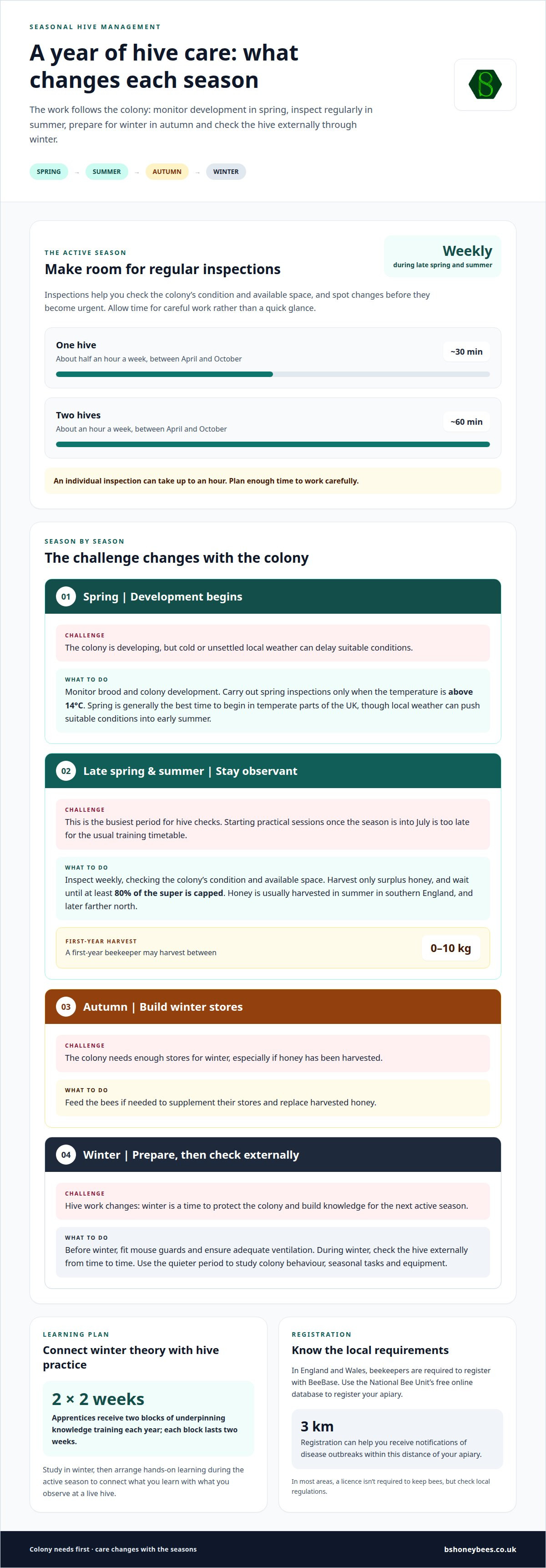
Beekeeping involves inspecting the hive, monitoring colony health and adapting care as the seasons change. Your workload increases in spring and summer, then shifts to preparing the colony for winter.
Seasonal theory and practical training
Winter is a useful time to build knowledge before practical hive work begins. Study colony behaviour, seasonal tasks and the equipment you’ll use, then arrange hands-on learning during the active season. Apprentices receive two blocks of underpinning knowledge training each year, with each block lasting two weeks. This connects winter theory with what you observe at a live hive.
Time commitment during the active season
During late spring and summer, inspect active hives weekly to check the colony’s condition and available space. An inspection can take up to an hour, so set aside time for careful work rather than a quick glance. One hive needs about half an hour a week between April and October; two hives take about an hour weekly over the same period. Inspections help you spot changes before they become urgent.
Timing the start of beekeeping
Spring is generally the best time to begin in temperate parts of the UK, but local weather can delay suitable conditions until early summer. Use winter to study and prepare, then seek practical experience before getting a colony. Starting practical sessions once the season is into July is too late for the usual training timetable. In spring, carry out inspections only when the temperature is above 14 degrees Celsius.
Tasks during the first year
A first year follows the colony’s seasonal needs, not a fixed honey target. In spring, monitor brood and colony development; through late spring and summer, inspect weekly and watch for signs that the hive needs attention. Honey is usually harvested in summer in southern England, and later farther north. Harvest only surplus honey, and wait until at least 80% of the super is capped. A first-year beekeeper may harvest between 0 and 10kg.
In autumn, feed bees if needed to supplement their stores and replace harvested honey. Before winter, fit mouse guards and ensure adequate ventilation; during winter, check the hive externally from time to time. In most areas, a licence isn’t required to keep bees, but check local regulations. Beekeepers in England and Wales are required to register with BeeBase.
To register a beehive, use the National Bee Unit’s free online BeeBase database and register your apiary. Registration can help you receive notifications of disease outbreaks within 3km of your apiary.
Finding a local beekeeping association
The British Beekeepers Association has over 270 area associations and branches offering local support and education. Contact a nearby branch to ask about beginner classes, practical apiary sessions and mentoring.
Beginner classes
Association classes introduce beginners to the knowledge and practical skills involved in beekeeping. Many local associations in Scotland run beginners’ classes, and groups may hold taster days where you can meet experienced beekeepers. Use a class to learn about handling bees and inspecting a hive before deciding whether you’re ready to keep a colony.
Ask a local beekeepers’ association what its beginner programme covers and whether it includes practical sessions. An introductory course can help you understand the basics, while hands-on learning lets you observe beekeepers working at an apiary. If you’re hoping to start in summer, ask about session dates, as practical learning follows the beekeeping season.
Mentoring through an association
A mentor can guide you through your first year of beekeeping. This support matters because the questions you face change with the seasons: a spring inspection is different from preparing a colony for winter. An experienced beekeeper can help you interpret what you see and understand which issues need attention.
Ask whether the association can match you with a mentor and what support is available at its apiary. Bring a specific observation to discuss, such as a change in brood or the colony’s stores. A mentor can help you build confidence gradually while keeping the bees’ needs at the centre of your decisions.
Joining an association
Joining an association connects you with local beekeepers and practical resources. It can help you find a branch, classes, apiaries and a source for a starter colony. This makes it easier to plan your first season with nearby support instead of trying to learn every task by yourself.
Contact the branch serving your area and ask how it welcomes beginners. Find out whether it offers classes, taster days, apiary access or a mentor, then choose the support that fits your plans. Membership arrangements vary, so ask the local branch about joining. As your knowledge grows, use the group to work through new challenges and decide whether to expand.
Starting small and expanding a beekeeping operation
Start with a manageable colony, suitable equipment and a site that meets the bees’ needs. Expand only when you can care for more colonies throughout the seasons.
Starting and running costs
Startup costs include the hive, frames, protective clothing, smoker, hive tool, feeder and bees. Listing each item helps you distinguish essentials from extras and avoid buying equipment that doesn’t suit your hive. A bee suit and basic tools are part of the initial setup; replacement equipment and colony care add to ongoing costs.
Annual running costs depend on what your colonies need, including feed, treatments and repairs. Honey production varies from year to year, so don’t base a first-season budget on selling a crop. Beekeeping may break even or bring a small profit, depending on harvests and expenses.
Choosing hive options
The National hive is the most common hive type in the UK, making it a familiar option for new beekeepers. It uses compatible boxes and frames, so settle on a hive system before buying equipment. British National hives and frames are one option for creating a consistent setup.
Choose a site with a water source and a continuous food supply from spring through autumn. A suitable apiary site should be at least half an acre, though gardens can accommodate a couple of hives. Match the number of colonies to the space, forage and time you can manage. A local association or mentor can help you plan the setup.
Obtaining a starter nucleus colony
A beginner needs a colony, not just a queen. A small colony of 3-5 frames is a recommended starting point, and a starter nucleus is usually obtained in June or July. A nucleus gives you bees to manage as a developing colony, rather than a queen without workers.
Ask your local association about sourcing a starter colony, and have the hive ready before bringing bees to the site. The British Beekeepers Association recommends sourcing local bees rather than imported bees and queens. Choose a colony suited to your equipment and your ability to inspect it; a mentor can help you understand its development during the first season.
Starting with one or two hives keeps your first setup manageable, although beginner guidance also recommends considering at least two. Two colonies let you compare their development and provide a reference when something changes. Expand gradually, adding colonies only when your inspection time, equipment and site can support them. Building a commercial operation typically takes several years of increasing hive numbers and gaining experience.
Beekeeper responsibilities and colony management
A beekeeper manages a living colony, not simply a box of honey bees. Regular observation helps you assess its development, health and changing needs.
A fully developed honey bee colony may contain about 20,000-60,000 bees, each with a role. The queen lays eggs, workers maintain the colony and drones are its male members. At peak season, a queen can lay up to 2,000 eggs per day. Keep clear records of what you observe, such as brood patterns, stores and changes in activity. Those notes help you find out whether the colony is developing as expected or needs closer attention.
Colony lifecycle and members
Colony management means understanding how the queen, workers and drones develop and contribute. In the UK, a queen takes 16 days to emerge, a worker takes 21 days and a drone takes 24 days. These different development periods help explain why brood frames contain bees at several stages. During spring, compare your observations over time rather than judging colony strength from one inspection.
Queen genetics influence characteristics across the colony, including its behaviour. Honey bee queens typically live two to five years, while the colony’s needs change as new bees emerge and older bees leave. Steady observation is valuable: look for signs of healthy brood and note unusual activity or behaviour.
Preparing colonies for winter
Winter preparation means ensuring the colony has enough food and remains healthy when forage is limited. A UK honey bee colony needs around 20kg of stores to survive winter. After harvesting, assess the remaining stores and feed in autumn if needed, including to replace honey removed. Varroa monitoring and treatment also form part of colony care, because unmanaged mites threaten survival and can spread to other colonies.
Bees settled for winter generally need little attention from October to March, apart from recommended Varroa treatments. Check the hive externally from time to time without disturbing the cluster. Farnham Beekeepers identifies October to March as a critical period for bees to find forage.
Sourcing a first colony
Choose a responsible source for your first colony, with local bees preferred over imported bees and queens. The British Beekeepers Association recommends sourcing locally. Ask your association about a starter colony and discuss its condition with an experienced member. The queen’s genetics shape colony characteristics, so provenance and temperament are useful factors to understand when choosing.
Once the bees arrive, manage their health rather than focusing only on honey. Inspect brood, monitor Varroa and record changes in stores and behaviour. Harvest honey only when it exceeds the colony’s requirements. Good records give you a practical history of the hive, helping you make informed decisions as the colony develops through successive seasons.
Getting advice and support as a new beekeeper
Good support helps you make sound decisions, from choosing a course to responding to colony changes. For a fascinating hobby like beekeeping, combine local knowledge with practical experience, especially during your first season.
Start learning before bringing bees home. Farnham Beekeepers recommends an introductory course first, and a beginner course should last at least 16-20 hours. A short college course can introduce basic skills and knowledge, with no set entry requirements for that route. Use a taster day to observe experienced beekeepers and see how theory applies around a working hive.
Make each learning session answer a practical question. Ask how to recognise healthy brood, what signs may indicate disease and how weather affects an inspection. Write down what you observe and discuss it with an experienced beekeeper. Clear records help you explain what changed instead of relying on memory when you need advice.
Use local support to plan the apiary as well as the bees. A garden can be a possible hive site, but consider access, forage, water and the flight path before placing equipment. Honey bees can forage up to 3 miles, so the activity around a hive can extend beyond your boundary. Discuss your plans with neighbours before installation, and ask local beekeepers how they manage concerns about bees nearby.
Ask for help when a colony's behaviour changes, not only when you think something is wrong. Swarming, unusual activity at the entrance or dwindling stores are examples to record and discuss. In autumn, advice can help you understand feeding and winter preparation; during the active season, practical observations can clarify what an inspection has revealed. Local experience also helps put weather and forage conditions in context.
Keep the support network active as your skills develop. An association can help beginners find courses, apiaries and a source for a starter colony, while a mentor can offer guidance through the first year. Use that relationship to review your records and plan the next seasonal task. For expert guidance from BS Honey Bees Ltd, plan your first hive setup around the needs of your site and colony.
BS Honey Bees
BS Honey Bees can help with the practical next step when you’re ready to source bees for your apiary. For a new hive, choose a colony rather than a queen alone: its 5 / 6 Frame Nucs provide a starting colony, while F1 Buckfast and Carniolan Queens suit beekeepers looking for queen bees. The right option depends on whether you need an established nucleus or are managing a queen for another purpose.
As your apiary develops, 2 in 1 Poly Nucs offer another equipment option to consider. Match your choice to your beekeeping plans and the setup you can manage. For help with sourcing bees or choosing between these options, contact BS Honey Bees.
Make your first beekeeping decision count
Learning how to become a beekeeper in the UK is less about doing everything at once and more about building sound habits. Before taking the next step, decide what you need to learn or arrange first: practical experience, a suitable apiary plan or equipment for your setup. Be specific. This gives your learning direction and helps you prepare for the responsibilities of keeping a colony.
As your plans take shape, use experienced local beekeepers to discuss practical questions and keep your priorities centred on colony welfare. Then consider what you need to move from preparation to a first hive. If you’re ready to discuss your beekeeping plans, contact BS Honey Bees. Take the next step at a pace that lets you care for your bees confidently.
Frequently Asked Questions
Can I be a beekeeper?
Yes, you can keep bees as a hobby without making beekeeping your job. Patience, careful observation and attention to detail are useful, because colony behaviour changes and needs regular monitoring. You’ll also need to be comfortable working outdoors and handling practical tasks. If you’re unsure whether the work suits you, attend a taster session before committing to equipment or a colony.
Where can I keep my bees?
You can keep bees in a garden, on a roof, on unused farmland or at a nearby apiary. Choose a position with safe access to the hive, and avoid placing its entrance beside a busy path. Consider neighbours and how bees will move through the surrounding space. A shared apiary can work well if your home site isn’t suitable.
What equipment will I need?
For a first colony, plan for a hive with frames and wax foundation, a bee suit, smoker and fuel, hive tool, feeder and bees. Each item has a practical purpose: the suit protects you, the smoker supports hive inspections, and the tool helps separate hive parts. Keep equipment together in a clean, dry place so it’s ready when conditions are suitable for an inspection.
How many beehives should a beginner start with?
Consider starting with two hives if your time, space and budget allow. Comparing colonies can help you notice differences in development, brood and stores, giving you useful context when one hive changes. Some beekeepers manage only one or two colonies, so a larger apiary isn’t essential. Choose a number you can inspect consistently and manage throughout the season.
How much does it cost to start keeping bees?
Budget for a hive, protective clothing, tools, a feeder and a colony: these are the main parts of a first setup. Your total depends on the equipment you choose and how you source your bees. Plan for ongoing needs too, such as feed, Varroa treatments and repairs. Put the colony’s welfare ahead of any expectation of selling honey.
How much time does it take?
Beekeeping needs regular attention, especially during the active season. Allow time beyond opening the hive: preparing equipment, recording observations and arranging feed or treatments are all part of responsible care. Honey extraction adds work if you harvest a crop. Leave room in your schedule to respond to changes in the colony rather than relying on occasional visits alone.
How do I become a beekeeper in the UK?
To learn how to become a beekeeper in the UK, build practical knowledge through an association, taster session or introductory course. Arrange a suitable apiary site, prepare equipment and source a colony before starting regular inspections. In England and Wales, register with BeeBase. After keeping your own colony for at least a year, you can take the BBKA Basic Assessment.
What beekeeping courses and beginner training are available in the UK?
Local beekeeping associations may run beginner classes, taster days and practical apiary sessions. Introductory college courses offer another route, with no set entry requirements for that pathway. A more work-based option is an apprenticeship, where you gain experience on a UK bee farm and receive underpinning knowledge training in two blocks each year. Choose training that combines theory with practical experience of managed colonies.