

A queenless colony can look busy while still losing strength. A honey bee colony not growing may have laying workers instead of a functioning queen, so brood production cannot keep pace with worker losses. Seasonal changes, low stores, slow comb building and swarming can also affect colony strength.
It’s easy to focus on the number of bees you can see, but the brood pattern and the colony’s ability to replace workers matter just as much. A queen problem can be hard to spot when eggs are present, so check what those eggs are producing and whether the brood is developing in a healthy pattern.
This article explains how brood, laying workers, swarming, feeding and comb building affect colony growth and honey production. You’ll learn which signs may point to a queen problem, why the season matters, and how to tell whether a colony is gaining strength or falling behind.
Key Takeaways
- Read brood patterns alongside visible bee numbers to judge whether the colony is replacing its workers effectively.
- Account for swarming when assessing a sudden drop in colony strength and the honey crop.
- Match feeding decisions to the colony’s stores, brood needs and the season.
- Understand how available space and comb building can influence a colony’s development in a new hive.
- Recognise signs of laying workers so a queen problem can be identified as a possible cause of stalled growth.
Honey used for brood rearing and colony needs
Honey provides more than a supply to fill the comb. Worker bees use it for energy, brood rearing, temperature regulation and survival during gaps in nectar flows. When stores run low, workers have fewer resources for these demands, which can limit brood rearing and the replacement of ageing bees. Assess food stores alongside brood and adult bee numbers; a hive that looks full is not necessarily growing well.
Brood patterns show whether the queen’s eggs are developing into replacement workers. In healthy capped worker brood, pupae typically number about four times as many as eggs and twice as many as larvae. The stages won’t match exactly at every inspection, but eggs, larvae and sealed brood together show that laying and development are taking place. A patchy pattern or empty cells can have several causes, so assess them alongside stores and the adult population.
A nucleus colony needs brood and food reserves to grow. The Institute of Northern Ireland Beekeepers advises that a nuc should contain eggs, larvae and sealed brood, as well as adequate honey and pollen stores. Each offers a different clue: eggs indicate recent laying, larvae show ongoing development, and sealed brood contains bees nearing emergence. Check whether food is close to the brood, as nearby stores are more accessible to a developing cluster than reserves elsewhere in the hive.
Varroa mites can weaken growth by harming developing bees and spreading viruses. UK beekeepers should monitor mite levels through routine inspections and use a suitable Varroa treatment according to its instructions; timing and choice depend on the colony and season. A rising mite burden can reduce the number of healthy workers available to care for brood.
Disease, pests and pesticide exposure can also disrupt brood development or reduce adult bee numbers. Unusual larvae, damaged or irregular brood, and a sudden decline in foraging are reasons to investigate, but none identifies the cause on its own. Compare brood patterns and stores over successive inspections, and record any changes.
Seek help from a local beekeeping association if brood remains abnormal or the colony keeps losing strength despite adequate stores. Contact a bee inspector if you suspect a serious or unusual brood disease; prompt assessment can help identify the appropriate response.
When stores are low, assess the colony’s condition and available forage before deciding whether to feed. Honey supports brood rearing, temperature regulation and energy needs, so removing too much can leave a colony short when nectar is scarce. Follow brood from eggs to sealed cells and compare its development with food reserves at each inspection. These observations can help distinguish a temporary shortage from an ongoing growth problem.
Swarming and its effect on honey production
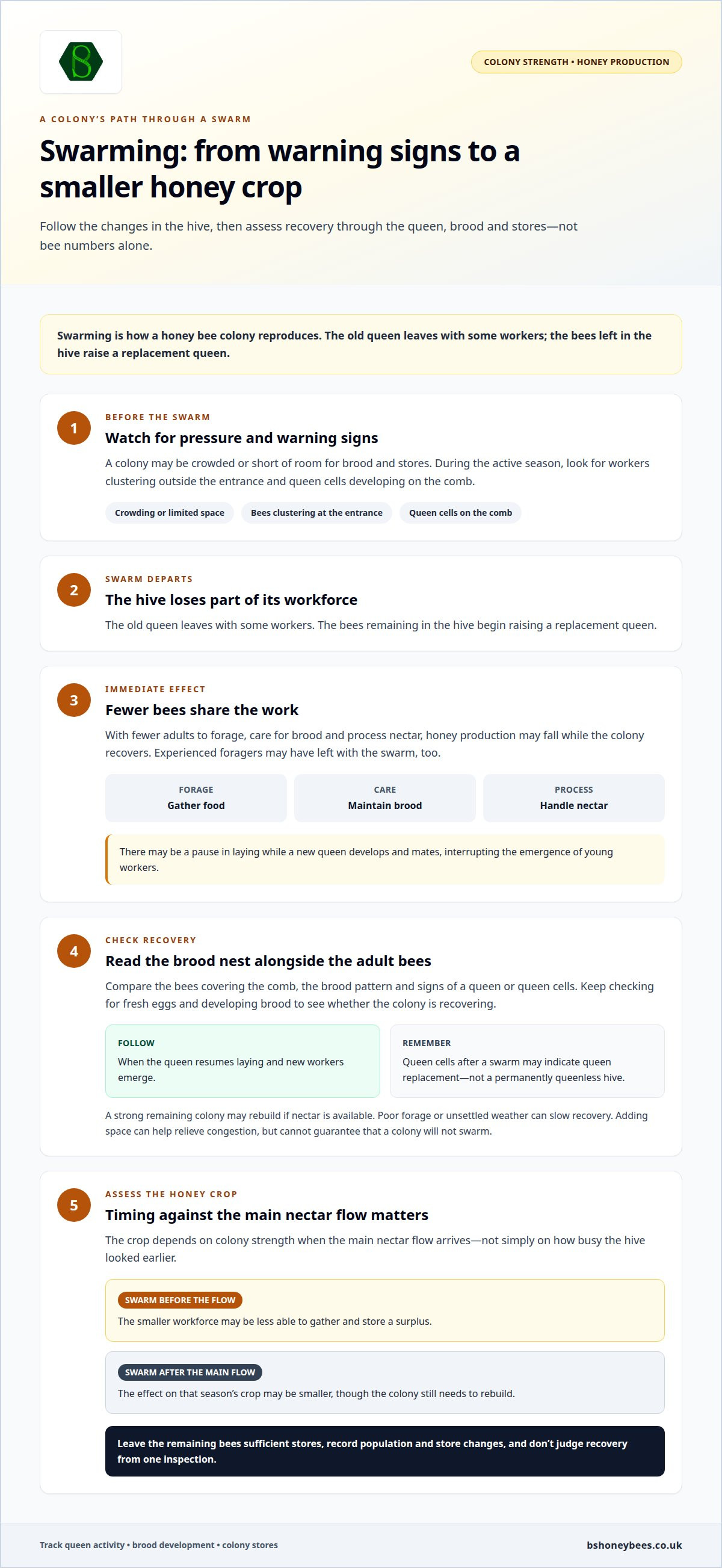
Swarming is how a honey bee colony reproduces. The old queen leaves with some of the workers, while the bees left in the hive raise a replacement queen. This natural process can make a productive colony seem suddenly smaller. With fewer adult bees to forage, care for brood and process nectar, honey production may fall while the colony recovers.
Look for changes in both the adult bees and the brood nest. Before a swarm leaves, workers may cluster outside the entrance, and queen cells may be developing on the comb. After the swarm departs, the original hive has fewer bees and may not have a laying queen while a new queen develops and mates. This interruption can reduce the number of young workers emerging to replace older bees.
A swarm may also take experienced foragers with it. The bees left behind must maintain the brood, protect the hive and collect food with a smaller workforce. A strong remaining colony may rebuild if nectar is available; poor forage or unsettled weather can slow recovery. The honey crop depends on colony strength when the main nectar flow arrives, not simply on how busy the hive looked earlier.
Assess what has changed before treating a smaller population as a lasting decline. Compare the adult bees covering the comb, the brood pattern and signs of a queen or queen cells. Queen cells after a swarm may indicate queen replacement rather than a permanently queenless hive. Keep checking for fresh eggs and developing brood to see whether the colony is recovering.
Swarming pressure can build when a colony is crowded or short of room for brood and stores. Provide suitable space as the colony expands, and inspect during the active season so you don’t miss developing queen cells. Adding space alone cannot guarantee that a colony won’t swarm, but it can help relieve congestion. Record inspections, queen cells and population changes to distinguish gradual growth from a sudden loss.
Honey production also depends on timing. If a swarm leaves shortly before a local nectar flow, the smaller workforce may be less able to gather and store a surplus. If it leaves after the main flow, the effect on that season’s crop may be smaller, though the colony still needs to rebuild. In either case, leave the remaining bees sufficient stores and don’t judge recovery from one inspection.
Every colony responds to its condition and surroundings. Treat queen cells as useful evidence, not a reason to destroy them automatically. Track when the queen resumes laying, when new workers emerge and how stores change. These observations can show whether swarming explains a temporary setback or another problem is also limiting growth.
Timing and feeding to build colony strength
Colony growth depends on matching brood rearing with food, suitable weather and the local nectar flow. A colony needs enough workers to forage while others care for larvae and maintain the nest. Build strength before the main nectar flow rather than expecting a small colony to expand and gather a surplus at the same time. Assess adult bee numbers, brood development and available stores together. Feeding can support a colony when natural forage falls short, but it cannot resolve every cause of weak growth.
The seasonal laying cycle matters. Honey bee queens gradually stop laying eggs in early October and produce few or no eggs until the following January. This winter pause means fewer young bees emerge to replace workers, so reduced activity does not automatically signal a problem. As conditions improve, look for fresh eggs and developing brood alongside suitable stores. A colony’s needs change through the year; assess its current brood and food, not against summer expectations.
Before feeding, inspect the colony’s stores and brood. If honey and pollen are available, extra feed may not address the problem. If stores are low and natural forage is limited, feeding can provide energy and support continued activity. Reassess afterwards: check whether the colony is using the feed and whether brood development continues. A persistent lack of eggs or a deteriorating brood pattern calls for investigating the queen or colony health, not relying on feed alone.
For a new nucleus colony, timing affects how much opportunity it has to build before winter. The Institute of Northern Ireland Beekeepers recommends obtaining a nuc in late May or June and feeding it carefully if needed to help it build strength. This is a seasonal recommendation, not a reason to feed automatically. Assess the colony’s stores and forage, then decide whether feeding is appropriate as it establishes.
Plan hive space around the colony’s growth and the approaching nectar flow. Add supers at the right time to give a strong colony room to store incoming nectar. Adding space too early can leave a developing colony with more hive volume to manage; adding it too late can restrict storage. Check how much of the frames the bees are using and assess stores before making a change. Local flowering and weather also affect when nectar becomes available.
Use a simple inspection record to connect feeding decisions with results. Note the date, visible stores, brood stages, signs of a queen and any feed given. Compare these observations at later inspections instead of relying on a single snapshot. For example, a colony with expanding brood and declining stores may need support; one with adequate reserves but no fresh eggs needs a different investigation. This helps feeding support colony development rather than mask the underlying cause.
Comb building in a new hive
New comb gives a colony places to rear brood and store food. Workers produce wax and shape it into cells, but comb building takes resources and active labour. A new hive with bare foundation therefore doesn’t offer instant usable space. Until the bees draw the comb, the queen has fewer ready cells for laying and foragers have fewer places to store incoming nectar.
Read comb building alongside the bees’ coverage of the hive. Honey bees cluster around the queen on 4 - 6 frames, so space beyond the occupied area may not be used straight away. For example, a small colony in a large hive may concentrate on warming and protecting its existing nest instead of drawing distant foundation. Expansion is most useful when the workers can cover and manage it.
Foundation guides the shape and position of new cells, while drawn comb is already formed and can be used sooner. In either case, bees need favourable conditions to build. A steady nectar source supports wax production; a shortage of forage can slow construction as workers prioritise other colony needs. Check frames at successive inspections for fresh white wax along the foundation or frame edges.
Comb progress also depends on the queen’s laying pattern. When she is laying and the colony has room to expand, workers can build cells for the next brood cycle. If new comb remains empty, consider whether the bees have enough active workers, suitable forage and an effective queen. Empty foundation alone does not identify the cause; compare it with brood, stores and the distribution of bees.
Place new frames where the colony can reach them instead of leaving all the expansion at the edge of an oversized hive. Bees tend to work within their established nest, so the position of unused foundation affects whether they encounter it during routine movement. Avoid repeatedly rearranging frames to force progress. Make each inspection answer a clear question, such as whether comb has been drawn or the brood nest is expanding.
Protect newly drawn comb from damage. Handle frames steadily, keep them upright and avoid shaking fresh wax, which can be fragile before it is reinforced. During an inspection, return frames to their previous order unless there is a clear reason to change it. A consistent arrangement helps the colony maintain its nest and makes later changes easier to assess.
Compare comb construction across inspections rather than judging the hive’s overall appearance. A colony drawing foundation and extending its brood nest is making usable progress, even if the outside population looks unchanged. If construction stalls, check the colony’s strength, queen activity and forage before adding more space. These signs help distinguish a temporary pause from a hive setup the bees cannot yet use effectively.
Laying workers in queenless colonies
A queenless colony has no functioning queen. A failing queen may still lay, but her brood pattern can be inconsistent. This distinction matters because eggs alone don’t prove that the colony can replace its workers.
Queenless Colonies and Failing Queens
A queenless colony has no queen laying viable eggs, while a failing queen’s laying may be sparse or irregular. To assess the difference, look for eggs, larvae and sealed brood together, then check whether the pattern is consistent across the brood nest. A queen can lay up to 1,500 eggs per day during peak production, but that figure isn’t a target for every inspection.
Fresh eggs can be difficult to spot, especially if the queen is moving across the comb. If you find none, inspect again rather than immediately concluding that the colony is queenless. A recently emerged or newly mated queen may not yet have established a clear laying pattern. Compare successive inspections for fresh eggs and developing worker brood.
Scattered brood, empty cells within the brood area or a shrinking patch of sealed brood can indicate a failing queen, but these signs need context. Consider the season, colony strength and stores as well. A queenless colony may begin raising replacement queens if suitable young larvae are present. Record what you see, including any queen cells, rather than relying on one sign alone.
Laying Workers
Laying workers are worker bees that begin laying eggs after a colony has been queenless for a while. Their eggs are unfertilised, so they develop into drones rather than replacement workers. The colony is then left without the worker brood it needs to rebuild its population, even though eggs may be visible.
Look for several eggs in one cell, eggs attached to cell walls or eggs placed irregularly. A queen usually lays a single egg neatly at the bottom of a cell, so these patterns can point to laying workers. Drone brood in worker-sized cells is another clue: drone cappings are raised, unlike the flatter cappings over worker brood.
Don’t treat one unusual cell as a confirmed diagnosis. Check several frames and see whether the pattern repeats across the nest. If laying workers are established, simply adding a queen may not solve the problem, as the workers may not accept her. Get experienced help to assess the colony and choose a suitable recovery approach before making a change.
If a queen replacement is appropriate, explore queen options as part of your next steps.
BS Honey Bees
BS Honey Bees Ltd can help you take the next practical step when a colony needs a queen or a fresh start. If inspections point to a failing queen, F1 Buckfast Queens and Carniolan Queens are relevant options to consider for queen replacement. If rebuilding the colony is more appropriate, 5 / 6 Frame Nucs provide a nucleus-colony option, while 2 in 1 Poly Nucs support hive management.
Match the option to the problem you’ve identified: replacing a queen is different from establishing a colony with a nuc. BS Honey Bees Ltd supplies queen bees and nucleus colonies to support beekeepers’ needs.
Choose the next step with confidence
If your honey bee colony is not growing, let the evidence guide your next decision instead of making several changes at once. Work out whether the priority is addressing a queen problem, supporting a colony that needs to rebuild or allowing a seasonal pause to pass. A clear diagnosis helps you avoid adding resources that don’t address the cause.
Set one practical goal for your next inspection, such as confirming fresh laying or checking whether the colony is improving. Then use what you observe to choose your next step. This measured approach keeps decisions focused and helps you recognise when the colony is moving in the right direction.
If you’re considering a queen or nucleus colony as your next step, contact BS Honey Bees Ltd to discuss your beekeeping needs. Take the next decision calmly and give your bees a clear path towards strength.
Frequently Asked Questions
What are the common reasons a honey bee colony is not growing?
Common causes include a failing or absent queen, swarming, insufficient stores, disease, pests and limited forage. Seasonal pauses can also make growth appear slow. Look for combinations of signs: falling adult bee numbers alongside little developing brood, for example, suggests a different issue from a strong population that has recently swarmed. Compare inspections over time, as one snapshot may not show whether the colony is recovering or continuing to weaken.
How do forage availability, weather and seasonal timing affect colony growth in the UK?
Forage provides nectar for energy and pollen for brood rearing, while cold, wet or windy weather can limit opportunities to fly. A gap between flowering sources may leave a colony with less incoming food, even if the hive seemed active earlier. Conditions vary across the UK and through the seasons, so note which plants are flowering and whether bees are returning with pollen. Consider these observations alongside stores and brood development.
What signs show that a colony lacks enough food, and when should I feed it?
Low or empty food cells, dwindling stores and limited incoming forage can indicate a shortage. Assess these signs alongside the brood area and current weather: a colony may use stores quickly while raising brood or be unable to forage in poor conditions. Feed when available stores and forage aren’t meeting the colony’s needs. Check food levels again afterwards rather than assuming one feed has resolved the shortage.
What should I check in a hive inspection when brood numbers are not increasing?
Check for the queen or signs of recent laying, then look for eggs, larvae and sealed brood. Note irregular gaps, drone brood in worker cells and any queen cells. Also assess stores, how many frames the bees cover and signs of pests or disease. Record your observations and compare them with the next inspection. This helps show whether brood production is changing or one inspection caught a temporary pause.
When should I add a brood box or super to a growing UK honey bee colony?
Add space in response to the colony’s development, not the calendar alone. Add a brood box when the existing brood nest is becoming crowded; a super provides storage as the colony gathers nectar. Consider how much available comb the bees are using and whether the colony can manage more space. Adding either too early or after usable space has become restricted can make hive management less effective.
What is a normal honey bee colony size and brood pattern at different times of year in the UK?
At the height of summer, an average honey bee colony has 35 - 40,000 bees; over winter, a colony has around 5,000 bees. Brood activity also changes with the season: queens gradually cease laying in early October and produce few or no eggs until the following January. During active brood rearing, compare eggs, larvae and sealed brood rather than judging colony condition by adult numbers alone.