

Brace comb isn't a sign of rebellious bees; it's a structural symptom of violated bee space. Every UK beekeeper knows the dread of prising open a brood box only to find frames cemented solid with wax and propolis. One wrong lever of the hive tool tears open honey stores, sending sticky mess pooling across the hive floor and triggering robbing behaviour. Worse still is that sudden knot in your stomach when you realise your queen might be walking across those fragile wax bridges. Routine inspections shouldn't feel like a high-stakes gamble, and mastering clean brace comb removal is the quickest way to restore order to your apiary.
You don't need to risk rolling the queen or tearing through valuable brood just to maintain workable frames. In this guide, you'll learn how to execute safe brace comb removal during routine inspections, protect your queen, and correct frame spacing errors so the colony stops rebuilding unwanted bridge comb. We'll walk through practical hive tool techniques, comb manipulation methods, and the exact spacing habits required to keep your British National hives inspectable and your bees calm.
Key Takeaways
- Understand the structural difference between brace comb and burr comb to pinpoint where bee space has failed inside your hive.
- Master methodical brace comb removal techniques using cool smoke and precise hive tool angles to protect the queen from fatal rolling.
- Prevent messy honey spills and damaged brood cells by learning the exact leverage points needed to separate joined frames cleanly.
- Stop bees from rebuilding bridge comb by maintaining proper frame alignment and using accurately spaced British National frames.
- Collect, sort, and repurpose clean hive wax whilst upholding strict apiary hygiene standards to prevent robbing and disease.
What Is Brace Comb and Why Do Bees Build It?
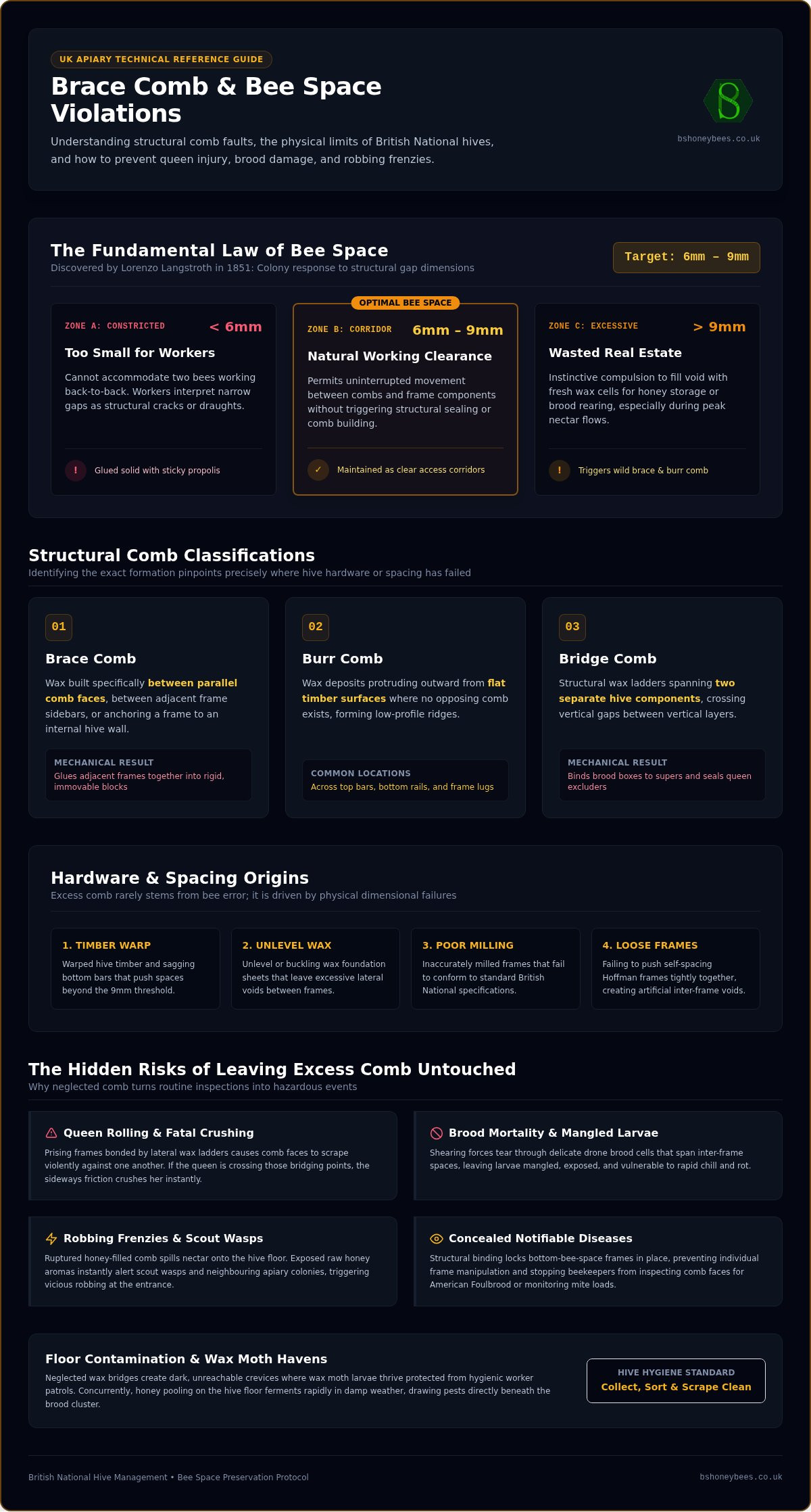
Honey bees are master architects, but they build strictly according to instinct. When empty space inside a hive fails to match their biological requirements, worker bees instinctively fill the void. In 1851, Lorenzo Langstroth identified "bee space", the precise gap between 6mm and 9mm that bees leave open as corridors. Violate this threshold, and your colony immediately begins constructing unwanted wax. During heavy nectar flows, worker wax glands produce scales at peak capacity, prompting rapid, opportunistic comb building across any available opening. Leaving these structures unchecked restricts frame movement, blocks internal air currents, and makes periodic brace comb removal an absolute necessity.
Brace Comb vs Burr Comb vs Bridge Comb
Many beekeepers treat these terms as interchangeable, but they represent distinct structural responses to hive spacing errors. Recognising the exact formation tells you where your hardware or spacing has failed:
- Brace Comb: Extra wax built specifically between two parallel combs, between adjacent frame sidebars, or linking a frame directly to an internal hive wall. It glues adjacent frames into rigid blocks.
- Burr Comb: Wax deposits built out from flat timber surfaces where no opposing comb exists. In beekeeping terminology, burr comb typically forms in low-profile ridges along top bars, bottom rails, or frame lugs.
- Bridge Comb: Structural wax spanning two entirely separate hive components, most commonly crossing vertical gaps between brood boxes, supers, or over queen excluders.
The Mechanics of Bee Space Violations
A honey bee colony operates on rigid structural rules. Gaps smaller than 6mm cannot accommodate two bees working back to back; workers view these as draughts or structural cracks and seal them tight with sticky propolis. Conversely, any opening exceeding 9mm triggers an immediate comb-building response. The bees view the excess volume as wasted real estate and construct fresh wax cells to store honey or house brood.
These violations rarely stem from bee error. Warped timber, unlevel foundation sheets, and sagging bottom bars push dimensions beyond the 9mm limit. Using poorly milled frames or failing to push Hoffman frames firmly together creates artificial gaps that invite wild comb. Once these wax webs anchor frames together, attempting an inspection without deliberate brace comb removal risks catastrophic comb collapse and crushed bees.
The Hidden Risks of Leaving Excess Comb Inside the Hive
Leaving bridge and brace comb untouched creates severe structural hazards across your apiary. Beyond being merely annoying to the beekeeper, wild wax bridges transform routine brood inspections into destructive ordeals. In British National hives, where frames rely on precise bottom bee space, excess wax locks components together. This structural binding prevents individual frame manipulation, leaving you unable to inspect comb faces thoroughly for notifiable brood diseases like American Foulbrood or monitor mite loads. Neglected wax bridges also create dark, unreachable crevices where wax moth larvae thrive protected from hygienic worker patrols.
Preventing Queen Injury and Brood Mortality
The single greatest threat during late brace comb removal is rolling your queen. When two frames are bonded by lateral wax ladders, prising them apart forces the comb faces to scrape violently against one another. If the queen or attendant workers are walking across those bridging points, the sideways friction crushes them instantly. The same shearing force tears through delicate drone brood cells spanning inter-frame spaces, leaving larvae exposed and mangled. To prevent hive panics when freeing locked timber, wear reliable protective bee suits so you can work deliberately, slowly, and without flinching.
Managing Honey Spills and Robbing Frenzies
Rupturing honey-filled brace comb inevitably spills liquid nectar down the comb faces and onto the hive floor. This sticky pool does not stay unnoticed for long:
- Robbing Pressure: The distinct aroma of exposed raw honey alerts neighbouring apiary colonies and scout wasps, triggering vicious robbing frenzies at the hive entrance.
- Defensive Aggression: As spilled honey coats nurse bees, the colony reacts with heightened alarm pheromone production, turning an otherwise docile inspection intensely defensive.
- Floor Contamination: Puddled stores ferment quickly in damp weather and draw pests right beneath the brood cluster.
Whenever you rupture honey comb, wipe down frame lugs immediately and clean bottom boards before closing up. Ensuring your colonies are housed on precision-machined timber from trusted suppliers like BS Honey Bees keeps dimensions true, helping you eliminate the irregular gaps that lead to built-out wax bridges in the first place.
Step-by-Step Brace Comb Removal During Routine Inspections
Orderly inspections depend on methodical execution. Removing brace comb shouldn't be an erratic hack-and-slash job done amidst a cloud of agitated bees. Approaching the task with steady, measured movements preserves frame timber, keeps the brood nest intact, and ensures your queen remains completely safe throughout your inspection.
Essential Tools for Clean Comb Removal
Before cracking the crown board, prepare your kit so you aren't hunting for equipment mid-inspection:
- Hive Tool Selection: A traditional flat scraper provides broad surface contact for shaving top bars, whilst a J-type tool offers precise leverage when prising frame lugs without splintering softwood.
- Long-Bladed Knife: Keep a clean, stainless steel uncapping knife on hand to sever thick wax ladders spanning parallel combs cleanly.
- Sealable Bucket: Never let warm wax scraps drop into the grass. Deposit every shaving into an airtight tub immediately so foraging scouts cannot catch the scent.
The Safe Cutting Protocol
Never cut blindly. Begin by applying two gentle puffs of cool smoke to guide workers down into lower seams. Lift an outside resource frame out first to create working clearance, and inspect both faces meticulously to confirm the queen is elsewhere. Rest that frame securely on an external perch so both your hands remain free.
Hold your hive tool flat against the woodwork at a shallow fifteen-degree angle. Rather than levering aggressively against the comb, use a firm, upward shearing motion to slide the blade beneath the wax footprint. This slicing action severs the bridge without tearing adjacent comb faces. Practising consistent spacing habits helps prevent cross combs from anchoring foundation across empty gaps. Execute your brace comb removal smoothly; sudden, jerky snaps crush bees and release alarm pheromones that rile the colony.
Dealing with Comb Containing Eggs, Larvae, or Honey
Examine severed comb chunks carefully before consigning them to your bucket. If you discover patches of developing worker larvae or eggs, evaluate the damage. If wild comb bridges two frames but contains viable brood, you can leave it undisturbed until adult emergence if cutting would rupture adjacent sealed brood.
Drone comb built into lateral gaps should be excised completely. For comb leaking nectar or capped stores, scrape the ruptured wax directly into your container, then wipe frame sidebars down using a clean, damp cloth. Removing residual sweetness stops robber bees from descending on sticky frames once you close the hive.
How to Prevent Brace Comb from Rebuilding in Your Apiary
Stopping wax rebuilds requires tackling the structural causes of irregular comb. Consistent brace comb removal treats the symptom, but correcting your equipment setup eliminates the trigger. Bees demand consistency. If your hive stand sits unlevel, bees build off plumb, producing angled combs that inevitably breach bee space. Keeping your apiary level, maintaining tight frame contact, and clearing propolis buildup from runners prevents bees from throwing up fresh wax bridges.
Hoffman Frames vs Spacers and Castellations
Hoffman self-spacing frames automatically regulate the standard 35mm centre-to-centre distance needed in brood chambers. However, worker bees gradually coat these contact points with propolis. Over several seasons, this sticky accumulation adds two to three millimetres across a box, pushing end frames against hive walls and creating gaps where bees build lateral brace comb.
Scrape frame side bars and rebate runners clean every spring. In honey supers, castellated runners lock frames into nine or ten-frame spacing for easy uncapping. In the brood nest, stick to snug Hoffman frames pushed tightly together into the centre of the brood box.
Top Bee Space vs Bottom Bee Space in UK Hives
Standard UK equipment relies on bottom bee space, meaning the top bars sit flush with the top of the box while an 8mm gap sits below the bottom bars. Mixing top-space components with bottom-space equipment is a recipe for chaos. Combining the two creates an oversized 16mm chasm between boxes, which bees bridge with dense wax ladders within days.
Queen excluders also attract messy comb if warped. Ensure your woodwork conforms strictly to the classic British National beehive layout, and replace sagging excluders to keep clearances true.
Foundation Selection and Comb Drawing Hygiene
Warped or loose foundation sheets encourage bees to draw irregular, bulging combs that drift into adjoining gaps. Take these preventative measures:
- Fit Foundation Taut: Ensure wired wax sheets are pinned firmly into split bottom rails without bowing.
- Feed During Drawing: Provide sugar syrup during early foundation drawing so workers build straight, uniform comb faces rapidly.
- Cull Old Frames: Rotate distorted, uneven dark brood combs out of circulation each spring during comb renewal.
Precision equipment makes colony management effortless. Upgrade your apiary with accurately manufactured frames and boxes by ordering from BS Honey Bees to eliminate improper spacing gaps for good.
Repurposing Hive Wax: What to Do with Harvested Comb
Every shaving collected during brace comb removal represents valuable beeswax that shouldn't go to waste. Leaving removed wax lying around your apiary is a severe biosecurity hazard. Exposed wax invites foraging bees from neighbouring colonies, rapidly spreading pathogen spores like Paenibacillus larvae if disease lurks undetected. Discarded comb also attracts wax moths, which lay eggs in warm wax before migrating directly into weak colonies. Treat every scrap of harvested comb as a resource to be secured, sorted, and processed off-site.
Safe Storage and Biosecurity in the Apiary
Sort your wax at the hive side into two distinct batches. Keep clean, virgin white comb scraped from supers separate from dark, propolis-hardened brood comb. Store these trimmings in heavy-duty buckets fitted with airtight lids to keep wax moth adults out. During warm summer months, run small batches through a solar wax extractor. Solar melting heats the comb naturally, separating liquid wax from slumgum without burning the delicate aroma.
Rendering Clean Beeswax for Practical Use
Processing recovered wax requires minimal equipment but yields exceptional materials for home and apiary use:
- Straining Debris: Melt your sorted wax in a water bath, then pour it through fine muslin or lint-free cheesecloth to trap cocoons, wood splinters, and grit.
- Foundation Coating: Melt pure golden wax blocks to paint a fresh coating onto foundation sheets, encouraging bees to draw comb quickly and evenly.
- Hive Care and Crafts: Blend clean wax with mineral oils to craft non-toxic timber polishes for your hive boxes, or pour it into moulds for clean-burning candles.
Colony temperament plays a direct role in how wax is built inside your boxes. Chronic, excessive bridging and propolising often stem from unruly stock. Choosing gentle bee genetics from BS Honey Bees Ltd helps you maintain calm colonies that build neat, orderly brood nests, significantly reducing the volume of messy wax bridges you encounter during routine inspections.
Take Control of Your Hive Inspections Today
Methodical brace comb removal protects your queen from fatal rolling and keeps frame manipulation effortless. When you respect the strict bee space threshold, level your hive stands, and keep frame lugs scraped clean, your bees spend their energy storing surplus honey rather than bridging unwanted gaps. Routine inspections become faster, cleaner, and far less disruptive for the colony.
Achieving that structural balance starts with dependable equipment. As a UK specialist breeder supplying calm F1 Buckfast and Carniolan colonies nationwide, BS Honey Bees pairs gentle genetics with precision-milled woodenware built to exacting dimensions. Whether you need robust BBWear protective suits for sting-free scraping or reliable hive components, we ensure your apiary runs smoothly. Discover high-precision British National hives and frames engineered for flawless bee space at BS Honey Bees. With accurate equipment and a steady technique, you don't have to dread messy frames; you can approach every colony inspection with complete confidence.
Frequently Asked Questions
Is brace comb harmful to the bees if I leave it in the hive?
Brace comb is not toxic to bees, but it introduces severe management hazards that indirectly threaten colony health. Leaving it intact glues frames together, which prevents thorough brood disease checks and risks crushing workers during manipulations. Over time, these lateral wax webs restrict ventilation pathways and create unpatrolled recesses where wax moth larvae thrive out of reach of worker bees.
Can I leave brace comb if it contains honey or brood?
You can leave comb temporarily if excising it causes catastrophic loss of developing worker brood. If wild comb bridges two frames and holds healthy, capped worker larvae, wait for adult emergence before removing the wax structure. However, if it contains drone brood or raw nectar stores, carry out safe brace comb removal immediately to prevent frame damage during your next inspection.
Why do my bees keep building brace comb between the frame top bars?
Bees build comb between top bars when the vertical clearance above them exceeds the 9mm bee space threshold. This problem frequently occurs when you mix incompatible hive boxes, use warped timber, or place a crown board with a deep rim directly above flush frames. Bees instinctively treat excessive headroom as functional space, rapidly filling it with wax cappings and honey stores.
What is the difference between top bee space and bottom bee space?
The difference lies entirely in where the 8mm access gap is located inside the box. In bottom bee space equipment, frame top bars sit flush with the rim of the box, leaving the bee space beneath the bottom bars. In top bee space boxes, frames hang sunken inside the rim. Mixing these two distinct standards creates either crushed bees or massive gaps that trigger wild comb.
How do I stop bees from building comb under the inner cover or crown board?
Ensure your crown board rests flat side down to maintain a strict bee space corridor over the top bars. If your board incorporates raised wooden rims, place the flat face toward the brood frames so the clearance does not exceed 9mm. Additionally, remove any thick propolis deposits from the box rebates that might cause the board to sit askew or bow upwards.
What should I do with brace comb that contains live drone brood?
Excise the comb completely and scrape it directly into your wax collection bucket. Drone brood built in lateral spaces will only get torn apart during subsequent frame movements anyway. Culling this wild drone comb also acts as a practical integrated pest management technique, as female varroa mites preferentially breed within drone cells; removing them reduces mite reproduction naturally.
Does removing brace comb make the colony angry during inspections?
Comb removal only riles a colony if you use aggressive, jerky movements or rupture honey stores across nurse bees. Slicing through wax bridges calmly with a sharp hive tool causes minimal disruption. Wearing robust protective clothing like BBWear bee suits keeps you composed, preventing the nervous twitches or sudden frame drops that release alarm pheromones and trigger defensive stinging.