
What if the best feed for bees in spring UK is no feed at all? Stores can run low as brood rearing gathers pace, but feeding automatically by the calendar can create problems. Start by assessing the colony, not by reaching straight for syrup or fondant.
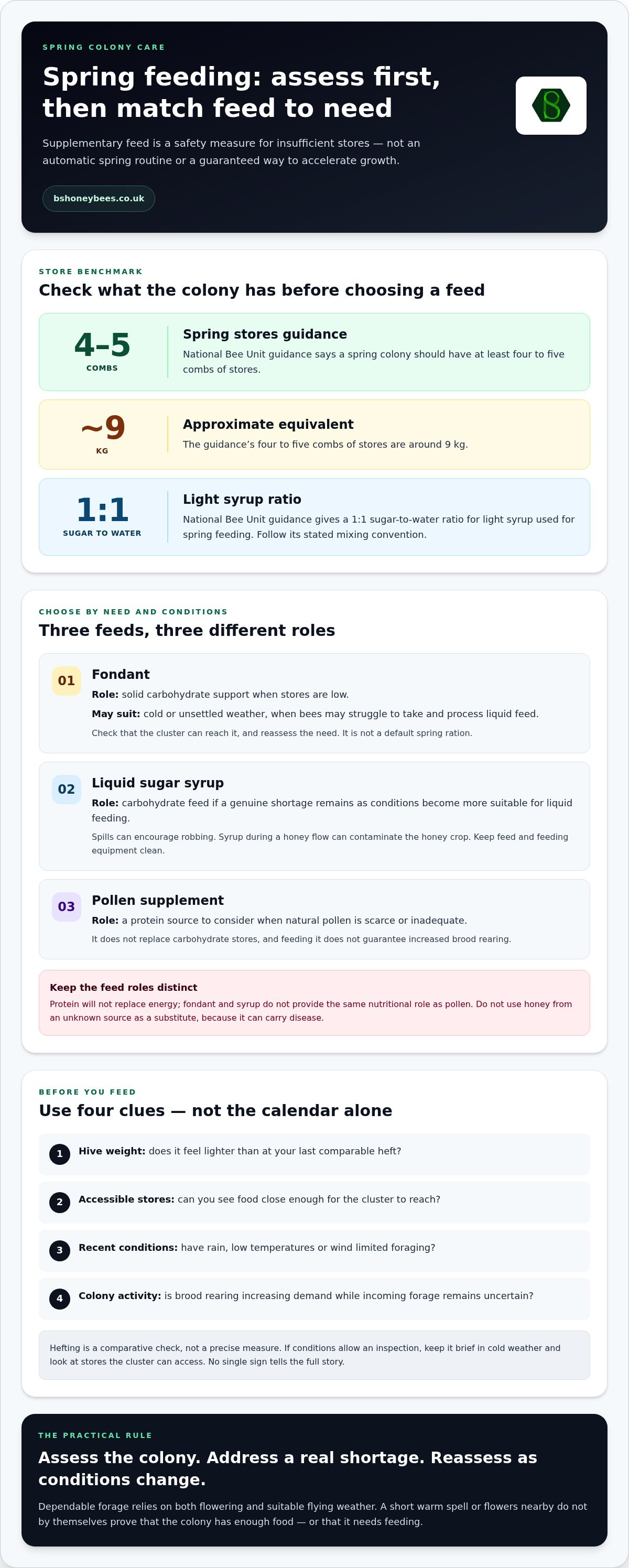
It’s understandable to worry about a cold spell or a gap in reliable forage. National Bee Unit guidance says a spring colony should have at least four to five combs of stores, around 9kg. If stores are low, the most suitable supplementary feed depends on the weather and what the bees can use. In cold, unsettled conditions, fondant may be more practical than liquid syrup. In warmer conditions, light syrup may be an option if feeding is genuinely needed.
This guide explains how to check stores with minimal disturbance, choose between fondant and syrup, and monitor the colony so you know when to stop. It also explains why spring feeding is a safety net against starvation, not a routine shortcut to more brood, and how to avoid overfeeding as natural forage becomes available.
Key Takeaways
- Match feed to the colony’s immediate need: carbohydrate support and pollen supplements serve different purposes.
- The best feed for bees in spring UK depends on conditions and colony need. Spring feeding doesn’t reliably produce a stronger build-up.
- Assess stores, provide an appropriate amount if needed, then reassess instead of feeding on autopilot.
- Follow current UK guidance and feeder instructions. Take care to prevent spills, robbing and contamination risks.
- Stop supplementary feeding when stores have recovered and dependable forage is available, then review the colony again as conditions change.
Best feed for bees in spring UK: first decide whether the colony needs it
Spring can put a colony under pressure. Brood rearing increases food demand just as cold snaps, rain or wind can keep bees from flying. Stores may be dwindling even when flowers are visible, so don’t decide to feed by the calendar alone. Supplementary feed is a safety measure for a colony with insufficient stores, not an automatic spring routine or a guaranteed way to accelerate growth.
Before choosing the best feed for bees in spring UK, gather a few useful clues without keeping the hive open longer than necessary. Assess the colony’s weight, the stores you can see and the conditions bees have had for foraging. Then decide whether there is evidence of a shortage.
How can you tell whether a colony is short of stores?
Start by hefting the hive. Stand beside it and gently lift one edge just enough to judge its weight, without rocking or jolting the colony. Compare how it feels with previous checks made in the same way. If the hive feels noticeably lighter than before, take a closer look. Hefting is a comparative check, not a precise measure, so if you’re new to it, treat the result as one clue rather than a verdict.
If the weather and colony condition allow an inspection, look for accessible stores on the combs nearest the cluster. Keep the opening brief in cold conditions: have your equipment ready, avoid leaving frames exposed and close the hive promptly. Don’t assume that one frame with little visible honey means the whole colony is short. Consider what food the bees can reach, where it is in relation to the cluster and whether they have had recent opportunities to fly.
Use this short checklist before deciding:
- Hive weight: does it feel lighter than at your last comparable heft?
- Accessible stores: can you see food close enough for the cluster to reach?
- Recent conditions: have rain, low temperatures or wind limited foraging?
- Colony activity: is brood rearing increasing demand while incoming forage remains uncertain?
No single sign tells the full story. A date on the calendar, a brief spell of sunshine or flowers appearing nearby doesn’t prove that the colony has enough food, or that it needs feeding.
Why UK spring conditions make timing variable
Bees need suitable flying weather to collect nectar and pollen. Low temperatures, persistent rain and wind can reduce foraging opportunities, while a short warm spell may offer only a temporary break. Flowering also varies with local conditions and the season’s progress across the UK. As a result, a colony’s food supply can come under different pressures from one week to the next, even in the same apiary.
Dependable forage relies on both flowering and suitable flying weather, so reassess stores as conditions change instead of relying on a single spring check. This helps you distinguish a genuine shortage from understandable concern about unpredictable spring weather.
Fondant, sugar syrup or pollen feed: which spring bee feed fits the situation?
Choose feed according to the problem you need to address. Fondant and sugar syrup provide carbohydrate to help with low energy stores. Pollen supplements have a different role: they provide protein when natural pollen is limited. Neither is a routine spring boost. The best feed for bees in spring UK depends on the colony’s needs, the weather and the forage available.
| Feed | Purpose | Limitations |
|---|---|---|
| Fondant | Solid carbohydrate support, often practical in cold or unsettled weather. | Not a reason to feed a colony whose stores are adequate; check access and reassess need. |
| Liquid sugar syrup | Carbohydrate feed considered as conditions become more suitable for liquid feeding. | Spills can encourage robbing, and syrup during a honey flow can contaminate the honey crop. |
| Pollen supplement | A protein source considered when natural pollen is scarce or inadequate. | It doesn’t replace carbohydrate stores, and feeding it doesn’t guarantee increased brood rearing. |
These feeds aren’t interchangeable. If the colony risks running short of stores, address the carbohydrate shortage. Protein won’t replace energy. Likewise, syrup or fondant doesn’t provide the same nutritional role as pollen. Don’t use honey from an unknown source as a substitute, because it can carry disease. Keep feed and feeding equipment clean.
When might fondant be the more practical option?
In cold or changeable weather, bees may struggle to take and process liquid feed. Fondant placed where the cluster can reach it may be more practical in those conditions. That doesn’t make it a default spring ration. First establish that stores are low, then consider whether the colony can access the feed. Weather, cluster position and the hive’s condition all matter.
When is liquid syrup considered, and what is pollen feed for?
As conditions improve, liquid syrup may be considered if a genuine carbohydrate shortage remains. National Bee Unit guidance gives a 1:1 sugar-to-water ratio for light syrup used for spring feeding. Follow the guidance’s stated mixing convention rather than assuming equal volumes and equal weights are the same. Its guidance on feeding bees also covers feed types and suitable feeders.
Pollen supplements are a separate option, not a substitute for stores. Consider them in light of the colony’s condition and the natural pollen available. They aren’t a guaranteed way to increase brood or honey yield. Avoid feeding syrup during a honey flow, and prevent spills that could trigger robbing.
Use suitable, clean equipment and follow its instructions. If you’re reviewing your hive setup, British National hives and frames are practical apiary equipment to consider.
Does spring feeding stimulate a colony? What the evidence and risks mean
Spring feeding doesn’t reliably produce a stronger colony. Syrup may prompt activity in some circumstances, but it can’t compensate for poor weather, limited forage or other factors affecting colony development. The University of Edinburgh’s discussion of spring feeding describes mixed research findings: one study reported increased brood rearing in a year with poor weather, while another found that concentrated syrup decreased brood rearing. These results don’t support treating stimulative feeding as a dependable shortcut.
The benefit of spring feeding depends on the colony’s need and the conditions, not simply on the season. That’s why you should choose the best feed for bees in spring UK only after assessing the colony and identifying what, if anything, is lacking.
Emergency feeding is different from stimulative feeding
Emergency feeding responds to a genuine risk that a colony doesn’t have enough accessible stores to sustain itself. Its purpose is immediate support, not faster expansion. Stimulative feeding means providing feed in the hope of encouraging activity or brood rearing, even when stores aren’t critically low. Before either approach, assess the colony’s stores and circumstances. Don’t mistake wanting to see rapid spring growth for evidence that feed is needed.
If stores are dangerously low, preventing starvation takes priority. If the colony has adequate food, adding syrup to try to influence brood rearing is a separate management choice with uncertain results. Keep the decision practical: respond to a shortage when one is present, and don’t assume supplementary feed will improve a colony that is already adequately supplied.
How unnecessary feeding can create problems
Feed is not risk-free. If syrup is taken in and stored when the colony doesn’t need it, it can occupy comb space the queen might otherwise use for laying. A brood nest crowded with stores may complicate colony management and restrict expansion, although this outcome isn’t inevitable. The risk depends on how much feed is supplied, how quickly it is used and how much space is available in the hive.
Timing matters too. Syrup given during a natural honey flow may be stored alongside nectar and affect honey intended for harvest. Avoid feeding syrup during a honey flow, and stop if you see stores accumulating where the brood nest needs room. Spilled syrup can attract bees from other colonies and encourage robbing, so use suitable equipment and keep feed contained.
- Short of stores: prioritise correcting the shortage with an appropriate feed.
- Adequately supplied: don’t feed automatically in the hope of stimulating brood.
- Honey flow underway: avoid syrup that could enter the harvest crop.
- Stores filling brood space: review the feeding decision and colony condition.
Spring feeding is best treated as a targeted intervention, not a routine. Check how the colony responds and reconsider the need as weather, forage and stores change. This cautious approach recognises uncertainty in the research while keeping the bees’ immediate welfare at the centre of the decision.
How to feed bees in spring safely: a simple UK apiary routine
Keep spring feeding controlled and purposeful. Base your decision on what you’ve observed, choose a feed suited to the conditions, then check whether it has addressed the shortage. Don’t leave feed in place simply because you supplied it at the last visit.
- Assess stores first. Heft the hive and compare its weight with previous checks. If conditions allow a brief inspection, look for accessible stores near the cluster. In cold weather, keep the hive open only as long as needed. Don’t feed based on the date alone.
- Choose feed for the need and weather. If stores are low and conditions remain cold or unsettled, solid feed may be more practical. As conditions improve, liquid syrup may suit a demonstrated carbohydrate shortage. Pollen supplements address a different nutritional need; they don’t replace carbohydrate stores.
- Provide a measured amount. Use a suitable feeder and position it so the colony can reach the feed. Follow current National Bee Unit guidance and the feeder manufacturer’s instructions for preparation and use. Base the amount on the shortage rather than supplying excess feed.
- Reassess and adjust. Note what you supplied and check again at a sensible interval. Consider how quickly the feed is used and whether stores remain accessible. Reduce or stop supplementary feeding once the shortage is resolved or dependable natural forage is available.
Assess stores, match the feed to the need, supply only what’s required, then reassess and stop when conditions no longer call for it.
Prepare and provide supplementary feed
Prepare feed and equipment before opening the hive, so the colony is exposed for as little time as practical. Use clean equipment and a suitable feeder, following its instructions to limit spills and keep feed accessible. Spilled syrup can attract bees and increase the risk of robbing, particularly when forage is scarce. Keep the intervention proportionate: the aim is to address a shortage, not create a surplus.
In cold conditions, avoid a prolonged inspection while positioning feed. If the colony can’t reach what you’ve supplied, it may not provide useful support, so consider the cluster’s position. Don’t feed honey from an unknown source, as it may carry disease. Feeding is not a substitute for appropriate colony health management. Keep those decisions separate and follow relevant guidance.
Recheck the colony and respond to changing conditions
Choose a follow-up point based on feed use, observed stores and the weather, rather than a fixed calendar date. Recheck sooner if the colony is using feed quickly or conditions have deteriorated. As forage becomes dependable or stores recover, review the need and stop feeding where appropriate. Continue observing the colony, but avoid opening it unnecessarily in cold or unsettled weather.
Good apiary management also depends on suitable equipment. If you’re reviewing your setup, explore British National hives and frames as an option for managing your apiary.
When to stop spring feeding and plan the next colony check
Supplementary feed is a temporary response, not a standing part of spring management. Stop when the colony’s stores have recovered, dependable natural forage is available and there is no continuing shortage. Consider these signs together: flowers may be present, but poor weather can still prevent bees from collecting reliably. Equally, a short spell of bad weather doesn’t automatically mean feeding should continue if stores are adequate.
Review the decision at each check. If stores are being replenished naturally, continued feeding may add unnecessary stores. If syrup is taken during a honey flow, it may also affect honey intended for harvest. If the shortage remains, reassess the colony and conditions before deciding whether further support is needed. Don’t leave a feeder in place simply because you used it before.
A spring feeding decision checklist
Use the same sequence each time: assess the colony, choose a suitable feed only if stores are short, provide what’s needed, then reassess. Record your observations so the next decision is based on the colony’s progress rather than memory or the month of the year.
- Stores and weight: note accessible stores and how the hive feels when hefted, using the same gentle method for comparison.
- Weather: record recent conditions and whether rain, cold or wind may have limited foraging.
- Forage: note what’s flowering and, more importantly, whether bees appear to have dependable opportunities to collect.
- Feed and response: record the type and amount supplied, how much remains at the next check, and whether stores appear to be recovering.
At your next visit, compare your notes with what you observe. A lighter hive after poor flying weather, with little accessible food, may call for a different decision from a colony whose weight is stable and stores are being replenished. Keep checks proportionate to the season and avoid unnecessary disturbance in cold conditions.
Keep the wider apiary ready for the season
Stopping feed is also a useful point to consider your wider management routine. Suitable hive equipment can support practical inspections and ongoing colony management, but it doesn’t replace careful observation or sound feeding decisions. Check that your equipment suits the way you manage the apiary and allows you to inspect colonies efficiently as spring progresses.
British National hives and frames are relevant equipment to consider when reviewing a British National setup. Keep your apiary’s needs in view alongside the colony’s stores, forage and changing weather.
If you’re reviewing your setup, explore beekeeping equipment as one option for planning the season ahead.
Plan your apiary for the season ahead
As spring develops, use what you learn about each colony to plan for the months ahead. Consider whether your current hive setup suits your inspection routine and whether you have the capacity and equipment needed if you intend to expand. Planning early helps you make considered choices instead of leaving every decision until the apiary is busy.
The best feed for bees in spring UK is a colony-specific decision. Your wider equipment plan should be just as practical. Think about what will make routine management straightforward and choose equipment that fits the way you work.
BS Honey Bees Ltd supplies beekeeping equipment, including British National hives and frames, as well as nucleus colonies and live bees. Explore beekeeping equipment as you plan your next step and get your apiary ready for the season ahead.
Frequently Asked Questions
Can I feed bees honey from another hive?
Don’t treat honey from another hive as a safe default, especially if you don’t know its source or health history. Honey can carry disease organisms between colonies, and transferring it may spread infection through your apiary. If you’re considering honey from a known colony, check current advice from the National Bee Unit or another trusted UK beekeeping authority before using it. Keep containers and utensils clean, and don’t leave honey exposed where bees can reach it.
Can I feed bees brown sugar in spring?
Don’t assume brown sugar is suitable feed for honey bees. Its composition and any additives may differ from the plain sugar used in common feeding guidance, and kitchen products aren’t automatically appropriate for colonies. Use a feed intended for honey bees and follow current advice from a trusted UK beekeeping authority. If you’re unsure about a particular ingredient or sugar type, don’t experiment. Check reliable guidance before preparing feed.
Do bees need pollen substitute in spring?
No, not every colony needs a pollen substitute. It’s a protein supplement, not a replacement for natural pollen or carbohydrate stores, so consider the colony’s condition and the pollen available nearby. A colony bringing in pollen may have no reason for extra supplementation. Evidence and local conditions vary, and adding a substitute doesn’t guarantee more brood or a stronger colony. Make the decision for the individual colony instead of treating it as a routine spring measure.
Can I feed bees during a cold snap?
Possibly, but cold weather alone doesn’t show that a colony needs feed. First consider what you can learn from the hive’s weight and previous observations. Avoid a lengthy inspection in unsuitable conditions. If the best feed for bees in spring UK is needed during a cold spell, choose a form and placement suited to the weather and the cluster’s access. Follow current UK guidance, then reassess when conditions allow.
Should I feed a newly established nucleus colony in spring?
Not automatically. A nucleus has fewer bees and stores than a full-sized colony, but its need depends on the food available, its condition and the weather. Check accessible stores with minimal disturbance and note whether the bees have had opportunities to forage. If stores appear inadequate, provide suitable supplementary feed and monitor how much is taken. Don’t apply a fixed amount or timetable to every nuc; assess each colony on its own evidence.
Does spring sugar syrup affect honey intended for harvest?
It can, if bees store supplied syrup in combs later used for honey intended for harvest. The risk depends on timing and hive management, so avoid feeding syrup while bees are collecting or storing a honey crop in the same space. This doesn’t mean every use of syrup contaminates honey. Follow current beekeeping guidance on feeding and feeder removal, and keep a clear record of when syrup was supplied.