

The sunniest corner isn’t automatically the best place for a hive. Choosing the best location for a beehive in garden means balancing sunlight, shelter and dry ground with the routes people use every day. A position may suit the bees but still create problems if their flight path crosses a patio, path or neighbouring garden.
It’s easy to focus first on sun and orientation, especially in the UK’s changeable weather. But access for inspections, protection from wind and damp, and consideration for neighbours, visitors and pets matter just as much. Even a small garden may be suitable if you choose the position carefully and guide bees upwards as they leave the hive.
Use this guide to assess your outdoor space before preparing a hive or bringing in a colony. You’ll learn how to weigh morning sun against shelter, choose a practical position with room to work, and plan flight paths around people. We’ll also cover water, access and the questions to ask when deciding whether your garden is a sensible fit. Once you’ve assessed the site, you can make a more informed decision about hive equipment and colony options.
Key Takeaways
- The best location for a beehive in garden depends on your property’s conditions and daily use, not a single compass direction.
- Compare possible positions for sunlight, wind exposure and ground conditions before settling on a site.
- Plan where bees will fly by mapping doors, paths, seating areas and play spaces around the garden.
- Use the same checklist to compare two or three possible positions and identify the most practical option.
- Once the site allows safe access and hive management, choose a hive format and stand that suit the space.
Where is the best location for a beehive in a garden? Start with the essentials
The best location for a beehive in garden isn’t necessarily the sunniest corner or the spot furthest from the house. First consider whether the site can support the colony, direct its flight away from everyday activity and give you safe, practical access for inspections. Picture both the bees’ route out of the hive and the space you’ll need to work around it.
A suitable garden hive site supports the colony, keeps flight paths manageable and lets the beekeeper work safely. That’s a way to assess a site, not a universal formula. One garden may have a sheltered position with a clear approach; another may have better access elsewhere. The compass direction alone won’t tell you whether a position is practical.
Separate essential conditions from preferences. The hive needs a stable, dry position and enough room for you to approach and handle equipment without being squeezed against a fence or hedge. You can weigh sun and shelter against the garden layout, but a spot that stays persistently damp or leaves no room to work is a poor choice. Don’t try to fix a fundamentally awkward site with small adjustments.
- Colony needs: consider forage, water, shelter and a suitable place for the hive.
- People’s routines: account for doors, paths, seating and places where children or pets spend time.
- Beekeeper access: leave room to approach the hive and carry out inspections comfortably.
These checks make it easier to compare sites objectively. If you’re building your knowledge, the British Beekeepers Association (BBKA) is a recognised UK beekeeping organisation. Apply the same criteria to each position rather than choosing one simply because it looks convenient at first glance.
What does a honey bee colony need from a garden site?
Bees need access to forage and water, but don’t assume your garden alone will provide enough of either. Honey bees forage beyond the garden, with a potential range of up to 3 miles, so nearby flowers are only part of the picture. Consider the wider surroundings, as well as your planting, and look for a stable, dry position with a nearby water source and clear working space.
Can a small garden be suitable for a beehive?
Garden size alone doesn’t determine suitability. A compact space may have a practical position and manageable flight direction, while a larger garden could still funnel bees across a busy patio or shared boundary. Check narrow paths, entrances and frequently used areas honestly. If people need to pass close to the hive or you can’t reach it safely for routine management, resolve that constraint before buying bees or equipment.
Sun, shelter and drainage: choose a garden position that suits UK conditions
Garden conditions change throughout the day and across the seasons. A spot that looks bright in spring may be shaded later by a fence, tree or neighbouring building. An exposed corner can catch gusts and driving rain, even if it gets plenty of sun. Assess the conditions at the exact place where the hive will stand rather than choosing by compass direction alone.
To find the best location for a beehive in garden conditions, compare possible spots at different times of day and after wet weather. Note the sun and shade, wind exposure and how quickly the ground dries. This gives you a more reliable picture than a quick look on a fine day.
How much sun and shade should a garden hive get?
Morning sun can warm the hive early, while afternoon sun may leave it exposed during the warmest part of the day. Shade also shifts as the sun moves and trees come into leaf. Visit each possible position at different times and consider how it may change between summer and winter. A sheltered spot can be useful, but prolonged heavy shade may leave the hive cool and damp. Look for a workable balance rather than aiming for a fixed orientation.
How do wind, rain and ground conditions affect placement?
Notice where wind funnels between buildings or across an open garden, and where rain runs off a roof or collects on the ground. Hedges, fences and buildings can provide shelter, but leave enough room to reach the hive and work around it. Check the ground after rain, not just in dry weather. A position that stays saturated or muddy can make access difficult and compromise a stable setup.
A dry, firm and level base helps keep a hive stable and makes routine access more practical. Set the stand on ground that won’t shift or become waterlogged, and check that it sits level before placing the hive. Avoid low points where water gathers. Think about where you’ll stand and move equipment too: shelter is useful only if you can still work comfortably around the hive.
Compare each possible position using these checks:
- Sun: note when direct light reaches the spot and when shade falls.
- Exposure: look for gusts, driving rain and natural windbreaks.
- Drainage: check for puddles or persistent mud after rainfall.
- Working room: make sure you can approach the hive and handle equipment without obstruction.
Choose the site that performs consistently across these checks, not simply the one with the most sunlight. Once you’ve settled on a position, match the equipment to the space. British National hives and frames are one option to consider when planning a practical garden setup.
Beehive safety in a garden: manage flight paths, neighbours and access
A garden hive calls for deliberate flight-path planning. Before choosing a position, map where bees are likely to leave the entrance and where people routinely move, sit or play. The best location for a beehive in garden is one that reduces crossings between people and the bees’ main route while still allowing you to reach the hive for inspections.
Start with a simple garden plan. Mark doors, gates, paths, patios, washing lines, play spaces and seating areas. Include neighbouring garden boundaries and any shared access, then draw a likely route from the hive entrance towards open space. This isn’t a prediction of every bee’s movement, but it can reveal obvious conflicts before you commit to a site.
How can you direct bees away from people?
Where possible, point the entrance away from busy paths, doors and frequently used parts of the garden. A fence, hedge or screen behind or beside the hive may encourage bees to rise above head height as they leave. A barrier around 2 metres high is often suggested for this purpose, but it can’t control every flight or remove all bee activity from the garden. Treat it as one part of a considered layout, not a guarantee.
Check what lies beyond the barrier. Bees may emerge above it and cross a neighbour’s patio, a public path or another area where people regularly gather. If the likely flight line still passes through a busy space, consider another hive position. Don’t place a screen so close that it blocks access or leaves no room to work safely around the entrance.
What should you consider about neighbours, pets and visitors?
Think about how nearby gardens are used, not just where the boundary falls. A neighbour may regularly sit, garden or hang washing close to the likely flight path. Pets and visitors can also move unpredictably, particularly near gates and narrow passages. A quiet corner may still be unsuitable if reaching the hive means carrying equipment through a crowded patio or past a frequently used doorway.
Plan your inspection route as carefully as the bees’ route. You should be able to approach and work at the hive without blocking household access or passing through a play area. Consider whether you can manage inspections when others are using the garden, and whether a gate or path could create a close encounter. Discussing your plans with neighbours can help raise concerns early and support good communication.
- Map routine movement: include people, pets, visitors and access through neighbouring spaces.
- Check the flight line: look for crossings over paths, seating areas and play spaces.
- Review requirements: check current local rules and relevant UK beekeeping guidance before setting up.
Barriers can help guide flight upwards, but safe siting depends on the whole garden layout. If no position gives you practical access without directing regular bee traffic across busy areas, pause before preparing the site. Make a different plan rather than relying on a fence or screen to resolve every conflict.
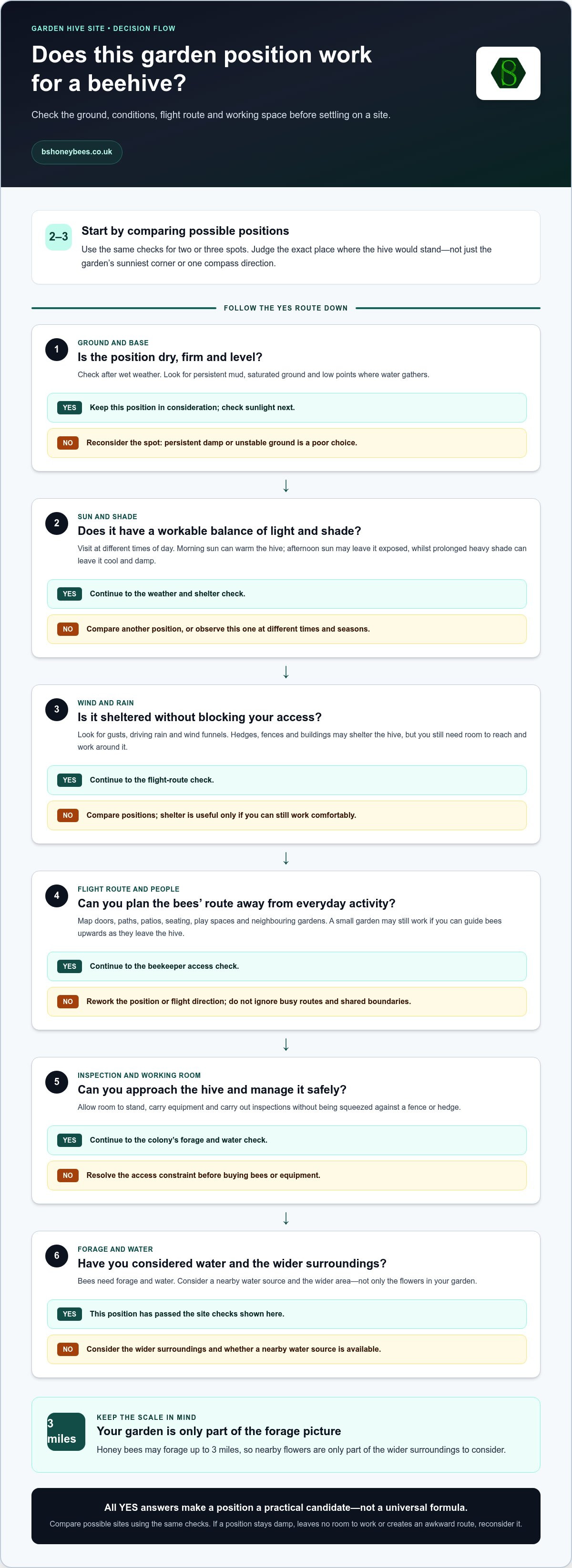
How to assess your garden for a beehive: a practical site checklist
Use the same checks for every possible position. A simple plan and a few observations help you compare two or three spots fairly, instead of favouring the one that looks convenient at first glance. The best location for a beehive in garden is the candidate that meets practical needs consistently, not the one that scores well on a single feature.
Map how the garden is used, observe its conditions, inspect the ground, then test your access before choosing a hive position. Following that order helps uncover safety or access problems before you decide on details such as the hive format.
What to observe before settling on a position
- Map garden use. Mark doors, paths, seating, play areas, boundaries and shared access. Add nearby water sources and note where people, pets or visitors regularly pass. Consider whether planned changes, such as a new seating area or play equipment, could affect the space later.
- Observe conditions. Visit each candidate position at different times of day. Note when sunlight and shade fall, where wind reaches the site and whether the area is sheltered from rain. Check after rainfall too, as a dry spell can hide poor drainage.
- Inspect the ground. Look for puddles, soft soil, uneven surfaces or ground that shifts underfoot. Picture the hive on a firm, level stand and make sure the surrounding area will remain usable for routine work.
- Test your route. Walk from the garden entrance to the proposed hive position as if carrying equipment. Check that you can reach it without crossing a crowded area, squeezing past obstacles or blocking a household route.
How to compare possible hive positions
Use a short scorecard for each spot. Mark each item pass, reconsider or reject, and add a brief note explaining your decision. A position may need adjustment if a small change could improve access or reduce exposure. Reject it if routine movement would cross directly in front of the entrance, the ground remains unsuitable or you can’t work at the hive safely.
- Bee needs: Is there a reasonable setting for forage and water nearby?
- Ground: Can you establish a firm, stable base?
- Flight and people: Can you avoid directing regular activity across the entrance or likely flight line?
- Access: Can you reach and work at the hive without disrupting everyday routines?
Safety concerns outweigh convenience. If every candidate has a significant drawback, pause and reconsider whether the garden layout can accommodate a hive. Once a position passes the site checks, match the equipment to the available space. If you’re considering a British National setup, the British National beehive guide explains this hive format. You can also explore British National hives and frames when you’re ready to plan your equipment.
Once you have chosen a garden site, prepare the hive and colony
Choosing a position is only the first decision. Move ahead when the site allows safe access and practical hive management, not simply because there’s a convenient patch of ground. Revisit your assessment with the equipment in mind: the hive, stand and space needed to work around them must all fit without blocking a route or creating a new conflict.
The best location for a beehive in garden use is one you can manage consistently. If placing the hive or carrying out routine work would be awkward, adjust the plan before bringing a colony home. A site that works on paper should be workable in practice too.
What equipment should be ready before bees arrive?
Prepare the hive and a suitable stand before the colony arrives, and keep the access route clear. Account for the space the hive occupies as well as the room you’ll need to approach and work around it. Choose a hive format with the garden layout in mind: equipment that fits the available area and working space is more practical to manage.
BS Honey Bees Ltd supplies British National hives and frames. If you’re considering that format, the British National beehive guide can help you understand the system before deciding how it fits your site. Keep the sequence straightforward: confirm the position, prepare the stand and hive, then arrange the colony.
- Position: settle on a site that supports safe access and manageable hive work.
- Stand: have a stable base ready in the chosen place.
- Working area: keep enough clear space to approach and handle the hive.
How do you move from a suitable site to a stocked hive?
Assess the garden before choosing or ordering a colony. This prevents you committing to bees before resolving problems with access, flight paths or available space. Once the site and equipment plan are ready, consider which colony option suits your next step. BS Honey Bees Ltd supplies nucleus colonies, including 5 and 6 frame nucs.
If you’re new to choosing a nucleus colony, the honey bee nucs buyer’s guide offers a useful next point of reference. Read it alongside your site notes so your colony choice follows a realistic garden plan rather than leading it.
Take the decision one step at a time: confirm the site, prepare a suitable hive and stand, then choose a colony. Explore beekeeping equipment and bees when you’re ready to plan your next step.
Turn your site decision into a confident next step
Before committing, make sure your chosen position still works with the way your household uses the garden. A hive is a long-term responsibility, so think about whether access, boundaries or garden plans could change. The best location for a beehive in garden is not just a good spot today; it should remain practical to manage as routines evolve.
Once you’re confident the site is workable, choose equipment that suits the space and your plans for keeping bees. BS Honey Bees Ltd supplies British National hives and frames, along with 5 and 6 frame nucleus colonies. A clear site plan gives you a more useful basis for deciding what to prepare next.
Take it step by step, and don’t rush from choosing a position to bringing a colony home. Explore beekeeping equipment and bees when you’re ready to plan your setup. A thoughtful start can help you create a practical place for bees in your garden.
Frequently Asked Questions
Is a sunny or shaded spot better for a beehive in a garden?
A position with morning sun and some shelter is often a practical starting point, but full sun isn’t automatically best. In a UK garden, a neighbouring building or deciduous tree can change light levels between summer and winter. Observe the candidate area at different times and consider seasonal shade. If the sunniest spot is also exposed to gusts, weigh that trade-off rather than choosing on light alone.
Can you keep a beehive in a small garden?
Yes, a small garden can work if the layout gives you room to manage the hive and its entrance doesn’t conflict with regular activity. In a terraced garden, for example, consider how close the hive would be to a shared boundary, back door or narrow passage. The best location for a beehive in garden settings depends on how the space functions, not its total area. If no position feels workable, wait before buying bees.
How far should a beehive be from a neighbour’s garden?
There isn’t a single distance that guarantees a hive won’t affect a neighbour. Check whether your landlord, allotment provider or local council has requirements, then assess how bees may travel beyond your boundary. A hive set further back could still direct activity towards a neighbour’s seating area, while a carefully positioned one may avoid a busy route. Discussing your plans early can help identify concerns before the colony arrives.
Should a beehive entrance face south or south-east?
No compass direction is right for every garden. South or south-east may suit some sites, but a wall, fence or nearby path can make another direction more practical. Prioritise an entrance that doesn’t send bees directly towards a doorway or regular seating area. Before settling on an orientation, stand where the hive would go and trace the route from its entrance towards open space and nearby boundaries.
Can a beehive sit directly on the ground?
It’s better to place a hive on a firm, level stand than directly on soil. Bare ground can become muddy or uneven after rain, making the hive less stable and harder to reach for inspections. A stand also helps keep the base clear of ground-level damp. Check the position after wet weather and make sure the stand won’t rock or sink as the ground softens.
What happens if a beehive is placed in a damp or windy spot?
Persistent damp can leave the ground around the hive muddy and make the base harder to keep stable. Strong, exposed winds can disturb bees leaving or returning and may affect the hive’s security. Look for standing water, wind funnelled between buildings or an exposed corner that catches gusts. If you can’t address the problem without blocking working access, choose another position.
Do you need permission to keep bees in a UK garden?
You don’t need a general beekeeping licence in the UK, but permission may be required from a landlord, allotment provider or local council. Check the terms that apply to your property before setting up, as garden access and local conditions vary. If you rent or share a managed outdoor space, review the relevant agreement first and raise the plan with the person or organisation responsible.