
The best bee smoker fuel isn’t one particular material. It’s a fuel you can light reliably and manage to produce cool, steady smoke without unwanted chemicals or harsh fumes. If you’ve struggled to keep a smoker alight, or wondered whether a handy material is suitable to burn near your bees, fuel choice and lighting technique both matter.
This practical guide compares common options, including pine needles, untreated hessian, cotton and wood, so you can choose according to availability, ease of use and the smoke you want. You’ll also learn how to build a smouldering burn, keep smoke controlled during an inspection and deal with leftover fuel safely. We’ll cover materials to avoid and simple checks to help you finish the inspection with confidence.
Key Takeaways
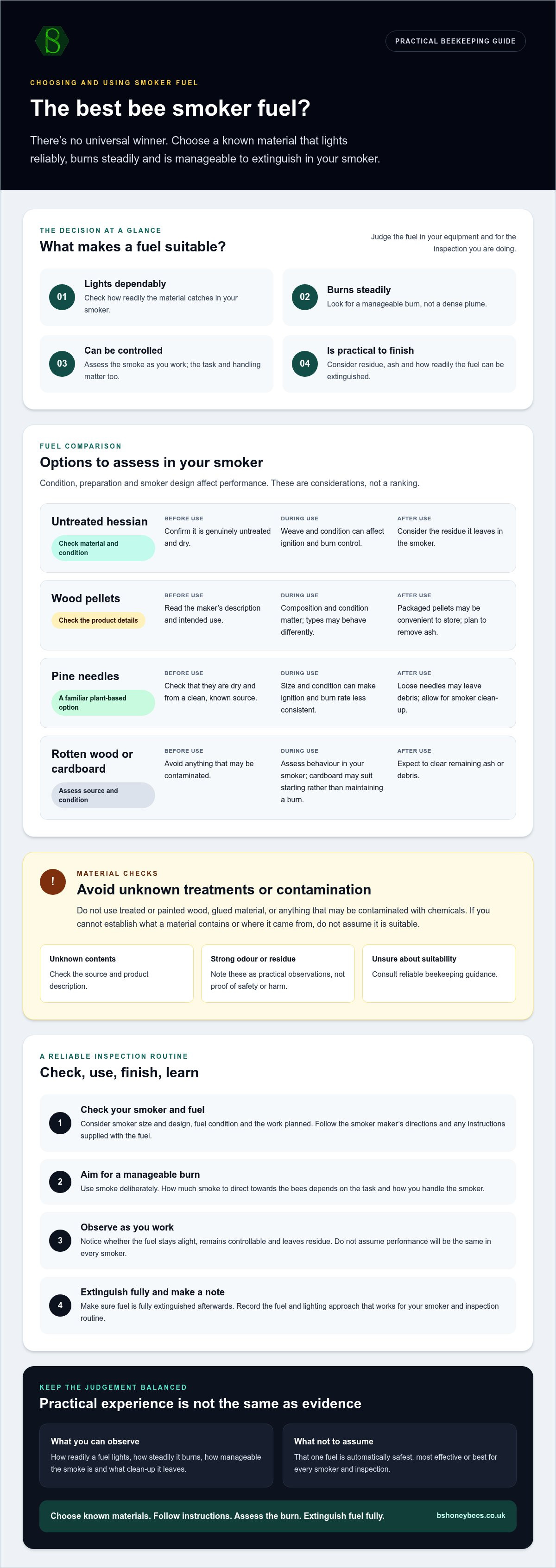
- Choose the best bee smoker fuel by considering how readily it lights, how steadily it burns and how easily you can extinguish it.
- Compare untreated hessian, wood pellets and pine needles, checking each material’s condition and suitability for your smoker.
- Don’t assume one fuel is automatically safest or most effective. Separate practical experience from evidence about bee responses.
- Follow your smoker maker’s instructions, assess the smoke as you work and make sure the fuel is fully extinguished afterwards.
- Keep a simple record of the fuel and lighting approach that works for your smoker and inspection routine.
Best bee smoker fuel: what makes a fuel suitable?
Bee smoker fuel is the material burned inside a smoker to produce smoke during hive work. Choosing a fuel is one decision; deciding how much smoke to direct towards the bees is another. The latter depends on the task and how you handle the smoker.
The best bee smoker fuel isn’t a universal winner. A suitable option should light dependably, keep burning at a manageable rate and be practical to extinguish when you finish. Your smoker, available fuel and the inspection itself all affect what works. Familiar materials include hessian, pine needles, corrugated cardboard and rotten wood. The Bee smoker fuels overview provides a broader list to consider.
What should good bee smoker fuel do?
Look for predictable ignition and a burn you can control through ordinary use. A dense plume isn’t the goal. Manageable smoke lets you use the smoker deliberately instead of trying to compensate for an unruly burn. Check how a material behaves in your equipment rather than assuming it will perform the same way in every smoker.
Consider practical details too: does the fuel leave troublesome residue or a strong odour, and is the remaining ash straightforward to handle? These are useful observations, not proof that a material is safe or unsafe. Avoid fuel with unknown treatments or contamination. If you’re unsure what it contains, consult reliable beekeeping guidance.
Does the smoker or inspection change the answer?
Yes. Consider the smoker’s size and design, which suitable fuels are readily available, and how long you expect to be working. A brief inspection and longer hive work place different demands on a burn, but neither calls for a universal fuel quantity. Follow the smoker maker’s directions and any instructions supplied with the fuel.
Keep the decision practical. If a material is awkward to ignite, difficult to regulate or inconvenient to extinguish in your smoker, it may not suit your routine, even if other beekeepers commonly use it. Note how it performs during the inspection, including whether it stays alight and what residue remains. This gives you a sounder basis for comparing options than relying on a claim that one fuel is always best.
Common bee smoker fuels compared: strengths and trade-offs
Compare fuels by how they behave in your smoker, not by reputation alone. This table is a starting point: condition, preparation and smoker design can all affect lighting, burn control and clean-up. Treat each material as an option to assess, and check its source before use.
| Fuel | Lighting and burn control | Availability and clean-up |
|---|---|---|
| Untreated hessian | Check that it is genuinely untreated and dry. Its weave and condition can affect how readily it catches and how easily you manage the burn. | It may be available as a purpose-sold material. Confirm its composition and consider how much residue it leaves in your smoker. |
| Wood pellets | Check the maker’s description and intended use. Pellet composition and condition matter, so don’t assume all types behave alike. | Packaged pellets may be convenient to store. Check the product instructions and plan to remove ash after use. |
| Pine needles | Dry needles are a familiar plant-based option, but their size and condition can make ignition and burn rate less consistent. | Availability depends on what can be gathered responsibly. Loose needles may leave debris, so factor in smoker clean-up. |
| Rotten wood or corrugated cardboard | These are among the other materials listed in general bee smoker references. Assess them carefully in your smoker. Cardboard may be more useful for starting than maintaining a burn. | Source and condition vary. Avoid material that may be contaminated, and expect to clear remaining ash or debris. |
Natural and plant materials: what to consider
Dry pine needles and similar plant material can be readily available, but moisture makes ignition less dependable. Pieces that vary in size and condition can also burn differently. Gather only from a source you know is clean and free from contamination. Don’t use material if you can’t establish where it came from or what it may have been exposed to. Availability is useful, but it doesn’t replace checking suitability.
Processed fuels and hessian: check the source
For wood pellets and hessian, read the product description and confirm the material is intended for smoker use. Avoid treated or painted wood, and anything glued or potentially contaminated with chemicals. A fuel another beekeeper has used successfully isn’t automatically right for your equipment. Test only known materials, follow supplied instructions and assess how controllable the burn is and how much clean-up it requires.
There’s no single best bee smoker fuel for every inspection. Keep notes on what lights reliably and remains manageable in your smoker. For other practical hive essentials, explore British National hives and frames.
Is one bee smoker fuel better than another for controlled smoke?
No single material is automatically the safest or most effective choice. A fuel that suits one beekeeper may be awkward in another smoker, or less practical for a different inspection. The useful test is whether you can manage the burn and use the smoke with restraint, not whether the fuel produces the biggest plume.
Keep three practical factors in view:
- Convenience: Is the fuel easy to source, store and prepare for use?
- Consistency: Does it behave predictably in your smoker, or does its condition vary from batch to batch?
- Clean-up: How much ash or other residue does it leave, and how straightforward is it to clear once cool?
These are comparison points, not a ranking. Packaged wood pellets, for example, may be convenient to store, while gathered pine needles can vary in dryness and condition. Hessian also depends on knowing what it is made from. None of these observations, on its own, proves how a fuel affects bees. Treat claims about bee behaviour or smoke effects as questions of evidence, and look for reliable beekeeping guidance rather than repeating a preference as fact.
How do you judge whether smoke is controlled?
Observe how the smoker operates as you work. Does the fuel keep burning steadily, and can you direct smoke deliberately without struggling to manage the output? Adjust cautiously and follow the smoker maker’s instructions. Don’t treat a particular plume, colour or amount as a universal target. No fixed smoke quantity suits every setup or inspection.
Bee behaviour can be influenced by more than one factor, so don’t use a brief response as proof that a fuel is superior. If a claim links a specific material with a particular effect on bees, check whether a dependable source supports it before relying on it.
Why do beekeepers prefer different fuels?
Preferences often reflect what’s available, the smoker’s design, the beekeeper’s experience and the work planned. Someone familiar with a fuel may find it easy to handle, while another person may prefer a material that stores or clears more conveniently. A successful method doesn’t automatically transfer to a different smoker or fuel supply.
Try a suitable, known fuel before relying on it for a planned inspection. Note how readily it starts, whether you can control the burn and what clean-up it requires. That practical record will help you decide which option is the best bee smoker fuel for your routine, without mistaking personal preference for a universal recommendation.
How to prepare, light and use bee smoker fuel responsibly
A steady routine matters as much as your choice of fuel. Before starting, check the smoker maker’s instructions and any directions supplied with the fuel. Follow established beekeeping safety guidance, particularly when working around a live hive and combustible surroundings. Keep the smoker under direct control throughout the inspection.
Before lighting: inspect the fuel and working area
Use fuel you can identify, in a suitable condition for burning, and free from known treatments or contamination. Don’t use painted, glued or chemically treated material, or anything with an uncertain source. Check the smoker for damage and make sure you understand how its bellows and lid operate before lighting.
Choose a stable working position clear of dry vegetation and other combustible material. Wear appropriate protective clothing, and keep the smoker where you can monitor it rather than setting it down unattended. If you’re checking the fit of your protective clothing, consult this bee suit sizing guide.
Light and use the smoker with care
Prepare the smoker as its maker directs, then light the fuel cautiously using a suitable method. Build and manage the burn according to the instructions rather than adding unfamiliar materials to keep it alight. Once it is working, assess the output and use smoke sparingly and deliberately during hive work. Avoid directing smoke towards people, equipment or combustible surroundings, and pause if the smoker behaves unpredictably.
- Check: Confirm the fuel and smoker are suitable and ready.
- Prepare: Set up on stable ground, clear of combustible material.
- Light: Follow the maker’s directions and keep control of the smoker.
- Assess: Monitor the output and adjust your use cautiously.
- Finish: Extinguish the fuel fully before leaving the apiary or storing the smoker.
After inspection: extinguish and store safely
Don’t assume the smoker is out because it has stopped producing visible smoke. Make sure the fuel is fully extinguished before you leave or put the equipment away. Follow the manufacturer’s guidance for cooling, ash handling and storage, and don’t handle hot parts or residue as though they have cooled. If disposal instructions aren’t supplied, check appropriate UK guidance rather than guessing.
Choosing the best bee smoker fuel is only one part of responsible use. A known material, careful handling and complete extinguishing help make the routine more controlled. For protective clothing options, explore beekeeping equipment.
Choose your bee smoker fuel and build a reliable inspection routine
A good choice is one you can identify, prepare and manage with confidence. The best bee smoker fuel for your setup may differ from another beekeeper’s. Local conditions, available materials and smoker design all play a part. Use a consistent decision process rather than improvising with unknown materials on inspection day.
A quick decision checklist before you choose
Before using a fuel, work through these checks:
- Known material: Can you identify it and confirm it’s untreated and uncontaminated? If you’re unsure of its source, don’t burn it in the smoker.
- Suitable condition: Is it in a condition the maker recommends, and can you store it so it remains suitable for use?
- Controllable use: Can you light and manage it by following the smoker’s instructions, without relying on improvised methods?
- Safe finish: Do you know how to extinguish it completely and follow the manufacturer’s guidance for cooling, ash handling and storage?
- Reliable supply: Can you obtain it consistently without depending on unknown waste materials?
If any answer is no, pause and choose a known alternative. The checklist is useful for new beekeepers too: it gives you a clear way to assess a fuel without assuming that a familiar material is automatically suitable.
Make fuel choice part of a repeatable hive routine
Try a suitable option in your own smoker before relying on it for an important inspection. Make a brief note of the fuel type and condition, whether it lit as expected, how easy it was to control and what clean-up it required. Record the inspection context as well. Damp weather, storage and the work planned can all affect how practical a material is, so conditions at your apiary may produce different results from those another beekeeper records.
Use your notes to refine your approach over time. Keep the smoker maker’s instructions to hand, and repeat the checks before each use rather than assuming the same fuel will always behave identically. A routine makes it easier to spot when the material or equipment needs attention and helps you avoid last-minute substitutions.
Fuel selection is separate from choosing hive equipment. If you’re reviewing your setup, explore this guide to British National hive equipment. It’s a resource on hives, not smoker fuel.
Build a safer, more consistent inspection routine
The best bee smoker fuel is a known material that works predictably in your smoker, not a universal favourite. Compare options by how readily you can light and manage them, and check their source and condition before use. During hive work, focus on restrained, controllable use rather than producing as much smoke as possible.
Make the routine repeatable: follow the smoker maker’s instructions, note how your chosen fuel performs and ensure it’s fully extinguished before you leave or store the smoker. These checks help new and experienced beekeepers make informed choices as conditions and inspection needs change.
For hive equipment, BS Honey Bees Ltd supplies British National hives and frames. Explore the range separately from your fuel choice. Explore BS Honey Bees Ltd’s beekeeping equipment and prepare for your next inspection.
Frequently Asked Questions
What is the best fuel for a bee smoker?
There’s no single best bee smoker fuel for every beekeeper or smoker. Choose a known, suitable material that lights reliably, stays manageable during your work and can be fully extinguished afterwards. Untreated hessian, wood pellets intended for smoker use and dry pine needles are options to assess, not guaranteed recommendations. Check the material’s source and condition, and follow the smoker maker’s instructions.
Can I use pine needles in a bee smoker?
Yes, dry pine needles are a familiar option, provided you can confirm they’re clean and haven’t been exposed to contaminants. Damp needles may be harder to light, and variable material can behave inconsistently. Gather only from a source you trust, and assess how the needles perform in your smoker before an inspection. Follow the equipment maker’s directions, and make sure the fuel is fully extinguished afterwards.
Is untreated hessian suitable as bee smoker fuel?
Untreated hessian may be suitable, but confirm what the material is made from and check that it’s genuinely free of treatments or contamination. Don’t assume all hessian is the same, or that another beekeeper’s experience guarantees it will suit your smoker. Follow any fuel product instructions, observe how the material burns during use and check the smoker afterwards for residue to clear once cool.
Can I burn wood pellets in a bee smoker?
Wood pellets can be considered if the maker identifies their composition and intended use as suitable for a bee smoker. Don’t assume every pellet product is appropriate, particularly if its ingredients or treatments are unclear. Follow the product and smoker instructions, and assess whether the pellets are manageable in your equipment. Avoid pellets that are painted, treated or contaminated, and check for ash after the smoker has cooled.
How much fuel should I put in a bee smoker?
There isn’t a universal amount. It depends on the smoker and the planned hive work. Start by following the smoker maker’s instructions, and avoid packing or loading it in a way that makes the burn difficult to control. A short inspection and longer work may call for different preparation, but don’t rely on an unverified quantity. Check the smoker’s behaviour as you work and keep it under control.
What should I never burn in a bee smoker?
Don’t burn petroleum products, plastics, rubber, synthetic materials, or wood that’s treated or painted. Avoid glued or chemically contaminated materials, and never use anything of uncertain composition. Some natural plants can also be hazardous when burned, so don’t use unidentified or potentially toxic vegetation. Paper and cardboard are generally suggested only as starters, not as the main fuel. If you can’t verify a material, leave it out.
How do I extinguish a bee smoker safely?
Follow the smoker maker’s extinguishing instructions and ensure the fuel is completely out before leaving the apiary or storing the equipment. Don’t assume it’s extinguished just because visible smoke has stopped. Keep the smoker under control while it cools, and follow the manufacturer’s guidance for handling ash and storing the smoker. Don’t handle hot parts or residue as though they’ve cooled, and check appropriate guidance if disposal instructions aren’t supplied.