

Choosing the wrong nucleus configuration for your apiary is more than a minor administrative error. It's a decision that often dictates whether your colony thrives or swarms before the first honey flow even begins. You likely want a colony that hits the ground running, yet the debate over a 5 frame vs 6 frame nuc often leaves beekeepers feeling stuck between industry minimums and biological requirements. It's a common anxiety, especially when you're trying to balance the risk of immediate swarming against the need for rapid spring expansion. We know you're looking for high-quality queen genetics and a colony that can withstand the volatile British weather without constant intervention.
This guide will help you discover the critical differences between these two setups to ensure your bees have the best possible start in the 2026 season. We'll examine why that extra frame acts as a 20% biological safety net, providing essential space for brood and food stores. You'll learn how to navigate the confusion between National and Langstroth sizing whilst discovering why a slightly larger nucleus can significantly reduce the risk of starvation during a cold snap. We'll provide a clear path to choosing the configuration that helps your apiary reach its full potential and expands quickly into a full brood box.
Key Takeaways
- Identify the core components of a healthy nucleus colony and why frame count is a primary factor in colony stability.
- Assess the portability and standardisation of the 5-frame configuration for beekeepers with physical lifting restrictions.
- Apply the "20% Rule" when deciding between a 5 frame vs 6 frame nuc to secure additional food stores and brood space.
- Compare the thermal efficiency of polystyrene versus timber boxes to maximise colony expansion in the British climate.
- Ensure a productive 2026 season by sourcing expertly bred F1 Buckfast or Carniolan queens that meet rigorous NBU standards.
What Is a Nucleus Colony and Why Does Frame Count Matter?
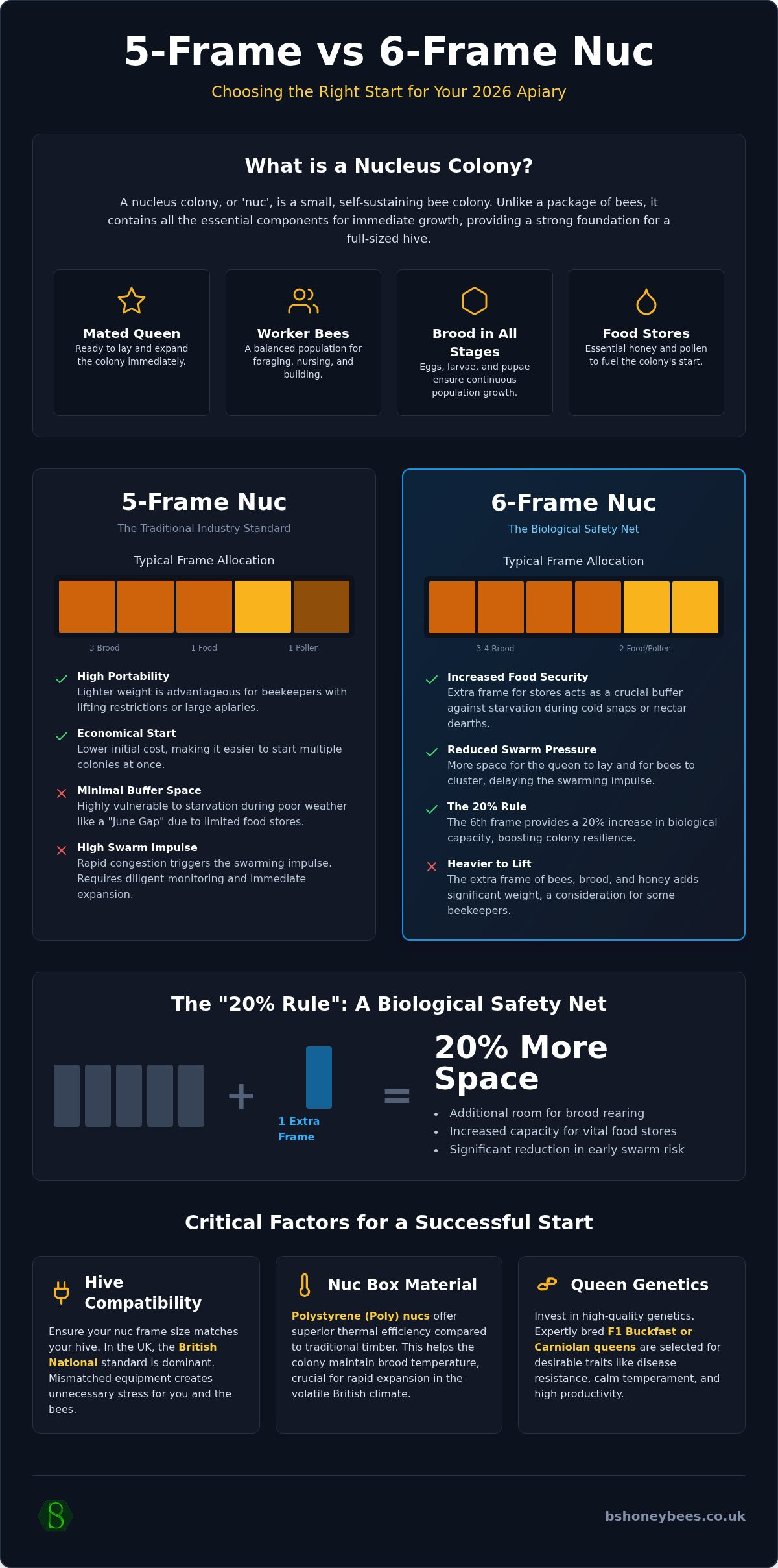
A nucleus colony is the starter engine of a full-sized apiary. It represents a functional, self-sustaining unit condensed into a small, transportable box. Unlike a package of bees, which consists only of a queen and a bulk weight of workers, a nuc contains a balanced population including a mated queen, adult bees, and brood in all stages. This biological diversity ensures the colony can continue expanding from the moment you install it into your hive.
When you're evaluating a 5 frame vs 6 frame nuc, you're essentially choosing the level of initial momentum for your beekeeping season. Frame count determines the biological capacity of the colony upon arrival. It dictates how many workers are available to forage, how many larvae the queen can produce, and how much honey the colony can store to protect itself against sudden weather changes. Choosing the right size is a strategic decision that affects your management timeline for the rest of the year.
The NBU Standards for Nucleus Colonies
The National Bee Unit (NBU) provides the benchmarks for colony health and quality in the UK. A standard nucleus must meet specific criteria to ensure it's fit for sale and capable of survival. This typically involves a minimum of three frames of brood in various stages, with a significant portion being sealed brood ready to emerge. High-quality suppliers also ensure there are sufficient food stores, usually at least one full frame of honey and pollen.
We prioritise providing bees on drawn comb rather than foundation. For a new beekeeper, drawn comb is a precious resource. It allows the queen to continue laying immediately without delay. It also saves the colony from the massive energy expenditure required to produce wax, which is vital during the unpredictable British spring.
British National vs Langstroth Nucs
Compatibility is the most critical logistical factor when purchasing bees. The British National frame is the dominant standard across the UK, favoured for its manageable size and suitability for our climate. You must match your nuc frame size to your existing equipment. A mismatch leads to complex management issues or the need for messy adaptations that stress the colony. If you're still deciding on your equipment, read The British National Beehive: The Definitive 2026 Guide to understand why this standard is the preferred choice for British apiaries. Choosing a nuc on National frames ensures a seamless transition into your permanent hive.
The 5-Frame Nuc: The Traditional Industry Standard
The 5-frame nuc is the classic choice for UK beekeepers. It's the industry standard for a reason. These units are incredibly portable. If you have physical lifting restrictions or need to move colonies across a large apiary, the lighter weight is a significant advantage. They're also an economical entry point. When you're looking at the 5 frame vs 6 frame nuc debate, the 5-frame option often appeals to those starting multiple colonies simultaneously because it keeps initial costs lower.
These colonies are designed for speed. In a typical British spring, a healthy 5-frame nuc will expand into a full brood box rapidly. The tighter space forces the bees to concentrate their heat. This can accelerate brood rearing during the early season, provided you're ready to provide more room the moment they need it.
When to Choose a 5-Frame Colony
Carniolan bees are particularly well-suited to this setup. Their explosive spring build-up and generally calm temperament make them easier to manage in a smaller volume. If you're an organised beekeeper who enjoys weekly inspections, you can stay ahead of the colony's growth. You'll need to be diligent. Managing space is vital to prevent early swarming. Once the bees cover all five frames, you must transfer them immediately. You can find high-quality Carniolan Queens and nucs to start your season with confidence.
Limitations of the 5-Frame Setup
The primary drawback is the lack of a biological "buffer." British weather is notoriously unpredictable. A sudden cold snap in May or the infamous "June Gap" can leave a 5-frame colony vulnerable. With only one frame dedicated to food stores, there's very little margin for error. If the foragers can't get out for three or four days, starvation becomes a real risk. You must monitor their weight closely whilst they're in this smaller box.
Space is the other major constraint. In a 5-frame box, you'll often see "wall-to-wall" bee coverage within weeks. This congestion is a primary trigger for the swarming impulse. Additionally, a prolific queen might hit her laying ceiling sooner than expected. If she runs out of empty cells, the colony's momentum stalls just when you need it most. You're effectively trading a safety net for portability and lower initial cost.
The 6-Frame Nuc: Why the Extra Frame Matters
The 6-frame nuc represents a significant biological upgrade from the standard 5-frame model. Whilst it might seem like a minor difference, applying the "20% Rule" reveals why this configuration is often superior for the British climate. That extra frame provides 20% more space for brood, nurse bees, and, crucially, food stores. This additional volume transforms the colony's thermodynamics. A larger cluster of bees maintains the core temperature of the brood nest more efficiently, even during the erratic temperature swings of a typical UK spring.
Starvation is a major fear for new beekeepers. A 6-frame nuc mitigates this risk by providing dedicated space for pollen and honey "chimneys" on the outer frames. This increased capacity ensures the colony has a buffer against the "June Gap" or prolonged periods of rain that keep foragers grounded. Essentially, 6-frame nucs act as a stronger engine for honey production, allowing the colony to reach peak foraging strength earlier in the season.
Thermoregulation and Disease Resilience
Colony size directly impacts health. A larger, more robust cluster can regulate hive temperature with less energy expenditure per bee. This thermal stability is a primary defence against temperature-sensitive issues like Chalkbrood. Smaller colonies often struggle to cover all the brood during a cold night, leading to chilled brood and opportunistic infections. A strong population is a healthy population.
A more substantial population also manages Varroa pressure more effectively. More nurse bees mean better care for developing larvae and a more thorough hygienic behaviour throughout the hive. This is why 6-frame configurations are the preferred choice for overwintered Buckfast nucs. The extra frame provides the necessary winter stores to ensure the colony emerges in spring with its momentum intact.
Reduced Swarming Risk for Beginners
Beginners often struggle with the timing of hive transfers. In the 5 frame vs 6 frame nuc comparison, the 6-frame option offers a vital "buffer period." Bees have a natural impulse to swarm once they "hit the sides" of their enclosure. A 5-frame box fills up incredibly fast, often leaving a novice beekeeper with only a very short window to move the bees before queen cells appear.
The 6-frame setup buys you more time. It provides the extra volume required by prolific queens, such as F1 Buckfasts, to reach their full laying potential without feeling congested. This extra space acts as your primary anti-swarming tool. It allows the colony to expand naturally whilst you prepare your full-sized National hive for the final transition. It reduces the pressure on you and the bees.
Comparing Management Styles: Poly vs Wood Nucs
The choice between a 5 frame vs 6 frame nuc often hinges on the material of the box. Traditional cedar nucs offer a classic aesthetic and natural breathability, but they lack the thermal efficiency required for modern intensive beekeeping. High-density polystyrene (poly) has surged in popularity because it provides superior insulation. This material maintains a stable internal environment, significantly reducing the energy bees spend on heating the brood nest during the erratic British spring.
When weighing up the 5 frame vs 6 frame nuc options, consider that a 6-frame poly nuc is widely considered the gold standard for overwintering success in the UK. Combining the extra food capacity of a sixth frame with the thermal properties of poly gives the colony a massive advantage. These boxes are lightweight for transport but remarkably durable. Most poly designs include space for "ekes," which allow you to provide emergency fondant without breaking the propolis seal or losing vital heat.
The 2-in-1 Poly Nuc Advantage
The 2-in-1 poly nuc system offers unparalleled versatility for the ambitious beekeeper. By using a central divider, you can convert a single 6-frame unit into two independent 3-frame mating nucs. This is an essential tool for those who want to split colonies or rear their own queens. Professional breeders favour this setup to maintain mated queen bees in peak condition before sale. It allows for efficient resource management whilst providing the concentrated warmth a small nucleus needs to thrive.
Transferring to a Full Hive
Moving your bees into a full-sized British National hive is a precision task that requires a calm hand. Prepare your hive with the appropriate number of empty frames beforehand. When transferring a 5-frame nuc into an 11-frame brood box, you'll have a larger gap to fill than with a 6-frame nuc. Use a "dummy frame" to close this space and prevent the bees from building wild brace comb in the empty areas.
Identify the queen before moving her frame to ensure she isn't caught on the hive walls. Maintain the original order of the frames to keep the brood nest intact. If you require the highest standard of equipment for your new colony, browse our British National Hives & Frames to provide your bees with the best possible home.
Sourcing Your Nucleus Colony from BS Honey Bees Ltd
Securing a high-quality colony is the most significant investment you'll make this season. At BS Honey Bees Ltd, we specialise in providing F1 Buckfast and Carniolan colonies tailored specifically for the British climate. Whether you've decided on a 5 frame vs 6 frame nuc, the quality of the bees remains our absolute priority. Every nucleus we supply undergoes rigorous health checks and adheres strictly to National Bee Unit (NBU) standards. This ensures you receive a productive, disease-free colony that's ready to expand the moment it arrives at your apiary.
Logistics shouldn't be a source of anxiety. BS Honey Bees Ltd provides reliable live bee delivery across the UK, using specialist couriers who understand the delicate nature of transporting livestock. We don't just send you a box of bees and leave you to it. Our team offers comprehensive support for beginners, helping you with everything from hive setup to choosing the correct suit size. We're your partners in beekeeping success, providing the expertise you need to manage your new colony with confidence.
Why Our Queens Make the Difference
The queen is the heart of the colony. We breed for temperament above all else. You want bees that are calm and easy to handle, especially if your apiary is in a garden or near neighbours. Our F1 genetics ensure the highest standards of honey production and health resilience. If you're still undecided on which strain suits your management style, read our guide on Buckfast vs Carniolan Bees to see which breed is best for your specific environment. High-quality genetics are the foundation of a thriving, low-stress apiary.
Ordering Your 2026 Nuc
Demand for high-quality bees is always high. We recommend pre-ordering your 2026 nuc early to secure your preferred frame count and delivery window. On delivery day, you'll receive your bees in secure, ventilated packaging with clear initial care instructions. To ensure you're fully prepared, BS Honey Bees Ltd also supplies BBWear bee suits and British National Hives. Having your equipment ready before the bees arrive is the best way to ensure a smooth transition. Don't wait for the spring rush; organise your apiary today and give your bees the best possible start in their new home.
Secure Your Beekeeping Success for 2026
Deciding between a 5 frame vs 6 frame nuc is a strategic choice that defines your colony's resilience. A 5-frame unit offers a lightweight, traditional entry point, whilst the 6-frame configuration provides an essential 20% biological safety net against the unpredictable British spring. By choosing the extra frame, you secure additional food stores and brood space, which significantly reduces the risk of starvation and immediate swarming. Whether you prefer the classic timber setup or the thermal efficiency of a 2-in-1 poly nuc, the focus should always be on robust health and superior genetics.
As specialist UK breeders of F1 Buckfast and Carniolan bees, we're committed to your success. We provide nationwide safe delivery of live bees and supply premium BBWear protective gear to ensure you're fully prepared for the season ahead. Don't leave your apiary's momentum to chance. Order your 5 or 6 frame Nucleus Colony for the 2026 season today to guarantee your place in our delivery schedule. We look forward to helping your new colony thrive and expand into a productive, healthy hive.
Frequently Asked Questions
What is the main difference between a 5 frame and 6 frame nuc?
The primary difference lies in the available volume for food stores and brood expansion. A 6-frame configuration provides roughly 20% more internal space than the standard 5-frame model. This extra capacity allows the colony to store more pollen and honey, which serves as a critical buffer during poor weather. Whilst both contain a mated queen and brood in all stages, the 6-frame option offers greater thermal stability.
Will a 6 frame nuc fit into a standard British National hive?
Yes, a 6-frame nuc on British National frames will fit perfectly into a standard National hive. Since the frames are identical in size, you simply move them across in their current order. In an 11-frame brood box, you will have five empty slots remaining. You should fill these with foundation or drawn comb and use a dummy frame to keep the cluster tight and prevent the bees from building wild comb.
Do I need to buy a specific box for a 6 frame nuc?
You don't need a specific box if you are transferring the bees immediately into a full hive. However, if you plan to keep the colony in the nucleus box for any length of time, you must ensure the box is designed for six frames. Many modern poly nucs are built specifically to hold six frames to maximise overwintering success. Always verify that your nucleus box matches the frame standard of your main apiary equipment.
Is a 6 frame nuc better for beginners than a 5 frame one?
A 6-frame nuc is generally better for beginners because it provides a larger biological safety net. The extra frame of food stores is invaluable during the unpredictable British spring when foragers might be grounded for several days. It also gives the novice beekeeper more time to observe the colony's growth before the hive becomes congested. When comparing a 5 frame vs 6 frame nuc, the larger option reduces the immediate pressure of swarm management.
How quickly will a 5 frame nuc expand into a full brood box?
A healthy 5-frame nuc with a prolific queen can expand into a full National brood box in as little as two to three weeks during a strong nectar flow. This rapid growth depends heavily on local forage availability and weather conditions. You must monitor the bees weekly. Once they cover the faces of all five frames, they require immediate transfer to a larger hive to prevent the swarming impulse from taking hold early in the season.
Can I overwinter a 5 frame nucleus colony in the UK?
It is possible to overwinter a 5-frame colony, but it is riskier than using a 6-frame setup. The smaller cluster has less thermal mass and fewer food stores to last until spring. If you must overwinter a smaller nucleus, using a high-density polystyrene box is essential for insulation. You will likely need to provide supplemental feeding with fondant through an eke to ensure the bees don't starve during a prolonged cold snap.
What should I look for when my nuc is delivered?
Upon delivery, check that the bees are active and that the queen is present. A quality nuc should have brood in all stages, including eggs, unsealed larvae, and sealed brood. Verify that there are sufficient food stores of honey and pollen. Look for a healthy, uniform brood pattern and ensure the bees match the temperament you ordered. Every colony from BS Honey Bees Ltd arrives meeting rigorous NBU health standards for your peace of mind.
Why do some breeders only offer 5 frame nucs?
Many breeders stick to the 5-frame model because it has been the traditional industry standard for decades. It is a lighter, more portable unit that fits standard wooden travel boxes, making it easier for nationwide shipping. However, as beekeeping practices evolve, many specialists are moving toward the 6-frame configuration to offer customers better colony stability. The choice in the 5 frame vs 6 frame nuc debate often comes down to balancing logistical ease with biological resilience.