
Searching for “cost of starting beekeeping uk 2026” is a sensible first step, but a single headline figure won’t show what your first season involves. The hive is only one part of the set-up. You’ll also need suitable protective clothing, tools and a colony, then a plan for care as the months pass.
Costs vary with the equipment you choose, the type of bees you plan to keep and what you already own. A complete set-up and a collection of separately purchased items can look very different, and the costs don’t stop when the bees arrive. Feeding when needed, monitoring the colony and preparing for winter all belong in a realistic plan.
This guide breaks the budget into one-off equipment, bees, recurring care and optional extras. It covers practical decisions such as choosing a British National hive, protective clothing and a 5- or 6-frame nucleus colony, then looks beyond the first purchase to the responsibilities that follow. Start with the essentials and build a budget for the first year, not just the price of a hive.
Key Takeaways
- Build your cost of starting beekeeping uk 2026 budget around the whole set-up, not just the hive or colony.
- Separate one-off purchases, recurring colony care and optional extras to see what your first-year plan needs to cover.
- Compare new, suitable used and staged set-ups by compatibility, condition and preparation, rather than assuming one approach is automatically cheaper.
- Use a simple budget worksheet to prioritise essentials and leave room for ongoing care and unexpected needs.
- Plan your hive, protective clothing and colony format before ordering, including how British National equipment and nucleus colonies fit your set-up.
Cost of starting beekeeping in the UK: what does the first budget need to cover?
The cost of starting beekeeping uk 2026 depends on the equipment you choose, the format of your colony and what you already own. Someone buying a complete set-up has different needs from a beekeeper who already has compatible equipment. In either case, a hive-only budget leaves out important parts of getting started.
Use this checklist to map the main expenses before deciding what to buy:
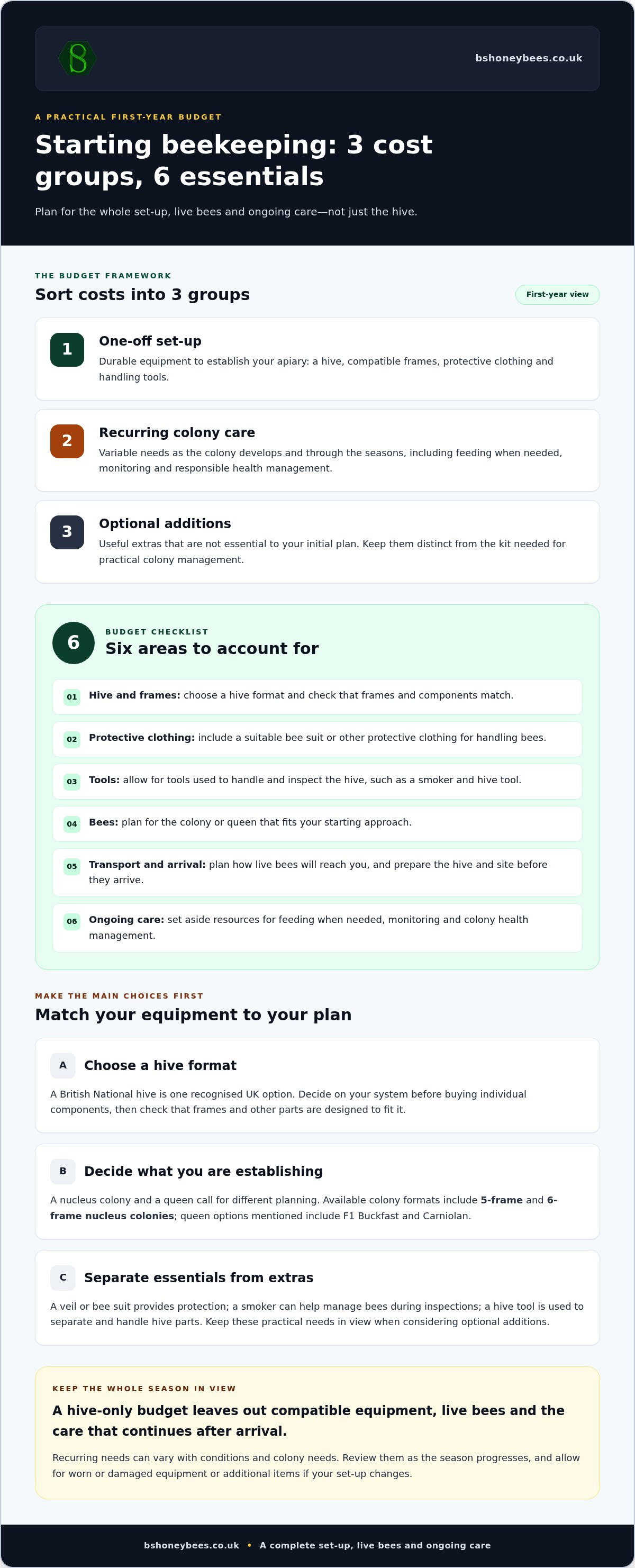
- Hive and frames: Choose a hive format and make sure its frames and other components match.
- Protective clothing: Include a suitable bee suit or other protective clothing for handling bees.
- Tools: Budget for the tools you’ll need to handle and inspect the hive.
- Bees: Allow for the colony or queen that fits your starting plan.
- Transport and arrival: Plan how the live bees will reach you, and prepare the hive and site before they arrive.
- Ongoing care: Set aside funds for feeding when needed, monitoring and responsible colony health management.
Beekeeping (or apiculture) means caring for a living colony, not simply owning a hive. Protective clothing and suitable tools are practical parts of the set-up. A hive without bees, compatible frames and the equipment to manage inspections isn’t a complete working arrangement.
A realistic first-year beekeeping budget covers the complete set-up, live bees and the ongoing care needed after they arrive.
Which expenses are part of the initial set-up?
Start by choosing a suitable hive, compatible frames, protective clothing and essential handling tools. The hive format determines which parts fit together, so decide on the system before buying individual components. British National hives and frames are one option. Read this guide to the British National beehive to understand the format. If you buy components separately, check that each one is designed for the hive you’ve chosen.
Why do bees and first-year care belong in the budget?
Decide whether your plan is based on a nucleus colony or a queen, then include transport and prepare the hive before the bees arrive. BS Honey Bees supplies 5- and 6-frame nucleus colonies, as well as F1 Buckfast and Carniolan queens. A UK guide to honey bee nucleus colonies can help you understand this colony format.
Keep ongoing care as a separate budget category. Feeding may be needed at certain points, while regular monitoring and responsible health management help you keep track of colony condition. These aren’t one-off purchases. Plan for them before ordering live bees so your budget accounts for the resources and care needed after the initial set-up.
Beekeeping start-up costs explained: equipment, bees and recurring care
Sort each item into three groups before comparing set-ups. One-off costs are purchases to establish your apiary, such as a hive and protective clothing. Recurring costs are supplies or care needs that may arise as the colony develops and through the seasons. Optional costs are useful additions that aren’t essential to your initial plan.
A ready-to-use set-up brings main components together, while buying items separately lets you choose each piece yourself. Neither route is automatically cheaper. For a complete set-up, check what’s included. For separate purchases, make sure the hive, frames and other components are compatible. The colony format also matters: a nucleus colony and a queen call for different planning. Decide what you’re establishing before making your list. This is central to a realistic cost of starting beekeeping uk 2026 assessment.
Which beekeeping equipment is essential for a beginner?
The hive provides a home for the colony, and frames give the bees a structure on which to build comb. A veil or bee suit provides protection during handling. A smoker can help manage bees during inspections, and a hive tool is used to separate and handle hive parts. The bee suit sizing guide can help you consider fit as part of your preparation.
The British National hive is a recognised UK format, but it isn’t the only possible choice. Match frames and components to your selected hive rather than assuming parts will fit across different formats. Keep essentials separate from optional additions so that extras don’t distract from the equipment needed for safe, practical colony management.
Which costs can continue after the first purchase?
Capital equipment is the durable kit you buy to establish your set-up. Recurring colony-care supplies are variable items you may need as conditions and colony needs change. Feeding supplies, monitoring and health management belong in your recurring-care plan, but they shouldn’t be treated as fixed annual amounts. Needs can vary, so review them as the season progresses.
Allow a contingency for worn or damaged equipment, or for additional items if your set-up needs change. This is sensible preparation, not a prediction that something will go wrong. For relevant health and biosecurity practices, refer to current National Bee Unit guidance and the British Beekeepers Association. To compare equipment for your plan, explore British National hives, frames and BBWear bee suits.
New, used or staged set-up: how can beginners manage the budget?
There’s no single buying route that suits every beginner. A complete new set-up, suitable second-hand equipment and staged purchases each bring different considerations around compatibility, condition and preparation. The lowest initial outlay isn’t automatically the lowest-risk choice: unsuitable or incompatible parts can create extra work, and a staged plan still needs to cover everything essential before bees arrive.
| Approach | Compatibility | Condition and preparation | Ease of planning |
|---|---|---|---|
| Buy new | Can be planned around one hive format and its matching components. | Condition is known at purchase; assemble and prepare the set-up before use. | Clearer to organise as a complete list of required items. |
| Buy suitable used equipment | Check every component fits the chosen hive format. | Inspect condition, cleanliness and provenance; assess any biosecurity concerns. | Planning depends on what is available and what needs checking or preparation. |
| Buy in stages | Requires a consistent plan so later purchases remain compatible. | Prepare and check each item before it’s needed. | Can spread decisions over time, but requires a clear list and readiness plan. |
What should a beginner check before choosing used equipment?
Inspect hive parts and frames for sound condition, cleanliness and suitability for your chosen format. Ask about their history where possible. Provenance matters because equipment previously used with a colony may raise disease-control considerations. Don’t assume cleaning alone makes used parts suitable for reuse. Check current National Bee Unit guidance before reusing equipment associated with colonies, and set aside anything whose condition or history you can’t assess confidently.
When does buying in stages make sense?
Staging can help you avoid buying optional extras before you know what your set-up needs. Prioritise protective clothing, essential tools and a suitable hive, then plan other purchases around the season and your readiness to care for a colony. Staging organises decisions; it isn’t a reason to delay necessary care or acquire bees before their home is ready.
When comparing options for the cost of starting beekeeping uk 2026, look at what each approach includes, what needs checking and how confidently you can prepare for the colony. Choose your hive format first, check that each component is compatible, and have the apiary and care plan ready before arranging live bees.
How to build a realistic first-year beekeeping budget in the UK
A useful first-year budget is based on your actual plan, not a headline figure. Work through the steps in order and use current supplier information for each amount rather than relying on old estimates.
- Define your set-up. Decide how many colonies you’re planning for, which hive format you’ll use and whether you’re starting with a nucleus colony or a queen.
- List essential equipment. Include the hive and compatible frames, protective clothing and the tools needed to handle and inspect the hive.
- Plan for the bees’ arrival. Add the colony and any delivery or transport costs. Arrange the timing around the UK beekeeping season, and have the apiary, suitable hive and handling equipment ready before live bees arrive.
- Allow for ongoing care. Budget separately for possible feeding supplies, monitoring and responsible health management. Use current UK guidance to plan for your colony’s needs.
- Add optional items and contingency. Record learning resources or association membership separately from essentials. Set aside a contingency for changing needs or replacement equipment.
What should go into a first-year budget worksheet?
Use this as a working template. Fill in each amount using current supplier information for the equipment and colony you’ve selected. Keep optional items visible, but don’t let them displace essentials.
| Budget line | Priority | Your researched amount |
|---|---|---|
| Hive and compatible frames | Must-have | £_____ |
| Protective clothing | Must-have | £_____ |
| Essential tools | Must-have | £_____ |
| Colony or queen | Must-have | £_____ |
| Delivery or transport | Plan for arrival | £_____ |
| Recurring care supplies | Ongoing | £_____ |
| Learning resources or association membership | Optional | £_____ |
| Contingency and replacements | Reserve | £_____ |
How can beginners avoid overlooking seasonal responsibilities?
Care needs and purchase timing can shift with the weather, colony development and management requirements. Plan ahead for feeding, monitoring and health management, then review your plan as the season unfolds. Follow current National Bee Unit and BBKA guidance for appropriate colony care and biosecurity. Registration with the National Bee Unit’s BeeBase is encouraged for beekeepers; check its current guidance for details.
Budget for the colony’s care, not only its arrival. This makes the cost of starting beekeeping uk 2026 a more useful planning exercise, accounting for preparation and responsibilities beyond the initial purchase. Explore British National hives, frames, bee suits and colonies as you shape your equipment and colony plan.
Plan your beekeeping set-up with BS Honey Bees
A sound budget connects each purchase to a practical need: housing, protective gear, the bees and the care you’ll provide throughout the season. BS Honey Bees supplies British National hives and frames, BBWear bee suits, and different colony options to help you plan your set-up. Your budget will depend on your equipment choices and the care your colony needs.
Which BS Honey Bees products match the main budget categories?
- Hive and frames: British National hives and frames cover the housing and equipment part of your plan. Make sure your chosen hive format and frames work together.
- Protective clothing: BBWear bee suits are part of your safety preparation. Choose protective clothing you can wear and use confidently when handling bees.
- Colony planning: F1 Buckfast and Carniolan queens suit queen-related plans. The 5- and 6-frame nucleus colonies are live-bee options to consider when deciding how to establish your colony.
These categories are connected, but they aren’t interchangeable. A queen and a nucleus colony represent different ways of planning for bees, while the hive format determines which frames and equipment you’ll need. List the items relevant to your set-up, then account separately for transport and ongoing care. This makes it easier to see what your budget covers and what remains to plan.
What should you prepare before ordering bees?
First, have a suitable hive and compatible frames ready. Set out your protective clothing and essential tools, and plan where the hive will stand. Think through how live bees will be received and moved into their prepared home. Align equipment readiness with the planned arrival of your bees and the season, rather than ordering a colony before you’re ready to care for it.
Plan beyond the arrival date, too. Make room in your budget and routine for responsible colony care, including feeding when needed, monitoring and health management. Consult current UK beekeeping guidance as the season and colony develop, and adjust your preparations to their needs. Bringing the hive, clothing, colony and ongoing care together in advance helps you make considered purchasing decisions.
Ready to explore the equipment and live-bee options for your plan? Explore bees and beekeeping essentials from BS Honey Bees.
Build your beekeeping plan with confidence
A realistic cost of starting beekeeping uk 2026 budget goes beyond the first hive or colony. Separate one-off equipment from ongoing care, compare new, used or staged purchases carefully, and make sure your hive, protective clothing and essential tools are ready before the bees arrive.
BS Honey Bees supplies British National hives and frames, BBWear bee suits, 2-in-1 poly nucs, F1 Buckfast and Carniolan queens, and 5- and 6-frame nucleus colonies. These products cover key parts of a beginner’s set-up. Your total depends on the choices you make and the care you plan to provide. Live bees and beekeeping equipment are distributed nationwide across the UK.
Use your budget as a practical checklist, then explore the products that fit your plans. Explore bees and beekeeping essentials from BS Honey Bees.
With preparation and a clear view of ongoing responsibilities, you can take your first steps into beekeeping with confidence.
Frequently Asked Questions
How much does it cost to start beekeeping in the UK in 2026?
The cost of starting beekeeping uk 2026 depends on your hive format, colony choice and what equipment you already own. Build your budget by listing the hive and compatible frames, protective clothing, tools, bees, transport and ongoing care. Then research current supplier prices for the specific items you need. This gives you a more realistic first-year figure than counting only the hive or relying on a headline estimate.
What equipment do I need to start beekeeping in the UK?
Start with a suitable hive and compatible frames, a bee suit or veil, a smoker and a hive tool. You’ll also need a colony or queen, a prepared site and a plan for receiving live bees. Choose your hive format before buying parts, as frames and components need to fit the system. Set aside a separate budget for supplies used in ongoing feeding, monitoring and colony health management.
Are bees included when you buy a beehive?
Not necessarily. A beehive is equipment, while bees are a separate live colony or queen purchase unless an offer specifically says they’re included together. Read what’s included in any set-up and make a separate plan for the bees you intend to acquire. Before arranging their arrival, have the suitable hive assembled and ready, along with protective clothing, essential tools and a plan for responsible colony care.
Is it cheaper to buy a complete beekeeping kit or equipment separately?
Neither option is automatically cheaper. A complete kit may group several essentials together, but check which items it contains and whether they match your chosen hive format. Buying separately gives you control over each component, but requires careful compatibility checks and a complete list so essentials aren’t missed. Compare the contents and suitability of each route using current prices, rather than judging by the initial headline figure alone.
Can I start beekeeping with second-hand equipment?
Yes, if the equipment is suitable, compatible and in sound condition. Inspect hive parts and frames for damage and cleanliness, and consider their provenance, especially if they’ve been used by a colony. Previously used equipment can raise disease-control concerns, so don’t assume basic cleaning is enough. Before reusing hive parts associated with bees, consult current National Bee Unit guidance on disease control and safe handling.
How much does it cost to keep bees after the first year?
There isn’t one fixed annual amount, because colony needs and seasonal conditions vary. Plan for recurring supplies, which may include feeding when needed, alongside monitoring and responsible health management. Keep a separate reserve for equipment that may need replacing or for changes to your set-up. Review your budget as the season progresses, using current UK beekeeping guidance to inform care decisions rather than assuming every year will be identical.
Do I need to register as a beekeeper in the UK?
A hobby beekeeper doesn’t need a licence in the UK, and registration on the National Bee Unit’s BeeBase is encouraged rather than legally mandatory. The research available for 2026 states that BeeBase registration is free. Check current National Bee Unit advice for the latest registration and biosecurity guidance. Registration is a useful planning step, but it doesn’t replace learning how to monitor colony health and respond responsibly to concerns.