
The two notifiable bee diseases in the UK are American foulbrood and European foulbrood. They are among the common bee diseases UK beekeepers need to recognise. If you suspect a notifiable disease or pest, report it immediately to the National Bee Unit or a local bee inspector. The UK Government states that failing to report is an offence. Prompt action can help limit the risk of disease spreading between colonies.
It is not always easy to distinguish disease from other signs of a struggling colony. Changes in brood, weakened bees or unusual behaviour all warrant attention. Good apiary hygiene also helps reduce opportunities for infection and pests to spread.
This guide covers the signs and causes of key bee diseases and pests, explains which are notifiable, and outlines practical prevention measures. It also sets out when to act urgently and how clean equipment and careful colony management can support healthier bees.
Key Takeaways
- Know the warning signs of American and European foulbrood, and act immediately if either is suspected.
- Distinguish Varroa-related symptoms from other causes of brood or colony decline, and monitor colonies routinely.
- Recognise that not every bee disease or pest has the same reporting status; suspected notifiable pests also require prompt action.
- Reduce opportunities for disease to spread by cleaning equipment, managing damaged comb and avoiding equipment transfers between apiaries.
- Explore suitable queen or nucleus options when planning colony management, while treating disease concerns as a separate priority.
American foulbrood and European foulbrood
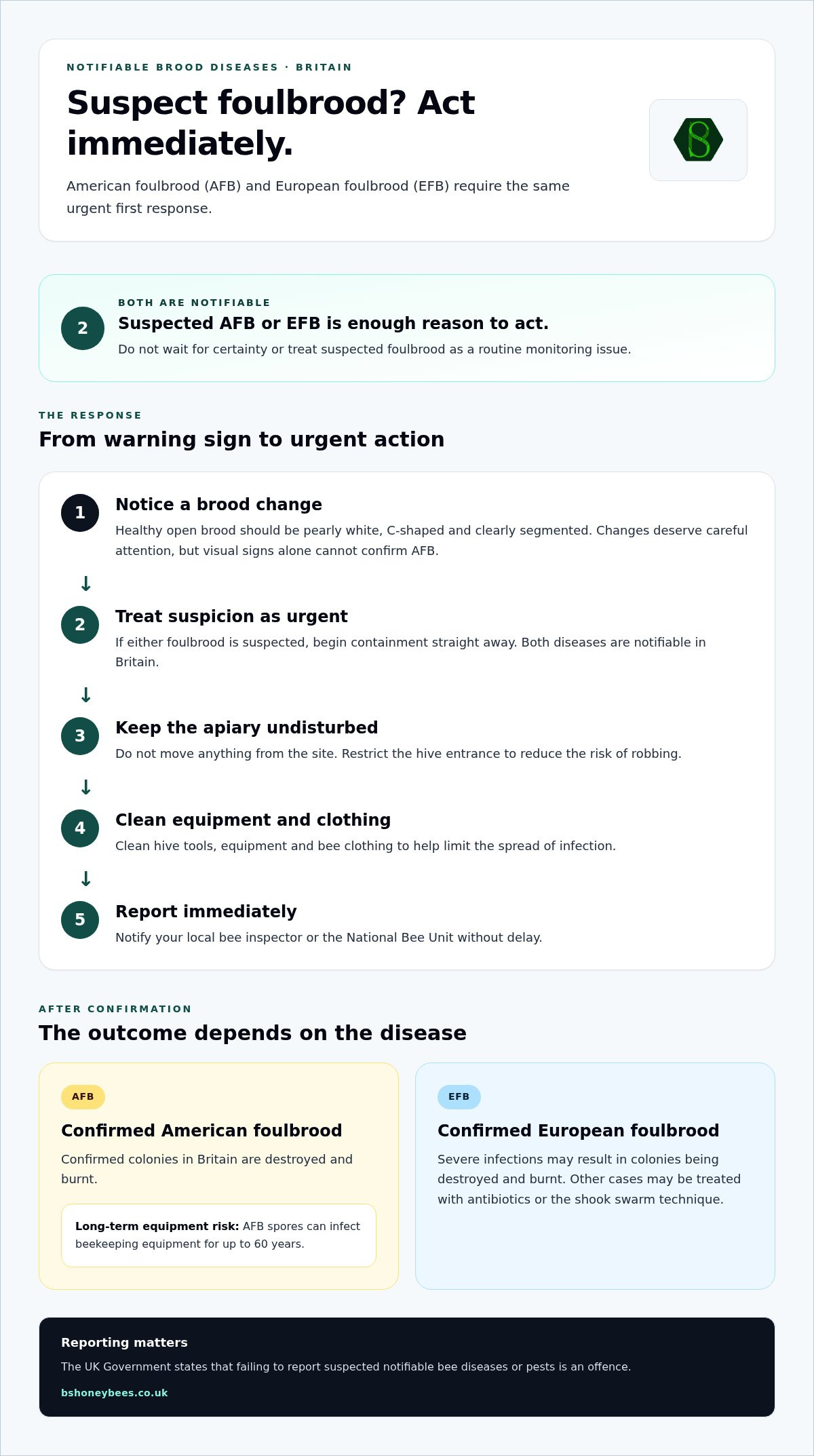
American foulbrood (AFB) and European foulbrood (EFB) are brood diseases affecting honey bee larvae and pupae. Both are notifiable in Britain, so suspected cases require prompt action to limit spread.
American Foulbrood Symptoms and Control
American foulbrood is a bacterial disease of honey bee brood that can leave lasting contamination in apiary equipment. Healthy open brood should be pearly white, C-shaped and clearly segmented. Any change from this appearance warrants careful attention, but visual signs alone cannot confirm AFB. The disease can cause complete colony failure and spread between colonies through bees or poor apiary hygiene.
Act immediately if you suspect AFB. Don’t move anything from the apiary, restrict the hive entrance to reduce robbing risk, and clean hive tools, equipment and bee clothing. Notify the local bee inspector or the National Bee Unit. Confirmed AFB colonies in Britain are destroyed and burnt. Spores can infect beekeeping equipment for up to 60 years, making contaminated kit a long-term risk.
European Foulbrood
European foulbrood is a notifiable brood disease affecting honey bee larvae and pupae. It has been under statutory control in Britain for 70 years, and suspected cases need urgent attention rather than routine monitoring alone.
For suspected EFB, take the same containment steps as for suspected AFB: stop moving items from the site, reduce robbing risk at the hive entrance, and clean tools and clothing. Notify the local bee inspector or the National Bee Unit immediately. Severe EFB infections may lead to colonies being destroyed and burnt; other cases may be treated with antibiotics or the shook swarm technique. Foulbrood can spread between colonies through bees or poor hygiene.
What treatments are approved in the UK for Varroa and other honey bee diseases? Varroa medicines are governed by UK legislation, and the National Bee Unit provides guidance on their use. Confirmed AFB colonies are destroyed and burnt. Severe EFB may also be destroyed and burnt, while other EFB cases may be treated with antibiotics or the shook swarm technique.
These diseases require a different response from ordinary brood irregularities. If you suspect either foulbrood, report it immediately; the UK Government states that failing to report suspected notifiable bee diseases or pests is an offence.
Beekeepers should take action if they suspect European foulbrood or American foulbrood in a honey bee colony; suspicion is the point at which a response is needed, rather than waiting for certainty. In a UK apiary, keep the site undisturbed: nothing should be moved from it. Notify the local bee inspector or the National Bee Unit immediately. These steps apply whether the suspected disease is European foulbrood or American foulbrood, giving a clear response to either concern.
There are 2 notifiable bee diseases present in the UK: American Foulbrood and European Foulbrood. Treating suspicion of either as a reason to act keeps the response consistent. Leave items in place and contact the local bee inspector or the National Bee Unit without delay. This means taking the same immediate steps whichever of the two diseases is suspected, rather than moving anything from the apiary while deciding what to do.
Colony Collapse Disorder and Parasitic Mite Syndrome
Colony Collapse Disorder describes unexplained sudden colony losses reported in the USA from 2006 onwards. Parasitic Mite Syndrome describes damage associated with heavy mite infestation, especially Varroa.
Colony Collapse Disorder
Colony Collapse Disorder is a name for unexplained, sudden honey bee colony losses. Reports began in the USA from 2006 onwards, but the term does not identify a single cause. For UK beekeepers, it is more useful to inspect the colony for specific signs, including Varroa mites, deformed wings or damaged brood, than to treat every loss as this disorder.
Keep records of colony strength, brood condition and mite observations. Compare changes between inspections to spot developing problems and investigate what you see in the hive. A sudden decline can have several causes, so a label alone will not explain what happened. Look for identifiable symptoms and respond to the risks they indicate.
Parasitic Mite Syndrome
Parasitic Mite Syndrome is a term coined by scientists in the USA in the 1990s for colony problems linked with parasitic mites. Varroa mites feed on brood and adult bees, weaken colonies and can spread viruses between them. They can transmit deformed wing virus, while high mite levels are associated with high virus levels in a colony.
Look for deformed wings, dead or rotting pupae, chewed brood cappings and a pepperpot brood pattern. These signs can indicate Varroa-related damage, but routine monitoring helps identify mite pressure before visible symptoms become severe. UK beekeepers should monitor colonies regularly and treat when necessary. Untreated colonies affected by Varroa usually die out after a few years.
Foulbrood and mite-related problems are different, but both can threaten colony survival and spread between colonies. American and European foulbrood affect brood, and foulbrood can spread through bees or poor apiary hygiene. Weak colonies and damaged brood therefore call for careful inspection, not assumptions based on a single symptom.
Distinguish suspected signs from confirmed causes. Record what you see, including the condition of brood and adult bees, then compare your findings during follow-up inspections. For Varroa, use monitoring to guide timely treatment rather than waiting for deformed wings or a pepperpot brood pattern. For suspected foulbrood, follow the urgent reporting and containment steps described earlier.
These terms describe different things: Colony Collapse Disorder describes unexplained losses, while Parasitic Mite Syndrome points to mite-associated damage. Knowing the distinction helps you focus inspections on observable evidence and choose a targeted next step for the colony.
Nosema and Vairimorpha
Nosema, also known as Vairimorpha, is an infection that invades a honey bee’s gut. It can cause weakness and dysentery, and is among the common adult bee diseases found in the UK. Nosema ceranae was confirmed in Britain in 2007. Recognising the difference between adult bee symptoms and affected brood helps guide your next inspection.
Nosema signs can include weakness and dysentery, but these observations do not identify the cause on their own. If a colony shows suspected Nosema and dysentery signs, generally leave it alone for a few weeks. During that period, check only that it has enough food. Avoid unnecessary disturbance while observing whether the colony’s condition changes.
Nosema apis spores can remain infective for several years, so hygiene matters when managing affected colonies. The research points identify no available treatment for Nosema. Focus on observing adult bees, checking food stores and limiting avoidable disturbance, rather than using an unsupported remedy for a suspected case.
To distinguish these conditions, note where the signs appear. Chalkbrood affects brood, which can dry into hard white or grey pellets. Sacbrood is another brood disease, while Nosema affects adult bees’ guts and can cause weakness and dysentery. These patterns help separate brood symptoms from signs in adult bees, but a single observation is not a confirmed diagnosis.
Chalkbrood is a brood disease in which affected brood dries into hard, pale pellets. Persistent heavy cases may require requeening, and thymol may reduce chalkbrood incidence. Sacbrood is also among the common brood diseases in the UK, but no treatment is available for it. The visible distinction described here is chalkbrood’s dried pellets, rather than a specific sign of sacbrood.
For a practical check, note whether the affected bees are adults or brood, then record the specific sign. For example, weakness and dysentery in adult bees fit the described Nosema pattern; hard white or grey brood pellets point towards chalkbrood. When Nosema is suspected, keep food availability in view and avoid unnecessary hive disturbance for a few weeks.
No treatment is available for Nosema or sacbrood in Britain. Chalkbrood also has no available treatment, although thymol may reduce its incidence. These distinctions matter: brood symptoms and adult bee symptoms call for different observations. Use the signs to guide careful monitoring, and check the colony’s food supply during the stated observation period.
UK notifiable bee diseases and pests
The notifiable honey bee diseases in Britain are American foulbrood and European foulbrood. Small Hive Beetle and Tropilaelaps mite are notifiable pests. Report suspected cases promptly, and recognise other pests so you can respond appropriately.
How do UK bee disease rules differ across England, Wales, Scotland and Northern Ireland? The UK Government says suspected reportable or notifiable bee pests and diseases must be reported immediately to the National Bee Unit or a local bee inspector, and failure to report is an offence. In Scotland, suspected cases should be reported to Scottish bee inspectors by email.
How do UK beekeepers report suspected foulbrood and what happens during an inspection? Contact the National Bee Unit or a local bee inspector immediately, and do not move anything from the apiary. The inspector can assess the reported signs and determine whether the colony is affected. Keep the site contained while suspected foulbrood is investigated.
Small Hive Beetle is a notifiable pest not currently thought to occur in Britain. Its larvae eat wax comb, disrupt brood production and spoil honey stores. Tropilaelaps mites are also not found in the UK. Report suspected presence of either pest in a honey bee colony to the National Bee Unit. Tropilaelaps can weaken bees, spread viruses and cause rapid colony failure.
Wax moth larvae damage comb and stored beekeeping equipment. Two species are found in Britain. Careful hygiene and management of spare equipment help prevent damage, so inspect stored comb and kit rather than leaving them unmanaged between uses.
Exotic honey bee pests threaten colonies but are not established in the UK. Small Hive Beetle and Tropilaelaps have yet to reach the country, while the Asian Hornet has been detected at various times but is not established. The National Bee Unit provides guidance on identifying and reporting yellow-legged hornet sightings. Report suspected notifiable pests promptly rather than treating an unfamiliar sighting as an ordinary insect.
Varroa is different: it is present throughout the UK, and routine monitoring helps beekeepers decide when treatment is necessary. During the beekeeping season, confirmed American and European foulbrood cases in England, Wales and Scotland are updated daily. The National Bee Unit also provides live case information and information on bee imports. Use these distinctions to separate established pests, notifiable threats and sightings that need reporting.
Apiary hygiene and disease prevention
Apiary hygiene means routinely cleaning and managing equipment to reduce opportunities for pests and diseases to spread. It works alongside colony inspection and Varroa control, not instead of them. Clean tools, sound comb and well-managed spare equipment each reduce avoidable risks between hives.
Start each inspection with clean hive tools and bee clothing. Clean and disinfect equipment, especially before using it on another colony. Avoid moving equipment between apiaries, since contaminated comb or tools can carry infection between sites. If disease is suspected, stop moving items from the apiary and follow the reporting and containment steps for that disease.
Manage comb and spare equipment deliberately. Remove diseased or damaged equipment from use instead of returning it to a healthy colony. Store spare comb carefully and inspect it for wax moth damage. Good hygiene and management of spare equipment help prevent wax moth problems. Two wax moth species are found in Britain, so include stored kit in routine apiary checks.
Varroa control is essential for honey bee colony survival. Monitor colonies routinely, then use the results to decide when treatment is necessary. Varroa mites feed on brood and adult bees, weaken colonies and can spread viruses between them. A colony with deformed wings or damaged brood needs closer attention, but monitoring can reveal mite pressure before visible symptoms appear.
Make hygiene part of a repeatable inspection routine. Keep equipment for each apiary separate, clean tools between colonies, and record unusual signs in brood or adult bees. For example, note damaged brood and which hive you inspected, then avoid transferring its equipment elsewhere. This builds a clearer picture of colony changes and helps prevent accidental movement of contaminated items.
If foulbrood is suspected, routine cleaning alone is not enough. Do not move anything from the site, restrict the hive entrance to reduce robbing risk, clean tools and clothing, and notify the local bee inspector or National Bee Unit immediately. These steps help contain spread while the suspected disease is addressed.
Keep prevention practical: monitor Varroa, maintain clean tools, separate apiary equipment, and remove damaged or diseased items from use. For equipment that supports organised apiary management, review British National hives and frames.
Apiary hygiene is one of the recommended ways to prevent pests and diseases in UK beekeeping. It is part of a broader approach: manage disease in colonies, clean and disinfect equipment, remove diseased or damaged equipment, and avoid moving equipment between apiaries to help prevent disease spread.
The National Bee Unit provides guidance on the biology, impact and management of a range of honey bee infestations and infections.
BS Honey Bees: F1 Buckfast Queens
BS Honey Bees supplies F1 Buckfast Queens for beekeepers planning queen replacement or establishing a colony. If you’re building or expanding your apiary, its Carniolan Queens, 5 / 6 Frame Nucs and 2 in 1 Poly Nucs offer further options for colony management.
Choose these products for stocking and apiary planning, not as disease treatments. Suspected notifiable diseases or pests still require prompt reporting and the appropriate containment steps. Once those concerns are addressed, a queen or nucleus colony may suit your plans for developing the apiary.
Consider which option suits your next beekeeping step, then contact BS Honey Bees to discuss your requirements.
Make your next inspection more informative
Recognising common bee diseases in the UK is only the start of sound colony management. Use each inspection to build a working picture of what is normal for every colony. Record changes in brood, adult bee activity, stores and overall strength consistently. Comparing observations over time can reveal a developing pattern and help you decide what needs attention next.
Make your records useful. Note the colony, what you observed and any action taken, then review the entries at the next inspection. Clear notes can help distinguish a one-off change from a persistent concern and provide a more reliable basis for planning your apiary. Keep disease response separate from decisions about colony development.
When you’re planning future apiary needs, explore BS Honey Bees’ beekeeping options as a next step. Stay observant, keep your records practical, and approach each decision with confidence.
Frequently Asked Questions
What are the most common honey bee diseases in the UK?
Common bee diseases in the UK include sacbrood, chalkbrood and bald brood in brood, plus Nosema and chronic bee paralysis virus in adult bees. Varroa is a widespread parasitic mite, not a disease, but it can weaken colonies and spread viruses. Start an inspection by noting whether signs affect brood or adult bees. This simple distinction helps focus attention on the affected part of the colony.
How can beekeepers identify varroa mite infestations and what damage do they cause?
Look for deformed wings, dead or rotting pupae, chewed brood cappings and an irregular, pepperpot brood pattern. Varroa feeds on brood and adult bees, weakens colonies and can transmit viruses, including deformed wing virus. Although Varroa is a pest rather than a disease, it is often discussed alongside common bee diseases in the UK because of its effect on colony health. Monitor colonies regularly and record findings to spot changes over time.
What are the symptoms of American foulbrood and European foulbrood in UK honey bees?
Both diseases affect brood, so inspect larvae and pupae for changes from healthy brood, which should be pearly white, C-shaped and clearly segmented. Appearance alone cannot reliably distinguish American foulbrood from European foulbrood. If brood looks abnormal and foulbrood is suspected, stop moving items from the apiary and report the concern promptly to the appropriate bee inspector. Do not treat a visual observation as a confirmed diagnosis.
Which honey bee diseases are legally notifiable in England, Scotland and Wales?
American foulbrood and European foulbrood are the two notifiable honey bee diseases in the UK, including England, Scotland and Wales. Report suspected notifiable bee pests and diseases immediately to the National Bee Unit or a local bee inspector. The UK Government states that failure to report is an offence. In Scotland, report suspected cases to Scottish bee inspectors by email.
What are the risks of spreading bee diseases between apiaries and how can they be prevented?
Diseases can spread between colonies through bees and poor apiary hygiene. Contaminated equipment can also carry infection between sites, so moving used tools or comb from one apiary to another can transfer risk. Clean and disinfect equipment, keep apiary kit separate, and remove diseased or damaged items from use. If foulbrood is suspected, do not move anything from the site and follow the required reporting steps.