

Are you inadvertently shortening the lifespan of your British National hives by leaving them too close to the damp UK soil? Most beekeepers focus entirely on the colony's health whilst overlooking the physical foundation that supports it. It's frustrating to deal with chronic back strain during inspections or to discover hive rot and pest ingress because your equipment sits on uneven, sodden ground. A heavy nectar flow can make a double-brood National hive incredibly heavy, making a reliable base an absolute necessity for both the bees and the keeper.
You deserve a stable, level platform that protects your F1 Buckfast or Carniolan queens and ensures your apiary remains professional and efficient. This guide provides the best bee hive stand ideas to solve these logistical headaches once and for all. We'll explore fifteen practical solutions, from clever DIY timber frames to robust commercial options, tailored to keep your poly nucs and standard hives dry, secure, and at the perfect working height. Whether you're managing a single garden hive or a sprawling out-apiary, these designs prioritise airflow and durability.
Key Takeaways
- Elevation is essential in the UK to combat rising damp and ground frost, protecting your British National hives from rot and decay.
- Discover versatile bee hive stand ideas that range from budget-friendly DIY timber frames to high-capacity commercial metal platforms.
- Optimise your working height to between 30cm and 45cm to significantly reduce back strain whilst deterring pests like slugs and mice.
- Prioritise stability and levelling to safely support heavy colonies and vulnerable 2-in-1 poly nucs during the peak of the season.
- Select materials based on your long-term maintenance preferences, balancing the classic aesthetic of timber with the durability of modern plastics.
Why Every UK Apiary Needs a Robust Hive Stand
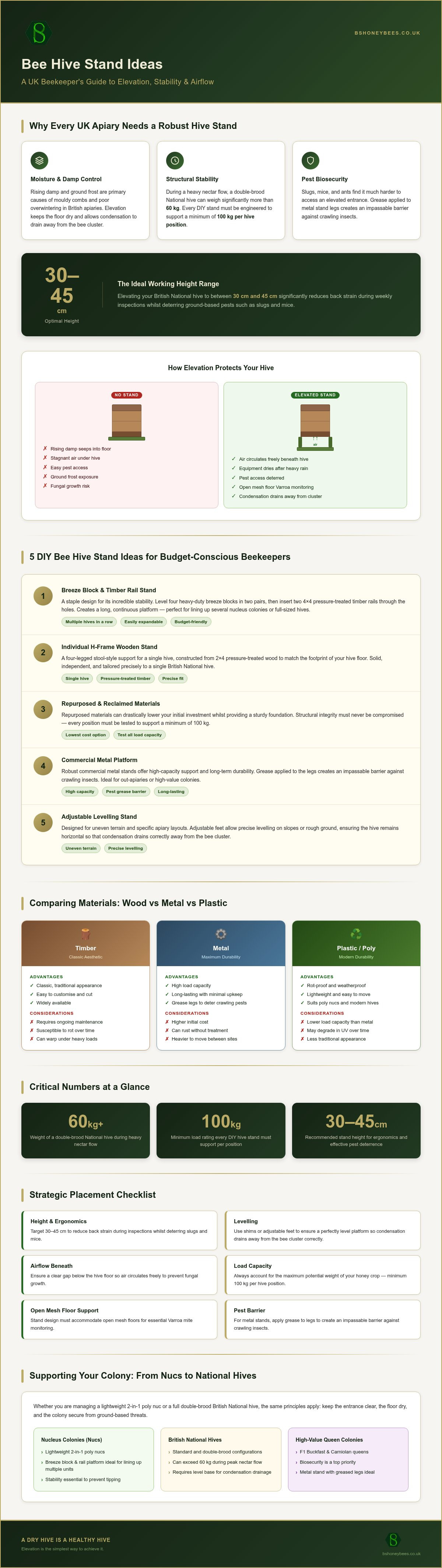
A hive stand is a purpose-built structure designed to elevate honey bee colonies above ground level. It serves as the foundation of your apiary's health and operational efficiency. In the UK, elevation is critical to combat rising damp and ground frost during the long, wet winter months. Without this gap, moisture seeps into the hive components, compromising the colony's ability to thermoregulate. Well-executed bee hive stand ideas also incorporate space for open mesh floors, which are essential for effective Varroa mite management and monitoring.
Stability is paramount for any stand. During a heavy nectar flow, a double-brood National hive can weigh significantly more than 60kg. A flimsy or poorly constructed base won't suffice. If the ground shifts or the material warps under this pressure, you risk the hive toppling over. This is a disaster for the bees and a significant safety hazard for the beekeeper. Always factor in the maximum potential weight of your honey crop when selecting your support system.
Combating the UK Damp: Airflow and Moisture Control
Ground moisture is a primary cause of mouldy combs and poor overwintering success in British apiaries. When a hive sits too low to the earth, the air underneath becomes stagnant. This lack of circulation traps humidity inside the brood chamber, leading to damp conditions that can kill a colony faster than the cold itself. British National hives rely on a level base to ensure that condensation drains away from the bee cluster rather than pooling on the floor.
Increasing the distance between the hive floor and the grass improves air circulation. This helps dry out the equipment after heavy rain and reduces the humidity that encourages fungal growth. When exploring different bee hive stand ideas, aim for a height that balances this vital airflow with ergonomic access for your weekly inspections. A dry hive is a healthy hive, and proper elevation is the simplest way to achieve it.
Pest Management and Biosecurity
Your stand acts as the first line of defence against pests. Slugs, mice, and ants find it much harder to access an elevated entrance. For beekeepers managing high-value F1 Buckfast queens, biosecurity is a top priority. A stable, elevated platform prevents small mammals from chewing through the floor or disturbing the bees during their winter cluster. You can even apply grease to the legs of metal stands to create an impassable barrier against crawling insects.
By studying various beehive types and components, it becomes clear that a robust stand is a non-negotiable part of a professional setup. It protects your investment and ensures your bees remain productive. Whether you are supporting a standard hive or a lightweight 2-in-1 poly nuc, the goal remains the same: keep the entrance clear, the floor dry, and the colony secure from ground-based threats.
5 DIY Bee Hive Stand Ideas for the Budget-Conscious
Building your own apiary infrastructure allows for precise customisation that off-the-shelf products sometimes lack. These bee hive stand ideas are designed for beekeepers who need to manage uneven terrain or specific apiary layouts without overspending. Repurposed materials can drastically lower your initial investment whilst providing a sturdy foundation for your bees. However, never compromise on structural integrity. Every DIY stand must be engineered and tested to support a minimum of 100kg per hive position. This ensures the stand can handle the combined weight of the bees, wax, and a full honey crop during the height of summer.
The Classic Breeze Block and Timber Rail Stand
This design is a staple for a reason. It's incredibly stable and easy to build. First, clear the ground and level four heavy-duty breeze blocks. Place them in two pairs, spaced to accommodate the length of your rails. Insert two 4x4 pressure-treated timber rails through the holes in the blocks. This creates a long, continuous platform that is perfect for lining up several nucleus colonies or full-sized hives. Use wooden shims to ensure the rails are perfectly horizontal across their entire length. This setup allows you to expand your apiary quickly by simply adding more blocks and longer rails.
The Individual "H-Frame" Wooden Stand
The H-frame is a four-legged stool-style support for a single hive. Using 2x4 pressure-treated wood, construct a frame that matches the footprint of your floorboard. Individual stands are superior for preventing vibration transfer between colonies. When you inspect one hive, the bees in the neighbouring unit remain undisturbed. This isolation is particularly beneficial when managing sensitive colonies or high-productivity queens. Ensure the legs are braced correctly to prevent splaying under heavy loads. These stands are portable and allow you to reposition British National hives easily as your apiary grows.
Beyond these two classics, you can explore other bee hive stand ideas using durable materials. Recycled plastic lumber is an excellent rot-proof alternative to timber, whilst old scaffold poles can be hammered into the ground to create an indestructible metal frame. Some beekeepers even use heat-treated shipping pallets, though these require regular inspection for rot. Always prioritise pressure-treated timber to ensure the stand lasts amongst the elements. By selecting the right materials and testing your build, you create a safe environment for your bees and an ergonomic workspace for yourself.
Comparing Materials: Wood vs Metal vs Plastic Stands
Material choice directly impacts the lifespan, portability, and maintenance requirements of your apiary. When evaluating different bee hive stand ideas, you must weigh the initial cost against the expected duration of the equipment. Timber remains the most popular choice in the UK for its ease of construction and traditional aesthetic, but metal and synthetic options are increasingly favoured for their logistical excellence and longevity. Your decision should reflect your long-term goals, whether you're managing a single garden hive or a commercial enterprise.
Timber Stands: The Traditional UK Choice
For any wooden structure in constant contact with the damp British ground, Tanalised (pressure-treated) timber is a non-negotiable requirement. This treatment involves forcing preservatives deep into the wood fibres to resist rot and insect attack. Timber stands are cost-effective and easy to repair using basic tools, making them ideal for beekeepers who prefer a bespoke setup. They blend naturally into a garden or woodland setting, maintaining a classic look for your apiary whilst providing a sturdy base for your colonies.
However, even the best-treated wood will eventually succumb to the elements. You must perform periodic structural checks, especially at the joints and ground-contact points. A timber stand that feels solid in spring might be compromised by autumn after a particularly wet summer. If you prioritise a low upfront cost and enjoy the process of manual maintenance, wood is a reliable and accessible standard.
Metal and Synthetic Alternatives
Galvanised steel stands represent a "buy once, cry once" investment. They offer the highest longevity and weight-bearing capacity, easily supporting the heaviest British National hives during a peak nectar flow. These stands are often preferred by professional beekeepers who cannot afford the downtime associated with replacing rotten timber. Whilst the initial investment is higher, the total lack of maintenance requirements makes them far more efficient over a decade of use.
Synthetic options, such as high-density polypropylene stands, are gaining traction for their lightweight and completely rot-proof properties. These are particularly well-suited for 2-in-1 poly nucs and temporary out-apiaries where portability is essential. If you practice migratory beekeeping or frequently move colonies to different forage sites, the weight savings of plastic over steel or wood are significant. When browsing bee hive stand ideas, consider whether your priority is permanent stability or the flexibility to reorganise your apiary at short notice.
Strategic Placement: Height, Stability, and Airflow
The "Golden Height" for your apiary foundation sits between 30cm and 45cm (12 to 18 inches). This elevation provides the ideal balance between airflow and accessibility. When considering your bee hive stand ideas, you must also factor in the morning sun. Orienting the hive entrance towards the South-East encourages bees to begin foraging earlier in the day as the first rays warm the landing board. However, don't just place your stand on raw soil. Use paving slabs or a bed of compacted gravel to create a solid footprint. This prevents the legs from sinking into the soft UK ground under the immense weight of a productive summer colony.
Stability isn't just about the stand itself; it's about the interface with the earth. A falling hive is a total disaster for the colony and a safety risk for anyone nearby. Ensure your stand is rock-solid before the first bees arrive. If you're setting up on a sloping site, use stepped blocks or adjustable legs to maintain a secure base. A level hive is easier to manage, but a slight forward tilt of one or two degrees is actually beneficial. This subtle angle ensures that wind-driven rain runs off the roof and away from the entrance rather than pooling inside.
Ergonomics: Protecting the Beekeepers Back
Avoiding "beekeepers back" is a priority for long-term enjoyment of the craft. Your stand height should be tailored to your own stature and your preferred hive configuration. The goal is simple: the top of the brood box should be at waist height during inspections. This positioning allows you to pivot and lift using your legs rather than your spine. If you're managing a single-brood National, a 45cm stand is usually perfect. If you prefer a double-brood setup, drop the stand to 30cm to account for the extra height of the second box. This prevents you from having to stoop or reach awkwardly whilst handling heavy supers.
Levelling and Ground Security
Sloping UK terrain presents a unique challenge for stability. You can't simply rest a stand on a hill and hope for the best. Use a spirit level to check your progress at every stage. For those using bee hive stand ideas that involve individual legs, consider burying the uphill legs slightly or using wider base plates to distribute the load. A solid foundation is especially important for British National hives, which have a specific footprint that requires uniform support. Secure ground contact prevents the stand from toppling during the high winds common in British winters.
Supporting Your Colony: From Nucs to Full National Hives
Managing the transition from a developing nucleus colony to a full production hive requires a forward-thinking approach to your apiary's infrastructure. Different stages of colony development demand specific configurations to ensure health and productivity. Whilst a small colony has a modest footprint, your bee hive stand ideas must account for the rapid expansion that occurs during a strong nectar flow. A full British National hive can easily exceed 100kg when packed with honey; your stand must be robust enough to support this weight without bowing or shifting. Planning your layout with future expansion in mind prevents the logistical headache of moving heavy, established colonies later in the season.
Stability is the foundation of a professional apiary. When you start with a nuc, it's tempting to use a temporary or lightweight support. However, as the colony grows and you add supers, the centre of gravity rises. This makes the hive more susceptible to high winds and accidental knocks. By installing a high-quality stand from day one, you provide a consistent environment that protects your bees and your investment. A level, secure platform is essential for the long-term success of any UK beekeeping operation.
Special Considerations for Nucleus Colonies
Nucleus colonies are significantly lighter than full hives, but they're far more vulnerable to temperature fluctuations and ground damp. Grouping 5 and 6 frame nucs on a single long rail stand is an efficient way to manage multiple small units. This setup allows for shared thermal mass and makes inspections faster and more organised. The 2-in-1 poly nuc is a versatile tool for queen rearing that requires a stable, level base to function effectively. Proper elevation ensures these smaller colonies remain dry, which is vital for their survival during the damp British spring.
The Final Checklist for a Successful Stand
Before you commit to a specific design, run through this final checklist to ensure your setup meets professional standards. Your chosen bee hive stand ideas should satisfy every one of these criteria to guarantee the longevity of your equipment and the safety of your bees.
- Material: Use Tanalised timber, galvanised steel, or high-density plastic to resist rot.
- Height: Aim for 30cm to 45cm to protect your back and improve airflow.
- Stability: Ensure the stand is level with a slight forward tilt for water runoff.
- Airflow: Maintain clear space beneath the hive to facilitate open mesh floors.
Investing in quality British National hives and frames is only half the battle. Without a robust stand, even the best equipment will deteriorate prematurely. Take the time to prepare your site properly and choose a support system that matches the high standards of your bees. Ready to populate your new stands? Browse our 2026 Buckfast and Carniolan nucs today and give your apiary the best possible start.
Prepare Your Foundation for a Productive Beekeeping Year
A robust foundation is the first step toward a healthy and high-yielding apiary. By implementing these bee hive stand ideas, you protect your British National hives from persistent UK damp whilst ensuring your own physical comfort during inspections. Whether you choose a traditional timber H-frame or a permanent galvanised steel solution, your focus must remain on stability, airflow, and security. A well-placed stand doesn't just support weight; it preserves the longevity of your equipment and the health of your queens.
As a specialist UK breeder, BS Honey Bees Ltd provides the premium stock and hardware your new infrastructure deserves. We are leading specialists in the industry-standard British National hive and offer nationwide delivery on all live bees and equipment. It's time to match your logistical excellence with the best genetics available. Order your F1 Buckfast and Carniolan bees for the 2026 season at BS Honey Bees Ltd and secure your colonies today. Professional beekeeping starts from the ground up; build it right and your bees will thrive.
Frequently Asked Questions
How high should a bee hive stand be off the ground?
A hive stand should typically sit between 30cm and 45cm above the ground. This height balances ergonomic access for the beekeeper with the need for airflow. Elevating the hive protects the floor from rising damp and ground frost, which are common issues in the UK. If you manage double-brood National hives, keep the stand closer to 30cm to ensure supers don't become too high to lift safely during your weekly inspections.
Can I use old pallets as a bee hive stand?
You can use old pallets, but they aren't the most durable bee hive stand ideas for long-term use. Ensure any pallet you use is heat-treated rather than chemically treated. Pallets rot quickly in damp grass and offer poor ergonomics because they lack space for your feet. This forces you to stoop during inspections, which can lead to back strain. Treat them as a temporary solution rather than a permanent foundation for your apiary.
What is the best material for a hive stand in the UK climate?
Galvanised steel is the superior material for the UK climate due to its total resistance to rot and high weight-bearing capacity. Whilst timber is traditional and aesthetically pleasing, it requires regular maintenance and will eventually decay in wet conditions. High-density plastic stands are also an excellent, rot-proof choice for lighter equipment like 2-in-1 poly nucs. For most UK beekeepers, a Tanalised timber stand offers the best balance between cost and long-term durability.
Do I need to level my bee hive stand perfectly?
Your stand must be perfectly level from side to side to ensure the bees build straight, vertical combs. However, a slight forward tilt of about one or two degrees is highly recommended. This subtle angle allows rainwater to drain off the hive roof and away from the entrance, preventing moisture from pooling inside the floor. Use a spirit level during installation and check it annually, as the weight of the colony can cause ground subsidence over time.
How much weight does a bee hive stand need to support?
A robust hive stand must support at least 100kg to 125kg for a single colony. During a heavy nectar flow, a double-brood British National hive with multiple supers becomes exceptionally heavy. If your stand is flimsy, it may buckle or shift, leading to a catastrophic collapse. Always over-engineer your DIY designs or choose commercial stands rated for heavy loads. Stability is non-negotiable when you are protecting a valuable F1 Buckfast or Carniolan colony.
Should I have individual stands or one long rail for multiple hives?
Individual stands are better for biosecurity and temperament because they prevent vibrations from travelling between hives during inspections. If you bump one hive, the neighbours remain undisturbed. Conversely, a long rail stand is more efficient for managing rows of nucleus colonies and is easier to level on uneven ground. Consider your apiary goals: use individual stands for production hives and rails for raising several 5 or 6 frame nucs in a limited space.
How do I prevent my wooden hive stand from rotting?
To prevent rot, always use pressure-treated timber and ensure the legs do not have direct contact with the soil. Place your stand on paving slabs, bricks, or a bed of gravel to break the path of moisture. Applying a bee-safe wood preservative or a coat of exterior paint every few years will further extend the lifespan of the wood. Periodically check the joints, as these areas trap water and are usually the first points to fail.
Is it better to buy a commercial hive stand or build my own?
Building your own stand is cost-effective and allows for custom heights, but commercial options offer guaranteed stability and precision. Professional galvanised stands are designed to fit British National hives perfectly and last for decades without maintenance. If you are handy with tools and have specific terrain challenges, a DIY build is a great way to explore various bee hive stand ideas. For most, the time saved and the reliability of a commercial stand justify the initial investment.