
Your winter survival rate often has less to do with the size of your colony and everything to do with the thermal efficiency of your hive. Most UK beekeepers have faced the heartbreak of a spring inspection only to find a colony lost to the damp, biting British cold. It's a frustrating cycle, frequently caused by flimsy imports that degrade under UV light or leave you stranded without compatible poly nucs + parts when a component fails. You deserve equipment that works as hard as your bees do.
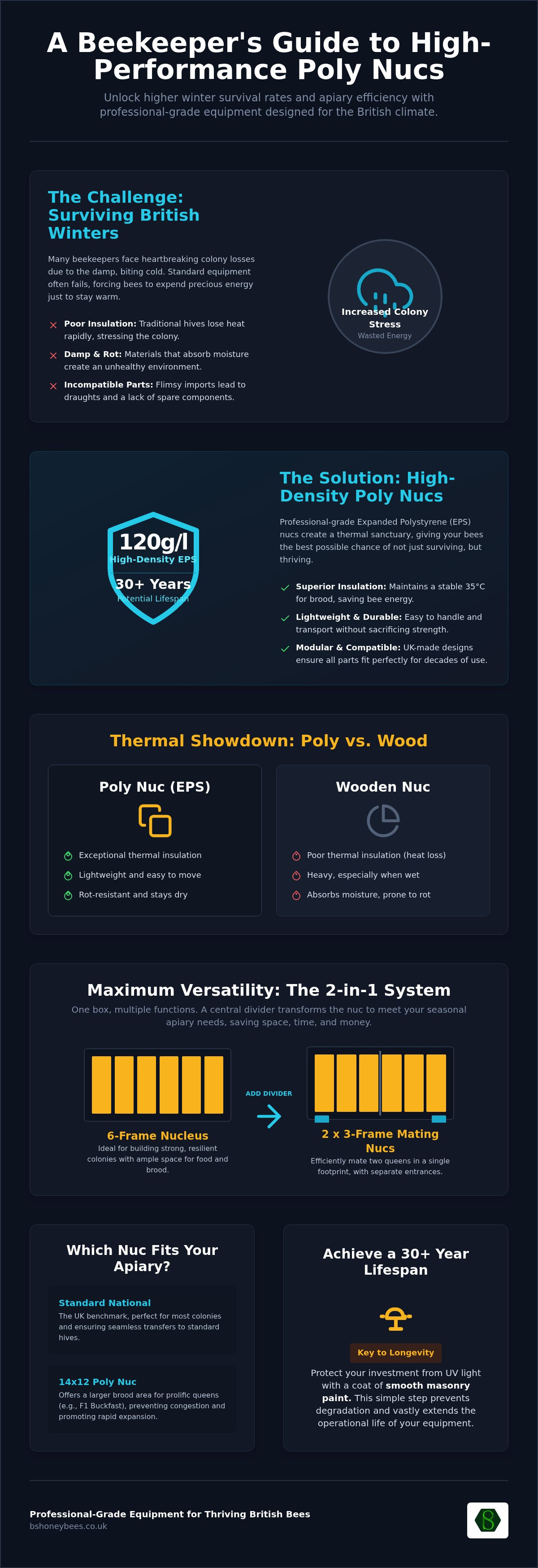
We understand that you need gear that offers more than just a temporary home. You require a professional-grade solution that provides maximum insulation whilst remaining versatile enough to function as both a 6-frame nuc and a mating nuc. This guide will help you identify high-density EPS equipment, specifically 120g/l density, which can last thirty years or more with the right care. We will break down exactly what to look for in a modular system, from integrated feeders to the essential spare parts that ensure your investment never becomes obsolete.
Key Takeaways
- Learn why high-density EPS at 120g/l provides the critical thermal insulation needed to prevent colony losses during damp British winters.
- Discover the versatility of 2-in-1 designs that transition from 6-frame nucleus boxes to mating nucs, and why sourcing compatible poly nucs + parts is vital for long-term use.
- Identify the essential accessories, such as 3L top feeders and steel queen excluders, that improve colony management and survival rates.
- Master the maintenance techniques, including the use of smooth masonry paint, that can extend the operational life of your equipment to over 30 years.
- Determine whether the standard National 2-in-1 or the larger 14x12 poly nuc box best suits your specific apiary requirements.
What are Poly Nucs and Why are They Essential?
A nucleus colony is the heartbeat of any expanding apiary, but its success depends entirely on its environment. Traditional wooden boxes have served beekeepers for centuries, yet the modern shift toward poly nucs represents a significant leap in colony welfare. These high-insulation boxes are manufactured from expanded polymers, specifically high-density expanded polystyrene (EPS). They offer a thermal sanctuary that wood simply cannot match. By maintaining a stable internal temperature, these units ensure your bees spend less energy on thermoregulation and more on brood rearing and foraging.
Managing a busy apiary is physically demanding work. Poly nucs are remarkably lightweight compared to their cedar counterparts, which makes transporting bees or performing inspections much easier on your back. When you invest in high-quality poly nucs + parts, you aren't just buying a box; you're securing a modular system designed for longevity. This transition from wood to poly has directly contributed to higher colony survival rates across the UK, particularly during the unpredictable "beast from the east" style spring snaps.
Poly vs Wood: The Beekeepers Debate
The debate often centres on thermal conductivity. Cedar has a relatively high U-value, meaning heat escapes quickly. In contrast, high-density EPS acts like a thermal flask. For a small colony struggling to maintain the 35°C required for brood, this insulation is life-saving. Whilst wood absorbs moisture and can become damp in the UK's climate, poly remains dry and rot-resistant. If you protect the material from UV light with a simple coat of masonry paint, these boxes will outlast many wooden alternatives whilst keeping the cluster warmer in winter and cooler in summer.
The Importance of UK-Made Designs
Precision matters in beekeeping. Many cheap imports use low-quality expanded polypropylene (EPP), which often lacks the density and precise fitment required for British National frames. Choosing a UK-made design, like the original 2-in-1 poly nuc, ensures that every component fits perfectly without gaps that invite draughts or robbing bees. These designs were created by bee farmers who understand the specific challenges of the British climate. When you source the correct poly nucs + parts from a reputable UK specialist, you benefit from a potential 30-year lifespan and the peace of mind that comes with professional-grade equipment. It's a logistical standard that ensures your gear remains compatible and effective for decades.
Choosing the Right Poly Nuc: 5/6 Frame and 2-in-1 Options
Selecting the right equipment is a strategic decision that affects your apiary's productivity for years. Whilst a 5-frame box is common, the 6-frame footprint has become the professional standard for building stronger, more resilient nucleus colonies. This extra frame provides a vital buffer of food or space for the queen to lay, ensuring the colony doesn't outgrow its home before you're ready to transfer them to a full hive. It's about giving your bees the best start with enough resources to survive a sudden cold snap.
The real innovation lies in the 2-in-1 design. This system uses a removable central divider to instantly change the box's purpose based on your seasonal needs. David Evans at The Apiarist recommends polystyrene nucs for their superior insulation and ease of use in swarm control. By choosing a modular system, you ensure that all your poly nucs + parts remain interchangeable across your apiary. This compatibility is essential when you need to swap a lid or add an eke in a hurry.
The 2-in-1 Mating Nuc Functionality
Efficiency is key during the queen-rearing season. By inserting the central divider, you transform a single 6-frame nuc into two independent 3-frame mating nucs. Each side features its own entrance on opposite ends of the box, allowing two queens to be mated simultaneously in one footprint. This clever design reduces the need for multiple specialised boxes, saving you money and storage space. It's a logistical win for any beekeeper looking to expand their stock without cluttering the honey house with single-use gear.
To complement your modular hive system, consider how custom storage can improve your workflow; for example, the precision-cut flat pack cabinets from CutByBEES show how bespoke design can maximise efficiency in any beekeeping workshop or honey house.
Standard National vs 14x12 Poly Nucs
Your choice of nuc must match your existing hive standard to ensure seamless frame transfers. Standard National frames are the UK benchmark, but the 14x12 format is gaining popularity amongst those managing high-performance colonies. Prolific strains, such as F1 Buckfast Queens, often require the extra brood area that 14x12 frames provide. A 14x12 nuc offers significantly more room for expansion, preventing the colony from feeling congested too early in the season. Always ensure your poly nucs + parts, such as feeders and queen excluders, are specifically sized for your chosen frame depth to maintain a bee-tight seal and proper bee space.
If you're looking for equipment that grows with your skills, you can browse our professional range of 2 in 1 Poly Nucs designed for real-world beekeeping.
Essential Poly Nuc Parts and Accessories
Outfitting your equipment correctly is just as vital as the box itself. A high-quality nucleus colony requires specific accessories to function at peak efficiency, especially during the volatile UK spring. Investing in professional-grade poly nucs + parts ensures that your management remains seamless and your colonies stay protected. You shouldn't settle for basic setups when specialized components can significantly improve survival rates and ease of use.
The 3L top feeder is perhaps the most critical accessory for any nuc. Small colonies have limited food stores and can starve quickly during lean times or persistent rain. This high-capacity feeder sits directly above the bees, allowing them to access syrup without leaving the warmth of the cluster. For those managing queens, a slotted steel queen excluder is far superior to plastic versions. Steel maintains its shape and provides precise bee space, preventing the queen from entering the feeder or a super whilst allowing workers to pass through without hindrance. Other essential parts include:
- The Eke: This spacer adds vital internal height. It is essential when feeding fondant in winter or applying Varroa treatments that require clearance above the frames.
- Travel Screens: Poly is an incredible insulator, but this can lead to overheating during transport. A mesh travel screen replaces the lid, providing the ventilation necessary for safe colony moves.
- Entrance Discs: These allow for rapid adjustment between full flight, ventilation, or total closure.
Feeding Systems for Poly Nucs
Top feeders are the preferred choice in an insulated EPS environment. Unlike contact feeders, they don't require you to invert a bucket, which can lead to leaks if the atmospheric pressure changes. The thick poly roof fits snugly over the feeder, maintaining the thermal envelope and allowing the bees to take down syrup even when external temperatures drop. Using a silicone plug is a smart way to manage bee access. It allows you to restrict the number of bees in the feeder at any one time, which prevents accidental drowning and keeps the colony calm during feeding.
Upgrades and Replacement Parts
Logistical precision is the hallmark of a well-run apiary. By sourcing specific poly nucs + parts like replacement correx dividers, you can maintain your 2-in-1 functionality for decades. Don't discard a box just because a small component has worn out. Entrance discs can be upgraded to more robust versions for better pest control, and "Upgrade Packs" are often available to bring older equipment up to modern standards. Keeping a stock of spare parts, such as extra hive staples or replacement vents, ensures that your equipment is never obsolete and always ready for the next swarm or split.
Maintenance and Longevity: Making Your Nuc Last 30 Years
High-density EPS (120g/l) is a professional-grade material, but its longevity depends entirely on your maintenance routine. Unlike wood, which eventually rots regardless of treatment, poly is practically immortal if you protect it from its one true enemy: ultraviolet light. By following a disciplined care schedule and using the correct poly nucs + parts, you can ensure your equipment remains in service for over three decades. It is a matter of logistical precision and simple, effective protection.
Off-season storage requires a proactive approach to prevent physical damage. Rodents find the high-insulation walls of poly nucs very attractive for nesting during winter. Always fit a secure metal mouse guard and store your empty boxes in a dry, cool area. If you notice any minor dings or scratches from hive tools, don't ignore them. Repairing these small imperfections with an exterior-grade filler or poly-safe adhesive maintains the thermal seal and prevents water ingress. This keeps the unit functioning at peak efficiency year after year.
Painting Your Poly Nuc
Smooth masonry paint is the industry standard for protecting beekeeping equipment. It provides a flexible, waterproof, and UV-resistant barrier that bonds perfectly with the EPS surface. Avoid textured paints; they trap dirt and make subsequent cleaning far more difficult. Stick to light colours like pale green, light blue, or off-white. Darker shades absorb excessive solar radiation, which can lead to overheating during the summer months. Applying two generous coats will provide the necessary UV blockage for a 30-year finish.
Hygiene and Disease Management
Hygiene is paramount, but you must adapt your methods for expanded polymers. Never use a blowtorch. You will melt the material in seconds. Instead, use a solution of washing soda or a mild bleach concentration to scrub away wax and propolis. For stubborn buildup on frame rests, use a blunt hive tool carefully to avoid gouging the EPS. Managing these surfaces correctly ensures a bee-tight fit for your frames and maintains the overall structural integrity of the brood chamber. Regular cleaning prevents the spread of pathogens and keeps your gear looking professional.
Ensure your apiary is equipped for the long haul by sourcing the original poly nucs + parts designed by bee farmers for maximum durability.
Standout Products from the BS Honey Bees Ltd Collection
Professional beekeeping requires equipment tested in real-world UK conditions. The BS Honey Bees Ltd collection is the result of years of commercial bee farming experience; it's designed for reliability and the specific demands of our climate. If you want equipment that performs, start with the National 2 in 1 Poly Nuc Box. It's a highly versatile unit that functions as a standard 6-frame nuc or a dual mating nuc with a simple divider change. This modularity is a hallmark of our design philosophy.
For those managing larger frame formats, the 14x12 Poly Nuc Box offers the necessary volume without compromising on insulation. You can also turn your nucleus colonies into productive assets by adding the 2 in 1 Poly Nuc Super to harvest honey from smaller units. If you already have an existing kit, our Upgrade Packs allow you to modernise your setup with current components. This ensures your apiary stays efficient without the need to replace entire hive systems. Having the right poly nucs + parts makes all the difference when the season hits its peak.
The Original 2-in-1 Design
The core of the BS Honey Bees Ltd range is built from high-density EPS to provide the thermal stability your bees need. Each box comes with an integrated 3L top feeder to ensure your colony never goes hungry during the erratic British spring. This isn't just a box; it's a dual-purpose investment. You get a high-insulation 6-frame nucleus box and a two-way mating nuc in one single purchase. This versatility makes it the logical choice for beekeepers who value logistical simplicity and professional standards.
View the National 2 in 1 Poly Nuc Box at BS Honey Bees Ltd
Parts to Keep You Productive
Maintaining a professional apiary requires access to specific poly nucs + parts at the right time. Our slotted steel queen excluder is a prime example of this precision. It maintains perfect bee space and won't warp or degrade like plastic alternatives. When it's time to move your colonies, the 2 in 1 Poly Nuc Travel Screen makes the process stress-free by providing maximum ventilation whilst keeping your bees secure. Having these specialised parts on hand ensures your equipment remains functional and your bees remain safe throughout the season.
Browse all Poly Nucs + Parts at BS Honey Bees Ltd
Secure Your Apiary's Future with Professional Grade Equipment
Choosing the right equipment isn't just a simple purchase; it's a long-term commitment to your colony's welfare. You've seen how high-density EPS provides the critical thermal protection needed for damp UK winters and how the 2-in-1 design maximises your apiary's versatility. By focusing on correct maintenance and sourcing the right poly nucs + parts, you ensure your gear remains a productive asset for decades rather than a single season.
We design our products based on years of professional bee farming experience to ensure they meet the highest logistical standards. Our high-density construction offers maximum insulation, and we maintain a full range of spare parts so your equipment never becomes obsolete. It's time to invest in gear that works as hard as your bees do. We are here to support your growth with reliable, expert-tested solutions.
Shop the UK’s Favourite 2 in 1 Poly Nucs and Parts
Set your colonies up for success this season and enjoy the peace of mind that comes with industry-leading standards. Your bees will thank you for the warmth, and you'll appreciate the durability.
Frequently Asked Questions
Do I need to paint my poly nuc before using it?
Yes, you must paint the exterior of your poly nuc before placing it in the apiary. Raw EPS is vulnerable to UV degradation, which causes the surface to become powdery and brittle over time. Apply two coats of a light-coloured, smooth masonry paint to create a durable weather shield. This simple step is what allows high-density equipment to reach a 30-year lifespan whilst maintaining its structural integrity.
Can I use standard National frames in a poly nuc box?
You can absolutely use standard British National frames in our poly nuc boxes. These units are designed with precise bee space specifically for the National standard, which is the most common frame size in the UK. Whether you are using DN4 or DN5 frames, they'll fit perfectly. This compatibility makes it simple to transfer a growing nucleus colony into a full-sized British National brood chamber when the time is right.
What is the difference between EPS and EPP poly nucs?
EPS (Expanded Polystyrene) is the superior choice for thermal performance, offering higher insulation values than EPP (Expanded Polypropylene). Whilst EPP is more flexible and impact-resistant, it lacks the density required for maximum heat retention in a cold UK spring. Our poly nucs + parts are manufactured from 120g/l high-density EPS, which provides a rigid, professional-grade finish that outperforms less dense alternatives.
How do I clean a poly nuc without melting the material?
Clean your equipment using a solution of washing soda or a mild bleach concentration and a stiff brush. This effectively removes propolis and wax without damaging the EPS surface. You must never use a blowtorch or boiling water, as high heat will cause the material to melt and deform instantly. For stubborn debris on frame rests, a blunt hive tool used with a light touch is the safest method.
Is a poly nuc better than a wooden nuc for overwintering?
A poly nuc is significantly better than a wooden nuc for overwintering small colonies. The high insulation value of EPS helps the bees maintain their cluster temperature with far less energy consumption. This reduces the amount of winter stores they burn through and ensures the queen can start laying earlier in the spring. In the damp British climate, the thermal efficiency of poly is a proven lifesaver for nucleus colonies.
Can a poly nuc be used as a permanent hive?
You can use a poly nuc as a permanent hive for smaller colonies or specialised breeding stock. By adding a 2-in-1 super, you can even harvest honey from these units whilst keeping the footprint small. This is a common practice for beekeepers who want to maintain backup queens or produce local honey in urban gardens where space is limited. It's a versatile solution for long-term apiary management.
What is an "Eke" and when should I use one with my nuc?
An Eke is a spacer that sits between the brood chamber and the lid to increase internal head height. You should use one when you need to provide space for a block of fondant during winter or when applying Varroa treatments that require clearance above the frame tops. It's a vital component of the poly nucs + parts ecosystem that ensures your colony management remains flexible throughout the year.
How does the 2-in-1 divider system actually work?
The 2-in-1 system works by utilising a vertical slot in the centre of the nuc body to hold a removable divider. When inserted, this divider splits the 6-frame space into two independent 3-frame compartments, each with its own entrance. This allows you to mate two queens in a single box. When you want a standard 6-frame nuc, simply remove the divider and close one of the entrances to unite the space.