

What if the difference between a thriving, honey-laden hive and a £40 loss is simply forty-eight hours of patience? Every beekeeper feels that spike of adrenaline when introducing a new queen bee in the UK. It's a high-stakes moment where your investment in elite genetics meets the unpredictable nature of colony pheromones. You want a calmer, more productive colony, but the fear of aggressive rejection or "balling" often creates unnecessary hesitation during the most critical window of the season.
We understand that you prioritise results and hive health above all else. This expert-led guide provides a definitive, step-by-step roadmap for the 2026 season, designed to help you master the delicate biological negotiation of queen acceptance. We'll examine the essential 2026 white-marking standards, the mandatory IPAFFS biosecurity protocols, and the precise timeline for a successful fondant release. You'll gain a clear understanding of colony behaviour, ensuring your new F1 Buckfast or Carniolan queen is safely integrated and laying eggs without delay.
Key Takeaways
- Improve colony temperament and honey production by selecting high-quality F1 Buckfast or Carniolan genetics marked with the 2026 white international standard.
- Ensure total queenlessness by removing the old queen and allowing a 24-48 hour cooling-off period for pheromones to dissipate before starting the process.
- Master the industry-standard cage method for introducing a new queen bee uk to significantly reduce the risk of worker aggression and "balling."
- Follow a precise step-by-step protocol for preparing the cage and managing the fondant release to ensure a smooth biological transition for the colony.
- Implement the "no-peek" rule for post-introduction management, allowing seven full days before inspecting for eggs and calm behaviour.
Understanding the Need for Requeening Your Hive
Successful beekeeping in the UK requires more than just reactive maintenance. It demands a strategic approach to colony genetics. The decision to replace a queen is often the most impactful action you'll take during the 2026 season. Whether you're managing a single hive or a larger apiary, introducing a new queen bee uk allows you to pivot your colony’s trajectory from failing to flourishing. In 2026, beekeepers have faced particularly erratic forage gaps; making strong colony leadership even more vital for winter survival.
Primary reasons for requeening include:
- Improving Temperament: Replace aggressive, "bunchy" bees with gentler F1 genetics to make inspections safer and more enjoyable.
- Boosting Productivity: A young, prolific queen will out-lay an ageing predecessor, ensuring a massive foraging force for the main honey flows.
- Breaking Disease Cycles: Genetic stock replacement is a proven method for overcoming persistent issues like Chalkbrood.
- Apiary Expansion: Use mated queens to quickly establish new splits or 5-frame nucs without the delay of the colony raising their own.
To make an informed decision, it's helpful to Learn about the queen bee's life cycle and understand how her pheromones regulate every aspect of hive behaviour. When those pheromones wane, the entire social structure of the colony begins to degrade.
Choosing the Right Breed for Your Goals
Your choice between buckfast vs carniolan bees should align with your local climate and forage availability. Carniolans are renowned for their rapid spring buildup and thrifty wintering, whilst F1 buckfast queens UK are the gold standard for high honey production and low swarming tendencies. Always select for high standards of Varroa resistance; this reduces your reliance on chemical treatments and builds a more resilient apiary.
Signs Your Current Queen is Failing
Don't wait for a total colony collapse to take action. Monitor your brood frames for the "pepperbox" effect; a spotty, inconsistent brood pattern that suggests poor fertilisation or failing health. You must distinguish between supersedure cells (usually found on the face of the comb) and swarm cells (located at the bottom). A queen that has become a "drone layer," evidenced by domed cappings in worker-sized cells, requires immediate replacement to save the colony. Identifying these signs early ensures you have time to order a 2026 white-marked queen before the autumn decline begins.
Essential Preparation: Ensuring the Colony is Ready
Success in introducing a new queen bee uk begins long before the shipping cage arrives. You must ensure the colony is in a receptive state; this means verifying absolute queenlessness. A colony is only queenless when there is no mated queen, no virgin queen, and no viable queen cells present. If the bees believe they have a chance to raise their own royalty, they'll likely reject your expensive new arrival. You're looking for a psychological shift in the hive where the workers recognise their vulnerability and become desperate for a new leader.
Remove the old queen at least 24 to 48 hours before the new one is due to be introduced. This "cooling off" period allows the old queen's pheromones to dissipate, creating a vacuum that makes the workers more receptive. During this sensitive window, ensure you're wearing a professional bee suit UK. High-quality gear from BBWear allows you to work with precision and confidence, preventing the jerky movements that can agitate an already stressed colony. Calm beekeeper behaviour leads to calm bee behaviour.
Acceptance rates often climb when a nectar flow is in progress. If forage is low or you're facing the typical "June gap" in the UK, provide a thin sugar syrup to simulate a flow. This encourages a sense of prosperity and reduces defensive behaviour amongst the workers. For additional UK-specific queen introduction advice, consult regional beekeeping societies to understand how local environmental variables might impact your specific apiary location.
The Test Frame Method: A Mandatory Safety Step
If you're unsure of a colony's status, use a test frame. Place a frame of young, unsealed larvae from another hive into the suspect colony. Check it after 24 to 48 hours. If the bees have started building emergency queen cells, you know they are truly queenless and ready for a new queen. If they haven't, a virgin or "scrub" queen is likely present. This simple check is a mandatory safety step that prevents the common mistake of introducing a new queen to a hive that will immediately cull her. It’s better to lose a day of time than a high-quality mated queen.
Optimal Environmental Conditions in 2026
The 2026 season has seen unpredictable rainfall and sharp forage drops across the UK. Avoid introducing queens during heavy rain or sudden cold snaps. You want the maximum number of older, more aggressive foragers out in the field rather than huddled inside the hive. Introduce the cage during a period of calm, warm weather when the remaining younger house bees are more inclined to accept a new pheromone signature. If you're ready to secure your stock for the next flow, you can order mated queens now to ensure you're prepared for the next available weather window.
Comparing Queen Introduction Methods
Choosing the right technique for introducing a new queen bee uk is a calculated decision based on risk and reward. Several methods exist, but they are not all equal in safety. Direct release is the most dangerous approach. Releasing a queen immediately onto the comb relies entirely on luck; if the colony's pheromones aren't perfectly aligned, the workers will treat her as an intruder and kill her instantly. Professional beekeepers almost always avoid this gamble in favour of more controlled, timed-release strategies.
The standard cage introduction remains the benchmark for most mated queens. It provides a physical barrier that protects the queen whilst her pheromones circulate throughout the hive. For those handling exceptionally valuable F1 breeding stock, the nucleus split method offers the highest level of security. By introducing the queen to a smaller, younger population first, you bypass the aggression often found in large, established colonies. Once she is laying successfully in a nuc, combining that small colony with a larger hive is a much safer procedure.
The Standard Cage Method Explained
The plastic introduction cage is designed with a specific purpose: protection through pheromone transition. Inside, a fondant or "candy" plug acts as a natural timer. The workers from the hive chew through this plug from the outside, whilst the queen and her attendants chew from the inside. This process usually takes two to three days, providing ample time for the colony to recognise her as their own. Some beekeepers prefer to remove the attendant bees before introduction to prevent any initial clashing with the hive workers, but this requires steady hands and a secure environment to avoid the queen escaping.
The Nuc-to-Hive Transition
If you are managing a particularly defensive colony, don't introduce the queen directly into the main hive. Instead, establish her in a 5 or 6 frame nuc first. Once she has established a strong brood pattern and the colony has accepted her, use the newspaper method to merge the nuc with your main hive. This double-layered approach significantly reduces the risk of "balling," where workers cluster around the queen to overheat and kill her. It is a methodical, no-nonsense way to ensure your investment in high-quality genetics pays off with a productive, honey-gathering colony.
For an added layer of safety, many UK professionals use the delayed release technique. By placing a small piece of tape over the candy end of the cage for the first 24 hours, you extend the exposure period. This ensures the workers are fully accustomed to her scent before they even begin the process of chewing her out. This extra day of synchronisation can be the deciding factor in a successful acceptance.
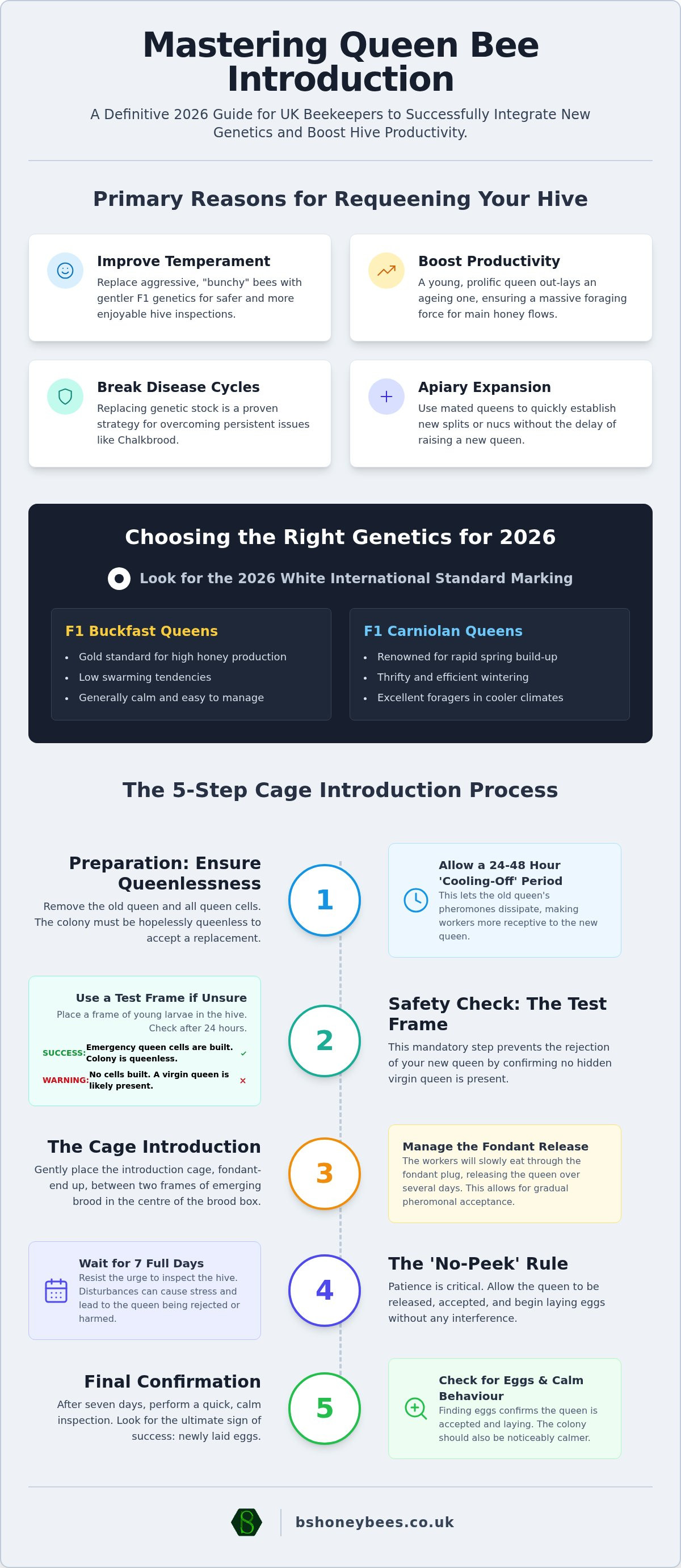
The Step-by-Step Cage Introduction Process
Execution is everything when introducing a new queen bee uk. You have already confirmed queenlessness and allowed the pheromone levels to drop; now you must manage the physical introduction with precision. This process requires a steady hand and a disciplined approach to hive management. Follow these five steps to ensure your new 2026 white-marked queen is accepted by her new colony.
- Step 1: Final Cell Check. Open the hive and perform one last, exhaustive search for emergency queen cells. Even a single missed cell will result in the colony rejecting the new queen. Destroy every cell you find.
- Step 2: Prepare the Cage. Most cages arrive with a plastic tab or tape covering the fondant (candy) end. Remove this carefully. If you are using the delayed release method mentioned previously, ensure the tape is positioned to allow the bees to start chewing only when you are ready.
- Step 3: Strategic Positioning. Place the cage between two frames containing open brood. This is where the younger nurse bees congregate. These bees are more receptive to new pheromones and are responsible for feeding the queen through the mesh.
- Step 4: Ensure Mesh Access. Position the cage so the wire mesh is accessible to the workers. If the mesh is pressed flat against a comb, the workers cannot feed the queen or communicate with her, which often leads to her death before she is even released.
- Step 5: Gentle Closure. Close the hive with minimal vibration. Do not use heavy smoke at this stage, as it can disorient the bees and trigger defensive behaviour.
If you haven't yet secured your stock for the season, you can buy mated queen bees that are ready for immediate dispatch in specialized transit packaging.
Cage Mechanics and Fondant Management
The state of the fondant is a critical variable. During transit, fondant can sometimes harden. Use a clean cocktail stick to gently poke a small hole through the candy; this gives the bees a starting point. When positioning the cage, orient it so the candy end is slightly upwards or horizontal. This prevents any attendant bees that might die inside the cage from falling into the exit hole and blocking the queen's path out. Always keep the queen in the shade whilst you work; direct sunlight can quickly overheat her and the attendants.
The Importance of Zero Disturbance
The most difficult part of this process is doing nothing. Beekeepers often fail because they cannot resist "peeking" after three days to see if the queen is out. This is the primary cause of queen rejection. Opening the hive creates light and vibration that can cause the workers to panic and "ball" the queen, even if they were on the verge of accepting her. You must leave the hive completely undisturbed for at least five to seven days. This biological timeline allows the queen to be released, her pheromones to saturate the colony, and for her to begin laying her first eggs in peace.
Ensuring Success: Post-Introduction Management
The wait is over. After seven full days of zero disturbance, you can finally assess the results of introducing a new queen bee uk. This first inspection must be brief and methodical. Your primary goal is to verify the queen has been released and that the colony has transitioned into a productive state. Check the cage first. If it's empty, look for the queen on the surrounding frames. You don't necessarily need to see her; finding pearly white eggs in the centre of the cells is the ultimate proof of success. A calm colony that ignores the beekeeper and continues working the comb is a hallmark of a successful transition.
If the queen is still in the cage after seven days, don't panic. Sometimes the fondant is too hard or the workers haven't chewed through it quickly enough. Check the bees' behaviour on the cage. If they are fanning their wings and trying to feed her, you can safely release her manually. If they are biting the cage, do not release her. You may need to move the cage to a different position or check once more for a missed virgin queen that is interfering with the acceptance process. A hive that remains queenless for too long during the 2026 season risks developing laying workers, which is a much harder problem to solve.
Troubleshooting Hostile Reactions
Hostility can still occur during this first look. You must distinguish between bees feeding the queen and bees attacking her. If you see workers biting the mesh or clinging tightly to the cage with their mandibles, they haven't accepted her yet. The most dangerous reaction is "balling," where workers form a tight, vibrating sphere around the queen to kill her. If you witness this, do not attempt to pull the bees off with your fingers. You'll likely trigger a sting that hits the queen. Instead, use a gentle puff of smoke or a light mist of water spray to disperse the cluster. Once the queen is free, re-secure her in a fresh cage and implement a delayed release strategy for another 48 hours. This strategy of using water spray is often more effective than smoke, as it doesn't agitate the bees as intensely.
Long-term Colony Integration
A successful introduction is just the beginning. It takes roughly 21 days for the first generation of her brood to emerge and several weeks more for the colony's temperament to truly reflect her genetics. You'll notice a gradual shift as the older, more defensive foragers are replaced by her gentler offspring. Monitor the brood pattern closely over the first month. A high-quality queen should produce a solid, wall-to-wall carpet of brood with very few empty cells. If you notice a "pepperbox" pattern this early, it may indicate a failure in the mating process, though this is rare with professionally mated stock. Consistent record-keeping during the 2026 season will help you track which colonies are performing best. Secure your 2026 season with high-quality mated queens from BS Honey Bees Ltd to ensure your apiary benefits from elite, UK-acclimatised stock.
Secure Your Colony’s Future for the 2026 Season
Mastering the art of introducing a new queen bee uk is the defining skill of a successful beekeeper. By following a disciplined seven-day timeline and ensuring absolute queenlessness before you begin, you eliminate the anxiety of rejection and protect your investment. Success depends on your patience; the "no-peek" rule is your most effective tool for ensuring a young queen is safely integrated and laying her first eggs without interference. Each step in this guide is designed to move your colony from a state of vulnerability to one of high-performance honey production.
As a specialist breeder of gentle-tempered Buckfast bees, we prioritise logistical excellence and biological precision. Our F1 Buckfast and Carniolan queens are marked with the 2026 white international standard and shipped via nationwide UK delivery with a live arrival guarantee. Using elite genetics is the fastest way to improve hive temperament and boost your honey yields. Don't leave your colony's productivity to chance during this critical window of the season.
Take the next step in your beekeeping journey. Order your F1 Buckfast or Carniolan Queens for 2026 Delivery and experience the difference that professional breeding makes. We look forward to being your dependable partner in a successful and productive 2026 harvest.
Frequently Asked Questions
How long should I wait after removing the old queen before introducing the new one?
You should wait between 24 and 48 hours after removing the old queen before starting the process of introducing a new queen bee uk. This interval allows the previous queen's pheromones to dissipate, creating a pheromone vacuum that makes the workers more receptive to a new leader. Waiting longer than 72 hours is risky, as the colony may begin building emergency queen cells that must be destroyed before the new queen can be safely introduced.
What should I do if my new queen bee arrives and the weather is too bad to open the hive?
Keep the queen cage in a quiet, dark place at room temperature if heavy rain or cold prevents you from opening the hive. You must provide a tiny droplet of water on the mesh once a day to keep the queen and her attendants hydrated. Provided they have fondant and this minimal moisture, they can easily survive for three to five days until a suitable weather window appears in your 2026 schedule.
Should I remove the attendant bees from the cage before introducing the queen?
Removing the attendants is optional but can slightly improve acceptance rates by reducing initial friction between the cage bees and the hive workers. If you're a confident handler, you can release the attendants indoors near a window before taking the queen to the apiary. However, if you're less experienced, it's safer to leave them in the cage to avoid the risk of the queen escaping or being injured during the transfer.
Why are the bees biting the cage when I first put it in?
Bees biting the mesh is a clear sign of initial aggression and indicates they haven't yet accepted the new pheromone signature. If you see this "cage-biting" behaviour, don't remove the plastic tab or tape from the fondant end yet. Instead, leave the cage in place for an extra 24 hours to allow the workers more time to habituate to the queen's scent before they begin the release process.
How long does it take for the bees to eat through the fondant?
The workers typically take two to three days to chew through the fondant plug and release the queen. This duration is a natural safety mechanism that ensures the colony is calm before the physical introduction occurs. If the fondant hasn't been touched after three days, check for blockages or use a clean cocktail stick to poke a small pilot hole in the candy to encourage the bees to start chewing.
What happens if I find queen cells a week after introducing a mated queen?
Destroy these emergency cells immediately, as they indicate the colony was still "hedging its bets" during the transition period. As long as you can see the new queen or find fresh eggs in the cells, the introduction is successful. The bees will usually stop building these emergency cells once the new queen's pheromones have fully saturated the hive and her first brood cycle is established.
Can I introduce a new queen to a colony that has laying workers?
Introducing a queen directly to a colony with laying workers is almost always a waste of money and effort. Laying workers will perceive the new queen as a rival and kill her instantly. To fix a laying worker colony, you must either unite them with a strong nucleus colony using the newspaper method or shake the bees out 50 metres away from the hive and introduce a new queen to the foragers that return.
Is it better to introduce a queen in the morning or the evening?
Early evening is the optimal time for queen introduction because the foragers have returned and the hive is generally more settled. Introducing the queen at this time allows her pheromones to circulate throughout the night whilst there is no flight activity or risk of robbing. Always ensure you're wearing professional gear like a BBWear suit during these evening sessions, as bees can be more defensive when the light levels begin to drop.