

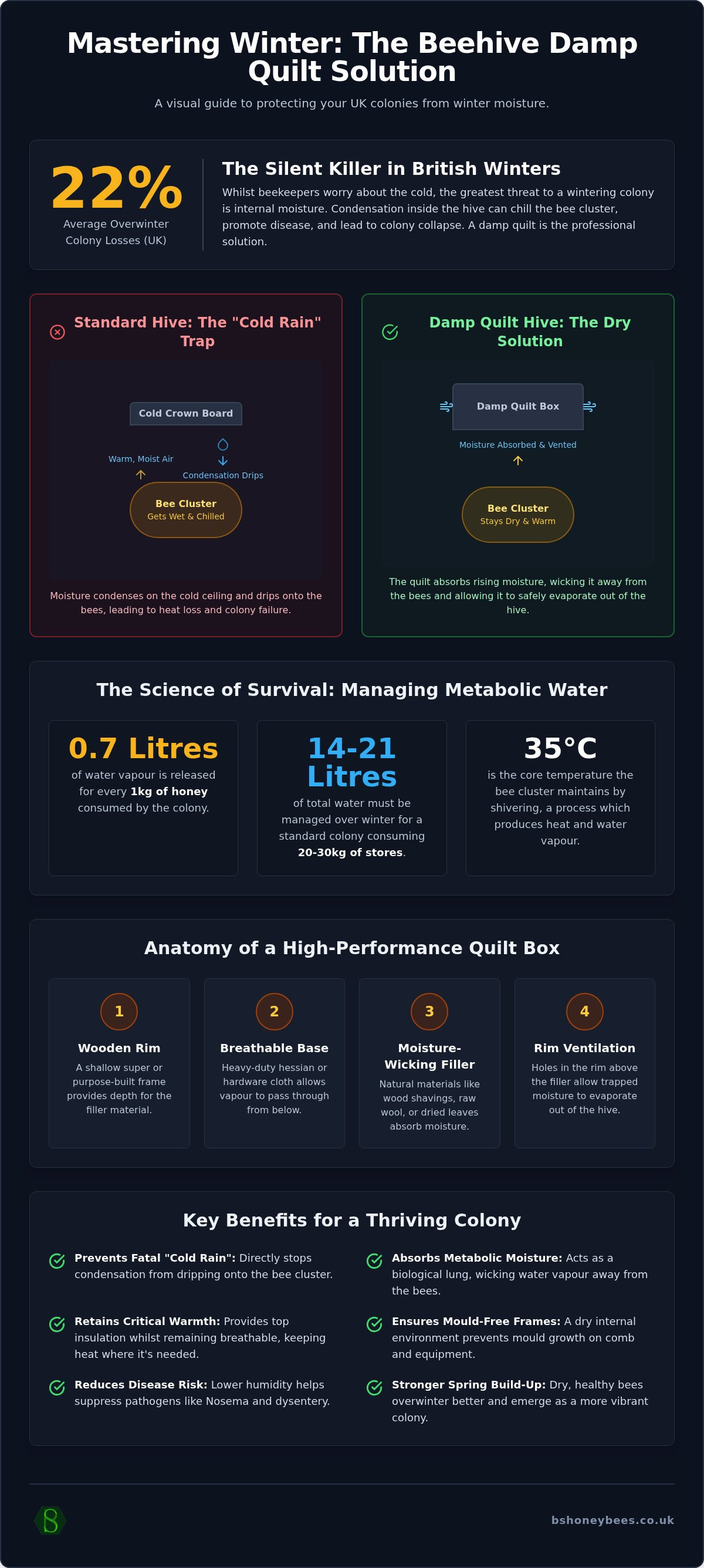
Did you know that average overwinter colony losses in the UK reached approximately 22% during the 2024/25 season? While many beekeepers worry about the biting cold, the real silent killer in a British winter is internal moisture. If you've ever discovered mouldy frames or a sodden cluster in your British National hives, you know that managing condensation is the biggest hurdle to spring success. Integrating a beehive damp quilt into your winter setup provides a professional, reliable solution to this perennial problem.
We understand the frustration of receiving conflicting advice about top ventilation versus heavy insulation. You want a clear, proven method to protect your bees. This guide shows you exactly how a damp quilt acts as a biological lung for the hive, managing the specific humidity of the British climate. We'll cover the best materials for your quilt box and provide step-by-step instructions to prepare your colony for the wet months ahead. By following these steps, you can ensure your Buckfast or Carniolan bees emerge as a healthy, vibrant colony when the first spring forage appears.
Key Takeaways
- Understand how a beehive damp quilt acts as a biological lung to absorb internal metabolic moisture whilst retaining critical colony warmth.
- Identify the specific risks of the "cold rain" effect, where condensation on cold crown boards can prove fatal to your winter cluster.
- Learn how to adapt a standard British National hive shallow super into a high-performance quilt box using breathable, natural fillers.
- Discover the wintering characteristics of F1 Buckfast and Carniolan bees and how their cluster behaviour influences moisture management needs.
- Secure a dry, healthy environment for your bees to ensure mould-free frames and stronger colony build-up in the spring.
What is a Beehive Damp Quilt? Essential Winter Moisture Control
A beehive damp quilt is a breathable, insulated top layer designed to manage the internal atmosphere of a hive during the dormant months. While a standard solid crown board acts as a flat ceiling, a quilt box functions more like a high-performance jacket; it retains vital heat while allowing metabolic moisture to pass through. This distinction is vital for survival in the British climate. Our winters are notoriously damp, and for a honeybee colony, moisture is a far greater threat than low temperatures. Bees can survive freezing air, but they rarely survive being wet.
Standard hive setups often fail in the UK because they trap the humid air produced by the bees' respiration. When this warm, wet air hits a cold, solid surface like a standard crown board, it condenses into water droplets. These droplets then fall back onto the winter cluster, chilling the bees and often leading to colony collapse. By replacing or augmenting the crown board with a beehive damp quilt, you create a buffer that absorbs this moisture before it can condense. This approach aligns with advanced general beekeeping practices that prioritise the health of the colony's environment over simple insulation.
The Anatomy of a Quilt Box
Constructing a functional quilt box requires three primary components: a wooden rim, a breathable base, and a moisture-wicking filler. The rim is typically a shallow super or a purpose-built wooden frame that provides the necessary depth for the insulation material. For the floor, beekeepers often use heavy-duty hessian or #10 hardware cloth. This material must be porous enough to let air pass through but strong enough to support the weight of the filler. Finally, the filler, usually wood shavings, raw wool, or dried leaves, acts as the sponge. You must include ventilation holes in the wooden rim above the filler line. These holes allow the moisture trapped in the material to evaporate out of the hive, keeping the insulation dry and effective throughout the winter.
Terminology: Quilt Box vs. Moisture Quilt
Beekeeping jargon can be confusing, but "quilt box," "moisture quilt," and "damp quilt" generally refer to the same concept. The term "quilt" originates from traditional Warré beekeeping, where a cloth-bottomed box was filled with natural materials to mimic the hollow of a tree. In the UK, we often use the term "damp quilt" to highlight its specific function in our maritime climate. Whether you're managing modified British National hives or traditional setups, the goal remains consistent: preventing "cold rain" inside the hive. Using this system ensures your bees stay dry, which is the single most important factor for successful wintering in Britain.
The Science of Winter Condensation and Colony Survival
Bees don't hibernate. They stay active by shivering their flight muscles to maintain a core cluster temperature of approximately 35°C. To fuel this heat, they consume winter stores. This metabolic process has a significant byproduct: water vapour. For every kilogram of honey your bees consume, they release nearly 0.7 litres of water vapour into the hive's atmosphere. Without a strategy to remove this vapour, your colony is at risk.
The "Cold Rain" effect occurs when this warm, humid air rises and meets a cold surface, such as a standard wooden or plastic crown board. The water vapour reaches its dew point and condenses into liquid. In a poorly managed hive, this water drips directly onto the bees. A wet bee is a dead bee. Cold water destroys the cluster's ability to thermoregulate, leading to rapid heat loss and eventual colony failure. Integrating a beehive damp quilt ensures this condensation happens within the filler material, safely away from the cluster.
Metabolic Water and the Winter Cluster
Excessive internal humidity does more than just chill the bees. It creates a breeding ground for pathogens. High moisture levels are directly linked to outbreaks of dysentery and Nosema, as the bees are forced to stay confined in a damp, unsanitary environment. A beehive damp quilt acts as a wick. It draws the moisture away from the cluster through capillary action. Considering a standard British National colony requires 20-30 kilogrammes of food for winter, that is upwards of 14 litres of water that must be managed to keep the environment healthy.
Vapour Pressure and Ventilation
UK beekeepers often struggle with the balance between warmth and airflow. While open mesh floors provide some ventilation, they are often insufficient during our saturated winters. Outside air in the UK is frequently at 90% humidity or higher, meaning it can't easily absorb more moisture from the hive through bottom openings alone.
The quilt box functions as a "biological lung." It uses vapour pressure to push humid air through the breathable floor and into the filler material. This setup avoids the aggressive "chimney effect" caused by large top vents, which can strip away too much heat. Instead, it allows for a slow, controlled exchange. This ensures your British National hive remains a stable, dry environment. For those managing high-performance colonies, ensuring a dry winter environment is a key step in optimising your F1 Buckfast queens' success for the following season.
Choosing the Best Materials for Your Hive Quilt Box
Selecting the right filler for your beehive damp quilt is a balancing act between thermal efficiency and moisture management. You need materials that offer a high thermal R-value to keep the colony warm, yet maintain enough porosity for air to move. Airflow is non-negotiable. If the air stays stagnant, the moisture won't evaporate out of the vents. This is why synthetic insulation, such as Celotex or Kingspan, often fails in this specific application. While these boards are excellent at retaining heat, they act as a vapour barrier. They stop the "breathable lung" effect, trapping damp air exactly where you don't want it.
Always source untreated, organic materials for your setup. Avoid any wood products containing glues, resins, or chemical fire retardants. These substances can leach fumes into the hive environment during the winter months, potentially harming your bees. Stick to natural fibres that have been used successfully in UK apiaries for generations. These materials are not only safer for the bees but are also more effective at wicking moisture away from the cluster through capillary action.
Wood Wool vs. Wood Shavings
Wood wool, often called excelsior, is a favourite amongst professional beekeepers. It provides high loft, meaning it creates large air pockets that facilitate rapid evaporation. This ensures the beehive damp quilt stays dry even during a saturated British January. However, its actual moisture-holding capacity is lower than denser materials. Wood shavings, such as the type used for pet bedding, are highly absorbent and act like a sponge. The risk with shavings is compression. If they pack down too tightly, they block the airflow. For a British National hive, a layer of wood wool topped with a thinner layer of shavings often provides the ideal compromise.
Hessian Sacking and Raw Wool
Hessian sacking is a staple component because it is cheap, breathable, and easy to handle. You can fold multiple layers of hessian to adjust the insulation level as the temperature drops. Raw, unwashed sheep wool is another traditional UK choice. It is naturally antimicrobial and retains its insulating properties even when slightly damp. It also offers a higher R-value than wood-based products. Be mindful that organic fillers can attract pests. Wax moths sometimes find their way into wool or wood shavings. Inspect your quilt boxes during brief winter checks and replace any filler that shows signs of infestation or excessive dampness.
Installing a Damp Quilt on a British National Hive
Adapting the beehive damp quilt concept to the British National beehive is a straightforward task that significantly improves winter survival rates. Because the National hive is the UK industry standard, most beekeepers already have the necessary components to build a quilt box. You don't need complex tools; a standard shallow super or a purpose-built wooden rim provides the perfect foundation. Follow these steps to ensure your setup is effective before the first frost arrives.
- Step 1: Select your rim. Use a shallow super or a dedicated 100mm wooden rim. This depth ensures there is enough space for insulation whilst leaving a small air gap at the top.
- Step 2: Prepare the floor. Secure a breathable base to the bottom of your rim. Heavy-duty hessian is the traditional choice, but stainless steel mesh also works well. Ensure it is stapled tightly to prevent sagging.
- Step 3: Fill the box. Add your chosen filler to a depth of 75mm to 100mm. This volume is essential for managing the high metabolic moisture output of a strong winter colony.
- Step 4: Manage the roof space. Place your roof over the quilt. It is vital that your roof has functional vents. If the moisture wicks into the filler but cannot escape the roof, the system will eventually fail.
Fitting the Quilt in the Hive Stack
For maximum efficiency, place the quilt directly above the brood box frames. This allows the breathable floor to sit in close proximity to the cluster, wicking away moisture the moment it is produced. Some beekeepers prefer placing the quilt above a crown board with the porter bee escape holes left open. While this works, direct contact is generally more effective for rapid moisture removal. Once installed, ensure the entire hive stack is secured with a ratchet strap. UK winter storms can be fierce, and a quilt box increases the hive's height and wind resistance.
Winter Inspections and Maintenance
Monitoring your beehive damp quilt throughout the winter is a low-impact way to ensure colony health. You don't need to open the brood nest; simply lift the roof and feel the filler material. If the top layer of wood shavings or wool feels saturated, it is time to swap it for fresh, dry material. These quick checks are best performed whilst wearing professional protection. Using BBWear bee suits allows you to work confidently and quickly, even on cold days when the bees might be defensive. If you need to refresh your winter equipment, browse our professional range of British National hives and frames to ensure your colonies have the best possible start for the coming season.
Optimising Winter Health for Buckfast and Carniolan Colonies
Successful wintering is not a one-size-fits-all process. The subspecies of your bees dictates how much metabolic moisture they produce and how they manage their stores. While a beehive damp quilt is a universal tool for the UK climate, its application should reflect the specific genetics of your colony. High-performance bees have distinct wintering behaviours that require a proactive approach to moisture management.
Colonies headed by F1 Buckfast Queens UK are known for maintaining larger winter clusters compared to native strains. This higher population density leads to increased respiration and higher consumption of stores. Because Buckfast bees stay active longer into the autumn, they generate a significant volume of water vapour. A robust damp quilt is essential for these colonies to prevent the cluster from becoming chilled by its own metabolic output.
Breed-Specific Wintering Traits
Buckfast bees are prolific. Their nature means higher metabolic activity throughout the winter, which necessitates a deeper layer of quilt filler to manage the extra moisture. In contrast, Carniolans are more conservative. They reduce their population significantly in late autumn, resulting in lower moisture output. However, Carniolan health is still closely tied to a dry environment. Damp conditions are a primary trigger for Nosema, a disease that can devastate an otherwise healthy Carniolan colony. If you are wintering honey bee nucs for sale UK, adjust your quilt depth carefully. Smaller volumes of bees produce less heat; the quilt must provide superior insulation whilst ensuring the environment remains bone-dry.
The Final Winter Checklist
Integrate your quilt setup with your autumn bee feeding and varroa treatment routine. Late-season syrup feeding adds significant moisture to the hive. Ensure your quilt is in place before you finish feeding to help the bees cure their stores without saturating the brood nest. Follow these final steps for a secure setup:
- Forward Tilt: Ensure the hive is tilted slightly forward. A 5-degree tilt prevents driving rain from entering the quilt rim or pooling on the landing board.
- Pest Protection: Install mouse guards. Organic fillers like wood wool or sheep wool can attract nesting rodents seeking warmth.
- Spring Timing: Plan to remove the quilt in early spring. Once the queen begins laying heavily in March, the colony needs to retain more heat for the brood. Over-ventilation at this stage can hinder the spring build-up.
By tailoring your winter hardware to your bees' genetics, you ensure a dry, healthy environment that allows your colonies to thrive. A well-managed hive in winter is the foundation of a productive honey season in the spring.
Secure Your Colony for a Successful Spring
Wintering honeybees in the UK requires a proactive strategy that prioritises moisture management over simple insulation. By installing a beehive damp quilt, you effectively eliminate the "cold rain" effect that threatens even the strongest clusters. Whether you're managing prolific F1 Buckfast colonies or efficient Carniolans, ensuring a dry internal environment is the most important factor for reducing winter losses. Use natural, breathable fillers and maintain clear ventilation to keep your bees healthy through the dampest months.
As specialist suppliers of F1 Buckfast and Carniolan queens, we understand the logistical precision required for a thriving apiary. We provide premium British National hives and professional BBWear protective gear to support your success. With nationwide UK delivery on all live bees and hardware, we're your dependable partner for high-standard equipment. Take the final step in your winter preparations today. It's the best way to ensure your bees are ready for the first spring flow.
Browse our British National Hives and Wintering Equipment and secure your colonies for the season ahead.
Frequently Asked Questions
Do I still need a crown board if I use a beehive damp quilt?
No, the quilt box typically replaces the crown board or sits directly on top of the brood frames. Placing it directly above the bees allows for the most efficient moisture wicking. If you choose to keep the crown board in place, you must ensure the porter bee escape holes are left open so the moisture can reach the quilt filler. Most professional setups remove the board entirely to maximise the breathable lung effect.
What is the best filler material for a UK moisture quilt?
Wood wool is widely considered the superior material for a beehive damp quilt in the UK. It offers high loft and excellent airflow, which is critical for evaporating moisture out of the side vents. Untreated wood shavings or raw sheep wool are also effective alternatives. Avoid synthetic materials or treated wood products that might release harmful chemicals or trap moisture rather than wicking it away through the filler.
Will a damp quilt make my hive too cold in winter?
No, a properly installed damp quilt actually improves thermal efficiency. While it allows moisture to escape, the filler material acts as a high-quality insulator that retains the heat generated by the cluster. Unlike aggressive top ventilation which can create a drafty chimney effect, the quilt provides a breathable buffer. This helps your bees maintain their core temperature of 35°C without wasting energy on excessive shivering during cold snaps.
How often should I check the wood chips in my quilt box?
You should check your quilt box once a month during the peak winter months. Lift the roof quickly to feel the top layer of filler. If the material feels saturated or sodden, swap it for fresh, dry shavings or wool immediately. These brief checks are vital during wet British winters, especially for prolific colonies like Buckfasts that generate significant metabolic moisture through high consumption of winter stores.
Can I use a damp quilt on a poly nuc or only on timber hives?
Damp quilts are primarily designed for timber British National hives, but you can adapt the concept for poly nucs if needed. While polystyrene is a better insulator than wood, it is entirely non-breathable. If you notice heavy condensation on the underside of a poly lid, adding a shallow rim with breathable filler can help. However, most 2-in-1 poly nucs rely on their high insulation values to keep internal surfaces above the dew point.
Does a damp quilt help with varroa management?
A damp quilt doesn't kill mites directly, but it significantly supports the colony's overall health during varroa treatments. High humidity and dampness stress the bees' immune systems, making them more susceptible to the viruses spread by mites. By ensuring a dry environment, the quilt allows the bees to focus their energy on survival and brood rearing rather than battling moisture-induced pathogens like Nosema or dysentery during the winter.
Should I provide top ventilation holes in the hive roof as well?
Yes, your hive roof must have functional vents for the system to work. The beehive damp quilt wicks moisture into the filler, but that moisture needs an exit path to the outside air. If the roof is sealed, the humidity will simply build up inside the quilt box, eventually saturating the material and dripping back onto the bees. Ensure your roof vents are clear of debris, spider webs, or winter blockages.
When is the best time to install the quilt box in the UK?
The ideal time to install your quilt box is in late autumn, typically late October or early November. You should wait until you have finished your autumn feeding and any initial varroa treatments. Installing the quilt before the first heavy frosts ensures that the bees are protected as they begin to form their winter cluster. This timing helps manage the initial moisture surge as the bees cure their final sugar syrup stores.