
Should you open the hive on the first mild day of spring, or wait until the colony is clearly ready? The first bee hive inspection of the year isn’t set by a date on the calendar. Weather, colony activity and a clear reason to inspect should guide your decision.
It’s sensible to worry about chilling brood or disturbing bees that have just come through winter. A focused check on a suitable, calm day can give you the essentials without leaving the hive open longer than necessary. You don’t need to find the queen to assess whether she’s laying: fresh eggs are useful evidence of her activity.
This guide explains how to judge whether conditions are right, what to check during your first opening and which observations to record. You’ll also learn how to interpret the signs without handling every frame, and how to close the hive securely when you’re done.
Key Takeaways
- Choose the first bee hive inspection of the year by judging the weather and colony readiness, not by following a fixed date.
- Keep the first check purposeful: assess survival, food stores and signs of brood without handling every frame.
- Separate routine spring observations from signs that need closer attention.
- Prepare equipment and notes in advance, follow a simple inspection sequence and close the hive securely.
- Record what you observe and use current official guidance if you spot possible disease concerns.
When should you make the first bee hive inspection of the year?
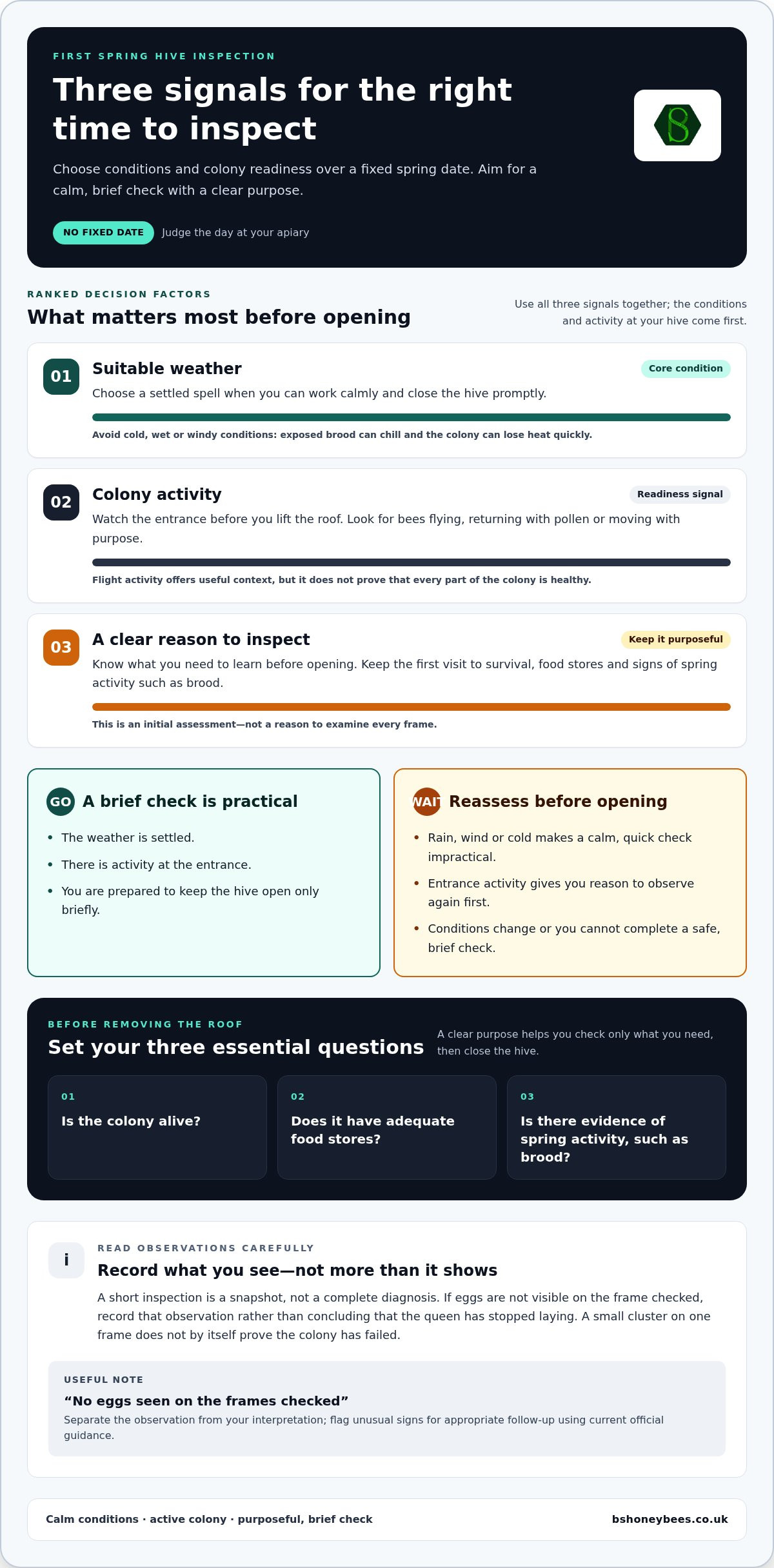
Choose conditions and colony readiness over a fixed spring date. The right time for the first bee hive inspection of the year is when the colony is active enough to check and the weather allows you to work calmly and close the hive promptly. Opening too early, particularly in cold, wet or windy conditions, can chill exposed brood and unsettle a colony that is still conserving warmth after winter.
Waiting indefinitely for a perfect day isn’t the answer either. As spring activity builds, useful observations about survival, stores and signs of brood shouldn’t be put off without reason. Make the decision based on the activity at your hive and the conditions on the day, rather than relying on a date that may not suit your apiary.
A suitable first-inspection window is a settled spell when the colony is showing activity and you can make a brief, purposeful check without exposing the brood to poor conditions.
Use weather and colony activity as your go/no-go signals
Start outside the hive. Watch the entrance and note whether bees are flying, returning with pollen or moving in and out with purpose. Flight activity is useful context, not proof that every part of the colony is healthy, but it helps you judge whether the bees are active enough for a brief opening. Assess the weather too: avoid cold, wet or windy conditions, when bees may be harder to manage and the colony can lose heat quickly.
Conditions vary across the UK, and even nearby apiaries can have different exposure, shelter and weather. Don’t treat a date that worked elsewhere as a rule for your hive. The broader Beekeeping practices include managing colonies in response to their conditions; apply that same practical judgement here.
- Go: the weather is settled, the entrance shows activity and you’re prepared to keep the hive open only briefly.
- Wait: rain, wind or cold makes a calm, quick check impractical, or entrance activity gives you reason to observe again before opening.
Set a clear purpose before you remove the roof
Decide what you need to learn before lifting the roof. Keep the first visit to three essential questions: Is the colony alive? Does it have adequate food stores? Is there evidence of spring activity, such as brood? This is an initial assessment, not a full-season frame-by-frame examination. You don’t need to inspect every frame simply because the hive is open.
If the weather turns or you can’t carry out a safe, brief check, postpone and reassess conditions. A clear purpose helps you stay focused: check only what answers your essential questions, note what you observe, then close the hive. This avoids both opening before conditions suit the colony and delaying without a plan as spring progresses.
What does a careful first spring hive inspection involve?
A first spring inspection is a brief check that the colony has survived, has food within reach and is showing signs of brood, without exposing the hive longer than necessary. Keep that purpose in mind throughout. The aim isn’t to examine every frame or reach a firm conclusion about every aspect of colony health from one visit.
Work methodically and calmly. A snapshot tells you what you observed at that moment, not necessarily the whole story. A small cluster on one frame, for example, doesn’t by itself prove the colony has failed. Colony size and activity can vary, so consider what you find alongside the conditions and the colony’s history. The National Bee Unit’s UK Spring Beehive Checks can provide a useful reference alongside your own records.
Check colony condition, stores and signs of brood
Begin with the bees you can see. Note whether there’s a live cluster and how the adults behave as you work. Then assess accessible food stores. Look at what’s present and where it sits in relation to the cluster. A quick glance at one frame won’t necessarily show you the whole supply picture.
If conditions allow, make a brief frame check for eggs or brood. Handle only what you need to answer the question, and return each frame carefully to its original position. If you don’t spot eggs on the first frame, record that observation rather than concluding that the queen has stopped laying. One short inspection cannot diagnose every colony issue.
- Record what you see: cluster and adult bee activity, visible stores, and any eggs or brood observed.
- Separate observation from interpretation: write “no eggs seen on the frames checked” rather than treating it as proof that no eggs are present.
- Flag concerns: unusual signs or suspected disease need appropriate follow-up using current official guidance.
Handle frames carefully and keep the opening brief
Get your smoker, hive tool and record sheet ready before opening the hive. Having the essentials to hand means you won’t need to search for equipment while brood is exposed. Use the smoker thoughtfully and work with controlled movements. Avoid rushing, but don’t leave frames out while you make notes.
Lift frames steadily and keep them over the hive where practical. Limit the time brood is exposed to the air, and avoid twisting or knocking frames together, which can injure bees or disturb the comb. Once you’ve checked survival, stores and signs of brood, replace the frames in order and close the hive securely.
Suitable protective clothing and sound hive equipment support careful handling. If you’re reviewing your setup, browse bee suits and British National hives as part of preparing for inspections.
How should you interpret what you find in the hive?
Use your notes to separate what you observed from what you think it means. A colony may still be clustered or have limited brood early in spring. Its size and brood pattern depend on the season, recent conditions and its own history. Don’t compare two colonies as though they should develop at the same pace, or diagnose queen failure from one absent sign or a single early inspection.
Use this table as a proportionate guide. It can help you decide whether to record and monitor, or seek advice, rather than make a firm diagnosis from a quick look.
| Observation | Proportionate response |
|---|---|
| Bees are clustered, with limited brood visible early in spring. | Record the cluster, adult bee activity and any brood seen. If the colony otherwise appears stable, avoid treating this alone as evidence of failure. |
| Stores are visible, but you’re unsure whether they’re adequate. | Note what you can see and where it is in relation to the cluster. Don’t estimate from a single frame or make assumptions about the whole hive. |
| No eggs are seen on the frames checked. | Record which frames you examined. One brief check may not show the full picture, so don’t conclude on this sign alone that the queen has failed. |
| Brood looks unusual or you suspect disease. | Don’t name a disease from a brief visual check. Consult current National Bee Unit guidance and follow its advice on appropriate next steps. |
Separate normal early-season variation from reasons to monitor
Early spring colonies can still be concentrated in a cluster, with brood rearing only beginning to build. Weather and forage conditions influence activity, while each colony’s winter history affects what you see. Record stores, adult bee activity and visible brood separately. If one finding is uncertain but the colony seems otherwise stable, note it and reassess at a later inspection when conditions are suitable. Repeatedly opening the hive to seek certainty can disturb the colony without adding useful information.
Know when an observation needs experienced or official guidance
Unusual brood appearance deserves attention, but appearance alone may not identify the cause. Avoid trying to diagnose disease from a short description or photograph. Use current National Bee Unit guidance for suspected disease and any advice on reporting or action; don’t apply a treatment based on guesswork. For queen-related concerns, drone-laying queen symptoms can help you understand which signs to consider, but it doesn’t replace a careful assessment.
For broader background on routine colony management, Penn State Extension’s Beekeeping Basics and Colony Management offers a useful overview. Treat it as general beekeeping information, not a substitute for UK-specific disease guidance. Let the first inspection inform your next step rather than force a conclusion: note the evidence, monitor uncertain findings and seek authoritative guidance when something appears abnormal.
How to complete the first inspection without over-disturbing the colony
A short, consistent sequence keeps the inspection focused and limits unnecessary handling. Decide which checks are essential before opening the hive, then stop once you have the information you need. Additional frame checks can wait if conditions worsen or the essential observations are clear.
Prepare, open and carry out the essential checks
Have your protective clothing, smoker, hive tool and inspection notes ready before approaching the hive. Check that the weather still suits a brief opening. If conditions have turned cold, wet or windy, postpone rather than expose the colony while you struggle through the inspection.
- Set up your notes and equipment. Make sure the smoker is ready to use and your record sheet is accessible. This avoids leaving the hive open while you look for tools or decide what to record.
- Open the hive calmly. Use deliberate movements and avoid unnecessary noise or jolting. Keep the roof and covers organised so you can replace them promptly.
- Make the essential checks first. Assess whether the colony is alive, whether food stores are accessible and whether there are signs of spring activity. Keep these observations distinct from optional checks, such as examining additional frames for brood.
- Handle only the frames needed. Lift frames gently and keep them in order. If a frame check is appropriate, look for the evidence you need, then return the frame without prolonged exposure. Don’t continue through the hive simply to inspect every frame.
- Close the hive securely. Replace frames and parts in their original arrangement where appropriate, then make sure the hive is properly closed before putting away your equipment.
If terms such as brood box, crownboard or floor are unfamiliar, the British National beehive guide can help you understand the parts of this common UK hive format.
Record findings, close the hive and plan a follow-up
Write down facts while they’re fresh, but don’t turn an uncertain observation into a diagnosis. Record the date, weather and working conditions, stores seen, brood or eggs observed, and any follow-up you think is needed. For example, “eggs not seen on the frames checked” is more useful than “queenless” when you haven’t confirmed that conclusion.
Use your notes to decide what comes next. If a finding is unclear and the colony otherwise appears stable, plan to reassess when conditions are suitable rather than reopening immediately. If you noticed a specific concern, note that you need to consult current official guidance or seek appropriate experienced advice. Let the observations and conditions guide the timing, not an arbitrary interval.
Good preparation includes protective clothing and equipment that suits your hive format. Browse bee suits and British National hives to review relevant inspection essentials.
What to prepare for your first bee hive inspection of the year
Preparation makes it easier to keep the hive opening brief and purposeful. For the first bee hive inspection of the year, decide what you need to check, choose a suitable day based on the weather and colony activity, and have your equipment and notes ready before you begin. If conditions aren’t right for a calm, short inspection, wait for a more suitable opportunity.
Prepare protective clothing and essential inspection equipment
Gather a bee suit or other suitable protective clothing, smoker, hive tool and notebook. Check that your clothing fits properly and that your tools are clean, functional and ready to use. Prepare your smoker before approaching the hive, and keep your notebook somewhere accessible so you can record findings without delaying closure. For practical advice on fit and protection, see this bee suit sizing guide.
Check the hive equipment too. Make sure the roof, covers and other parts are ready to be put back securely, and that frames sit properly in the box. Correctly fitting equipment helps you work methodically and avoid unnecessary handling while the colony is exposed. Don’t wait until the hive is open to discover a tool is missing or a component is awkward to replace.
- Protective clothing: suitable, comfortable and ready to wear.
- Inspection tools: smoker and hive tool prepared before opening.
- Records: notebook or record sheet ready for the date, conditions, stores, brood observations and follow-up.
- Hive parts: checked so you can restore the arrangement and close the hive securely.
Leave the colony settled and make the next decision deliberately
Once the essential observations are complete, return frames and equipment to their original arrangement where appropriate and close the hive securely. Record what you actually saw, not assumptions about the queen or the colony’s overall health. Note the weather, stores and brood observations, then use those details to guide your next decision.
There’s no single inspection interval or outcome that suits every colony. Consider whether conditions remain suitable, whether stores appeared adequate and whether any observation needs follow-up. If you have concerns about possible disease, consult current National Bee Unit guidance and follow relevant local beekeeping rules. Avoid reopening the hive simply because a fixed date has arrived.
With a clear plan, suitable clothing and equipment, and accurate notes, you’re better prepared to make a calm first check and decide what the colony needs next. If you’re getting your apiary ready for spring, browse beekeeping equipment for relevant hive and protective clothing essentials.
Build a confident inspection routine this spring
Let each inspection inform the next. A simple, consistent record gives you a useful reference as the colony develops, helping you notice changes over time rather than relying on memory or a single snapshot. Keep your notes factual, and let the colony’s condition and the weather shape your next decision.
The first bee hive inspection of the year is a starting point, not a test you need to get perfect. Stay purposeful, give the bees room to settle after you close the hive, and use your observations when planning future checks. If you’re preparing your apiary for the season, browse beekeeping equipment for the season.
Take it one inspection at a time. With a clear plan and steady practice, you can make sound decisions and support your colony as spring progresses.
Frequently Asked Questions
When should I do the first bee hive inspection of the year in the UK?
Choose a settled spring day when the colony is active and you can work without exposing it to cold, wet or windy conditions. The first bee hive inspection of the year isn’t tied to one date across the UK: local weather, shelter and the colony’s state all matter. Watch the entrance first, and postpone if conditions make a calm, brief opening impractical.
Is it normal to see very little brood during the first spring inspection?
Yes, limited visible brood can occur early in spring, especially if conditions have kept the colony clustered. Brood development varies between colonies and changes as the season progresses, so don’t judge the queen’s performance from one frame or compare colonies as though they’re identical. Record which frames you checked and what you saw. If the colony otherwise seems stable, use a later suitable inspection to see whether the picture has changed.
Can I inspect a hive if the day is sunny but windy?
Sunshine alone doesn’t make a day suitable. Wind can make it harder to handle frames steadily and may cool exposed brood, particularly if the apiary is exposed. Consider how sheltered the hive is and whether you can keep the opening brief. If gusts make it difficult to control the roof, covers or frames, leave the hive closed and observe entrance activity instead.
What should I do if I cannot find the queen during the first inspection?
Don’t keep searching through the colony just to see her. Look for evidence of laying, such as eggs, and record what you actually observed. If you find no eggs, that alone doesn’t confirm queen failure, particularly during an early-season check. Avoid handling more frames than necessary. If concerns persist at a later inspection, assess the new evidence alongside your notes and seek suitable experienced or official guidance.
Should I feed my bees after the first inspection of the year?
Not automatically. Base the decision on the stores you can assess, their accessibility to the cluster and the colony’s condition, rather than feeding every hive as a routine. If stores appear low or you’re concerned the bees may run short, seek current, reliable UK beekeeping advice before choosing what to provide. Record whether you fed the colony and why, so you can interpret later observations in context.
What should I record after my first hive inspection?
Note the inspection date and weather, the colony’s visible activity, stores seen and any eggs or brood observed. Add which frames you checked, anything unusual, and any action or follow-up you’re considering. Keep wording factual: “eggs not seen on frames examined” is clearer than an unconfirmed diagnosis. Consistent notes give you a useful comparison at later visits and help you spot changes without relying on memory.