

The most familiar hive isn’t automatically the most practical one for you. Choosing a beehive type means looking beyond its name: consider how you’ll lift and inspect it, which frames it takes, and whether you can source matching boxes and replacement parts as your apiary develops.
If National, WBC, Smith, Langstroth, top-bar and Warré designs feel difficult to compare, you’re not alone. Each involves different equipment and ways of working. A hive that looks appealing can become awkward if its inspection routine or components don’t suit your plans. The British National is a familiar UK option, and BS Honey Bees Ltd supplies British National hives and frames.
This guide compares practical differences between common hive types to help you match a setup to your experience, lifting preferences and plans for expansion. You’ll also find what to consider before buying, from frame compatibility to the routine of inspecting and managing a colony. Choose for the work you’ll do, not reputation alone.
Key Takeaways
- Compare National, Langstroth, WBC, Smith, Top-Bar and Warré designs by their components and management routines.
- When choosing a beehive type, weigh inspection comfort and lifting preferences alongside the hive’s design.
- Check frame dimensions and component compatibility before buying to keep equipment planning consistent.
- Use a practical checklist to match your priorities, storage space and future colony plans to a hive system.
- If the British National system suits your needs, matching British National hives and frames offer a clear starting point for building your setup.
Choosing a Beehive Type Starts With Your Beekeeping Plans
Several hive designs can support healthy colonies and good beekeeping. The practical choice depends on how you plan to inspect, handle and expand your setup, not on finding a universal winner. Start with the work you can manage consistently, then compare the equipment each system requires.
A beehive type is a design system with its own boxes, frames and management conventions. A National or Langstroth hive, for example, is more than a particular-looking box. Its design determines how components fit together and shapes the way you work through inspections. For an overview of the history and range of modern beehive types, see Wikipedia.
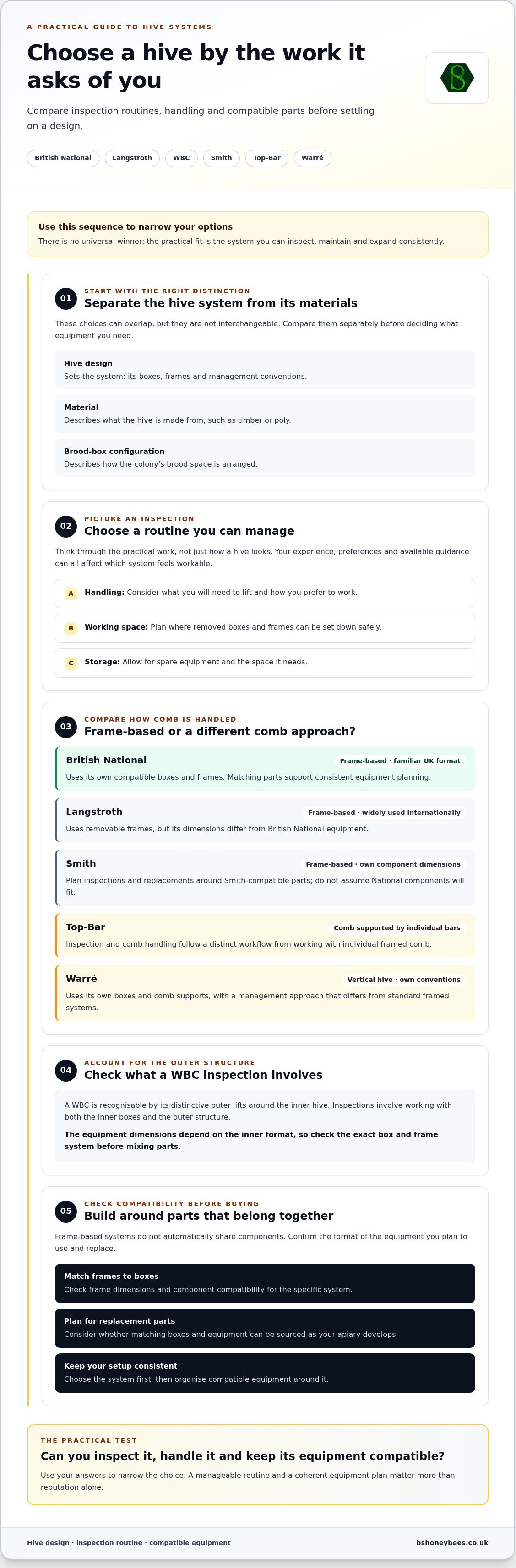
Keep three decisions separate. Hive design determines the system; material describes what it’s made from, such as timber or poly; and brood-box configuration describes how the colony’s brood space is arranged. These choices can overlap, but they aren’t interchangeable. Compare them separately to assess frame compatibility, inspection routines, lifting and handling, future expansion, and how straightforward it may be to source matching equipment.
What should a first-time beekeeper decide before buying a hive?
Decide what matters most in your day-to-day beekeeping. Do you value a familiar frame-based system, want to explore another approach to comb management, or prefer the traditional appearance of a particular hive? Then picture an inspection. Where will you place removed boxes and frames, and do you have enough room to set them down safely and store spare equipment? A manageable routine is more useful than choosing a design because it is fashionable or widely praised.
Does one beehive type suit every UK beekeeper?
No. Experience, practical preferences and the guidance available to you can all shape which system feels workable. Weather is one consideration, but it doesn’t determine performance on its own. Management and construction quality matter too, as do the time and effort you can commit to inspections and handling. If possible, compare your plans with the routine described by an experienced beekeeper who uses the system you’re considering.
No single hive design is best for every beekeeper; the best fit is the system you can inspect, maintain and expand consistently. The sections that follow compare British National, Langstroth, WBC, Smith, Top-Bar and Warré hives, then look more closely at handling and equipment compatibility. Use those differences to narrow your options before committing to a hive and its frames.
Compare British National, Langstroth, WBC, Smith, Top-Bar and Warré Hives
These systems differ in more than appearance. Their frames or comb supports, box arrangements and inspection routines affect which parts fit and how you handle the colony. Use the table as a starting point, then compare the actual components and working routine of the setup you’re considering. Specifications and practices can vary.
| Hive type | Design and frame system | Inspection and practical considerations |
|---|---|---|
| British National | A familiar UK format with its own compatible boxes and frames. | Frame-based inspections follow the system’s dimensions. Matching parts support consistent equipment planning. |
| Langstroth | A widely used international format, with dimensions that differ from British National equipment. | Uses removable frames. Its wider international use doesn’t mean components will fit UK hive systems. |
| WBC | Recognisable by its distinctive outer lifts around the inner hive. Equipment dimensions depend on the inner format. | Inspections involve working with the inner boxes and outer structure. Check the exact box and frame system before mixing equipment. |
| Smith | A frame-based format with its own component dimensions. | Plan inspections and replacement equipment around Smith-compatible parts rather than assuming National components will fit. |
| Top-Bar | Comb is supported by individual bars rather than conventional framed comb. | Inspections use a distinct workflow for handling bars and comb. Consider how that routine fits your experience and preferences. |
| Warré | A vertical hive with its own boxes, comb supports and management conventions. | Its approach differs from standard framed systems. Compare how boxes and comb are managed, and how you’ll access compatible equipment. |
How do the main British hive designs differ?
National, Langstroth, WBC and Smith are all frame-based, but their components aren’t automatically interchangeable. National is a familiar UK format with matching boxes and frames. Langstroth is widely used internationally, yet has different dimensions. WBC adds its distinctive outer structure, while Smith has its own format. For another UK perspective, see this comparison of common hive types.
How do top-bar and Warré hives change the approach?
Top-bar hives support comb on bars, so inspections and comb handling differ from working with individual framed comb. Warré hives are vertical and follow their own equipment and management conventions. Neither label alone tells you whether the routine will suit you. Consider what you’ll need to lift, how you’ll inspect, and how you’ll organise compatible parts.
For a frame-based UK system, British National hives and frames provide a compatible equipment route. Whichever design you favour, confirm the component format before building your setup.
Which Beehive Type Makes Inspections and Equipment Planning Easier?
Inspection effort depends on the whole setup, not just the hive’s name. Consider what you’ll need to lift or move during routine management, how you’ll handle frames or comb, and whether you’ll have room to set components down safely. A frame-based hive lets you inspect individual frames, while top-bar and Warré systems use different comb supports and working routines. None guarantees easier inspections; your comfort, technique and the particular configuration matter.
Why do frame dimensions and compatible parts matter?
Frames and boxes are made to fit a particular system. National, Langstroth, WBC and Smith components have different dimensions, so a frame from one format won’t necessarily sit correctly in another. Mixing incompatible equipment can disrupt a consistent inspection routine and make replacement parts harder to organise. It can also complicate plans to transfer comb, since comb attached to one frame system may not fit another without extra work. For more detail on the UK National format, read this British National hive guide.
Matching frames and boxes to one system simplifies equipment planning. Keeping components consistent makes it clearer which spares fit and helps you plan expansion without accumulating mismatched parts.
How should you compare inspection and handling demands?
Picture the routine you expect to follow. Will you lift boxes, remove individual frames, or handle bars and comb? How far will equipment need to be carried, and where can you place it during an inspection? A WBC’s outer structure adds components to work around, while top-bar and Warré hives have distinct comb-management routines. These differences affect the sequence of handling, but don’t establish that one type is inherently easier for everyone. The guide to common UK hive types offers another perspective on familiar frame-based systems.
Keep material separate from design. Timber and poly are material choices, not hive types, and each can have different care needs. First decide which system suits your inspection routine and future plans; then consider the material and upkeep involved. If you settle on the National format, explore British National hives and frames as a compatible starting point.
Use This Checklist to Choose a Beehive Type That Fits
A short decision process can turn a long list of hive names into a practical buying plan. Separate what you need for safe, consistent management from preferences such as appearance, material or comb-management style. Then check that your chosen hive, frames and planned colony fit together.
- Set your priorities. Decide what matters most: comfortable inspections, familiar frame-based equipment, a particular approach to comb management, or a traditional look. Treat inspection access, lifting and storage as practical requirements; treat appearance and material as preferences unless they affect how you’ll manage the hive.
- Compare systems against your routine. Picture an inspection in your apiary. Consider how you’ll handle frames, bars or boxes, where you’ll put removed parts, and whether the process feels manageable. Choose a format you can maintain consistently, not simply the one with the strongest reputation.
- Check compatibility before buying. Pick one frame and box system, then make sure replacement parts and future equipment use the same dimensions. Avoid building a setup from components that look similar but belong to different formats.
- Plan for growth and bees. Think about where spare equipment will be stored and whether you may add colonies later. Include the colony in your plan: check that its frames or transfer requirements suit the hive you’ve chosen. This nucleus colony buying guide can help you consider how a nuc fits into your setup.
What matters most for a beginner choosing a hive?
Prioritise a hive you can inspect confidently and maintain as part of a regular routine. Practical guidance from an experienced beekeeper can help you understand the steps involved in your chosen format; pair it with reliable reference material and keep learning as your experience grows. If you’re considering the National system, read about National hive frames before assembling your equipment list.
How can you avoid costly equipment mismatches?
Check frame and box dimensions as a system, not as isolated purchases. A replacement frame must fit the hive, and future boxes need to match the same format. Keep a simple record of the system and components you select. That makes it easier to plan compatible equipment as your colony develops, rather than discovering a mismatch during an inspection.
Once your requirements are clear, choosing a beehive type becomes a decision based on routine, compatibility and future plans. If the British National system fits your priorities, explore British National hives and frames as you build a compatible setup.
Choose Your Hive System and Build a Compatible Setup
A sound buying plan starts with one clear decision: select the hive format you can manage, then keep its components compatible. As you’re choosing a beehive type, consider the inspections you’ll need to carry out and how your equipment plan can adapt as the colony develops. Avoid buying parts simply because they look similar; dimensions and fittings can differ between systems.
What should you buy alongside the hive?
Build your list around the chosen format and the work you expect to do. A functioning setup needs the hive’s matching frames or comb supports, plus any compatible boxes required for your planned management. Frames aren’t an interchangeable extra: they need to fit the hive and support the inspection method you intend to use.
Plan in stages. First identify the components needed to establish the hive and inspect it; then consider which matching equipment may be needed as the colony grows. This keeps your purchases focused and reduces the risk of accumulating parts that don’t fit. Include the bees in the plan, too. A nucleus colony needs to suit the hive format and its frames or comb supports.
How do you move from choosing a hive to getting started?
Write down the system you’ve selected and list its matching boxes and frames. Before positioning the hive, think through how you’ll approach inspections, where you’ll place components while working, and how you’ll store spare equipment. Leave room in your plan for expansion, but buy additional parts according to the needs of the colony rather than guessing in advance.
For a beginner, a manageable routine matters more than an ambitious equipment list. Keep a record of the format and components you buy, and use reliable references and beekeeping guidance to understand its inspection process. That gives you a consistent starting point and makes future equipment decisions easier.
BS Honey Bees Ltd supplies British National hives and frames for beekeepers who choose that system. If the National format fits your plans, explore British National hives and frames and build your setup around compatible components.
Choose a Hive You Can Manage with Confidence
The best choice isn’t about finding a universally superior hive. It’s about choosing a beehive type that suits your inspection routine, handling preferences and plans for future colonies. Compare how each system works, then check that its frames, boxes and replacement parts are compatible before you buy.
A clear equipment plan helps you avoid mismatched components and prepare for the colony’s development. BS Honey Bees Ltd supplies British National hives and frames, along with beekeeping equipment for customers across the UK.
Explore British National hives and frames to build your setup around compatible components. With a practical choice and a consistent plan, you can begin beekeeping with greater confidence.
Frequently Asked Questions
What is the best beehive type for beginners?
There isn’t a single best beehive type for every beginner. In the UK, the British National is a familiar option with compatible equipment, while other designs suit different preferences and management approaches. When choosing a beehive type, compare frame availability, inspection routines, handling demands and plans for expansion. Choose a system you can learn and maintain consistently, and seek practical guidance from someone familiar with that format.
Is a British National hive a good choice for UK beekeeping?
Yes, a British National hive can be a practical choice for UK beekeeping. It’s a recognised format with its own compatible frames and boxes, which can help you organise equipment around one system. It may suit you if you value a familiar frame-based approach. Consider your inspection routine, handling preferences and future plans, then compare the National’s dimensions and management with other formats before buying.
What is the difference between a National and a Langstroth hive?
Both use a modular, box-based design, but their frames and components have different dimensions. Langstroth is widely used internationally, while the British National is a familiar format in UK beekeeping. Their equipment isn’t automatically interchangeable, so don’t assume a frame or box from one will fit the other. Choose a system, then plan to source matching parts for inspections, replacements and future expansion.
Are poly beehives better than wooden hives?
Neither poly nor timber is automatically better for every beekeeper. The materials can differ in insulation, weight, care requirements and handling, so compare them against your working preferences and the manufacturer’s guidance. Material is separate from hive design: a National hive, for example, can be made from different materials. Decide which hive system suits your management plans first, then consider the material and its upkeep.
Can I use frames from one hive type in another?
Don’t assume frames are interchangeable between hive types. Frame and box dimensions differ across systems, and a poor fit can complicate inspections and equipment use. Before buying frames or replacement parts, identify the exact format your hive uses and match components to it. Keeping one compatible system makes future purchases easier to organise and helps maintain consistency as you add equipment or build up your apiary.
Which beehive type is easiest to lift and inspect?
Ease depends on the beekeeper, the hive configuration and the tasks involved in an inspection. Compare the size and handling of the components, how boxes are moved, and whether the hive uses removable frames or another comb-support arrangement. Consider your strength, working space and intended management routine. No hive type is guaranteed to be easiest for everyone, so focus on the setup you can handle confidently and consistently.
Do I need to choose a hive before buying bees?
It’s sensible to choose your hive system before arranging a colony, so you can prepare equipment that fits. Decide on the format, obtain compatible frames and boxes, and plan where the hive will stand and how you’ll inspect it. Then choose a suitable colony for that setup. This order helps you avoid last-minute equipment mismatches and gives you a clearer, more organised start to beekeeping.