
The best beehive for beginners UK beekeepers choose is not necessarily the most traditional or the one with the most capacity. It is the hive they can handle confidently and equip with compatible parts. If you are weighing up a British National, WBC, Commercial, Langstroth or top-bar hive, consider more than the initial purchase.
Choosing a first hive can feel complicated, especially if you are unsure about lifting boxes, sourcing replacement frames or finding experienced advice. The British National is an established option in the UK, with compatible parts available, but the right fit depends on your space, strength and access to support.
This guide compares common hive formats and explains what to check before you buy. You will learn how hive design affects day-to-day handling, why frame compatibility matters and how to plan for sourcing a colony. By the end, you will have a clearer basis for choosing a manageable first setup instead of simply picking the hive that looks familiar.
Key Takeaways
- The best beehive for beginners uk beekeepers choose depends on what they can manage and equip, not on a universal ranking.
- Compare British National, WBC, Langstroth and top-bar hives by handling, equipment compatibility and sourcing options.
- Consider lifting comfort, apiary space and access for regular inspections before settling on a hive format.
- A familiar British National hive may be a practical option, but weigh its trade-offs against your needs.
- Before ordering, confirm current stock, specifications and frame compatibility, and plan how you will learn responsible colony care.
What makes a beehive a good choice for a UK beginner?
A first hive should be manageable to inspect, straightforward to maintain and supported by equipment you can reliably source. Look beyond its appearance: check whether replacement frames and compatible parts are available, and whether you can get practical guidance from people familiar with that format.
A beginner-suitable hive is one you can handle and keep supplied; it does not teach you how to keep bees. Hive design affects how you work with the colony, but successful beekeeping still depends on learning inspections, seasonal care and responsible colony management. No format removes those responsibilities or guarantees an easy start.
British beekeepers use several established hive formats, each with its own equipment and conventions. The different types of beehive offer a useful introduction to how man-made hives vary. Next, find out which formats beekeepers around you know and can help you use.
What does a beginner need from a first hive?
Start with handling. Inspections involve lifting and moving hive components, so think honestly about what feels comfortable. If possible, see the format in person and consider how you would manage each part during a routine inspection. Do not choose a setup based only on its size or appearance.
Next, prioritise replaceable parts and a clear inspection routine. Frames and components are not automatically interchangeable between formats, so settle on one system and check compatibility before buying. Mixing formats without a clear reason can make replacement more complicated. A consistent setup lets you focus on observing the colony and applying what you have learned.
Why local equipment and support affect hive choice
Ask beekeepers nearby which hive formats they use, where they source compatible equipment and whether they can explain the inspection routine. Familiarity does not prove a format is right for everyone, but practical experience can help you assess it before committing. The British Beekeepers Association can also be a starting point for finding local association information.
Use that support to compare options, not to look for a guaranteed shortcut. The best beehive for beginners uk keepers can choose is one that suits their handling needs and can be consistently equipped, while leaving them ready to learn the skills every colony requires.
Which beehive types should UK beginners compare?
Compare each hive’s layout, the work involved in handling it and how easy it is to source matching parts. A format familiar to nearby beekeepers may be easier to get advice on, but that does not automatically make it easier for you to manage. Frame sizes, box dimensions and component compatibility vary, so verify specifications with the supplier before ordering.
| Format | Handling considerations | Equipment compatibility | Questions to investigate |
|---|---|---|---|
| British National | Check how the boxes and frames feel to lift in the configuration you plan to use. | Confirm frames and replacement parts match the exact National setup. | Can beekeepers nearby help with this format, and can you source compatible parts? |
| WBC | The outer case adds components to consider when accessing the inner hive. Check the lifting sequence and overall handling demands. | Ask which parts are specific to the WBC and whether any equipment is shared. | Are you comfortable removing and replacing the outer sections during inspections? |
| Langstroth | Compare the box arrangement and loaded lifting demands of the setup you are considering. | Check that frames and boxes are made for the same Langstroth configuration. | Can you reliably source compatible equipment and get help from keepers who know it? |
| Top-bar | Its horizontal layout differs from stacked-box systems. Find out how comb is handled during inspections. | Confirm which parts are specific to the design and how you will replace or repair them. | Is there experience with this approach nearby, and can you source what you need? |
How does the British National hive compare with other formats?
BS Honey Bees Ltd sells British National hives and frames, so beginners can investigate this format with a supplier of matching equipment. That does not mean it is right for every beekeeper. Compare its handling and available advice with WBC and Langstroth options, and check dimensions, weights and compatibility for the specific equipment you are considering. A dedicated British National hive guide can provide more format-specific detail.
Are alternative hive designs suitable for a first colony?
Alternative designs are worth considering, but top-bar hives are not a guaranteed shortcut. Their approach to comb and inspection differs from systems built around conventional frames, which can affect how you manage the colony and source replacement equipment. Ask nearby beekeepers what they use and can support. The National Bee Unit’s official government advice is also useful background when assessing the wider commitment of keeping bees.
The best beehive for beginners uk beekeepers choose is a practical match, not a universal winner. If you are considering the National format, explore British National hives and frames from BS Honey Bees Ltd, and confirm current availability and specifications before ordering.
Is the British National hive the best beehive for beginners?
The British National hive is an established UK format and a sensible option to investigate, but familiarity alone does not make it right for every new beekeeper. Your lifting comfort, access to compatible equipment and the advice available to you matter just as much. The best beehive for beginners uk keepers choose is one they can manage consistently, not simply the format they see most often.
What are the practical advantages of a National hive?
A key practical consideration is whether you can source matching frames and components. Keeping to one compatible format makes replacing parts more straightforward than mixing equipment that may not fit. BS Honey Bees sells British National hives and frames, giving beginners a supplier to investigate. Confirm current availability and ask which frames and components match the specific hive before ordering.
Do not assume that every item described as “National” will suit every setup. Check the product specifications and ask questions if anything is unclear. For more detail on the format, consult a dedicated British National hive guide and compare its dimensions and other specifications with the equipment you plan to buy.
What should beginners check before choosing one?
Test the practical fit before committing. Think through how you will handle the boxes and frames during a routine inspection, and whether you can position the hive so you can work around it safely. If possible, see the format in person or ask an experienced beekeeper to demonstrate how its components are handled. Do not rely on claims that a hive is lighter, cheaper or easier unless they are supported by specific, relevant information.
Then check equipment supply and available advice. Ask beekeepers nearby whether they use National equipment and can advise on inspections, and confirm that replacement frames and other parts are available from a source you can rely on. Familiarity may make relevant advice easier to find, but experience varies and no hive design removes the need to learn sound colony management.
A National hive may suit a beginner who can handle its components and reliably source compatible equipment and advice. Before choosing it, verify the exact specifications, replacement-part options and inspection routine for your setup. That is a more useful test than treating any format as automatically best.
How can you choose the right first beehive for your situation?
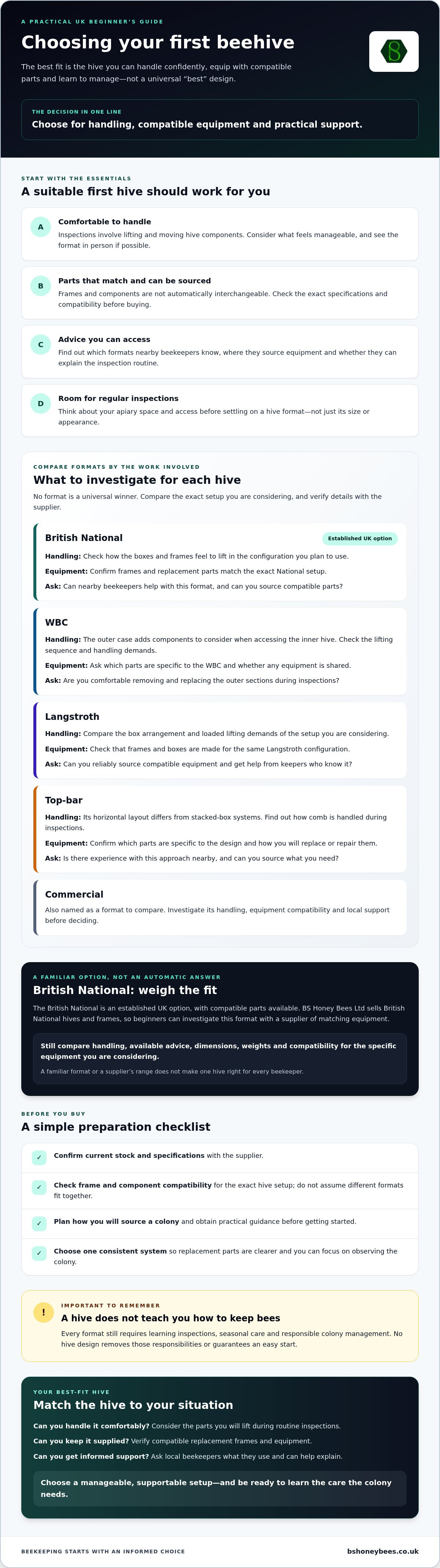
Use this checklist before choosing a format. Be realistic about what you can manage, and check the details with people who know the equipment. The best beehive for beginners uk keepers can choose is one that fits their apiary, handling needs and plans for ongoing care.
- Start with lifting comfort. Consider the boxes and other components you will handle during inspections. If you are unsure, see the hive in person and ask an experienced beekeeper to demonstrate the routine.
- Assess your available space. Allow room to approach the hive, open it and work safely without awkward manoeuvres. Consider whether access will remain practical when you are carrying tools and wearing protective clothing.
- Consider format familiarity. Ask beekeepers nearby which systems they know and can advise on. Familiarity can make relevant guidance easier to find, but it does not make a format automatically right for you.
- Check compatibility and supply. Confirm that the frames, hive parts and any colony you plan to obtain match your chosen format. Ask suppliers what is currently available and verify specifications before ordering.
- Plan for inspections and learning. Make sure your site allows regular access, and arrange suitable learning and support before acquiring a colony. Choosing a hive cannot replace the knowledge needed to inspect and care for bees throughout the year.
What should you check at your apiary?
Look for safe access and a stable position for the hive, with enough working room for routine inspections. Consider how exposed the site is to weather and whether you can still reach and work around the colony in less favourable conditions. There is no single position that suits every garden or apiary, so ask for advice based on your site rather than relying on a universal placement rule.
How do you plan the hive, bees and beginner equipment together?
Choose the hive and its frames as a system, then check that the colony you plan to obtain is supplied in a compatible format. A guide to honey bee nucleus colonies can help you understand what to consider when sourcing bees. Prepare protective clothing and other essentials before the colony arrives, and make a learning plan with support from beekeepers or an association.
For example, a beginner who can comfortably handle the equipment and has access to advice on National hives may decide to investigate that format. Someone who wants to minimise lifting or has limited working space may reach a different conclusion after assessing the site and available support. Match the hive to your circumstances, then confirm the details before buying. Explore British National hives and frames as one option, and check current availability and compatibility before ordering.
What should you buy and prepare before starting your first hive?
Buying a hive is only one part of getting ready. Choose a format, confirm its components fit together and prepare for the practical work of keeping a colony. The best beehive for beginners uk beekeepers choose will not replace learning how to inspect bees or arranging appropriate support.
What belongs on a first-hive preparation checklist?
Before ordering, work through these essentials:
- Hive format: Decide which system suits your handling needs and apiary space.
- Compatible frames: Confirm the frames and other parts match the exact hive you are buying. Check specifications and current stock with the supplier.
- Safe location: Choose a stable position with practical access for routine inspections and enough room to work around the colony.
- Inspection and learning plan: Arrange how you will learn safe handling and regular colony care, and identify suitable support before bees arrive.
- Protective clothing: Arrange suitable protective clothing and learn how to use it safely as part of your preparation.
Plan for the bees separately from the hive purchase. Check that the colony you intend to obtain is compatible with your chosen format, and consider the timing and arrangements for receiving it. A guide to honey bee nucleus colonies can help you understand what to consider when sourcing a nucleus.
Where can beginners explore British National hive equipment?
BS Honey Bees supplies British National hives and frames, alongside live bees and beekeeping equipment across the UK. If you are considering this format, compare the equipment details with your needs and confirm current availability, specifications and frame compatibility before placing an order.
Keep expectations clear: buying a hive does not provide beekeeping training, colony-care support, pest control or on-site maintenance. Make a separate plan to learn inspections and seasonal management, and seek guidance from an appropriate association or experienced beekeeper. Preparation matters as much as the equipment.
Once you have checked the format and compatibility, explore British National hive equipment as one option for your first setup. Verify the details and make sure the hive, frames, colony and learning plan fit together before you begin.
Choose your hive with confidence
The best beehive for beginners uk beekeepers choose is not simply the most familiar format. It should suit your lifting comfort and apiary, with compatible frames and parts you can reliably source. Compare British National, WBC, Langstroth and top-bar options, then check which formats beekeepers nearby can help you understand.
Before buying, confirm the hive specifications and frame compatibility, plan how you will obtain a colony, and make time to learn inspections and seasonal care. A well-chosen hive makes preparation more straightforward, but responsible beekeeping depends on the skills and support you build around it.
BS Honey Bees Ltd supplies British National hives and frames, alongside beekeeping equipment nationwide across the UK. If the National format fits your plans, explore British National hives and frames and check current availability and compatibility before ordering.
Take the decision one step at a time. With a manageable setup and a clear learning plan, you can prepare for your first colony with confidence.
Frequently Asked Questions
What is the best beehive for beginners in the UK?
The best beehive for beginners uk keepers choose is one they can handle safely, inspect regularly and equip with compatible parts. A British National hive is an established option to investigate, but it will not suit everyone. Compare it with other formats by checking frame compatibility, equipment availability and available advice. Consider your apiary space and lifting comfort before deciding, rather than choosing a hive based on familiarity alone.
Is a British National hive good for beginners?
Yes, a British National hive can be a suitable first hive if its handling demands and equipment fit your needs. Its established use in the UK makes it a practical format to investigate, but do not assume every frame or component described as “National” will fit your setup. Confirm compatibility and current availability with the supplier, and ask beekeepers nearby whether they can offer guidance on inspections using that format.
What is the difference between a National hive and a WBC hive?
A British National hive uses a box-and-frame arrangement, while a WBC has an outer casing around the inner hive. The casing means there are additional components to consider when accessing the colony. The practical difference depends on the specific equipment and how you handle it during inspections. Check the supplier’s specifications, lifting sequence and replacement-part options, and ask keepers nearby to show you each format if possible.
Can a beginner start with a Langstroth hive in the UK?
Yes, a beginner can start with a Langstroth hive if they can obtain compatible equipment and access advice on using that format. Before buying, check that the frames, boxes and other components match the specific configuration you plan to use. Ask beekeepers nearby whether they have practical experience with Langstroth hives. Choose a system you can maintain consistently rather than relying on assumptions about ease of use.
Should a beginner buy a hive before buying bees?
Prepare the hive and essential equipment before the bees arrive, and plan both purchases together. First choose a format, then confirm that the frames and the colony you intend to obtain are compatible with it. Arrange suitable protective clothing and make a plan for learning inspections and colony care. Check availability and delivery or collection arrangements with suppliers before committing, so the hive and bees are ready to work as one setup.
How many beehives should a beginner start with?
For many beginners, starting with one colony is a manageable way to build inspection skills and learn seasonal care without taking on more colonies than they can confidently manage. The right number depends on your time, space, support and ability to handle the equipment. Plan for responsible colony management and consider nuisance to neighbours when assessing your site. Ask a beekeeping association for advice relevant to your circumstances.
What equipment do I need with my first beehive?
Alongside a hive and compatible frames, prepare protective clothing, gloves, a smoker and a hive tool before the bees arrive. You will also need a safe hive position and a practical plan for regular inspections. Check that each component suits your chosen hive format instead of assuming parts are interchangeable. Equipment alone is not enough: arrange suitable learning and support so you can develop the skills needed for responsible colony care.