
Did you know the UK honey market is projected to reach a value of over $427 million in 2026? While the demand for authentic, traceable British honey is at an all-time high, the financial barrier to entry remains a significant challenge. Investing in premium British National hives and high-quality F1 queens requires substantial capital that can stall even the most dedicated apiarist's plans.
We recognise that the complex landscape of DEFRA requirements and the fragmented nature of local funding can be overwhelming. You need a clear path to secure the necessary resources without getting lost in a maze of bureaucracy. This guide serves as your comprehensive directory for beekeeping grants uk 2026, highlighting every major funding stream from the Eva Crane Trust to regional bursaries. We'll outline specific eligibility criteria, key 2026 application deadlines, and the exact equipment covered by these schemes. Follow this step-by-step guidance to align your project with national pollinator targets and secure the funding your apiary deserves for the upcoming season.
Key Takeaways
- Understand the shift towards 'Public Money for Public Goods' to align your apiary goals with the latest 2026 agricultural funding priorities.
- Navigate the complete landscape of beekeeping grants uk 2026, covering everything from the Sustainable Farming Incentive to specialist research trusts.
- Master the mandatory eligibility requirements, such as BeeBase registration and insurance, to ensure your application meets government and trust standards.
- Learn how to draft a compelling 'Apiary Impact Statement' that demonstrates your contribution to local biodiversity and pollinator recovery.
- Discover why investing grant funds in quality British National hives and gentle F1 queens ensures long-term sustainability and project success.
Beekeeping Funding in the UK: The 2026 Landscape
Securing beekeeping grants uk 2026 requires a clear understanding of how the funding environment has evolved. In simple terms, a beekeeping grant is a non-repayable financial award provided by government bodies like DEFRA, charitable trusts, or local beekeeping associations. These funds are designed to offset the high initial costs of equipment and livestock, ensuring that the essential practice of Beekeeping in the United Kingdom remains viable for both professionals and dedicated hobbyists.
The year 2026 marks a decisive shift in how these awards are distributed. We've moved fully into the 'Public Money for Public Goods' model. This means that funding is no longer just about honey production; it's about the measurable environmental benefits your apiary provides. If your project supports pollinator recovery, enhances local biodiversity, or provides community education, you're positioned at the front of the queue for the 2026 agricultural cycle. It's a pivotal year for the industry as the government seeks to meet ambitious nature recovery targets.
Capital vs. Revenue Grants
Understanding the distinction between capital and revenue funding is vital for a successful application. Capital grants cover physical assets. This includes essential hardware like British National beehives, honey extractors, and protective equipment. For most new beekeepers, capital grants are the easiest to secure because they offer a tangible, one-off investment that grant providers can easily track. They provide the foundation for your apiary without the burden of debt.
Revenue grants focus on management payments. These support ongoing hive maintenance, swarm control, and land management. Whilst these are common in larger agricultural schemes like the Sustainable Farming Incentive (SFI), they often require more rigorous reporting and long-term land commitments. If you're just starting, focus your energy on capital funding to get your first colonies established with high-quality hardware.
The Role of the National Pollinator Strategy
Your apiary doesn't exist in a vacuum. It's a key component of the UK's National Pollinator Strategy, which has set specific biodiversity targets for 2026. Grant providers prioritise projects that align with this 'Pollinator Recovery' framework. They aren't just looking for hives; they're looking for sustainable ecosystems. You must demonstrate how your bees will interact with the local environment to improve seed set and plant diversity.
This focus on sustainability is why many community-funded projects now specify a preference for gentle honey bee breeds. Breeds with a calm temperament are safer for public-facing projects and easier for beginners to manage. Demonstrating that you intend to stock your hives with docile, productive bees can significantly strengthen your application. It shows you've considered the long-term logistical success of the project and the safety of the surrounding community.
Primary Sources of Beekeeping Grants in 2026
Identifying the right funding stream depends on your specific goals for the upcoming season. Securing beekeeping grants uk 2026 is about finding the right fit for your specific scale, whether you're a commercial bee farmer or a community education group. Funding is generally split between large-scale government agricultural schemes and smaller, targeted charitable trusts. Knowing where to look can save you weeks of wasted paperwork.
Government Schemes: SFI and DEFRA
Most direct government support now flows through the Sustainable Farming Incentive (SFI). For the 2026 season, the 'Pollinator Options' provide payments for land management that supports honey bee health. Whilst these aren't always direct cash awards for equipment, they provide the revenue required to sustain a professional apiary. Successful applicants often use these payments to fund their annual disease management and feeding programmes, which helps stabilise the high costs of running multiple colonies.
Eligibility for any DEFRA-linked support hinges on your biosecurity status. You must be registered on BeeBase to access the National Bee Unit's Apiculture Programme, which provides the framework for bee health in England and Wales. Being part of this national network is often a mandatory requirement for beekeeping grants uk 2026 applications. It proves you're committed to national health standards and proactive pest management.
Private Trusts and Beekeeping Associations
Charitable trusts offer a more direct route for equipment and education funding. The Eva Crane Trust is a primary source for practical beekeeping projects, with 2026 application deadlines set for 15th March and 15th September. Their September round is particularly useful for small-scale projects, offering grants up to £5,000 for initiatives that advance the craft of beekeeping.
- C.B. Dennis Research Trust: Focuses on scientific research with grants up to £50,000 for advanced apiarists.
- Fat Beehive Foundation: Provides up to £2,500 for small UK charities working on environmental projects.
- Local BBKA Bursaries: Many local branches offer 'startup kits' or small cash bursaries for new members to help with initial costs.
If you're managing a community-led 'Urban Beekeeping' initiative, look toward local authority 'Green Recovery' funds. These often prioritise projects that include educational apiaries and public engagement. Once you've secured your funding, it's vital to procure livestock and hardware that meet these high standards. Choosing quality British National hives ensures your grant money is an investment in longevity rather than just a temporary fix.
Eligibility Criteria: Who Can Secure Funding?
Securing beekeeping grants uk 2026 requires more than just a passion for pollinators. You must meet a specific "professionalism threshold" to prove your project is a viable investment. Grant providers, whether government bodies or private trusts, look for evidence that your apiary will be managed with discipline and longevity. This begins with two non-negotiable requirements: registration on BeeBase and valid public liability insurance. Without these, your application will likely be rejected before the first review. Biosecurity is a national priority.
Land ownership is another common concern for applicants. You don't necessarily need to own the land where your hives sit. Formal land-sharing agreements or "apiary licenses" with farmers, local councils, or private estates are perfectly acceptable for most 2026 funding streams. Ensure your agreement is written and covers at least the duration of the grant period. This level of logistical preparation demonstrates that you're a dependable partner.
Hobbyist and Educational Requirements
If you're applying as a hobbyist or educator, your focus must be on community impact. You aren't just keeping bees; you're providing a public good. Many startup grants now require a minimum hive count—often three to five colonies—to ensure the project has enough scale to survive local environmental pressures. You'll need a formal 'Beekeeping Plan' for your 2026 application. This document should detail your forage sources, swarm management protocols, and how you intend to deliver biodiversity education to your local community. Impact matters most here.
Commercial and Farm-Based Eligibility
Commercial bee farmers face a more rigorous assessment process. To access government-backed agricultural schemes, you must hold a Single Business Identifier (SBI). This links your business to the wider UK agricultural framework and is a prerequisite for most DEFRA-managed payments. Assessors will scrutinise your commercial viability. They'll often ask for projected honey production targets or evidence of existing pollination contracts with local orchards or farms.
Expansion is a primary goal for many commercial applicants. When applying for expansion funding, your procurement list must reflect high standards. Including established honey bee nucs for sale UK in your application shows you're prioritising healthy, verified livestock over unproven swarms. This commitment to quality stock reduces the risk of colony failure. It makes your grant application far more persuasive to those managing the funds.
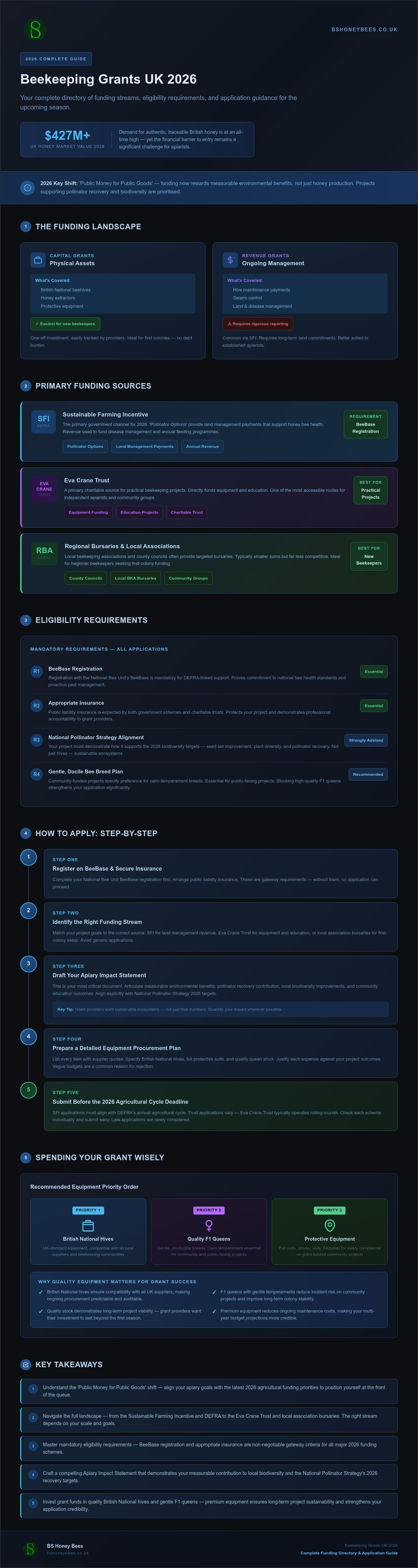
How to Apply: A Step-by-Step Guide to Beekeeping Grants
Securing beekeeping grants uk 2026 requires a methodical approach. Don't rush the process. Start by matching your specific 2026 goals to the most appropriate funding body. If you're a commercial farmer, focus on SFI; if you're a community group, look at local 'Green Recovery' funds. Once you've identified your target, your first task is to prepare an 'Apiary Impact Statement'. This document must shift the focus from honey production to local pollination services. Prove how your hives will benefit the surrounding environment to align with current government priorities.
To address common gaps in unsuccessful applications, use this essential checklist before you begin the online submission process:
- Formal Quotes: Obtain itemised quotes for all hardware and livestock.
- BeeBase Credentials: Ensure your registration is current and your profile is up to date.
- Land Permissions: Secure a signed letter of authority if you don't own the apiary site.
- Management Plan: Outline your 12-month strategy for colony health and swarm control.
- Insurance: Provide a copy of your current public liability certificate.
Drafting Your Proposal
Success lies in the details. Use local biodiversity data to prove the need for more hives in your specific area. When describing your livestock requirements, emphasise the use of mated queen bees UK to ensure colony stability and gentle temperament. This shows grant assessors that you aren't relying on erratic swarms or unverified genetics. Frame your project around 'Pollination Services' rather than 'Honey Sales'. Most 2026 funding bodies prioritise environmental recovery over commercial commodity production. Demonstrate how your apiary will improve the local seed set and support wild pollinator populations.
Budgeting for Success
Your budget must be realistic and comprehensive. Don't cut corners. Quote for premium gear that offers longevity, such as BBWear suits and durable poly nucs. These items are often preferred by grant providers because they represent a better long-term investment. Remember to account for live bee delivery costs and VAT in your total request. Many applicants forget these logistical expenses and find themselves out of pocket later. Match funding is a requirement where the grant provider pays a set percentage of the total costs whilst you cover the remaining balance from your own capital. Before you submit, contact us for a professional equipment quote to ensure your budget is accurate and competitive.
Procurement: Spending Your Grant Wisely on Quality Stock
Once you've secured beekeeping grants uk 2026, the focus shifts from paperwork to procurement. Grant providers are not just handing out funds; they're investing in the future of UK pollinators. They expect you to source equipment and livestock that demonstrate longevity, biosecurity, and high welfare standards. Investing in premium hardware and verified genetics ensures your project survives well beyond the initial funding cycle. It also makes your year-end reporting far more straightforward when you can show a thriving, stable apiary.
Biosecurity is a major priority for 2026 funding bodies. You must source your bees from reputable UK breeders who can provide health certifications. This protects your investment and prevents the spread of notifiable diseases that could jeopardise your entire project. Maintaining meticulous records of these purchases is vital. Keep every invoice and delivery note organised, as these documents form the backbone of your grant audit and prove you've spent the funds exactly as promised.
Investing in Livestock: Buckfast and Carniolan Queens
Livestock quality is the most critical factor in your apiary's long-term success. Grant bodies increasingly prefer gentle, productive breeds because they reduce management overheads and improve safety for community-focused projects. Many commercial beekeepers prioritise F1 Buckfast queens UK for their exceptional productivity and calm temperament. These traits are essential for meeting the honey production or pollination targets you set in your original grant proposal.
For projects focused on colder regions or high-altitude sites, Carniolan queens are an excellent choice due to their superior overwintering capabilities. Regardless of the breed you choose, ensure your nucleus colonies are healthy and disease-free upon delivery. Sourcing locally within the UK reduces transport stress, giving your new colonies the best possible start. High-quality genetics lead to stronger colonies, which in turn leads to the successful environmental outcomes that grant providers want to see.
Essential Hardware and Protective Gear
Standardisation is your best friend when it comes to hardware. Choosing British National hives and frames is a strategic move for any grant-funded project. It ensures all components are interchangeable, making future expansion or equipment replacement far more efficient. Professional-grade BBWear suits are another justifiable grant expense. They provide the highest level of protection and durability, representing much better value for money than cheaper, short-lived alternatives that may need replacing within a single season.
Don't overlook the role of poly nucs in your expansion plans. These are highly effective for queen rearing and provide superior insulation for smaller colonies during the winter months. Using specialised gear like 2 in 1 poly nucs demonstrates to grant assessors that you're using modern, efficient methods to manage your apiary. By selecting the right tools and the best livestock, you turn a simple grant into a sustainable, professional beekeeping operation that contributes meaningfully to the UK's biodiversity goals.
Launch Your Apiary Expansion for the 2026 Season
The 2026 season represents a significant opportunity for beekeepers to align their apiary goals with national biodiversity recovery targets. Success depends on your ability to demonstrate a professional commitment to bee health and local pollination services. By focusing on detailed impact statements and robust biosecurity measures, you can position your application at the forefront of the funding queue. Securing beekeeping grants uk 2026 isn't just about the initial award; it's about building a sustainable foundation for your business or community project.
Don't leave your procurement to chance. High-quality stock and hardware are the hallmarks of a well-managed apiary that grant providers trust. As a specialist UK breeder of F1 Buckfast queens, we provide the reliable livestock required to meet your productivity targets. We also stock professional BBWear suits and British National hives to ensure your equipment offers the longevity expected by funding bodies. Secure your 2026 beekeeping equipment and livestock at BS Honey Bees Ltd and take advantage of our nationwide delivery of nucleus colonies. We're ready to help you turn your funded proposal into a thriving reality.
Frequently Asked Questions
Can I get a grant to start beekeeping as a hobby in 2026?
Most beekeeping grants uk 2026 are directed towards community impact or environmental research rather than personal hobbies. While you won't find a national government scheme for starting a backyard apiary, local associations sometimes offer small bursaries for new members. You'll usually need to demonstrate how your bees provide a public benefit, such as educational workshops or local pollination services, to be eligible for most trust-based funding. Focus on community value to increase your chances.
What is the most common beekeeping grant available in the UK?
The Sustainable Farming Incentive (SFI) is currently the most significant source of government support for those with land. For beekeeping-specific projects, the Eva Crane Trust is widely recognised, offering funding for science and practical beekeeping advancements. These grants are highly competitive and require a detailed proposal. Smaller community funds from local authorities are also common for urban projects that include educational apiaries and biodiversity improvements across the country.
Do I need to be a member of the BBKA to apply for funding?
You don't always need to be a BBKA member for government-led schemes, but it's often a prerequisite for local branch bursaries. Many smaller grants are distributed through local associations to ensure the recipient has access to mentoring and support. Being a member also typically provides the public liability insurance that most grant providers require as a mandatory condition for any successful application in the 2026 cycle. It's a sensible step for any serious apiarist.
Are there specific grants for buying Buckfast queen bees?
There aren't grants dedicated solely to one breed, but high-quality livestock like Buckfast queen bees are often eligible under broader equipment and stocking funds. Providers prefer investments in gentle, productive breeds because they ensure the project's long-term success. When you apply, specifying that you intend to stock your apiary with verified F1 Buckfast genetics can actually strengthen your case by demonstrating a commitment to professional standards and colony stability. It shows you've planned for longevity.
How much money can I typically expect from a small-scale beekeeping grant?
The amount varies significantly depending on the source. Local association bursaries often provide around £200 for basic equipment, whilst small charitable trusts like the Fat Beehive Foundation offer grants up to £2,500. For more substantial research or community projects, you might secure up to £5,000. Larger commercial agricultural schemes provide management payments that depend on the scale of the land and the specific pollinator options you choose to implement for the season.
What happens if my grant-funded colony dies over winter?
If a grant-funded colony dies, you're generally expected to replace the livestock using your own funds or through sustainable apiary management like making splits. Grant providers understand that winter losses are a reality, but they'll look at your management plan to ensure you're taking proactive steps to minimise risks. Keeping detailed records of your winter preparations and any losses is essential for your year-end reporting and maintaining your standing with the funder.
Can I use grant money to buy used beekeeping equipment?
Most grant providers strongly discourage or outright prohibit the purchase of used equipment due to biosecurity risks. Diseases like American Foulbrood can linger in old hives for decades, so funds are almost always restricted to new, first-quality hardware. Investing your grant money in new British National hives ensures you're starting with a clean, standardised environment that meets the high biosecurity standards required by national bee health programmes and insurance providers across the UK.
Is there a deadline for 2026 beekeeping grant applications?
Deadlines for beekeeping grants uk 2026 are spread throughout the year, so you must plan ahead. For example, the Eva Crane Trust has deadlines on 15th March and 15th September 2026. Other trusts, like the C.B. Dennis Research Trust, follow similar biannual cycles in March and September. Local project grants often have spring deadlines, such as April or May, to ensure funds are distributed before the main season. Always check the specific funder's website for updates.