

Imagine walking into your apiary during a dry August afternoon only to find a frantic cloud of bees wrestling at the entrance of your prized Buckfast nuc. By the time you spot the telltale signs of shredded wax and greasy-looking foragers, it's often too late for a small colony to recover. You've likely tried standard entrance reducers, but during a heavy UK nectar dearth, these simple blocks of wood rarely provide enough scent-path disruption to stop a determined attack. That's why having reliable beehive robbing screen plans is essential for any serious beekeeper managing British National equipment.
It's frustrating when generic designs from overseas don't match the specific dimensions of your floorboards, leaving gaps that invaders quickly exploit. We understand the need for precision when protecting your investment in high-quality queens and colonies. This guide will show you how to construct and install professional-grade screens using exact metric measurements tailored for UK hives. You'll learn how to confuse robbers whilst allowing your own bees to defend their home with confidence. We'll walk through the assembly process and explain why this hardware is the most effective tool for maintaining a robbing-free apiary throughout the season.
Key Takeaways
- Learn how to identify the triggers of the UK summer dearth and why standard entrance reducers often fail against aggressive robbing.
- Access precise beehive robbing screen plans designed specifically for the metric dimensions of a British National hive to ensure a perfect, gap-free fit.
- Discover the "scent trap" principle that misdirects robber bees whilst allowing your own foragers to navigate safely through a secondary exit.
- Master the timing and techniques for installing your screen to minimise colony stress and help your bees adapt quickly to their new entrance.
- Understand why a prolific queen and strong colony temperament are your primary defences in maintaining a secure, robbing-free apiary.
Understanding the Robbing Phenomenon in UK Apiaries
In the UK, the "Summer Dearth" typically strikes between the end of the lime flow in July and the start of the ivy in September. It's a period of high anxiety for foragers. Natural nectar sources vanish; suddenly, the concentrated honey stores inside a neighbouring hive become the most efficient target. Understanding the Robbing Phenomenon is the first step in preventing the total collapse of your smaller colonies during these lean weeks.
Aggressive foragers use their keen sense of smell to track floral scents. They don't just find flowers; they find the exhaust plume of a hive entrance. Whilst strong colonies can usually fend off a few scouts, a newly established 5 or 6 frame nuc lacks the guard numbers to hold the line. This is why having effective beehive robbing screen plans ready before the August heat arrives is a non-negotiable part of modern apiary management. It's far easier to prevent an attack than it is to stop one once the pheromone trail is established.
Silent robbing is perhaps the most dangerous form of this behaviour. In these instances, there is no obvious fighting at the entrance. Robbers simply slip past the guards and exit with full bellies, slowly draining the colony's winter stores. A full-scale apiary riot is the opposite. It's a frantic, loud, and violent event that can lead to the death of the queen and the total destruction of the hive within hours. Both scenarios are devastating, but both are entirely preventable with the right hardware.
The Science of Scent and Misdirection
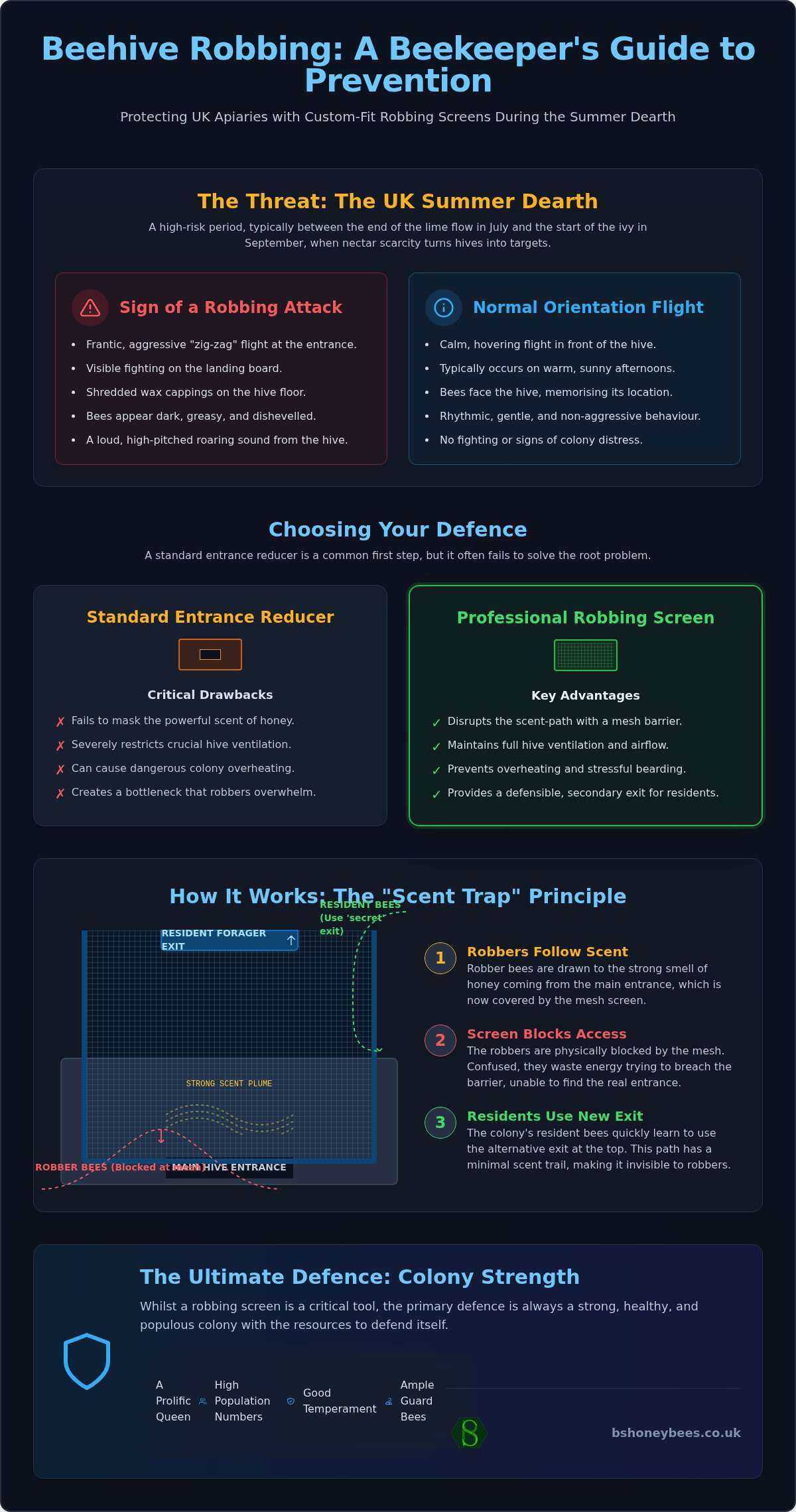
Scents escape the hive in a direct, warm stream of air. Guard bees stand at the entrance to verify the pheromone profile of every landing bee. However, during a dearth, the volume of attackers can overwhelm even the most vigilant guards. Standard entrance reducers might limit the physical gap, but they do nothing to mask the smell of honey. Robbers simply queue up at the small opening, waiting for a lapse in security. Our beehive robbing screen plans focus on redirecting this scent plume to a mesh barrier, confusing the attackers while your bees use a secret exit.
Identifying a Robbing Event in Progress
Don't confuse orientation flights with an attack. Orientation flights usually happen on sunny afternoons; bees hover in a calm, rhythmic pattern to memorise their surroundings. Robbing is different. You'll see a frantic "zig-zag" flight as bees try to bypass the guards. Look for fighting on the landing board and bees departing the hive with heavy, distended abdomens. If you see ripped wax cappings on the floorboard or a greasy appearance to the bees, the robbers have already breached the honey supers. Immediate action is required to save the colony.
What is a Robbing Screen and Why Does it Work?
A robbing screen is essentially a ventilated gate. It consists of a timber frame covered in fine mesh that fits snugly against the hive front. The brilliance of this design lies in the "scent trap" principle. Robber bees are attracted to the concentrated smell of honey leaking from the main entrance. They land on the mesh and spend hours trying to force their way through the wire, unaware that the actual entrance is now several inches away. When you are looking for DIY Beehive Robbing Screen Plans, the primary goal is to ensure the mesh is fine enough to block bees whilst allowing maximum scent to pass through.
Resident bees quickly adapt to this change. Whilst the robbers are stuck at the mesh wall, your foragers learn to walk up the face of the hive and exit through a small gap at the top of the screen. This secondary entrance is much easier for a small number of guards to defend. Because the scent of the hive isn't being blown out of this top exit, it remains largely invisible to opportunistic invaders.
The Advantages of a Screen Over a Reducer
Standard entrance reducers are often the first tool beekeepers reach for, but they have significant drawbacks. In the height of a UK summer, a reduced entrance severely limits ventilation. This can lead to colonies overheating or bearding on the outside of the hive, making them even more vulnerable. A robbing screen provides total security without compromising airflow. It also helps prevent drifting, where bees from other colonies accidentally enter the wrong hive. This is particularly important in crowded apiaries where disease transmission is a concern.
When to Install Your Robbing Screen
Prevention is always more effective than a cure. We recommend proactive installation for any honey bee nucs for sale UK as soon as they are settled in your apiary. Their smaller populations make them prime targets for larger, established colonies. You should also fit screens during autumn feeding when the smell of sugar syrup can trigger a feeding frenzy. Implementing robust beehive robbing screen plans before the dearth begins prevents the chaos of an active attack. If you do find yourself in an emergency robbing situation, fitting a screen immediately can save the colony by instantly breaking the robbers' momentum. To ensure your apiary remains secure, consider upgrading your hardware with our range of British National Hives & Frames designed for professional standards.
DIY Beehive Robbing Screen Plans for British National Hives
Building your own protection is a straightforward task that pays dividends during the lean summer months. Most online resources focus on Langstroth dimensions; however, these beehive robbing screen plans are specifically designed for the British National beehive. Our design philosophy prioritises a simple, removable frame that you can reuse for multiple seasons. By constructing a custom fit, you eliminate the gaps that often lead to failure with generic, one-size-fits-all solutions.
To begin, gather the following materials:
- #8 galvanised hardware cloth (mesh)
- 9mm or 12mm timber battening
- Exterior grade wood glue
- Stainless steel staples
Step 1: Measuring and Cutting the Frame
Precision is vital for these beehive robbing screen plans to work effectively. Cut your horizontal timber battens to exactly 460mm, which matches the standard width of a British National hive face. You'll need two horizontal pieces and two vertical spacers. The vertical spacers should be roughly 150mm to 200mm tall. This height creates the necessary "chimney" effect that allows your bees to travel upwards behind the mesh. Assemble the frame using wood glue and small nails, ensuring the structure sits flush against the hive floor and the front of the brood box. A snug fit is the only way to prevent clever robbers from finding a side entrance.
Step 2: Attaching the Mesh and Creating Entrances
Cut your mesh to cover the entire frame, but leave a 20mm gap at the very top. This gap becomes the new exit for your foragers. Staple the mesh securely to the timber, starting from the bottom and working your way up. Use your tin snips to trim any overhang. It's best to fold the sharp edges of the mesh inwards before stapling; this prevents injury to yourself and your bees. Because of the frantic robbing behavior in honey bees during a dearth, the "internal" entrance at the bottom must align perfectly with your hive's existing entrance. This allows your bees to move from the hive floor directly into the protected space behind the screen without hesitation.
Installation and Training Your Bees
Install your new hardware during the late evening or very early morning whilst all foragers are inside the hive. This prevents immediate confusion and ensures the colony wakes up to the new configuration as a unit. Once you have implemented your beehive robbing screen plans and secured the frame, you must monitor the entrance closely for the first 24 hours. It is perfectly normal to see a "beard" of bees clustered behind the mesh. These are foragers attempting to exit via their traditional route. They aren't trapped; they simply haven't looked up yet. By following these beehive robbing screen plans correctly, you ensure the foragers will eventually crawl upwards towards the light and discover the secondary exit.
Helping Resident Bees Adjust
Honey bees are naturally phototactic, which means they gravitate towards light sources. Because the top of your robbing screen is open to the sky, bees will eventually migrate towards that brightness. You can accelerate this learning curve by using the "temporary blockage" trick. Place a small, loose plug of grass into the old entrance hole behind the mesh. This physical barrier discourages them from wasting time at the old exit and forces them to explore the "chimney" space. Once the first few foragers navigate the top exit, they mark the path with Nasonov pheromones. This chemical signal guides the rest of the colony to the new flight path. If you are protecting one of our newly delivered 5 or 6 frame nucs, this proactive training ensures they don't lose valuable foraging time.
Dealing with Persistent Robbers
While your bees adapt, the robbers remain fixated on the scent plume hitting the mesh. They will spend hours landing on the wire and trying to push through, which rapidly exhausts their energy. This confusion is your colony's greatest advantage. The screen is also a formidable barrier against wasps and hornets. These predators are often more aggressive but less methodical than honey bees; they rarely find the hidden upper entrance. Keep the screen in place throughout the duration of the nectar dearth. Only consider removal once a reliable nectar flow returns, such as the late-season ivy bloom. A steady intake of natural forage naturally reduces the impulse for inter-colony theft.
Colony Strength: The Ultimate Defence Against Robbing
Hardware is only half the battle. The biological foundation of your apiary is what truly dictates how well a hive survives a dearth. A prolific, healthy queen is your first line of defence. She produces the sheer volume of workers needed to patrol the entrance whilst maintaining brood production. High-quality mated queen bees UK beekeepers rely on are bred for specific traits, including heightened defensive vigilance. This isn't about aggression; it's about the colony's ability to recognise a robber and react before the situation escalates. Combined with robust beehive robbing screen plans, a strong guard force makes your hives nearly impenetrable.
Choosing Robbing-Resistant Genetics
Selecting the right stock is essential for long-term apiary security. The F1 Buckfast queens UK specialists provide are renowned for their calm temperament on the comb, yet they remain extremely effective at protecting their stores. Similarly, Carniolan bees are prized for their rapid spring buildup and their tendency to maintain a very tight, well-guarded entrance. If you have a colony that is consistently targeted by robbers despite having a reduced entrance, it may be time to requeen. Replacing an underperforming queen with superior genetics can transform a vulnerable hive into a secure, productive unit that works in harmony with your entrance protection.
Final Checklist for a Secure Apiary
Integrating your beehive robbing screen plans into a wider integrated pest management (IPM) strategy ensures the best results for the 2026 season. A screen protects the entrance, but it cannot fix a hive with rotten woodwork or loose joints. Conduct regular inspections to ensure there are no gaps in your brood boxes or supers where robbers could slip in. Maintain strict cleanliness in the apiary. Avoid spilling sugar syrup or leaving scraps of wax on the ground, as these are the primary beacons for opportunistic foragers. Follow this checklist to maintain security:
- Check British National floorboards for warping or gaps.
- Ensure all supers are sitting flush with no light leaks.
- Remove any burr comb or wax scrapings from the apiary floor immediately.
- Feed colonies only in the evening to minimise scent trails.
By combining robust hardware with elite bee stock, you create a multi-layered defence system. Using these beehive robbing screen plans provides the physical security needed during nectar gaps, whilst your bees provide the biological resilience. A secure apiary is a productive one. Focus on queen quality and entrance management to keep your colonies thriving through the most challenging months of the year.
Secure Your Apiary for the Coming Season
Protecting your colonies from the summer dearth requires a proactive and methodical approach. By implementing precise beehive robbing screen plans tailored for British National equipment, you effectively disrupt the scent paths that lead opportunistic robbers to your winter stores. This hardware modification is a vital tool for any beekeeper, particularly when safeguarding newly established nucs or vulnerable colonies during nectar gaps. Remember that physical barriers are most successful when supported by strong, resilient genetics and the right management practices.
Ready to upgrade your apiary with professional-grade equipment? Browse our range of British National Hives and Frames to ensure your bees have the best possible protection. As specialist UK breeders of F1 Buckfast and Carniolan bees, we provide the high-quality stock necessary for maintaining a secure and vigilant hive. We also supply premium BBWear protective gear and offer nationwide delivery on all live bees and hardware. Take control of your apiary security today and enjoy the confidence that comes with a robbing-free season. Your bees will certainly thank you for the extra layer of defence.
Frequently Asked Questions
Can I leave a robbing screen on all winter?
You shouldn't leave the screen on throughout the entire winter season. Whilst it provides excellent ventilation, it can hinder the bees' ability to perform "undertaker" duties, such as removing dead colony members from the floorboard. It also risks trapping drones that haven't been evicted yet. Once the threat of robbing and wasp attacks has passed in late autumn, it's better to switch to a standard mouse guard for the winter months.
Will a robbing screen prevent wasps and hornets from entering?
Yes, these screens are exceptionally effective at deterring wasps and hornets. These predators are primarily attracted to the concentrated scent of honey and larvae coming through the mesh. They'll spend their energy trying to force their way through the wire barrier rather than searching for the hidden upper exit. This design exploits the predators' lack of persistence in navigating complex, non-scented entrance paths that your resident bees have already mastered.
Do I need to change my hive management when using a screen?
Your core management remains the same, but you must be more disciplined with apiary hygiene. Avoid spilling any syrup or honey near the hive, as this draws attention to the area. When you're following beehive robbing screen plans, the hardware does the heavy lifting, but you should still perform inspections quickly. Always ensure the screen is fitted tightly against the hive body to prevent any secondary gaps from forming.
My bees are clustering on the outside of the screen, is this normal?
Clustering is a common sight immediately after installation as returning foragers try to use their original entrance. Don't be alarmed; they'll eventually crawl upwards and find the new exit point. This behaviour usually subsides within 24 to 48 hours as the colony learns the new flight path. If the clustering persists during very hot weather, check that the screen isn't blocked by debris and that airflow remains clear.
Can I use a robbing screen on a nucleus colony (nuc)?
Using a screen on a nuc is highly recommended and often essential. Smaller 5 or 6 frame nucs are the most vulnerable targets in any apiary because they have fewer guard bees to defend a wide entrance. Fitting a screen provides these developing colonies with a massive defensive advantage. It allows them to focus their energy on brood rearing and foraging rather than fighting off invaders from stronger, established hives.
What is the best mesh size for a beehive robbing screen?
The industry standard is #8 galvanised hardware cloth, which features approximately 3mm squares. This specific size is perfect because it's small enough to prevent any bee, wasp, or hornet from passing through, yet large enough to allow for excellent ventilation and scent dispersal. When you're reviewing beehive robbing screen plans, always ensure you're using galvanised material to prevent rust, as this hardware needs to withstand the unpredictable British weather.
How do I know if the robbing has actually stopped?
You'll know the robbing has ceased when the frantic "zig-zag" flight patterns at the hive front disappear. Observe the entrance for calm, purposeful foraging activity instead of the high-pitched buzzing and wrestling associated with an attack. Check the floorboard for a reduction in wax "crumbs," which are a sign of robbers ripping open cappings. If the screen is covered in quiet foragers rather than fighting bees, your defences have worked.
Does a robbing screen interfere with drone flight or queen mating?
It can certainly interfere with the movement of larger bees like drones and queens. Drones are bulkier and may struggle to navigate the narrow "chimney" exit as easily as workers. If you're currently raising queens or expecting mating flights, it's best to remove the screen or use a design with a larger temporary opening. For standard honey production hives, however, the impact on the colony's overall efficiency is negligible.