
A successful honey harvest is decided during the ten minutes your hive tool is in your hand. For many British beekeepers, the weekly visit often feels like a frantic race against time, clouded by the anxiety of missing a hidden queen cell or failing to spot the early signs of European Foulbrood. You need more than a quick glance under the crown board to ensure your colony thrives through the 2026 season. By utilising a structured bee hive inspection checklist pdf, you transform these brief moments into a precise diagnostic routine that guarantees nothing is overlooked.
It's natural to feel a sense of urgency when managing multiple British National hives, especially with the increasing pressure of invasive species and unpredictable weather patterns. We'll help you replace that uncertainty with the assertive confidence of a professional breeder. This guide provides a structured framework to master Ted Hooper's five pillars of inspection, ensuring your F1 Buckfast or Carniolan colonies remain healthy and productive. You'll learn how to identify notifiable diseases, manage stores through the June Gap, and maintain accurate records that satisfy UK statutory requirements for years to come.
Key Takeaways
- Implement a structured routine using our bee hive inspection checklist pdf to transform your apiary management into a precise, professional-grade diagnostic process.
- Shift your focus from finding the queen to identifying eggs and healthy, "c-shaped" larvae to confirm colony status quickly and efficiently.
- Recognise the early warning signs of Varroa surges and notifiable diseases like AFB or EFB to protect your bees and meet 2026 UK statutory requirements.
- Adapt your inspection strategy for the British climate, specifically monitoring honey stores to navigate the "June Gap" and ensure high colony survival.
- Optimise your workflow by prioritising calm colony temperament and high-quality protective apparel, allowing for methodical inspections without the distraction of defensive behaviour.
Why a Structured Hive Inspection is Vital for Colony Success
A haphazard approach to the apiary is the quickest route to losing a colony. Professional apiary management relies on precision; it's the difference between a productive season and an empty hive. By using a structured bee hive inspection checklist pdf, you move beyond simply looking at bees and begin diagnosing the health and momentum of the colony. This methodical framework ensures you address the critical needs of the hive whilst maintaining the efficiency required to manage multiple British National hives.
The Consequences of "Guesswork" Beekeeping
Missing a single capped queen cell often results in the loss of your prime swarm and half your honey-producing workforce. Without a checklist, it's easy to overlook the subtle signs of American or European Foulbrood, allowing pathogens to spread through your entire apiary. Inconsistent records also make it impossible to track colony temperament over time. Since the advent of modern movable-frame beekeeping, successful beekeepers have known that guessing is not a strategy; it's a liability.
Setting Your 2026 Inspection Goals
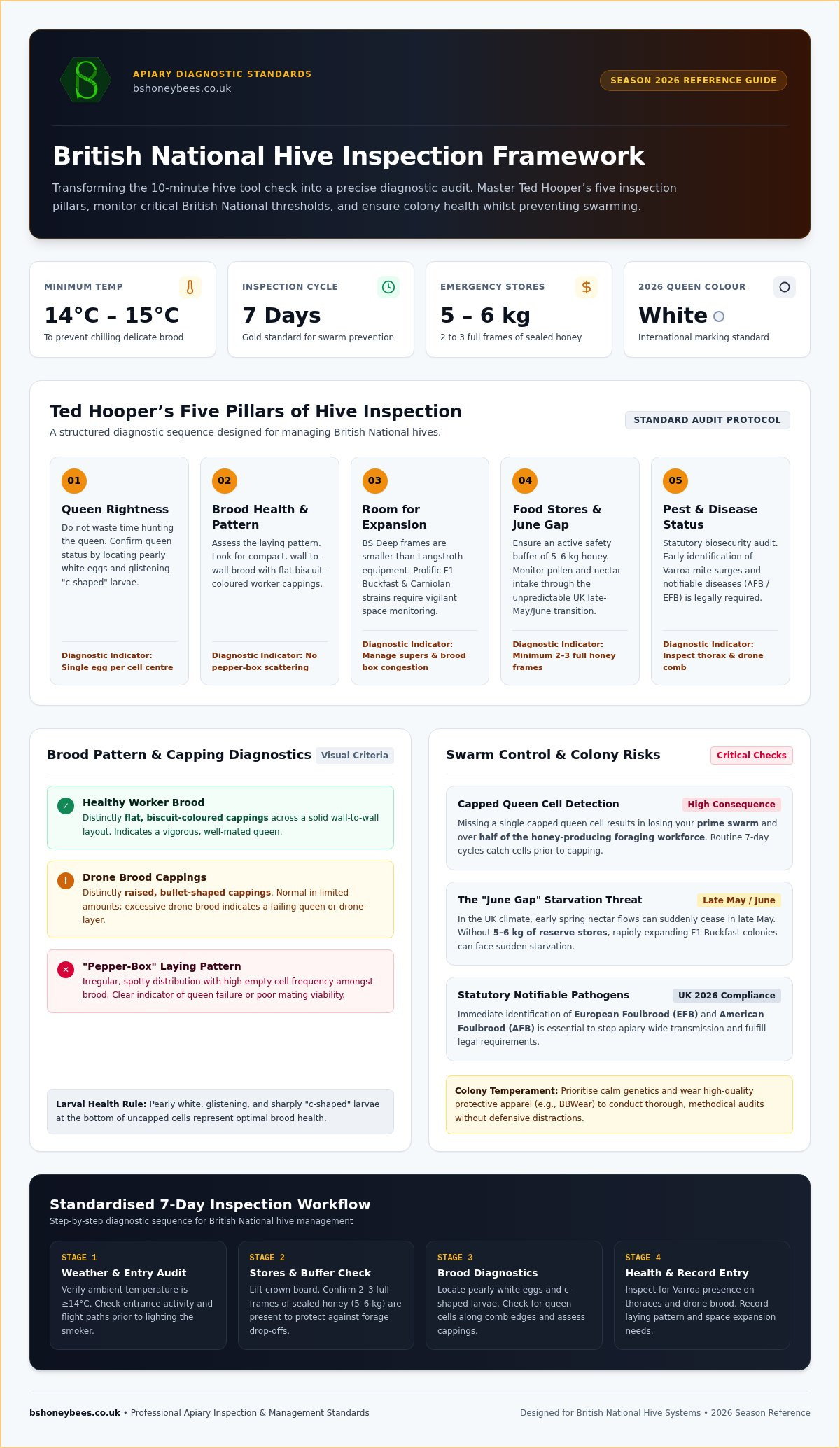
A successful inspection means you've confirmed the queen is laying, the brood is healthy, and the bees have enough space and food. In the UK, timing is everything. You should only open the hive when temperatures are at least 14°C to 15°C to avoid chilling the brood. The 7-day inspection cycle is the gold standard for swarm control, as it allows you to intervene before a queen cell is capped and the old queen departs. During the 2026 season, your goals should include:
- Identifying queen cells before they are capped to prevent swarming.
- Performing early detection of Varroa mite surges and statutory brood diseases.
- Monitoring honey and pollen stores to prevent starvation, especially during the "June Gap" in late May.
- Assessing the queen's laying pattern to ensure she hasn't reached the end of her productive life.
Using a bee hive inspection checklist pdf helps you stay focused. When you don your BBWear bee suit and light the smoker, you aren't just performing a chore; you're conducting a professional audit. This is particularly important when working with prolific F1 Buckfast queens, where rapid colony buildup requires vigilant management of space and resources. Methodical records allow for year-on-year comparisons, helping you identify which colonies are performing best in your specific environment.
The Five Pillars of a Healthy British National Hive
The British National hive requires a specific management style that differs from international standards. Because the BS Deep frame is smaller than a Langstroth, space management is more critical. Your bee hive inspection checklist pdf should prioritise five core pillars to ensure the colony remains productive and stable. These include queen rightness, brood health, room for expansion, food stores, and pest status. Professional apiary management relies on monitoring these factors simultaneously rather than treating them as isolated issues.
Searching for the queen is a common mistake that wastes time and stresses the colony. Instead, look for pearly white eggs. Healthy larvae should be glistening and "c-shaped" in the bottom of the cell. You must also ensure the colony has at least two to three full frames of sealed honey, approximately 5-6 kg, as a safety buffer against the UK's unpredictable spring weather. A well-designed bee hive inspection checklist pdf helps you track these metrics over time to ensure consistency across your apiary.
Identifying the Queen and Brood Patterns
A solid, wall-to-wall brood pattern indicates a high-quality queen with good genetic diversity. If you notice a "pepper-box" pattern with many empty cells amongst the brood, it suggests she is failing or poorly mated. Distinctly flat, biscuit-coloured cappings indicate healthy worker brood, whilst raised, bullet-shaped cappings signify drone brood. If your inspection reveals a failing queen or drone-laying behaviour, consult our guide on mated queen bees UK for professional replacement strategies. For 2026, remember the international marking colour is white.
Pest and Disease Indicators
Biosecurity is a legal and practical necessity. You must regularly check for Varroa mites, especially on the thorax of bees or within drone brood where they prefer to breed. Be alert for Chalkbrood, which leaves mummified, chalky larvae, or Sacbrood, where larvae fail to pupate and turn into fluid-filled sacs. Follow the UK government guidance on honey bee pests and diseases for statutory reporting protocols. If you notice a foul smell or sunken, perforated cappings, perform a "sniff test" immediately; American Foulbrood has a distinct, unpleasant odour that is easily recognisable. Maintaining high standards in your British National hives starts with these methodical checks.
Seasonal Variations: Adjusting Your Checklist for the UK Climate
UK beekeeping is defined by its volatility. A warm March can trigger rapid expansion, whilst a wet April might lead to starvation. Your bee hive inspection checklist pdf must adapt to these climatic shifts to be effective. In spring, your focus is entirely on colony buildup and preventing the loss of swarms. As the season progresses into summer, the priority moves toward managing the honey flow and navigating the "June Gap", a period in late May or June when nectar sources temporarily dry up and colonies can quickly run out of food.
Autumn requires a shift toward biosecurity and resource management. You must ensure the colony has sufficient stores and low mite counts before the winter cluster forms. Once winter arrives, full inspections cease to protect the bees from the cold. Observations are restricted to external checks, such as monitoring entrance activity on sunny days or checking the hive's weight by hefting the back of the floor. Using a comprehensive bee hive inspection checklist pdf allows you to track these shifting priorities across the 2026 season.
Spring Buildup and Swarm Season
During the peak buildup from April to July, inspections should occur every 7 to 9 days. You must distinguish between "play cups", which are empty wax foundations, and active queen cells containing larvae and royal jelly. When the bees cover seven or eight frames of a british national beehive, it's time to add your first honey super to provide extra space. Ensure the colony has ample pollen; a lack of protein during a cold snap can stall brood production and weaken the hive's potential for the summer flow.
Preparing for the UK Winter
Success in the following spring is earned in September. Use your checklist to assess if a colony or nuc is large enough to survive the winter. A colony should ideally cover at least six frames to maintain heat effectively. Weight-testing by "hefting" the back of the hive is essential; if it feels light, you must provide heavy syrup or fondant before the weather turns. This is also the critical window for Varroa intervention. Refer to the UK government guidance on honey bee pests and diseases to ensure your treatment protocols align with current biosecurity standards. Proper preparation ensures your bees emerge healthy when the first crocuses appear in early 2027.
Your Step-by-Step Apiary Walkthrough
A logical order of operations is the hallmark of an expert beekeeper. When you approach your apiary, your bee hive inspection checklist pdf serves as your operational manual. Start by lighting your smoker with natural fuel to ensure a cool, thick smoke. Approach the hive from the side or rear to avoid blocking the flight path. Spend sixty seconds observing the entrance. Are foragers returning with diverse pollen colours? Is there any "washboarding" or unusual guarding behaviour? These external cues provide a preview of the colony's internal state before you even lift the roof.
Gently remove the roof and place it upside down on the ground to serve as a clean base for your supers. Use your hive tool to carefully crack the propolis seal of the crown board. Puff a small amount of smoke across the top bars, not down into the seams, to signal your presence. Lift frames vertically and slowly. Reading a frame requires you to keep it over the hive at all times; if the queen falls, she should land back in the brood box, not in the grass.
Mastering Hive Tool Technique
Precision prevents casualties. Always remove the first frame from the wall to create a "working gap" that allows you to move subsequent frames without rolling or crushing bees. Use the hook end of your tool to pry frames apart at the lugs rather than the centre of the top bar. Between colonies, clean your tool with a washing soda solution or by scorching it with a blowlamp. This simple habit is a critical biosecurity measure that prevents the transmission of pathogens across your apiary.
Safety and Protection in the Apiary
Confidence in the apiary stems from reliable equipment. Wearing a BBWear bee suit ensures a calm inspection by providing a physical barrier that allows you to focus on the bees rather than potential stings. Clear vision through a well-maintained veil is essential when you are searching for tiny eggs or assessing the health of larvae. Calm movements and proper gear prevent defensive behaviour, keeping the colony settled whilst you complete your bee hive inspection checklist pdf. Once finished, replace frames in their original order and ensure the crown board is secure to maintain the colony's thermal regulation.
Upgrade your apiary with professional-grade British National Hives & Frames to ensure your inspections are as efficient as possible.
Beyond the Checklist: Upgrading Your Colony and Equipment
Even the most detailed bee hive inspection checklist pdf is only as effective as the bees you are managing. Colony temperament is the primary factor in how thoroughly and safely you can conduct your apiary duties. When bees remain calm on the comb, you can take the necessary time to identify eggs and assess brood health without the distraction of defensive behaviour. Professional apiary management is a partnership between your skill and the genetics of your stock.
Investing in high-quality hardware and protective gear further streamlines your workflow. Whether you prefer the traditional cedar of British National hives or the thermal efficiency of Poly Nucs, your equipment must be reliable and well-maintained. Following a structured bee hive inspection checklist pdf becomes a much simpler task when you aren't battling ill-fitting frames or subpar protective clothing that hinders your movement and vision.
The Role of Genetics in Apiary Management
Genetics dictate the rhythm of your beekeeping season. Buckfast and Carniolan bees are favoured by UK beekeepers for their exceptional docility and productivity. Specifically, F1 buckfast queens UK are bred for a calm temperament that makes them ideal for both hobbyists and commercial operators. If a colony becomes uncharacteristically aggressive, it often indicates a failing queen or a shift in pheromonal balance. In these instances, requeening with known, gentle genetics is the most effective way to restore safety and ease of inspection to your apiary.
Maintaining Your Hardware
Hardware maintenance is a winter priority that pays dividends in the spring. Clean your frames and scorch your brood boxes to eliminate pathogens before the new season begins. If you are transitioning bees from honey bee nucs for sale UK into full-sized hives, ensure your hive stands are perfectly level. An unlevel hive leads to wonky comb building that makes frames difficult to remove and increases the risk of crushing bees during inspections. Use your checklist to record the age and condition of your hardware, allowing you to plan for replacements before equipment failure occurs. High standards in your equipment, combined with premium BBWear bee suits, provide the logistical excellence required for a successful 2026 honey harvest.
Mastering Your 2026 Apiary Management
Mastering the art of hive inspections requires a blend of methodical consistency and high-quality genetics. By implementing a structured bee hive inspection checklist pdf, you ensure that every visit to the apiary is a diagnostic success rather than a guessing game. You've learned to prioritise the five pillars of colony health, adapt to the volatile British seasons, and utilise professional-grade gear to maintain a calm, productive environment.
Success in the apiary is built on the quality of your stock and the reliability of your protection. As UK-bred F1 Buckfast specialists and premium BBWear stockists, we provide the calm-tempered bees and expert hardware needed for easier, more methodical inspections. Browse our range of F1 Buckfast Queens and National Hives for the 2026 season to secure the best start for your colonies. With a disciplined routine and the right equipment, you're well-positioned to achieve a healthy, high-yielding season. We look forward to supporting your beekeeping journey throughout the coming year.
Frequently Asked Questions
How often should I inspect my beehive in the UK?
You should inspect your colony every 7 to 9 days during the peak active season, which typically runs from April to July. This specific interval is crucial because a swarm will usually depart once a queen cell is capped, which happens on the eighth or ninth day after an egg is laid. During the early spring and late autumn, you can reduce this frequency. In winter, keep the hive closed to maintain the cluster's thermal regulation.
What are the three most important things to look for in a hive inspection?
The three critical indicators are queen rightness, brood health, and sufficient food stores. You don't necessarily need to find the queen; spotting fresh eggs confirms she is active. Healthy brood should appear pearly white and "c-shaped" within the cells. Finally, ensure the colony has a minimum of two full frames of sealed honey at all times to avoid starvation during unpredictable UK weather spells or the notorious "June Gap."
Can I inspect my bees if the weather is overcast or windy?
It is best to avoid full brood inspections if the temperature is below 14°C or if conditions are excessively windy or rainy. Opening a British National hive in sub-optimal weather chills the sensitive brood and often triggers defensive behaviour amongst the workers. If an emergency check is required during overcast weather, keep the hive open for the shortest time possible and use your bee hive inspection checklist pdf to stay focused and efficient.
Do I need to see the queen bee during every inspection?
You do not need to physically sight the queen during every routine visit. Spotting eggs or young, unsealed larvae is the professional standard for confirming the colony is "queen right." Searching for the queen herself is often a time-consuming distraction that increases the risk of accidentally rolling or crushing her. Focus instead on assessing the brood pattern and checking for the presence of active queen cells to manage the colony effectively.
What should I do if I find queen cells in my hive?
First, verify if the cells are empty "play cups" or active queen cells containing larvae and royal jelly. If the cells are active and located along the bottom of the frames, the colony is likely preparing to swarm. You must act immediately by performing an artificial swarm or another recognised control method. Referencing a structured bee hive inspection checklist pdf ensures you don't miss a single cell, which is vital for successful swarm prevention.
How do I know if my bees have enough honey stores for winter?
A colony in a British National hive needs about 18-20 kg of stores to safely navigate a UK winter. You can estimate this by counting full frames of honey or by "hefting" the hive from the back to gauge its weight. If the hive feels light during your September inspections, you must supplement their stores with heavy sugar syrup or fondant before the ambient temperature drops too low for the bees to process it.
What does a healthy brood pattern look like on a National frame?
A high-quality brood pattern is characterised by a dense, uniform area of capped cells with very few gaps. On a standard National frame, the brood should form a large central arc, often surrounded by a ring of pollen and a crown of honey. Cappings should be dry, intact, and biscuit-coloured. If you notice a scattered "pepper-box" appearance, it may indicate a failing queen or the presence of a brood disease that requires attention.
How can I tell the difference between EFB and healthy larvae?
Healthy larvae are always pearly white, glistening, and curled in a tight "c-shape." In contrast, larvae suffering from European Foulbrood (EFB) often appear discoloured, turning a dull yellow or brown, and may look "melted" or twisted in the cell. If you suspect EFB, you are legally mandated to contact the National Bee Unit. Don't move any bees or equipment from the site until an official inspector has completed their examination.