

The success of your 2027 honey harvest isn't decided in the spring; it's won or lost during the damp, shortening days of September. While the bees forage on the last of the ivy, the clock is ticking for every UK beekeeper. Executing your autumn bee hive jobs with precision is the only way to ensure your colonies don't become a winter statistic. If you don't act now, you're gambling with their survival.
We understand the anxiety that comes with the changing season. You've likely felt that familiar worry about whether your Varroa treatments are working or if your bees have enough capped stores to see them through an unpredictable British winter. Our goal is to replace that uncertainty with a clear, professional strategy. By following this guide, you'll gain the confidence to prepare your apiary for the cold months ahead.
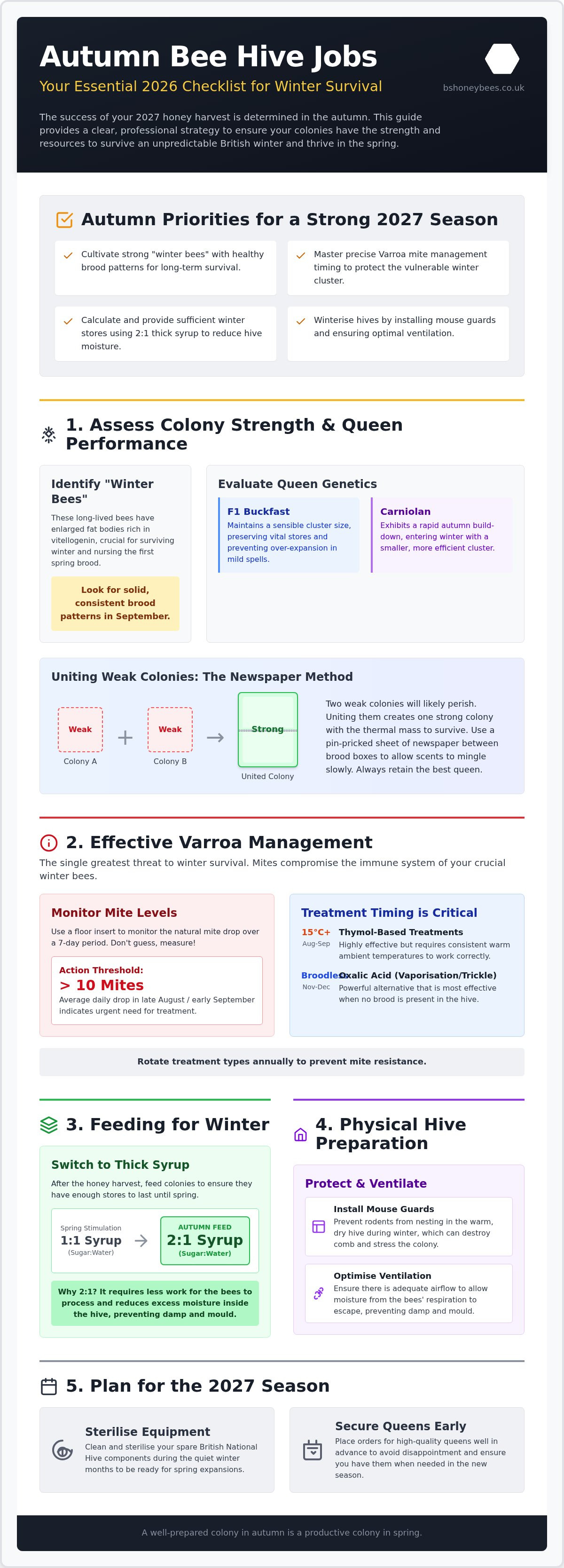
This essential 2026 checklist provides a step-by-step guide to winterisation. We'll examine critical mite control windows, feeding methods, and how to assess your queen's performance before the cluster forms. From checking your F1 Buckfast genetics to securing your British National Hives against the elements, we'll walk you through every vital task.
Key Takeaways
- Identify the specific brood patterns required for healthy "winter bees" to ensure your colony has the biological strength to survive until spring.
- Master the precise timing for Varroa management to protect your bees during their most vulnerable seasonal transition.
- Learn how to calculate winter stores accurately and why switching to 2:1 thick syrup is vital for reducing internal hive moisture.
- Complete your essential autumn bee hive jobs by installing mouse guards and optimising ventilation to prevent damp and rodent damage.
- Prepare for the 2027 season by sterilising your British National Hive components and securing your orders for high-quality queens early.
Assessing Colony Strength and Queen Performance
The most critical of your autumn bee hive jobs is the final assessment of the brood nest. You aren't just looking for quantity; you're looking for the specific quality of "winter bees." Unlike summer workers who live for a few weeks, these bees must survive for several months. They possess enlarged fat bodies rich in vitellogenin, a protein that allows them to nurse the first spring larvae before fresh pollen is available. If your queen isn't laying a solid pattern of these long-lived bees by September, the colony's chances of reaching 2027 are slim.
During these late-season inspections, pay close attention to colony temperament. As nectar flows dry up and wasps become a nuisance, defensive behaviour naturally increases. It's the perfect time to evaluate if the colony is simply protective or over-aggressive. If the queen's performance is lagging or the brood pattern is spotty, you may need to requeen a hive to ensure a young, prolific leader is in place before the first frost. Executing these autumn bee hive jobs before October allows you to correct issues whilst the weather still permits safe inspections.
The Role of F1 Buckfast and Carniolan Queens in Winter
Choosing the right genetics is a cornerstone of winter success. F1 Buckfast queens UK are prized for maintaining sensible cluster sizes. They don't over-expand in mild spells, which preserves vital stores. Carniolan strains show a rapid autumn build-down, entering winter with a smaller, efficient cluster. Ensure your queen has enough dark comb in the nest centre to lay those final brood cycles.
Uniting Weak Colonies
Beekeepers must be decisive when uniting colonies. Two weak colonies will likely perish; one united colony has the thermal mass to survive. Use the "newspaper method" by placing a sheet of pin-pricked paper between the brood boxes. This allows scents to mingle slowly, preventing conflict. Always select the most prolific queen to lead the new unit. This ensures you start the next season with a viable, healthy population.
Effective Varroa Management for the 2026 Season
Varroa destructor remains the single greatest threat to UK colonies. Protecting your winter bees from these parasites is arguably the most time-sensitive of all your autumn bee hive jobs. If mites are allowed to feed on the developing larvae that will form the winter cluster, the colony's immune system will be compromised before the first frost. You cannot afford to wait until you see physical symptoms like deformed wings; by then, the damage is often irreversible.
Do not rely on guesswork. Use floor inserts to monitor the natural mite drop over a seven-day period. A daily drop exceeding ten mites in late August or early September indicates an urgent need for intervention. This data allows you to choose the most appropriate treatment for the specific infestation level and current weather conditions.
Treatment Options and Timing
Timing your treatments is a matter of logistical precision. Thymol-based products are highly effective but require ambient temperatures to stay consistently above 15 degrees Celsius to evaporate and circulate throughout the hive. If the British autumn turns cold early, these treatments lose efficacy. For late-season interventions, oxalic acid vaporisation or trickling is a powerful alternative, though it's most effective during the broodless period. Rotating your treatment types annually is a disciplined approach that prevents mite populations from developing resistance to specific active ingredients.
The Impact of Varroa on Winter Survival
High mite loads are dangerous because of the viruses they vector. Deformed Wing Virus (DWV) can decimate a colony in November, long after the hive has been closed for the season. Low mite counts are directly linked to a successful spring build-up in 2027. Healthy, virus-free bees emerge from winter with the vitality needed to forage and expand the brood nest rapidly.
Record every dose and date in your apiary diary to track your progress. Since bees often become more defensive during these late-season checks, ensure you are wearing professional-grade protection. Investing in high-quality BBWear bee suits allows you to work with the focus and calm required for thorough Varroa management. Completing these treatments before the bees form a tight cluster ensures the entire population is protected throughout the coldest months.
Feeding Strategies: Ensuring Sufficient Winter Stores
Securing adequate nutrition is a race against the thermometer. Your bees need enough food to generate heat through the long British winter, and you must ensure they have these stores in place before the temperature drops. A colony that enters November light on weight is unlikely to see the spring. Calculating the heft of your British National beehive is a fundamental part of your autumn bee hive jobs. You're aiming for a total of 20-25kg of stores to guarantee survival.
Transitioning from 1:1 stimulative syrup to a 2:1 thick autumn syrup is essential. Thin syrup encourages the queen to lay, but thick syrup is designed for storage. Because 2:1 syrup contains less water, the bees spend significantly less energy evaporating moisture before capping the cells. Use rapid feeders to deliver large volumes quickly. This efficiency is vital for Buckfast colonies, which often maintain larger populations later into the season and consume more stores than the more conservative Carniolan strains.
Liquid Syrup vs. Fondant
Timing is everything when feeding. Liquid syrup is the superior choice for building bulk stores whilst the weather is mild. However, once ambient temperatures consistently fall below 10 degrees Celsius, bees struggle to process liquid feed. At this point, they cannot evaporate the moisture, and the cold syrup can chill the cluster. If your autumn bee hive jobs have been delayed, switch to fondant. It's a stable, low-moisture alternative that prevents "starvation in the midst of plenty," where bees are too cold to move to distant frames of honey but can reach fondant placed directly above the cluster.
| Feature | 2:1 Liquid Syrup | Bakers Fondant |
|---|---|---|
| Primary Use | Building bulk winter stores | Emergency or late-season feeding |
| Best Timing | August to late September | October through to March |
| Bee Effort | High (requires evaporation) | Low (ready to consume) |
The Importance of Pollen Stores
While carbohydrates provide energy, pollen provides the protein necessary for rearing the next generation. Ensure your colonies have several frames of "bee bread" tucked away. In many parts of the UK, the late-season ivy flow provides a massive boost of both nectar and high-quality pollen. If natural forage is scarce, consider supplementing with pollen patties. This ensures that when the queen begins laying in January, the nurse bees have the internal protein reserves to feed the larvae without exhausting themselves.
Physical Hive Preparation and Winterisation
The British winter is a test of structural integrity. Whilst bees can withstand freezing temperatures, they cannot survive being cold and wet simultaneously. Damp is the primary killer of colonies in the UK, often caused by leaking roofs or poor ventilation. Your autumn bee hive jobs must include a thorough audit of every hive component. Check the integrity of your hive roofs now. If you find cracks or rot, replace the parts before the autumn rains begin. A dry hive is a viable hive.
Stability is equally vital. Winter gales can easily topple a lightweight hive, especially if it's situated in an exposed apiary. Secure your hives using heavy-duty ratchet straps or weighted blocks. Ensure the hive stands are level and clear of rising damp. This prevents the floorboards from rotting and maintains a stable environment for the winter cluster. Clean the hive entrance and ensure it is propolise-proofed to prevent draughts whilst allowing for necessary air exchange.
Ventilation vs. Insulation
Beekeepers often debate the "chimney effect." This occurs when warm air rises from the cluster, hits a cold roof, and condenses into freezing droplets that fall back onto the bees. To prevent this, many professionals prefer top ventilation to allow moisture to escape. Conversely, adding insulation like Kingspan or bespoke hive pillows can help the cluster retain heat more efficiently. For those managing smaller colonies, the 2 in 1 poly nuc offers superior thermal properties, significantly reducing the energy bees spend on thermoregulation.
Protecting Against Predators
Predators become more aggressive as their own food sources vanish. Mice are a major threat; they seek the warmth of the hive and will destroy wax comb and disturb the cluster. Install mouse guards early, ideally before the bees form a tight cluster, to ensure you don't trap a rodent inside. In rural areas, woodpeckers can drum through timber hives in days. Fitting chicken wire or netting around the hive provides a physical barrier that deters them, though for larger apiaries, specialized equipment from Bird Control Products can provide a more comprehensive electronic deterrent. Finally, remain vigilant for Asian Hornet activity around the entrance. These invasive predators are particularly active in the late season and can decimate a colony through "hawking" behaviour.
If your current equipment is showing signs of wear, don't wait for a winter failure. Upgrade to professional-standard British National Hives and frames to ensure your colonies have the best possible protection against the elements.
Successful beekeeping requires foresight; the most prepared apiarists use the winter lull to ensure they hit the ground running in April. Your autumn bee hive jobs shouldn't end at the hive entrance. Once the bees are tucked up, shift your focus to the workshop. Evaluate your records from the past season to identify which colonies showed the best temperament and productivity. These are the queens you'll want to breed from or use as the foundation for your 2027 expansion. Identifying your best-performing genetics now allows you to plan your spring splits with professional precision.
Sterilisation is your primary defence against pathogens like Nosema or Chalkbrood. Use a blowtorch to scorch the internal surfaces of wooden hive bodies, paying close attention to the corners where disease spores often linger. For plastic or delicate components, a hot solution of soda crystals is highly effective. Organising your equipment shed now prevents the frantic search for a spare super during the first spring nectar flow. Create a "wanted" list of frames, foundation, and hardware to avoid the inevitable shipping delays that occur during the spring rush.
Ordering Bees and Queens for Spring
Securing your livestock is the most time-sensitive part of your winter planning. High-quality honey bee nucs for sale UK are in high demand and often sell out by January. If you wait until the weather warms up to order, you'll likely face long waiting lists. Ordering overwintered nucs is a strategic move for those seeking an earlier honey crop, as these colonies are ready to expand as soon as the willow starts to flower. Similarly, ensure your delivery schedule for mated queen bees UK is confirmed early to guarantee you have the genetics needed for successful spring colony management.
Equipment Maintenance
Don't neglect your personal gear. Propolis and wax build-up on queen excluders can be scraped off easily once they've been chilled in a shed. Check your protective clothing for any signs of wear that could lead to stings. Reviewing bee suit sizing is a sensible task if you're planning to upgrade to a new BBWear suit for the coming season. Repair any small tears in veils or cuffs now; a secure suit is essential for maintaining confidence during those first, potentially defensive spring inspections. Painting or refurbishing your wooden British National hives during the dry spells of late autumn ensures they remain weatherproof for years to come.
Securing Your Apiary's Future
Completing your autumn bee hive jobs with precision is the difference between a thriving spring garden and an empty hive. You've learned how to assess winter bee biology, manage Varroa levels effectively, and secure the structural integrity of your British National Hives. These steps aren't just seasonal chores; they're a strategic investment in the health of your colonies and the success of your 2027 honey harvest.
As F1 Buckfast and Carniolan specialists, we understand that high-quality genetics and robust equipment are the pillars of winter survival. We're committed to providing the UK beekeeping community with nationwide delivery of live bees and premium supplies, including BBWear apparel and British National hardware. Don't leave your spring start to chance.
Ensure your 2027 success by pre-ordering your F1 Buckfast Queens and Nucleus Colonies today.
Take action now whilst the weather is on your side and your bees are still active. We look forward to being your dependable partner as you prepare for a healthy and productive 2027 season.
Frequently Asked Questions
When should I start my autumn bee hive jobs in the UK?
You should begin your autumn bee hive jobs in late August or early September, immediately after the final honey harvest. This timing is critical because it allows you to treat for Varroa and feed the colony whilst the weather remains mild. Starting early ensures the queen has enough time to lay a healthy population of winter bees before the first frost, which is the foundation of spring survival.
How much honey should I leave for the bees for winter?
Aim to leave between 20kg and 25kg of capped stores for a standard British National Hive. A full deep frame of honey weighs approximately 2.5kg, so you're looking for roughly ten frames of food. If the colony is light, supplement with thick 2:1 sugar syrup before October. It's always better to have a surplus than to risk starvation during a cold, damp spring when the bees can't forage.
Can I treat for Varroa and feed the bees at the same time?
Yes, you can often treat for Varroa and feed simultaneously, but you must check the specific instructions for your chosen product. Thymol-based treatments work well alongside rapid feeders as they both require warm ambient temperatures to be effective. However, avoid using treatments that require a specific volume of space, such as certain strips, if the feeder obstructs the necessary air circulation. Always prioritise getting the mite count down whilst the bees are still active.
What is the best way to keep mice out of my beehive?
The most effective method is fitting a metal mouse guard across the hive entrance. These should be installed in September before the bees form a tight cluster and rodents seek winter shelter. Ensure the holes are large enough for bees to pass through but small enough to block mice. Avoid plastic guards as mice can chew through them. Maintaining a high hive stand also helps deter damp and ground-level pests.
Should I insulate my wooden British National Hive for winter?
Insulating the roof of a wooden British National Hive is highly recommended to prevent condensation. Use a 50mm slab of foil-backed insulation or a bespoke hive pillow directly under the roof. This helps the cluster maintain its temperature and stops warm air from hitting a cold surface and raining back down as damp. Whilst wooden hives have lower thermal properties than poly hives, targeted insulation provides a significant survival advantage during the coldest months.
What happens if my queen stops laying in October?
It's perfectly natural for a queen to reduce or stop laying in October as the days shorten and temperatures drop. This build-down is a survival strategy to conserve stores. As long as she produced a strong cycle of winter bees in September, the colony should be viable. However, if she stopped laying earlier in August, you may have a failing queen and should consider uniting the colony with a stronger nucleus before the winter sets in.
Is it too late to unite colonies in November?
November is generally too late to unite colonies because the bees have already formed a cluster. Opening the hive in cold temperatures causes a massive loss of heat and stresses the bees. If you discover a weak colony this late, it's safer to provide emergency fondant and hope they survive until a mild spell in early spring. Successful uniting is one of the autumn bee hive jobs that must be completed by late September.
How often should I inspect the hive during late autumn?
Inspections should be kept to an absolute minimum once October arrives. You only need to check the hive's weight by "hefting" it from the back and ensuring the mouse guards remain clear of dead bees. Avoid lifting frames unless there's a critical emergency, as this breaks the propolis seals the bees have created to prevent draughts. Your goal is to leave them undisturbed until the mid-winter oxalic acid treatment is required.