

Autumn feeding depends on timing. In this autumn bee feeding guide uk, you’ll find out why starting in late August or September matters, and how to get syrup into the colony before temperatures consistently fall below 10°C, when bees may struggle to process it. Delay too long and a well-intended feed may not become usable winter stores.
If you’re unsure whether to use 1:1 or 2:1 syrup, or how a spell of cold, wet weather should change your plan, you’re not alone. Autumn conditions can shift quickly. Guessing at feed amounts risks leaving colonies short of stores when winter arrives, while feeding without checking can take up comb the queen needs.
This guide sets out a practical sequence: assess stores, prepare 2:1 syrup by weight and monitor uptake while bees can still process it. You’ll also learn how to work towards 20 to 25kg of sealed stores, support healthy winter bees and know when fondant may be more suitable than syrup. Keep the plan in view, check the colony’s needs and act while the weather still gives your bees time.
Key Takeaways
- Use this autumn bee feeding guide uk to plan around the weather and avoid leaving the final assessment too late.
- Assess the colony’s stores after the honey harvest, rather than deciding how much to feed by guesswork.
- Match feeder capacity to the colony, check that bees can access syrup safely and monitor how quickly they take it down.
- Consider how hive insulation affects heat retention during late-season feeding. High-insulation poly nucs can help retain warmth.
- Complete final health and equipment checks, and consider how a vigorous queen and suitable protective gear support autumn preparation.
Why Autumn Feeding is Crucial for UK Colony Survival
Autumn feeding provides the stores a colony needs to carry it through winter and towards the first nectar flow. The aim isn’t simply to feed more. First assess what the bees already have, then provide enough to close any shortfall. This helps avoid both inadequate stores and unnecessary feeding.
Winter survival also depends on the bees themselves. The long-lived winter bees developing in late summer and autumn need well-developed fat bodies, which support their energy reserves and ability to survive through the colder months. A large colony isn’t automatically a prepared colony. Timely feeding, suitable stores and attention to health all matter. Feeding is one of the established Beekeeping practices, but timing is crucial: bees need warmth to process liquid feed and evaporate excess moisture.
Calculating Store Requirements for British National Hives
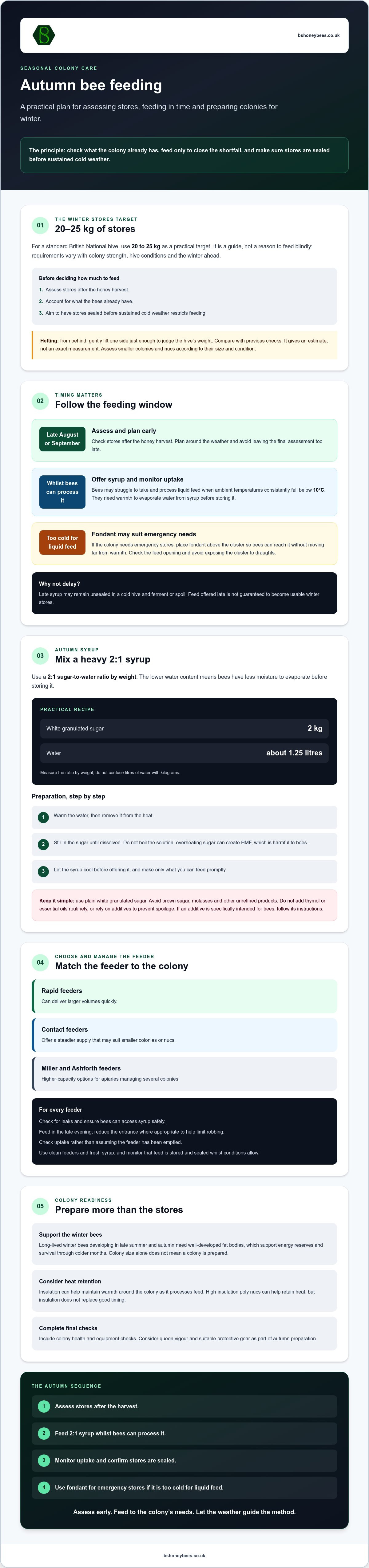
For a standard British National hive, use 20 to 25kg of stores as a practical target, while recognising that requirements vary with colony strength, hive conditions and the winter ahead. Treat the figure as a guide, not a reason to feed blindly. Check the colony’s existing stores and aim to have them sealed before sustained cold weather restricts feeding.
Hefting gives you an estimate without dismantling the hive. From behind, gently lift one side just enough to judge its weight, then compare it with your previous checks. It’s a useful way to notice changes, but it isn’t an exact measurement. Smaller colonies, including honey bee nucs for sale UK, need assessment according to their size and condition, not the full-hive target automatically.
The Impact of Temperature on Syrup Processing
Make the most of the feeding window. Bees may struggle to take and process liquid feed once ambient temperatures consistently fall below 10°C. They must evaporate water from syrup before storing it safely, a task that becomes harder as the weather cools. Syrup left unsealed in a cold hive may ferment or spoil, so don’t assume that feed offered late will become usable winter stores.
Insulation can help maintain warmth around the colony as it processes feed. A well-prepared British National beehive can support late-season management, while high-insulation poly nucs can help retain heat. Insulation doesn’t replace good timing. This autumn bee feeding guide uk follows a clear sequence: assess stores early, feed while bees can process syrup, then confirm the colony has enough sealed food for winter.
The 2:1 Syrup Recipe and Feeding Methods
For autumn feeding, use a heavy syrup with a 2:1 sugar-to-water ratio by weight. Its lower water content means bees have less moisture to evaporate before storing it, which matters as the feeding window narrows. A practical recipe is 2kg of white granulated sugar to about 1.25 litres of water. The ratio is by weight, so don’t confuse litres of water with kilograms when measuring.
Prepare it carefully. Warm the water, remove it from the heat, then stir in the sugar until dissolved. Don’t boil the solution, as overheating sugar can create hydroxymethylfurfural (HMF), which is harmful to bees. Let the syrup cool before offering it. Use plain white granulated sugar rather than brown sugar, molasses or other unrefined products, and make only what you can feed promptly.
Keep the recipe simple. Thymol and essential oils are sometimes discussed as additives, but don’t add them routinely or rely on them to prevent spoilage. Use an additive only if it’s specifically intended for bees, and follow its instructions. Clean feeders, fresh syrup and prompt uptake are practical safeguards. Additives can’t make stale or unsuitable feed safe.
Choosing the Right Feeder for Your Apiary
Match feeder capacity to the colony and the time available. Rapid feeders can deliver larger volumes quickly, while contact feeders offer a steadier supply that may suit smaller colonies or nucs. Miller and Ashforth feeders are higher-capacity options for apiaries managing several colonies. Whichever type you choose, check for leaks and make sure bees can access the feed safely.
Feed in the late evening and reduce the entrance where appropriate to help limit robbing. Check uptake rather than assuming the feeder has been emptied. The aim is to get feed stored and sealed while conditions still allow it.
Transitioning to Fondant
Once it’s too cold for bees to take and process liquid syrup effectively, switch to fondant if the colony needs emergency stores. Place it above the cluster so the bees can reach it without moving far from their warmth. The crown board’s feed opening can provide access, but check how your equipment is arranged and avoid leaving a gap that exposes the cluster to draughts.
In this autumn bee feeding guide uk, the key is to match the feed to the weather: syrup while bees can process it, fondant when liquid feed is no longer suitable. If you’re reviewing your winter set-up, explore British National hives and poly nucs as equipment options.
Comparing Feeders: Efficiency and Temperature Retention
As late September approaches, choose a feeder the colony can use quickly and safely. A high-capacity feeder may help a strong colony take down a substantial feed, but capacity alone doesn’t guarantee uptake. Match the feeder to colony size, check for leaks and spills, and make sure bees can reach the syrup without unnecessary risk.
Rapid feeders can present a drowning hazard if bees fall into uncovered syrup. Use a feeder designed to give them safe access, with its supplied floats or ladders correctly in place, and check it after filling. Clean up spilled syrup around the hive promptly. Exposed feed can attract robbing bees and wasps.
Feeder Types and Hive Styles
A British National hive can accommodate different feeder arrangements, so consider access, capacity and how easily you can refill without disturbing the colony. For a smaller colony in a nuc, a feeder sized for its population can help avoid offering more syrup than the bees can process. High-insulation poly nucs retain heat better than wooden equipment, which can support smaller colonies as they use late-season feed. Insulation helps, but it can’t compensate for feeding after bees have stopped processing syrup effectively.
Robbing is when bees from another colony steal stores from a weaker hive, potentially stripping its food and overwhelming its defenders during autumn. Reduce the entrance to a defensible size during feeding periods, especially for small colonies, and keep equipment free of exposed syrup.
Clean, Low-Disturbance Feeding
Feed at dusk to reduce the time syrup scent is exposed during active flight. Avoid spills, close feeders securely and keep inspections brief. Don’t rely on essential oils to mask syrup scent: their effectiveness for this purpose isn’t established here, and adding unverified substances to feed may create further problems. Good feeder hygiene and careful handling are the safer approach.
Stores also support the colony’s late-season brood rearing, which produces the long-lived winter bees. A queen’s laying pattern is influenced by the colony’s condition and available resources. Stable stores help avoid adding food stress during this period. If you’re considering queen stock, read about mated queen bees UK. The practical message in this autumn bee feeding guide uk is simple: match feeder capacity to the colony, protect access to syrup and choose equipment that supports heat retention.
The UK Autumn Feeding Timeline: September to October
Timing is the main risk in autumn feeding. Late August through September is generally the key window, while conditions are warm enough for bees to take and process liquid feed. Use the calendar as a prompt, not a guarantee. UK weather varies, and feeding should be completed before temperatures consistently fall below 10°C. This autumn bee feeding guide uk timeline helps you act early, then adjust to the colony and conditions in front of you.
September: Assess, Feed and Monitor
Early September: Once you’ve completed the final honey harvest, assess the colony’s stores and estimate how much feed it needs. Don’t wait for the hive to feel dangerously light. Check the forecast and start promptly if stores are short.
Mid-September: Offer heavy 2:1 syrup while bees can still process it. Check uptake and reassess stores rather than assuming one feed will be enough. Late summer is also an important period for Varroa management, as healthy winter bees are essential for colony survival. If treatment is due, use an authorised product as directed and check its instructions before feeding alongside it. Don’t assume every treatment can be combined with feeding.
Keep an eye on the nectar gap between summer forage and any later ivy flow. Local forage and weather determine what bees can gather, so don’t count on ivy to make up a shortfall. Avoid unnecessary disturbance, but check that the queen has suitable laying space for the final brood that will develop into winter bees.
October: Confirm Stores and Secure the Hive
Early October: Check that feed has been taken down and stores are sealed. Remove empty or half-empty feeders when liquid feeding is finished. Leaving them in place can add unwanted moisture and clutter to the hive. If temperatures are already too low for syrup processing, don’t keep offering liquid feed. A colony that feels light on a final heft may need fondant above the cluster for access during cold weather.
Make a final external check: fit mouse guards where needed, and make sure hive straps are secure ahead of winter winds. Keep the inspection focused. Opening the hive in cold weather can chill the colony, so rely on careful observation and hefting rather than repeatedly lifting frames.
Work through the schedule, but let temperature and store checks guide each decision. For equipment suited to preparing colonies for winter, explore British National hives and poly nucs.
Final Preparation: Health Checks and Equipment
Feed stores alone won’t carry a colony through winter. Before reducing inspections, check that the colony is healthy, its queen is laying a suitable pattern of brood and the hive is secure. A vigorous queen supports the production of winter bees, but genetics aren’t a substitute for sound health management. Read more about F1 Buckfast queens UK as part of your wider preparation.
Varroa and Nosema Management
Varroa management is closely connected to winter readiness. Heavy mite pressure can damage developing bees and compromise the colony’s ability to raise healthy, long-lived winter bees. Monitor mite levels and, where treatment is needed, use an authorised veterinary medicine according to its instructions. Check whether its guidance allows feeding at the same time, and keep the required treatment records.
A wet summer doesn’t by itself confirm Nosema. Watch for unusual signs, such as faecal staining around the hive, but remember that these signs aren’t a diagnosis. Seek reliable bee-health guidance if you’re concerned rather than treating on appearance alone. Good stores support the colony, but nutrition can’t replace appropriate disease and parasite management.
Equipment, Inspections and the Quiet Period
Complete essential checks before November, when the aim is to minimise disturbance. Inspect frames and boxes for damage or gaps that could provide access for mice or wasps, and make sure the hive is stable. For final autumn inspections, choose protective clothing that fits securely and check it for damage before use. Explore the bee suit UK sizing guide to help assess fit. BS Honey Bees Ltd supplies BBWear bee suits.
Once the colony is prepared, avoid opening the hive without a clear reason. Observe from outside and check after severe weather that the hive remains secure. The quiet period is for limiting disturbance, not ignoring problems. Act if there’s a clear concern, but don’t repeatedly open the hive just to recheck stores already assessed.
Finish your equipment review by checking that your boxes and frames fit together properly and are ready for winter use. Explore British National hives and frames as you prepare your apiary for the colder months. A sound autumn bee feeding guide uk plan brings feed, bee health and suitable equipment together before winter conditions set in.
Prepare Now for a Stronger Spring Colony
Winter readiness comes from a series of timely decisions, not a last-minute feed. Assess stores early, use 2:1 syrup while bees can still process it, and switch to fondant if cold weather closes the liquid-feeding window. Keep health checks and hive security in the plan too, so nutrition and protection work together.
Use this autumn bee feeding guide uk as a practical framework, then adjust your actions to the colony and conditions. Strong winter preparation starts with suitable equipment and healthy bees, supported by attentive care throughout autumn.
BS Honey Bees Ltd specialises in Buckfast and Carniolan genetics and supplies British National hives and frames, poly nucs and BBWear bee suits. Explore its range of British National hives, poly nucs and beekeeping equipment as you prepare your apiary for winter. With a clear plan and steady attention, you can give your colonies a better foundation for spring.
Frequently Asked Questions
When should I stop feeding syrup to my bees in the UK?
Stop offering liquid syrup before temperatures consistently fall below 10°C, as bees may struggle to take it down and process it in colder conditions. The main feeding window is generally late August through September, but weather varies, so judge by the forecast and the colony’s uptake. Check that stores are sealed before removing the feeder. If the colony still needs food after it’s too cold for syrup, fondant is a more suitable option.
What is the best sugar to water ratio for autumn bee feeding?
Use a heavy syrup made with a 2:1 sugar-to-water ratio by weight for autumn feeding. For a practical metric measure, combine 2kg of white granulated sugar with about 1.25 litres of water. Warm the water to dissolve the sugar, but don’t boil the mixture, as overheating can create HMF, which is harmful to bees. Let the syrup cool before feeding, and avoid brown or unrefined sugars.
Can I feed my bees honey instead of sugar syrup in the autumn?
Honey already in the hive is a valuable food reserve, so don’t remove usable stores simply to replace them with syrup. Avoid feeding honey from an unknown source, as it may carry disease organisms between colonies. If you’re considering giving back honey you’ve harvested, check its origin and suitability first. For topping up stores, plain white sugar syrup is the standard autumn feed. Assess the colony’s needs before adding any feed.
What happens if I feed my bees too late in the season?
If you offer syrup after temperatures have fallen, bees may not take it down or evaporate enough moisture for safe storage. Unprocessed syrup can remain exposed in the hive and may ferment or spoil. It can also leave the colony short of sealed stores just as winter begins. Check stores early and act while the weather allows. If it’s already too cold for liquid feed, use fondant when additional food is needed.
How much food does a honey bee colony need for a UK winter?
A standard British National hive is commonly assessed against roughly 18 to 22kg of winter stores, with 20 to 25kg used as a prudent target in some guidance. These are estimates, not fixed requirements for every colony: strength, hive conditions and winter weather affect consumption. Count existing honey and sealed syrup before feeding. Hefting can help you track changes in weight, but it’s an estimate rather than a precise measurement.
Is it better to use a rapid feeder or a contact feeder in September?
Choose according to colony size, feed volume and how quickly the bees are taking syrup. A rapid feeder can suit a strong colony that needs a larger quantity in a short period, while a contact feeder can offer smaller colonies or nucs a steadier supply. Whichever you use, make sure bees can access the syrup safely and check for leaks. A feeder’s capacity doesn’t tell you whether the colony has taken enough.
Should I feed my bees if they still have frames of honey left?
Not automatically. First estimate the colony’s total usable stores, including honey and any sealed syrup, then compare that with a suitable winter target for its hive and strength. Frames of honey are useful reserves, but their presence alone doesn’t confirm that the colony has enough. Avoid feeding without checking, as excess syrup can occupy comb the queen needs. Reassess the hive if its weight or stores appear inadequate.
How do I prevent other bees from robbing the hive during autumn feeding?
Feed in the late evening, reduce the entrance so the colony can defend it, and clean up any spilled syrup promptly. Keep feeders covered and avoid leaving syrup or wet equipment exposed near the hive. Robbing can escalate quickly, particularly where a small colony is defending a narrow entrance against stronger foragers. Watch for persistent fighting or bees searching around cracks, then remove exposed feed and make the entrance easier to guard.