

What if the biggest beekeeping mistake is acting too quickly? A colony that looks different after a cold snap or a change in forage may be responding normally, not signalling a crisis. For UK beekeepers, common beekeeping mistakes uk often start with uncertainty about when to inspect, feed or add space, especially when advice doesn’t reflect local weather and seasonal conditions.
It’s easy to feel pulled between conflicting recommendations, particularly when you’re still learning to read your bees. Rather than intervening at every change, observe the colony, consider the time of year and make decisions based on what you can see.
This guide explains how to recognise common management errors and avoid turning routine seasonal changes into unnecessary disruption. You’ll learn how to make inspections purposeful, keep useful records, assess feeding and space, and follow up on signs that need closer attention. It also covers how to use current, trusted UK guidance, including advice on bee health. A prepared inspection routine, suitable equipment and clear notes can help you manage your colony with greater confidence, season by season.
Key Takeaways
- Understand common beekeeping mistakes uk beekeepers may make, and pause before acting on a single sign.
- Choose inspection timing with the weather and colony condition in mind, rather than following a fixed habit.
- Base feeding decisions on the colony’s stores, available forage and circumstances, not guesswork.
- Look for evidence over time before deciding that a queen has failed or a colony is preparing to swarm.
- Use a simple prepare, observe, record, decide and review routine. Suitable equipment can support it, but it can’t replace careful observation.
Common beekeeping mistakes in the UK: why good intentions can go wrong
Beginners don’t need to get everything right immediately. Many problems are easier to prevent when decisions are guided by observations, rather than a hunch or a routine that doesn’t fit the colony. A common management mistake is an avoidable action, or omission, that disrupts colony care. The intention may be sensible, but the timing or evidence behind it may not be.
That’s why common beekeeping mistakes uk keepers encounter often come down to acting without enough context. Opening a hive in unsuitable weather, feeding without considering the colony’s stores or making a change based on one uncertain sign can add disruption rather than solve a problem. This broad overview of Beekeeping (or apiculture) introduces the subject; day-to-day decisions need to reflect the bees and conditions in front of you.
Why beginners can misread a colony
Limited experience can make ordinary seasonal changes seem alarming. A quieter colony, a change in activity at the entrance or a different brood pattern may raise questions, but one observation rarely explains the whole picture. Colony condition, recent weather and the time of year all matter.
Avoid drawing a firm conclusion from a single inspection finding. Note what you see, compare it with previous observations and look for a pattern. If a sign persists or you’re unsure what it means, consult current, trusted UK beekeeping guidance rather than guess. This can help you distinguish a change worth investigating from one that may reflect the season.
How UK conditions affect beekeeping decisions
British weather can shift quickly, and local forage and colony development don’t follow an identical timetable across every apiary. A spell of cold or wet weather can affect whether an inspection is appropriate, while changing forage can influence what the colony has available. Conditions at one apiary may differ from those elsewhere at the same time of year.
Don’t treat a calendar date as a universal instruction. Consider the weather, the colony’s condition and the reason for opening the hive before you act. If conditions or signs are unclear, consult current guidance from trusted UK sources, including the National Bee Unit. Keep any action proportionate to what you’ve observed.
Observe the colony, record what you find and act proportionately. Gather evidence, consider the context and respond when your observations support it. This simple habit helps turn uncertainty into a steadier approach.
Seasonal beekeeping mistakes: mistimed inspections, feeding and space
A calendar can help you anticipate the season, but it can’t tell you exactly what a colony needs today. In the UK, weather can change quickly, and forage and colony development vary between apiaries. One common beekeeping mistake uk keepers can make is following a routine simply because it worked on a particular date last year.
Seasonal cues guide timing; colony condition guides the decision. Use the time of year to know what to look out for, then consider the weather and what you’ve observed before inspecting, feeding or changing the hive.
When inspections become too frequent or poorly timed
Opening a hive in unsuitable weather can expose the colony to conditions it would otherwise be sheltered from. Repeated inspections without a clear purpose can also disturb the bees, while handling frames without a specific question may yield little useful information. Curiosity is understandable, especially for a new beekeeper, but each inspection should answer a question or help assess a concern.
Before opening the hive, consider whether conditions are suitable and what you need to learn. Don’t rely on a fixed interval as a rule for every colony unless current UK guidance supports it. If the weather is poor and there’s no urgent reason to inspect, waiting for a more suitable opportunity may be the more considered choice.
Feeding and adding space without checking colony needs
Feeding by assumption can overlook what’s actually happening in the hive. The colony’s stores, available forage, the weather and its overall condition all inform whether feeding is appropriate. Don’t treat a date on the calendar as proof that food is needed, or assume that visible activity alone means the colony has enough. Assess the situation and use current, trusted UK guidance if you’re uncertain. Avoid relying on a universal feed amount or timing.
Space needs attention too. Add it too late and a growing colony may become congested, which can contribute to swarming pressure. Add it too early and the colony may have more space to manage than its strength and conditions warrant. Look at colony development and the room available, then make a proportionate decision instead of following a fixed timetable.
Keep inspections focused: check the point that prompted the visit, note the colony’s condition and decide whether your observations support action. A sound setup can make hive management more orderly, but equipment can’t determine the right moment for you. If you’re reviewing your hive arrangement, explore British National hives and frames as one equipment option. Suitability depends on your apiary and management approach.
Queen, swarming and Varroa mistakes: investigate before intervening
A concern about the queen can feel urgent, but one unusual sign isn’t a diagnosis. For example, not seeing the queen during an inspection doesn’t by itself prove she’s absent or failing. Swarm preparation is not the same as queen failure, either. A common beekeeping mistake uk beekeepers should avoid is making a major change before checking the wider picture.
Confirm the evidence and consult current guidance before choosing an intervention. Consider what you’ve observed across inspections, the brood pattern and the colony’s overall strength. Record what you find and compare it with earlier notes. This helps distinguish a persistent concern from a single observation that may have another explanation.
Look beyond one queen or brood sign
Assess the brood and colony together rather than relying on one frame or one moment. Note whether the brood pattern has changed, what you can see at different stages and whether the colony’s condition appears to be changing over time. If the signs remain unclear, avoid rushing into requeening or another intervention based on guesswork. For more focused information, read this mated queen bees guide, which covers queen selection and introduction.
Assess swarm signs in context
Judge possible swarm preparation alongside colony strength and other evidence, rather than inferring it from one unusual observation. Note relevant signs during inspections and compare them over time. This gives you a sounder basis for deciding whether the colony may be preparing to swarm and what action, if any, is appropriate. Avoid treating every change in behaviour as proof that a swarm is imminent.
Keep Varroa decisions current
Varroa destructor is a significant colony-management concern. Monitoring helps you make informed decisions about the colony instead of relying on assumptions or outdated advice. Keep a record of checks and findings, and consult current National Bee Unit and BeeBase guidance for UK recommendations relevant to your circumstances.
General awareness is not a treatment plan. Don’t select a product, treatment or timing based on an old note or a recommendation that may not reflect current guidance. Check the latest UK advice before acting, especially if you’re unsure how to interpret monitoring results. A calm sequence of observation, record-keeping and evidence-led decisions is more reliable than intervening on a hunch.
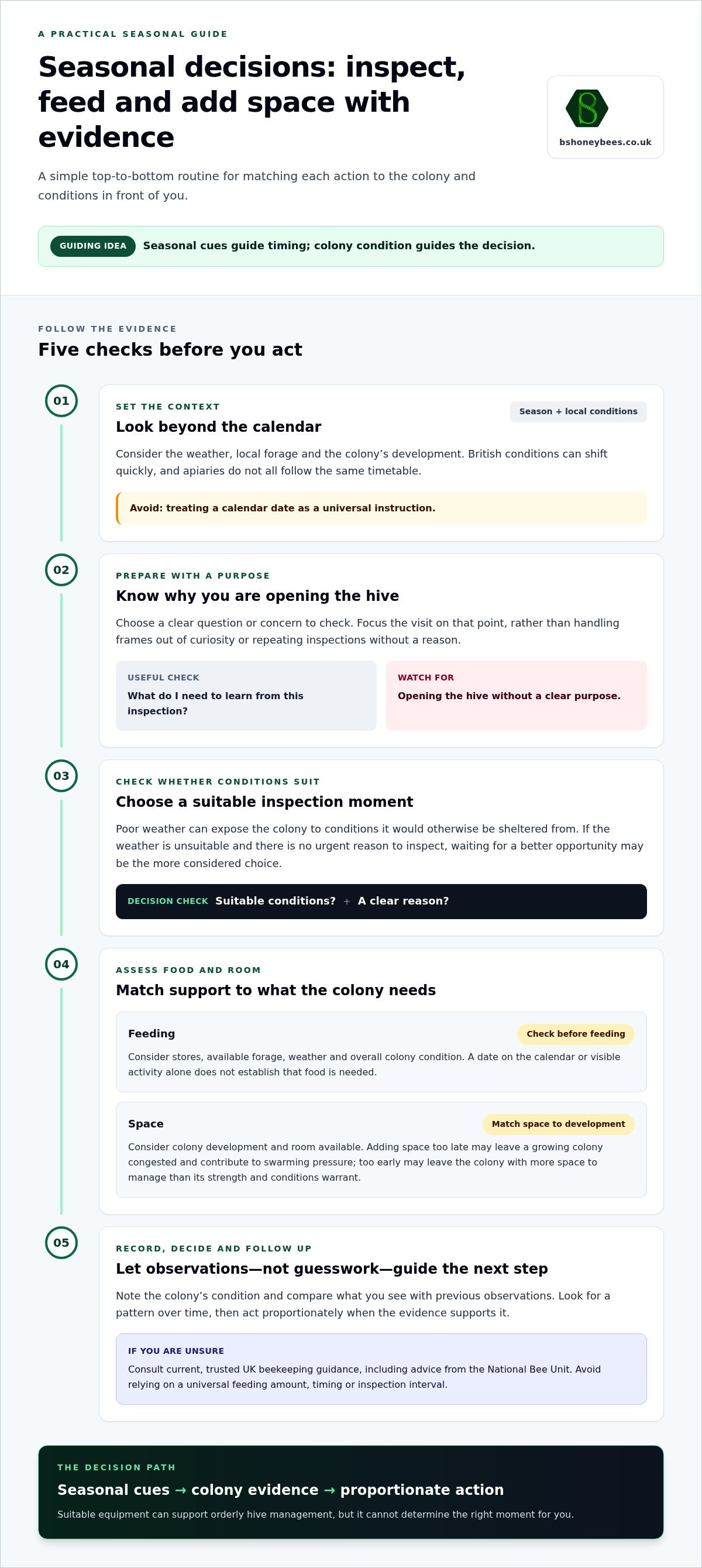
How to avoid common beekeeping mistakes in the UK: use a repeatable routine
A consistent process makes it easier to turn an inspection into a considered decision rather than a series of guesses. Use the same five steps each time, adapting them to the season, weather and colony in front of you. This practical routine can help reduce common beekeeping mistakes uk beginners may make when they feel pressured to act quickly.
A five-step hive inspection decision process
- Prepare: Choose suitable protective clothing, gather what you need and decide what question the inspection should answer. A clear purpose helps keep the visit focused.
- Observe: Take in the colony’s behaviour and condition. Look at stores, brood and available space, handling frames carefully and only as needed to answer your question.
- Record: Note the inspection date, weather, colony condition and anything you did. Include observations that may help you compare the next visit.
- Decide: Act only where your findings support it. If evidence is incomplete or the right response is unclear, pause rather than make a rushed change.
- Review: Set a sensible point to reassess the colony, guided by its condition and current advice, not an automatic date that ignores changing circumstances.
This routine works across the year because it is a decision-making framework, not a fixed seasonal timetable. Protective clothing that fits your inspection routine, such as a bee suit, can help you prepare calmly. It doesn’t replace careful observation or sound judgement.
Use records and reliable UK guidance to improve decisions
Brief, consistent notes can reveal a developing pattern that one inspection alone won’t show. Comparing records may help you see whether a colony’s condition is changing or whether an observation was isolated. Keep facts separate from assumptions: write what you saw, then record any action and the reason for it.
For current bee-health information, consult the National Bee Unit and BeeBase. Use their guidance to inform decisions where colony health is in question, and don’t rely on old instructions when recommendations or conditions may have changed. If you can’t confidently interpret a concerning sign, consult trusted, up-to-date UK guidance before intervening.
A familiar hive arrangement can also make inspections more consistent, provided it suits your beekeeping approach. Read this British National beehive guide for information about the format and its frame arrangement. To organise your inspections with suitable protective clothing, explore bee suits for hive inspections.
Build better beekeeping habits with suitable equipment and informed next steps
Good equipment can make a steady management routine easier to follow, but it can’t read the colony for you. Careful observation, sound judgement and ongoing learning remain central to avoiding common beekeeping mistakes uk beekeepers may encounter. Choose equipment that suits your approach, use it consistently and adapt your decisions to the colony’s condition.
Choose hive equipment that supports consistent management
A familiar hive format and compatible frames can help keep inspections orderly. When you know how your equipment fits together, it’s easier to handle frames methodically and record what you’ve seen. British National hives and frames are one established option, but no single hive type is right for every beekeeper or apiary. Consider your needs and management approach before settling on a format.
For more detail on its layout and frame arrangement, read the British National beehive guide. A consistent setup can support a repeatable inspection process, but it doesn’t prevent mistakes or replace learning to assess colony needs.
Prepare yourself before opening the hive
Before each inspection, check that your protective clothing is in good condition and fits properly. Make sure your veil is secure and your gloves are ready, so you can focus on the task rather than adjusting equipment once you’ve started. Being prepared can help you work calmly and handle the hive with care.
Fit is part of preparation. Use this bee suit sizing guide to consider protective fit before choosing a suit. The right clothing supports your routine, while attentive observation still guides decisions about the colony.
Build good habits one inspection at a time: prepare, observe, record and review. If you’re ready to organise your setup, explore beekeeping supplies and equipment.
Make your next hive decision with confidence
Good beekeeping isn’t about never making a mistake. It’s about learning to read your colony, taking the season and conditions into account, and choosing actions that match what you’ve observed. A repeatable routine and clear records can help you spot meaningful changes without rushing to intervene based on one sign.
These common beekeeping mistakes uk keepers encounter are easier to manage when you pause, check the evidence and turn to current, trusted UK guidance if you’re unsure. Suitable equipment can support consistent inspections, but your observations and continued learning remain central to colony care.
BS Honey Bees Ltd supplies live bees and beekeeping equipment across the UK, including British National hives and frames, nucleus colonies and BBWear bee suits. Explore the range of beekeeping supplies and live bees as you prepare for your next season.
Take it one inspection at a time. With steady habits and thoughtful decisions, you can keep building confidence as a beekeeper.
Frequently Asked Questions
What is the most common mistake beginner beekeepers make?
There isn’t one mistake that applies to every beginner, but acting without a clear reason is worth watching for. Some common beekeeping mistakes uk beekeepers encounter start with changing management based on a single sign or advice that doesn’t fit the season. Before opening the hive, decide what you need to learn. Observe the colony as a whole and record your findings before deciding whether to act.
How often should you inspect a beehive in the UK?
There’s no inspection interval that suits every colony, season and weather pattern. Inspect often enough to understand colony development and respond to relevant signs, but don’t open the hive unnecessarily or in unsuitable conditions. Consider the purpose of each inspection and the colony’s circumstances. Keep brief notes on the date, weather and condition so you can compare changes over time instead of relying on memory alone.
Can you inspect a beehive in cold or wet weather?
Cold or wet conditions may make an inspection unsuitable, so don’t let a calendar routine override the weather or the colony’s needs. Opening the hive at the wrong time can disturb the bees. First ask whether there’s an urgent reason to inspect and whether conditions are appropriate. If there isn’t a pressing concern, wait for a more suitable opportunity. Consult current UK guidance if you’re uncertain about what to do.
What happens if you feed bees when they do not need it?
Unnecessary or unsuitable feeding can complicate colony management, so base the decision on the colony’s condition, stores, available forage and current advice. Don’t feed automatically because it’s a particular time of year, or copy a quantity recommended for a different colony or situation. If you’re unsure whether stores are sufficient or how to respond, consult reliable, up-to-date UK guidance before feeding.
How can I tell whether my queen has failed?
You can’t reliably diagnose queen failure from one observation alone. Consider the broader picture, including the brood pattern, eggs, colony behaviour and changes across inspections. Record what you find and look for a pattern before deciding whether action is needed. Avoid a rushed, disruptive intervention based on a single sign. If concerns persist, consult current, reputable guidance before intervening.
Should I treat for Varroa without checking the colony?
Don’t base Varroa management on guesswork or an old treatment schedule. Monitoring and current recommendations should inform your decisions, as the appropriate approach can depend on colony conditions and timing. Check the latest guidance from the National Bee Unit or BeeBase before acting, and don’t assume one plan suits every apiary. If you’re unsure how to interpret what you find, seek up-to-date guidance before choosing an intervention.