

There’s no registered product for chalkbrood treatment in the UK, so good husbandry is the recommended approach. Spotting dry, chalk-like mummies early helps you focus on what matters: supporting the colony and managing affected comb before brood rearing suffers.
Finding pale or dark, hard remains in a brood cell, on the hive floor or near the entrance can be alarming. You may wonder whether the colony is at risk or whether its frames need replacing.
This guide explains how to distinguish chalkbrood mummies from other signs of diseased brood, why damp conditions and a struggling colony can worsen the problem, and how infection may affect colony strength and honey production. You’ll also learn how to improve hive conditions, manage affected comb and frames, and recognise when persistent chalkbrood may call for a change in management.
Key Takeaways
- Look for dry, firm, chalk-like brood remains, which may be white, grey or black, and check the hive floor and entrance as well as brood cells.
- Chalkbrood can slow colony growth and reduce honey production, especially when a weak colony struggles to cover its brood.
- There’s no registered chalkbrood treatment product in the UK; management centres on good husbandry and improving hive conditions.
- Keep the hive dry and ventilated, reduce excess space around a small colony, and avoid spreading contaminated material between hives.
- Assess affected comb in context: severe or recurring problems may call for gradual comb replacement and a review of the colony’s strength.
What causes chalkbrood?
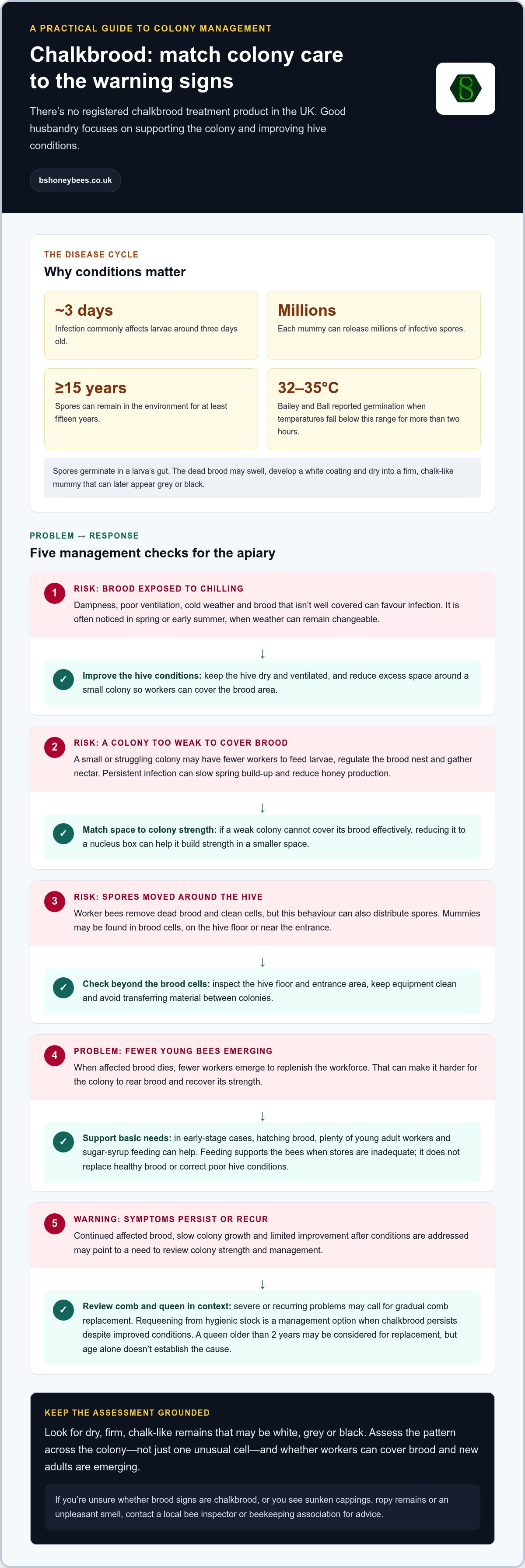
Chalkbrood is a brood disease caused by the fungus Ascosphaera apis. For chalkbrood treatment in the UK, the key point is that management focuses on the conditions that help the fungus spread, rather than a specific treatment product. Spores can remain in the environment for at least fifteen years, making it important to prevent repeated exposure.
The cycle begins when young larvae take in spores, through ingestion or absorption. Infection commonly affects larvae around three days old. After the spores germinate in a larva’s gut, fungal growth spreads through its body. The dead brood can swell and develop a white coating before drying into a firm, chalk-like mummy. As the fungus produces spores, the mummy may change from white to grey or black.
Each mummy can release millions of infective spores. Worker bees may spread them as they remove dead brood and clean cells. This behaviour helps clear affected larvae, but can also distribute spores around the hive. Mummies may therefore appear in brood cells or be carried out and found on the hive floor or near the entrance.
Conditions that chill or expose brood can increase the risk of infection. Dampness, poor ventilation, cold weather, a weak colony and brood that isn’t well covered are all risk factors. Chalkbrood is often noticed in spring or early summer, when colonies are expanding but UK weather can remain changeable. Pollen traps can also increase infection in honeybee colonies, so consider their effect alongside other hive conditions.
Colony temperature is another factor. Bailey and Ball reported that the fungus can germinate in the larval gut when temperatures fall below 32°C to 35°C for more than two hours. This helps explain why exposed brood and cold spells can coincide with symptoms. Spores may be present without causing a major problem; infection becomes more evident when conditions and colony strength favour fungal development.
Contact a local bee inspector or beekeeping association if you’re unsure whether brood signs are chalkbrood, or if you see sunken cappings, ropy remains or an unpleasant smell. Chalkbrood isn’t normally a notifiable disease in the UK, but those other signs warrant prompt advice so you can distinguish the cause and respond appropriately.
Effects on colony strength and honey production
Chalkbrood can reduce the number of adult bees emerging to work inside the hive. In a heavy infection, much of the sealed brood may dry out and die in its cells. Fewer emerging workers means less capacity to feed larvae, regulate the brood nest and gather nectar. Reduced brood production can create a cycle that makes it harder for the colony to rebuild its workforce.
The impact often shows in the colony’s pace of development. Persistent infection can slow spring build-up, leaving a small colony short of the bees needed to cover brood and manage stores. If it fails to reach full strength during the season, it may have fewer workers available during a nectar flow. Honey production can fall as a result, though the effect depends on colony strength and seasonal conditions.
Support the colony’s basic needs first. In early-stage cases, hatching brood, plenty of young adult workers and sugar-syrup feeding can help the colony recover. Feeding supports the bees when stores are inadequate, but it doesn’t replace healthy brood or correct poor hive conditions. Keep assessing whether workers can cover the brood and whether new adults are emerging to replenish the workforce.
Colony hygiene is part of recovery. Worker bees remove affected brood and clean cells, helping keep the brood nest usable. Make their task easier by matching the hive space to the colony’s strength. A small colony with excess space may struggle to cover its brood; reducing that space can help workers maintain the brood area. Keep equipment clean and avoid transferring material between colonies.
If a weak colony cannot cover its brood effectively, reducing it to a nucleus box can help it build strength in a smaller space. Requeening may be appropriate after significant damage or when chalkbrood persists despite improved conditions. Some colonies appear more genetically prone to infection, so recurring symptoms can prompt a review of the queen. Requeening from hygienic stock is a recognised management option, not an immediate response to every isolated mummy.
Consider the pattern before making that decision. Look for continued affected brood, slow colony growth and limited improvement after conditions have been addressed. A queen older than 2 years may be considered for replacement in chalkbrood management, but age alone doesn’t establish the cause. Keep the objective clear: a stronger, hygienic colony that can rear brood and maintain its workforce.
If requeening forms part of your plan, F1 Buckfast Queens are one option to consider. Focus on the colony’s ongoing condition and management needs, rather than expecting a queen change alone to resolve every factor behind persistent chalkbrood.
Recognising chalkbrood mummies
Chalkbrood signs appear in affected brood and may also be visible outside the cells. Check both places, as worker bees can remove mummies from the comb.
Visible signs in affected brood
Chalkbrood is a brood disease caused by Ascosphaera apis. Its signs include dead larvae that dry into chalk-like remains. Infected larvae may show visible changes just before capping or up to two days afterwards. Check recently capped brood as well as open cells.
Look for abnormal, pale remains in brood cells, then check whether they are firm and dry. Affected larvae may swell and develop a white coating before drying out. The change from larva to mummy can make a cell look unlike healthy brood, but one unusual cell isn’t enough to assess the colony’s overall condition.
Worker bees may remove affected brood while cleaning. Check the hive floor, landing board and ground near the entrance for discarded remains, even when the comb appears clear. Signs outside the hive can be an important clue that brood cells have been affected.
Appearance of chalkbrood mummies
Chalkbrood mummies are dead larvae that have dried into hard, chalk-like forms. They may be white, grey or black, with the colour darkening as Ascosphaera apis produces spores. Their dry, firm texture and changing colour help distinguish them from other suspicious brood signs.
White mummies are often easiest to spot against brood comb, while grey or black ones indicate a later stage of fungal development. Mummies may lie loose in a cell or appear on the hive floor after worker bees remove them. Check several affected areas rather than relying on one discarded larva.
Texture matters. Chalkbrood remains are dry and firm, not wet or sticky. Sunken cappings, ropy larval remains or a strong unpleasant smell are warning signs that don’t match the typical dry mummy. If you see these signs, or are unsure about suspicious brood, seek advice from a local bee inspector or beekeeping association.
Keep your observations specific: note whether remains were in cells or outside, their colour, and whether other brood looked abnormal. For example, white, firm remains on the floor suggest a different pattern from sunken cappings and ropy contents in brood cells. These details help you describe what you found and decide whether to seek further advice.
Replacing affected comb and frames
Replacing comb isn’t automatically necessary after every chalkbrood case. First assess how much brood comb is affected, whether the problem is recurring and whether the colony can keep the remaining brood area clean. A few isolated mummies call for a different response from a frame with widespread affected cells. Aim to remove heavily affected material without unnecessarily disturbing a colony already under pressure.
Use the appearance of the comb as one part of that assessment. Note how many cells contain affected brood and whether mummies are concentrated in one area or scattered across the frame. One contributor suggests considering removal when more than 10% of a frame is affected. Treat that as a practical consideration, not a universal threshold: the severity and pattern of infection also matter.
In severe cases, replacing affected comb frames may be necessary. Many beekeepers recommend burning wooden frames affected by chalkbrood and replacing them. This removes the comb and frame together, rather than leaving heavily affected material in circulation. Keep removed frames separate from clean equipment, and avoid moving contaminated comb or tools between colonies, as spores can spread through hive material.
For less extensive or older comb, gradual replacement can form part of normal brood-comb management. Replacing one frame at a time allows the colony to keep using its brood nest while affected or worn comb is phased out. Replacing and storing brood comb at least every three years is also recommended as a management technique to reduce chalkbrood infection. Keep a simple record of frame changes to distinguish recurring problems from an isolated affected frame.
Consider the colony’s strength before removing several frames. A small colony may need its remaining brood area compact enough for workers to cover and care for it. Removing too much usable comb at once can reduce the space available for brood, so match replacement to the colony’s condition. If severe infection affects multiple frames, prioritise the worst material and maintain clean equipment during each change.
Frame replacement works best alongside good hygiene. Remove dried-out larvae and clean affected areas, then keep removed material away from clean comb and other hives. Check replacement frames during later inspections for renewed signs, and record whether affected brood appears on new comb. If chalkbrood continues after heavily affected frames have been dealt with, review the colony’s wider conditions rather than assuming comb removal alone will resolve it.
Treatment and management of chalkbrood
No products are registered for treating chalkbrood in the UK, so good husbandry is the recommended approach. Focus on dry, ventilated conditions and a colony strong enough to cover its brood.
Managing chalkbrood
Managing chalkbrood means reducing conditions that favour the fungus while helping bees remove affected brood. Start by checking dampness, airflow, colony strength and whether workers cover the brood area. These factors guide practical changes; treating one symptom alone may leave the conditions supporting infection unchanged.
Keep the hive dry and ventilated. Raising it off the ground, using an open mesh floor and trimming vegetation around the stand can reduce dampness. Where practical, move a hive from a shady or persistently damp position, and provide suitable ventilation to limit humidity. In spring and summer, enlarging the entrance may improve airflow.
Match hive space to colony strength. Reducing excess space helps a small colony cover brood more effectively, while reducing brood-chamber volume in autumn and winter can support management. Remove white mummies promptly, clear dried-out larvae and use clean equipment. Avoid transferring comb or tools between colonies, as this can spread spores.
Review nutrition and stored pollen if infection persists. Adequate food supports colony strength, and removing stored pollen from an infected hive alongside a protein substitute may help reduce infection levels. In recurring cases, requeening from hygienic stock is a recognised management option. Consider the full pattern, including brood coverage and hive conditions, rather than relying on a single change.
UK treatment and prevention costs
There is no registered chalkbrood medicine to buy in the UK, so the recommended response is husbandry rather than a product treatment. Prevention and management costs depend on the changes needed, such as improving ventilation, adjusting hive space or replacing affected comb and frames.
For example, a hive that needs only better airflow has different requirements from one with heavily affected frames. The practical factors are the equipment already in use, the extent of affected comb and the colony’s condition. Chalkbrood treatment in the UK therefore has no single fixed cost that applies to every hive.
Prioritise changes that address the actual risk in your apiary: damp surroundings, poor airflow, excess space or persistent infection. If replacement equipment is needed, explore hive-management equipment to support a clean, appropriately sized set-up.
BS Honey Bees: F1 Buckfast Queens
BS Honey Bees Ltd supplies F1 Buckfast Queens and Carniolan Queens for beekeepers whose chalkbrood management plan includes requeening. A queen change may be considered when infection persists despite improved hive conditions, or when affected brood has caused substantial damage. It should form part of a wider management decision, not replace attention to ventilation, colony strength and comb condition.
If you’re rebuilding a weakened colony, BS Honey Bees Ltd also offers 5 / 6 Frame Nucs and 2 in 1 Poly Nucs. These options may suit a different stage of apiary management than requeening an established colony. Choose according to the action your colony needs, and continue monitoring brood health after making changes.
Visit BS Honey Bees Ltd to explore its queen and nucleus colony options.
Make your next hive check count
Use your next inspection to build a clearer picture of the colony, rather than reacting to one surprising sign. A brief record of what you observe and change can help you judge whether your management decisions are working over time. That steady approach is central to chalkbrood treatment in the UK, where the hive’s changing condition guides the next step.
If your plan involves strengthening a colony or considering a queen change, choose an option that fits its current needs. Keep decisions practical and review them as the colony develops. You don’t need to make every change at once; a focused response gives you a clearer basis for the next inspection.
For a relevant next step, contact BS Honey Bees Ltd to discuss its beekeeping offerings. Keep observing, make informed adjustments and give your colony the consistent care it needs to move forward.
Frequently Asked Questions
How do I spot it?
Look for dead brood that has dried into hard, chalk-like remains, then check nearby cells for similar signs. Worker bees may carry affected larvae out, so inspect the hive floor and entrance as well as the comb. Note whether remains are dry and firm, and whether cappings or other brood look unusual. If the signs don’t fit chalkbrood, seek advice from a local bee inspector or association.
Is chalkbrood serious?
Chalkbrood is usually less serious than American foulbrood or European foulbrood, but a persistent or heavy infection can still weaken a colony. It may reduce the number of emerging workers, slow colony growth and limit honey production. Assess the wider pattern: a few affected cells differ from widespread damaged brood and a colony that’s failing to build. Ongoing signs deserve attention to colony strength and hive conditions.
What does chalkbrood look like?
A chalkbrood mummy is a dead larva dried into a firm, chalk-like form. Mummies can be white, grey or black, and may be found inside brood cells or discarded near the entrance. Their dry texture is a useful clue. Wet or sticky remains, sunken cappings, ropiness or a strong unpleasant smell aren’t typical chalkbrood signs and call for prompt advice.
What causes chalkbrood in honey bees and how is it diagnosed?
Chalkbrood is caused by the fungus Ascosphaera apis. Young larvae become infected after exposure to spores, while dampness, poor ventilation, cold conditions or weak colony coverage favour disease. Beekeepers usually recognise it from characteristic dried brood remains and the surrounding symptoms. If the appearance is uncertain, describe what you found and seek an assessment from a local bee inspector or beekeeping association.
What are the signs and symptoms of chalkbrood in a UK honey bee colony?
Typical signs include dead larvae that become dry, hard mummies, ranging from white to grey or black. You may find them in cells, on the hive floor or near the entrance. The colony may also show slower build-up if brood loss continues. Record where the remains appear and whether other brood looks abnormal. This context helps distinguish an isolated finding from an ongoing colony problem.
What treatments for chalkbrood are recommended by UK beekeeping authorities?
Good husbandry is the recommended approach in the UK because no product is registered for chalkbrood treatment. Focus on reducing dampness, improving ventilation and matching hive space to the colony’s strength. Remove affected debris and keep equipment clean. If brood symptoms differ from chalkbrood, such as sunken cappings or ropy remains, seek advice promptly rather than treating them as the same disease.
Are any medicines or antifungal treatments licensed for chalkbrood in the UK?
No. There are no products registered for treating chalkbrood in the UK, so don’t rely on a medicine or antifungal as the remedy. Management centres on colony husbandry and reducing conditions that favour infection. If you encounter a product or treatment claim, distinguish it from the established UK approach: address hive conditions, hygiene and colony strength rather than assuming an antifungal is licensed for this disease.
How can beekeepers manage chalkbrood without medication?
Keep the hive dry, ventilated and appropriately sized for the colony. Remove dried affected brood, clean areas where mummies have accumulated, and use clean equipment without transferring material between colonies. Support adequate food and ensure workers can cover the brood. If infection recurs despite improved conditions, review the queen and overall colony management. Replace heavily affected comb when needed, rather than removing usable frames indiscriminately.