
A budget bee suit is often the most expensive piece of equipment in your apiary if you have to replace it every two seasons. Many beekeepers start their journey with cheap imports, only to face the sharp anxiety of a failing zip or the sudden heat of a sting through thin, inferior fabric. When searching for reliable beekeeping protective clothing uk, you deserve gear that will not let you down when the colony is most active.
We understand that total confidence is non-negotiable when you are handling bees. You need a suit that balances maximum sting protection with the breathability required for long apiary sessions in the British sun. Investing in high-quality, British-made garments ensures your safety and provides gear designed to last fifteen years or more. It's about choosing equipment that works as hard as you do whilst maintaining your comfort in the field.
This 2026 buying guide provides the technical clarity you need to make an informed investment. We will explore the essential safety regulations, compare ventilated versus traditional fabrics, and show you how to spot the hallmarks of lasting British craftsmanship. Discover how to select a suit that offers professional-grade security and remains dependable from the first hive of the season to the last.
Key Takeaways
- Learn why material density is the primary defence against stings and why "one size fits all" is a dangerous myth for apiary safety.
- Discover why British-made BBWear suits are the industry standard for longevity, often providing reliable protection for 15 years or more.
- Understand how to select the best beekeeping protective clothing uk by identifying the ideal balance between investment and professional-grade features.
- Master the "squat test" to ensure full mobility and learn maintenance techniques that preserve your suit's integrity for over a decade.
- Identify the essential accessories, such as gauntlets and specific glove types, required to seal vulnerable gaps whilst maintaining hive tool dexterity.
Essential Features of Beekeeping Protective Clothing in the UK
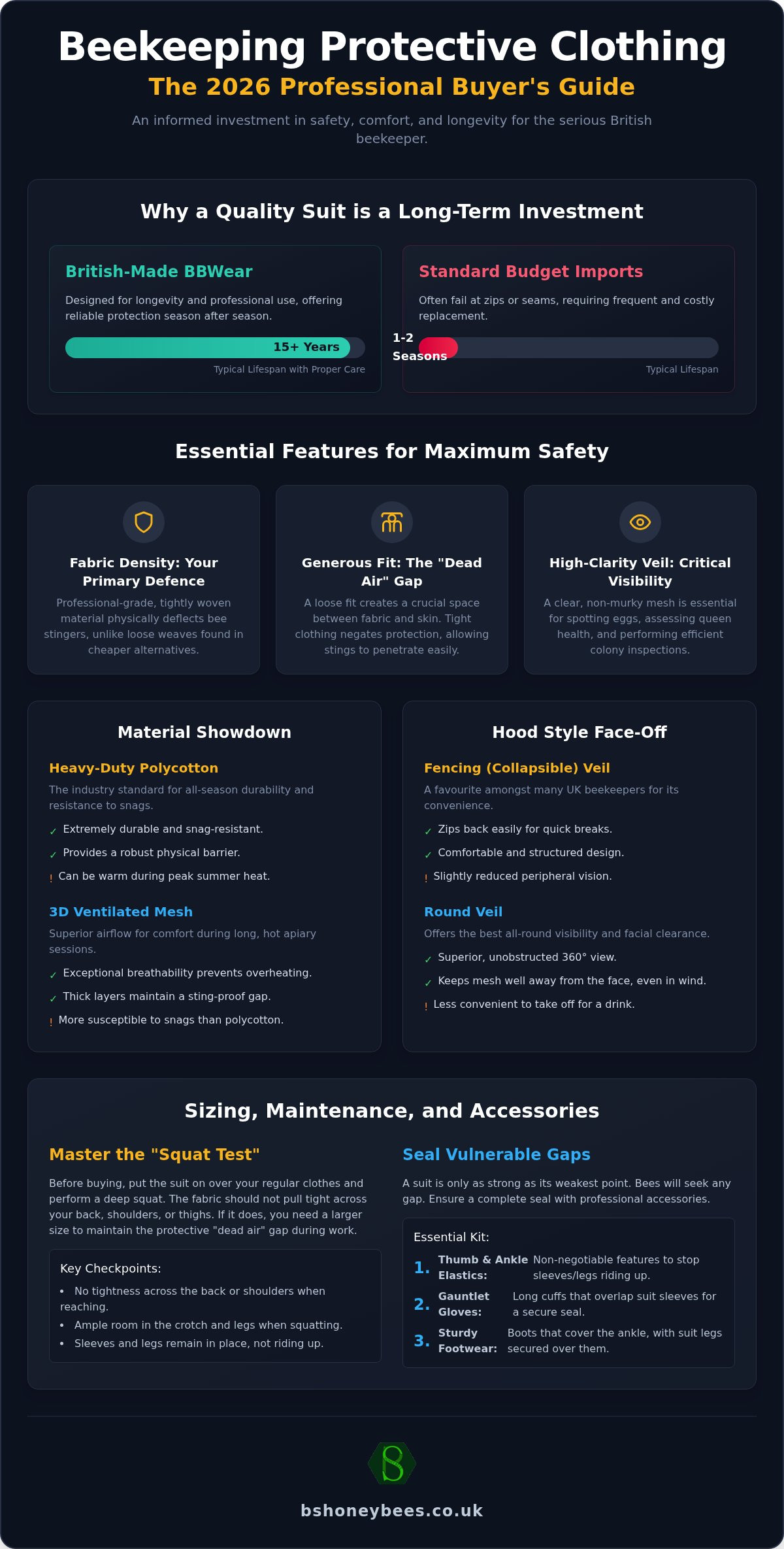
High-quality protection isn't just about covering your skin; it's about engineering a barrier that honey bees cannot penetrate. When selecting beekeeping protective clothing uk, the density of the fabric is your first line of defence. A loose weave allows a stinger to pass through easily, whereas professional-grade materials are woven tightly enough to deflect the most persistent foragers. This physical barrier is what allows you to work with confidence, even during heavy nectar flows or defensive autumn inspections.
Don't fall for the myth that "one size fits all" or that a snug fit is preferable. Safety in the apiary relies on a "dead air" space between the garment and your body. If the fabric is pulled tight against your shoulder or thigh, a bee can sting straight through. This is particularly vital when working with British National Hives, which often require significant bending and lifting of heavy supers. Your suit must have a generous cut and reinforced stress points to maintain this protective gap during every movement. Ensure your gear includes elasticated loops for your thumbs and feet to prevent sleeves and legs from riding up whilst you work.
Visibility is just as critical as physical protection. You cannot manage a colony effectively if you're squinting through a murky veil. High-clarity mesh is essential for spotting eggs or identifying the subtle movements of your F1 buckfast queens UK amongst thousands of workers. A clear view allows for faster, more efficient inspections, which ultimately reduces the stress on the colony.
Material Matters: Polycotton vs Fully Ventilated Mesh
Heavy-duty polycotton remains the industry standard for durability. It provides a robust shield during cooler days and resists snagging on brambles or hive stands. However, the UK's humid mid-summer heat can make traditional suits uncomfortable. This is where 3D ventilated mesh excels. By sandwiching a thick layer of polyester between two layers of mesh, these suits offer incredible airflow whilst keeping the outer layer far enough from your skin to prevent stings. Professional bee farmers often choose ventilated suits for the main season to prevent overheating during long apiary sessions.
Hood Styles: Fencing vs Round Veils
The choice between a fencing (collapsible) veil and a round veil often comes down to personal comfort. Fencing veils are the favourite for many UK beekeepers because they zip back easily for a quick break. Round veils, however, offer superior all-round visibility and ensure the mesh stays well away from your face, even in the gusty conditions common in British apiaries. Whichever you choose, ensure it features heavy-duty zips that lock securely. A failing zip is a safety hazard that can't be ignored; always opt for suits that use reputable hardware to ensure a bee-proof seal every time you suit up.
Choosing the Right BBWear Suit for Your Experience Level
Selecting the right beekeeping protective clothing uk requires looking past the initial price tag. While imported suits are plentiful, they often fail at the seams or zips within a single season. The BBWear philosophy focuses on British-made longevity; these garments are designed to last 15 years or more with proper care. This makes them a more economical choice over a decade than purchasing three or four budget alternatives. This British-made excellence isn't just about pride; it's about ethical production and a quality standard you can feel in the weight of the fabric.
Your level of protection should scale with your apiary. A hobbyist with two hives might prioritise a lightweight feel, but as your hive count grows, so does the risk of defensive behaviour during long sessions. Professional breeders, who might inspect dozens of colonies a day, require clothing that offers zero-compromise security. Essential features like thumb loops and ankle elastics aren't optional; they are critical for sealing the suit against "intruders" that seek out gaps in your armour. The thumb loops ensure that when you pull on your gloves, the sleeves don't bunch up, leaving a sliver of wrist exposed to an agitated colony. To ensure your apiary is equipped with the same standards we maintain, you can browse our professional equipment at BS Honey Bees.
The BBWear Basic Bee Suit: Perfect for Beginners
Don't mistake "Basic" for low quality. This suit uses a heavy-duty polycotton that far exceeds the flimsy materials found in standard starter kits. It includes all the professional essentials: YKK zips, thumb loops, and a fully elasticated waist for a tailored fit. It's the most reliable choice for those starting out with honey bee nucs for sale UK, providing the confidence needed to handle bees during those first crucial inspections. It offers a "sweet spot" between price and the professional features required to keep you safe.
The BBWear Ultra Bee Suit: The Professional Standard
The award-winning Ultra suit is the pinnacle of beekeeping protective clothing uk. It's the same gear we use daily in our queen breeding operations. The unrivalled ventilation makes it indispensable during the humid peak of the British season, allowing heat to escape whilst keeping the bees at a distance. When you're lifting heavy british national beehives or managing multiple apiaries, the reinforced knees and elbows provide the durability required for high-wear tasks. It's an investment in your comfort and safety that pays dividends through years of reliable service.
Crucial Accessories: Gloves, Footwear, and Gauntlets
A high-quality suit is only as effective as its weakest point. Your hands and feet are the most active parts of your body during an inspection, making them primary targets for defensive bees. Selecting the right accessories for your beekeeping protective clothing uk is about achieving a precise balance between impenetrable armour and the tactile sensitivity required for delicate hive work. If you neglect these entry points, even the most expensive suit becomes a liability when a colony is agitated.
Gauntlets play a vital role in creating a bee-tight seal. These heavy-duty sleeves extend from the glove and overlap with your suit's elasticated cuffs, providing a double-layer barrier. This prevents "crawlers" from finding a gap when you reach deep into a brood box or lift heavy supers. Without a proper gauntlet, the space between your glove and sleeve is a common entry point for stings. Ensure your gauntlets are made from robust material that resists propolis buildup and can be easily cleaned after every session.
Selecting Beekeeping Gloves
Soft leather gloves are the traditional choice for many UK beekeepers. They offer maximum protection against stings and are durable enough to handle rough hive stands and wooden frames. However, they can be bulky. Many professional breeders prefer nitrile gloves when they require high dexterity, particularly for tasks like marking mated queen bees UK or performing graftings. Nitrile allows you to feel the movement of the bees and the texture of the comb, reducing the risk of accidentally crushing workers. Regardless of your choice, hygiene is paramount. Leather gloves should be scrubbed with soda crystals regularly, and nitrile gloves should be changed between apiaries to prevent the spread of diseases like American Foulbrood (AFB).
Footwear for the Apiary
Your choice of footwear is just as critical as your veil. Wellington boots remain the gold standard for UK beekeeping. The tall, smooth surface makes it difficult for bees to climb, and they allow you to pull your suit's elasticated trouser legs over the top of the boot. This creates a downward-facing seal that bees cannot penetrate. If you prefer ankle boots, you must be extremely careful with your suit's elastic placement; any gap at the ankle is an invitation for bees to crawl into your socks. Look for boots with a relatively shallow tread pattern. Deep lugs can trap bees as you walk around the hive stand, leading to unnecessary stings when you later remove your gear. A simple, cleanable sole is always the most practical option for a busy apiary.
Sizing and Maintenance: Making Your Suit Last 15+ Years
High-quality beekeeping protective clothing uk is an investment that should serve you for over a decade. However, even the most robust British-made suit will fail prematurely if it's sized incorrectly or neglected. Longevity in the apiary is built on two pillars: a generous fit that prevents fabric stress and a disciplined maintenance routine that protects the integrity of the zips and mesh. If you treat your gear as a long-term tool rather than a disposable garment, it will remain dependable for years of heavy use.
Always choose a size larger than your standard high-street clothing. This isn't just about comfort; it's a critical safety requirement. A baggy suit ensures the fabric stays away from your skin, maintaining that essential "dead air" gap that prevents stingers from reaching you. You must also account for the layers you'll wear during early spring or late autumn inspections. If you can't fit a thick jumper underneath comfortably, the suit is too small.
The Ultimate Bee Suit Sizing Guide
Height is often more important than width when selecting your gear. A suit that is too short will cause "crotch-pull" when you bend over to inspect a bottom brood box, pulling the veil against your face or the fabric tight against your back. Ensure the sleeves are long enough to remain at your wrists even when your arms are fully extended. Before you commit to a suit, perform the "squat test." Squat down low as if you're inspecting a hive on a low stand. If the fabric feels tight across your knees or shoulders, swap it for the next size up.
Washing and Veil Care
Maintaining your beekeeping protective clothing uk prevents the spread of pathogens and keeps you cool. Most suit bodies are machine washable, but you must always detach the veil first. Wash the garment at 40 degrees Celsius using a mild detergent; avoid bleach or fabric softeners, as these can degrade the fibres and reduce the fabric's sting resistance. Once clean, hang the suit to air dry. Never use a tumble dryer, as the high heat can shrink the fabric and damage the elasticated cuffs.
Veils require a gentler touch. Hand-wash them in warm, soapy water to preserve the protective coating on the mesh. Scrubbing too hard or using a machine can cause the mesh to fray, which creates entry points for bees and obscures your vision. During the winter, store your gear in a sealed plastic tub to prevent moth damage. Zip failure is the primary reason beekeepers retire their suits, so keep the tracks clean of propolis and wax. Periodically rub a bit of dry soap along the teeth to ensure a smooth glide. For gear that stands the test of time, buy your professional bee suit from BS Honey Bees.
Why Buy Your Protective Gear from BS Honey Bees?
Choosing where to buy your beekeeping protective clothing uk is just as important as the suit itself. You need a supplier who doesn't just retail gear but understands its performance under pressure. At BS Honey Bees, we are professional bee farmers first. We don't stock every brand on the market; instead, we offer a curated selection of British-made BBWear suits because they are the only garments that meet our rigorous standards. This partnership supports local manufacturing and ensures that beekeepers across the country have access to equipment that is ethically produced and built for the specific challenges of the UK climate. When you buy from us, you're investing in a relationship with experts who use this equipment every day.
From the Apiary to the Shop
We manage thousands of colonies and produce high-quality F1 buckfast queens UK. This demanding work requires total focus, and we cannot afford to be distracted by poor-fitting veils or failing zips. Every piece of protective gear we sell has been personally tested in our breeding apiaries under real-world conditions. We prioritise longevity because we know that a suit should be a one-time investment that lasts for over 15 years. By rejecting the "cheap import" culture, we ensure our customers receive gear that complements our live bee offerings, providing a seamless and safe experience for the 2026 season. Our suits are designed to withstand the rigours of professional use whilst remaining comfortable for the hobbyist.
Order Your Professional Bee Suit Today
Our team of professional beekeepers is available to provide personalised support, helping you choose between the Basic and Ultra ranges based on your specific hive count and experience level. We understand the logistical needs of the modern beekeeper, which is why we offer fast, reliable nationwide delivery to ensure you are fully prepared before the first spring inspections begin. Don't settle for inferior beekeeping protective clothing uk that puts your confidence at risk or requires replacement after just a few seasons. Invest in safety that is proven to stand the test of time and support the British beekeeping industry. Shop our Professional Protective Equipment Collection today and experience the difference that professional-grade British craftsmanship makes in your apiary. We are ready to help you make the 2026 season your most successful yet.
Secure Your Apiary Safety for the 2026 Season
Choosing the right beekeeping protective clothing uk is a decision that defines your comfort and security for years to come. By prioritising British-made craftsmanship over disposable alternatives, you ensure that every hive inspection is conducted with total confidence. We've explored how material density, correct sizing, and disciplined maintenance can extend the life of your gear to 15 years or more. These are the same standards we maintain in our professional breeding operations; equipment failure is never an option.
Investing in premium protection means you can focus entirely on the health of your colonies rather than the fear of stings or failing hardware. Whether you're a beginner starting with your first nuc or a seasoned pro managing multiple apiaries, the right suit is your most essential tool. Our range of BBWear suits is trusted by professional breeders and crafted in the UK with premium materials designed for extreme longevity.
View our range of British-made BBWear Bee Suits and secure the professional-grade protection you deserve. We look forward to supporting your beekeeping journey throughout the 2026 season and beyond.
Frequently Asked Questions
Is a full bee suit better than a beekeeping jacket?
A full bee suit is generally the superior choice for most beekeepers because it provides total body coverage and eliminates the risk of bees crawling up under your waist. Jackets are useful for quick checks on very docile colonies, but they leave your legs and ankles vulnerable. In a professional apiary, the full suit is the standard for safety, ensuring you can focus entirely on your bees without distraction.
Can bees sting through a beekeeping suit?
Bees can sting through any fabric if it is pulled tight against your skin. This is why proper sizing is vital to maintain a "dead air" space between the garment and your body. High-quality beekeeping protective clothing uk uses dense, heavy-duty polycotton or multi-layered mesh to make it physically difficult for a stinger to reach you. Always ensure your suit has a baggy fit to maximise this protection.
How do I choose between a fencing veil and a round veil?
Choose a fencing veil if you prioritise convenience and a collapsible design that stays out of the way when not in use. Opt for a round veil if you prefer maximum all-round visibility and a mesh that is held further away from your face. Round veils are often better in gusty UK conditions as they maintain their shape more reliably than the collapsible fencing styles, which can blow against your skin.
What size bee suit should I buy if I am between sizes?
You should always buy the larger size if you find yourself between measurements. A suit that is too small will pull tight when you bend or squat, which allows bees to sting through the fabric. Buying a size up also provides enough room to wear warm layers underneath during early spring or late autumn inspections without compromising your mobility. Comfort and safety should always take precedence over a tailored appearance.
How often should I wash my bee suit?
Wash your suit as soon as it becomes marked with alarm pheromones or heavily soiled with propolis and honey. Pheromones left on the fabric from previous stings can agitate bees during your next inspection. For active beekeepers, a monthly wash is usually sufficient, but always remember to remove the veil first. Hand-wash the veil separately to protect the delicate mesh and the high-visibility coating that allows you to spot eggs.
Are ventilated bee suits actually sting-proof?
Ventilated suits are exceptionally sting-resistant because their three-layer mesh design is thicker than the length of a honey bee's stinger. The middle layer of 3D mesh creates a physical gap that is deeper than a stinger can penetrate, making it nearly impossible for a bee to reach your skin. This makes them an excellent choice for beekeeping protective clothing uk, especially during the peak of a humid British summer when traditional suits become uncomfortable.
Do I need to wear special trousers under my bee suit?
You don't require specialist trousers, but you should avoid wearing thin leggings or shorts. Jeans or thick work trousers provide an extra layer of protection and help maintain the necessary gap between the suit and your skin. Ensure your trousers are tucked into your socks or boots before zipping up your suit to prevent any bees from crawling up your legs. This simple step creates an essential secondary barrier.
What is the best colour for a bee suit in the UK?
White or very pale colours are the most effective choice because bees generally perceive dark, textured fabrics as potential predators. Light colours help keep the colony calm and also reflect heat, which is a significant benefit during summer inspections. Whilst some beekeepers use sage green or khaki to blend into the landscape, traditional white remains the professional standard for minimising defensive behaviour and ensuring your safety in the apiary.