

The difference between a thriving honey harvest and a collapsed colony often comes down to a single decision made before your bees even arrive: choosing the right hive standard for the British climate. It's natural to feel a bit overwhelmed by technical jargon or the fear of that first sting whilst trying to distinguish between National and Langstroth frames. You want to ensure your bees survive the unpredictable UK weather, but the sheer volume of conflicting advice can make the first step feel like the hardest one.
This comprehensive 2026 apiary setup guide uk simplifies the entire process. We'll show you how to master the essentials of British beekeeping, from selecting high-quality British National hives to sourcing gentle bee breeds that make hive inspections a pleasure rather than a chore. You'll gain the confidence to manage your first season with precision and ease. We'll walk through the essential equipment list, explain the legalities of BeeBase registration, and help you select a nucleus colony with the calm temperament required for a garden apiary.
Key Takeaways
- Identify the ideal location for your apiary and understand the legal importance of registering your hives on BeeBase to support national honey bee health.
- Use this apiary setup guide uk to select the industry-standard British National hive, ensuring your equipment is durable enough for the British climate.
- Discover why investing in professional-grade BBWear bee suits and a quality smoker is essential for building confidence during hive inspections.
- Learn why starting with a 5 or 6 frame nucleus colony is the safest way to establish a thriving colony with gentle F1 genetics.
- Master the critical first 48 hours of hive management, from preparing the hive stand to the methodical process of hiving your new bees.
Planning Your UK Apiary: Site Selection and Legalities
An apiary is the specific location where your beehives are kept and managed. Establishing a successful site requires more than just placing a box in a garden; it demands careful logistical planning to ensure the health of your colony and the safety of your community. This apiary setup guide uk highlights that your choice of location directly impacts honey yields and colony survival. Use this stage to think like a bee. They need warmth, protection, and a clear route to nectar to thrive during their first season. For those who appreciate this same level of artisanal detail in their home, find out more about bespoke hand-tiled basins.
Choosing the Perfect Spot in Your Garden
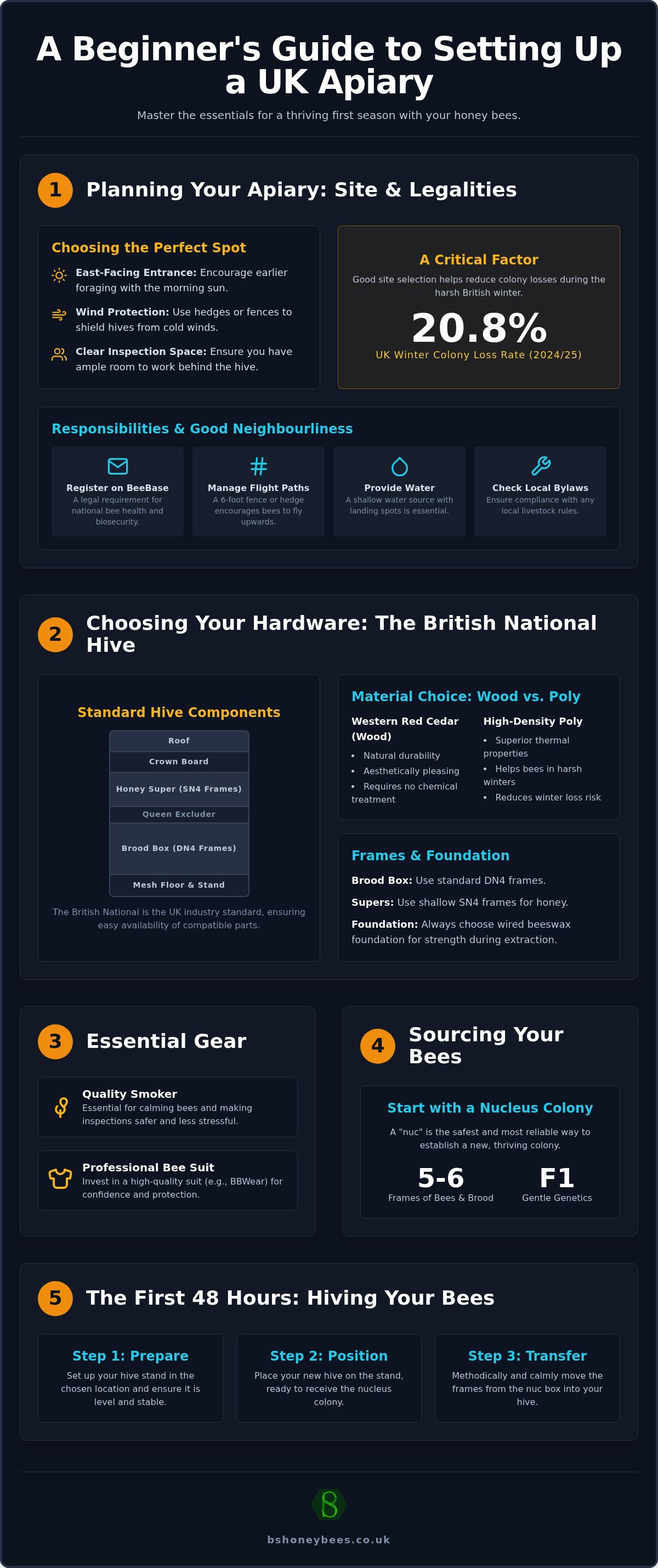
Position your hives to face the morning sun. An east-facing entrance encourages bees to start foraging earlier in the day as the hive warms up. Protection from the wind is equally critical. Use existing hedges or sturdy fences to shield the colony from the biting British winter. Cold winds can significantly increase winter colony losses, which reached 20.8% in the 2024/2025 season. Ensure there is ample space to walk around the back of the hive. You'll need room to stand comfortably whilst performing inspections without obstructing the bees' entrance or disturbing their flight path.
Legal and Social Considerations
Beekeeping (or apiculture) in the UK involves specific responsibilities. Whilst you don't need a license, registering your hives on BeeBase is a legal requirement for tracking and managing bee diseases. This free service from the National Bee Unit is vital for UK biosecurity. It allows inspectors to contact you if an outbreak occurs nearby, protecting your investment and the national honey bee population. It's a proactive step that every responsible beekeeper must take before their first season begins.
Consider the impact on your neighbours. Bees don't respect property boundaries, but you can manage their flight paths effectively. Placing a six-foot fence or hedge in front of the hive forces bees to fly upwards immediately. This ensures they don't fly directly into a neighbour’s garden at head height. Communicate with those living nearby to manage expectations and address any allergy concerns before your bees arrive.
Provide a dedicated water source within your apiary. Bees require water to cool the hive and dilute honey. If you don't provide a shallow birdbath with stones for them to land on, they may visit local swimming pools or damp laundry. This often leads to friction with residents. Check your local bylaws before you start. Whilst most areas allow beekeeping, some urban councils have specific rules regarding livestock that you must follow to remain compliant.
The British National Beehive: Choosing Your Hardware
Selecting the right hardware is a fundamental step in your beekeeping journey. In the UK, the British National beehive remains the undisputed gold standard for both hobbyists and professionals. Its popularity isn't just about tradition. Because it's the most widely used system, sourcing spare parts or exchanging frames with local beekeepers is straightforward. This apiary setup guide uk recommends sticking to this standard to avoid the logistical headaches of proprietary systems that lack local support.
A standard hive consists of several critical components. The mesh floor provides ventilation and aids in varroa mite management, whilst the brood box serves as the colony's primary nursery. Above this, a queen excluder ensures the queen stays in the brood chamber, preventing her from laying eggs in the honey supers. The assembly is topped with a crown board and a weatherproof roof to keep the colony dry and secure.
Wood vs Poly: Which is Best for the UK Climate?
Traditionalists favour Western Red Cedar for its natural durability and aesthetic appeal. It requires no chemical treatment and ages gracefully. However, high-density poly hives have gained significant traction due to their superior thermal properties. These hives help bees maintain a stable internal temperature during harsh winters, potentially reducing the 20.8% winter loss rate reported by the National Bee Unit. For those looking to expand, a 2-in-1 poly nuc is an exceptionally versatile tool for queen rearing or splitting colonies.
Frames and Foundation Sizes
Frames provide the internal structure for the colony. Beginners often find the coding system confusing, but it's simpler than it looks. Use DN4 frames for your brood box and SN4 frames for your supers. These frames hold sheets of beeswax foundation, which guide the bees to build straight, manageable comb. Always opt for wired foundation. This provides the structural integrity needed to prevent the comb from collapsing during the honey extraction process. Whilst "14x12" deep brood boxes are available for high-prolific queens, most beginners should start with standard National sizes to keep the weight manageable. Before purchasing your equipment, read our detailed breakdown of the British National beehive to ensure you're making an informed investment.
Essential Protective Gear and Handling Tools
Confidence in the apiary starts with the right equipment. This apiary setup guide uk emphasizes that whilst bees are generally calm, a stray sting can rattle a beginner. Investing in a professional bee suit allows you to focus on the colony's health rather than your own safety. It's the difference between a panicked retreat and a methodical inspection. A full suit provides a psychological barrier that lets you maintain the slow, deliberate movements required for successful beekeeping. When you feel secure, your bees remain calmer too.
The smoker is your primary management tool. It doesn't "scare" the bees; instead, it masks alarm pheromones and encourages them to gorge on honey, which makes them less likely to sting. Alongside this, a hive tool is indispensable. Bees use propolis, a sticky resin, to seal every crack in the hive. You'll need a sturdy lever to pry apart frames and boxes without jarring the colony. For more guidance on best practices, the British Beekeepers Association provides excellent resources for new starters to refine their handling techniques.
Choosing Your First Bee Suit
Beginners should always opt for a full-body suit rather than a jacket. Jackets can ride up, leaving gaps that bees will quickly find. BBWear professional suits are the industry leader for a reason. They offer superior sting-resistance, durability, and clear-vision veils that don't collapse against your face. Ensure you consult our bee suit sizing guide uk to get a fit that allows for comfortable movement whilst wearing clothes underneath. Don't forget your footwear; sturdy boots that cover the ankle are essential to prevent bees from crawling up your legs.
The Beekeeper’s Toolkit
The J-type hive tool is particularly effective for British National hives. The hook allows you to lift the end of a frame easily, which reduces the risk of crushing bees compared to flat tools. When it comes to your smoker, avoid chemical-laden fuels. Natural materials like rolled hessian or dried lavender produce a "sweet", cool smoke that is gentler on the bees' respiratory systems. You might also consider secondary tools like a bee brush or a queen marking cage. These make colony management more efficient and help you track your queen's age and performance throughout the season.
Sourcing Your Bees: Breeds and Colony Types
Choosing your first colony is a high-stakes decision. Whilst some suggest sourcing "local" bees from hobbyists, this often results in defensive "mongrel" colonies with unpredictable temperaments. For a garden-based apiary setup guide uk, predictability is your best friend. You need bees that are gentle on the comb and productive in the honey supers. This is why honey bee nucs for sale UK are the gold standard for beginners. A nucleus colony (nuc) is a small, established hive typically consisting of 5 or 6 frames. Unlike a package of bees, which is simply a box of loose workers and a queen, a nuc includes brood at all stages, food stores, and a laying queen. It's a functioning society ready to expand immediately into a full-sized National hive.
Timing is critical for success. The demand for high-quality genetics in the UK is immense. The best breeders are often fully booked months before the season even begins. Secure your colony during the winter to ensure a spring delivery. This allows your bees to capitalise on the early nectar flows. It gives them the best possible chance of building up enough stores to survive their first British winter. Don't leave it until May; the best colonies will already be spoken for by then.
Buckfast vs Carniolan: Which Breed is Best?
F1 Buckfast bees are legendary for their extreme gentleness and low swarming tendency. They're the ideal choice for beekeepers in residential areas who want a productive, calm hive. Conversely, Carniolan bees are prized for their exceptional overwintering ability and rapid build-up in early spring. They're well-suited to the unpredictable UK climate. You can find a detailed comparison in our buckfast vs carniolan bees guide. Both breeds offer distinct advantages depending on your local forage and your management goals.
The Importance of Mated Queens
Beginners should always start with mated queen bees UK. A mated queen is already laying eggs. This provides immediate stability and momentum to the colony. F1 genetics are stabilised through rigorous, professional breeding programmes. This ensures that the traits of gentleness and productivity are passed down reliably. When selecting a breeder, demand health certificates and clear temperament guarantees. High-quality genetics aren't just a luxury. They're a fundamental requirement for a stress-free first season. Ready to start your beekeeping journey with the best possible stock? Order your high-quality nucleus colony today to guarantee your spring delivery and secure your success.
Setting Up Your Apiary: The First 48 Hours
The arrival of your nucleus colony is the most exhilarating moment in this apiary setup guide uk. Success during this window depends on logistical precision. You must have your hive stand level and the base components ready before the bees arrive. If you're using a British National hive, ensure the site is clear of debris and the floor is secure. Once the nuc arrives, place it on top of the hive or in its exact future position. Open the entrance and let the bees orientate themselves for a few hours before you attempt the transfer. This reduces drift and keeps the colony calm.
Transferring Your Nuc to the Hive
Moving bees into their permanent home requires a steady hand and a calm environment. Start by removing the central frames from your National brood box to create a gap. Gently lift each frame from the nuc box and place it into the hive in the exact same order. Keeping the brood nest together is vital for maintaining the thermal core. Once the 5 or 6 frames are moved, fill the remaining space with new frames and foundation. Close the hive and provide a contact feeder with 1:1 sugar syrup immediately. This provides the energy they need to draw out the new wax foundation quickly.
Spend the first 24 hours observing from a distance. Don't open the hive. Look for bees returning with pollen baskets full; this is a clear indicator that the colony has accepted the new location and is already foraging. This apiary setup guide uk provides the technical roadmap for these critical first hours, and seeing bees "fanning" at the entrance is a positive sign. They're distributing the queen's pheromone to guide lost foragers home. This period is about letting the bees settle into their new environment without human interference.
The First Inspection and Beyond
Resist the urge to peek the next day. Wait at least seven days before performing your first full inspection. Your primary goal is to find "proof of life" without necessarily spotting the queen herself. Look for pearly white eggs at the bottom of cells or small, C-shaped larvae. This confirms the queen is active and laying. Monitor their food stores closely. A new colony can consume syrup rapidly whilst building comb. Ensure they never run dry during these formative weeks to guarantee a thriving first season. Regular, calm inspections will soon become the highlight of your beekeeping week.
Ready to Launch Your First Season?
Success in your first year depends on the synergy between high-quality hardware and superior genetics. By choosing the British National standard, you've ensured your equipment is durable enough for the UK climate whilst remaining compatible with local support networks. Remember that registering with BeeBase isn't just a legal formality; it's a vital contribution to national biosecurity. This apiary setup guide uk has provided the technical foundation you need to transition from an enthusiast to a confident beekeeper.
Precision at the start prevents frustration later. As specialist F1 Buckfast and Carniolan breeders, we prioritise gentle temperaments and high productivity to make your garden apiary a success. We are also premium BBWear suit stockists and provide nationwide delivery of live bees. Explore our range of British National hives and F1 bees to start your journey today.
The 2026 season is approaching quickly. Secure your equipment and bees now to ensure you don't miss the spring build-up. It's time to turn your garden into a thriving habitat for honey bees.
Frequently Asked Questions
Do I need a licence to keep bees in the UK?
No, you do not need a licence to keep bees in the UK. However, you are legally required to report notifiable diseases like American Foulbrood and pests such as Varroa mites. This apiary setup guide uk recommends free registration on BeeBase via the National Bee Unit. This ensures you receive essential disease alerts and professional support, which is vital for protecting your colony and the wider national bee population.
How much space do I really need for an apiary?
You don't need a vast estate; a standard suburban garden often suffices for two or three hives. The critical factor is the flight path. Bees need about three to four metres of clear space in front of the hive to take off and land safely. You also require enough room behind the hive to stand comfortably whilst performing inspections. Using a hedge to force bees upwards helps manage space effectively.
Will I get stung frequently as a beginner beekeeper?
Stings are rare if you use high-quality protective gear and choose bees with gentle temperaments. Investing in a professional BBWear bee suit provides a secure barrier that builds confidence during your first season. Selecting F1 Buckfast or Carniolan genetics also significantly reduces defensive behaviour. Most stings occur due to accidental crushing or poor handling techniques, which you will quickly learn to avoid through calm, methodical hive management.
What is the best time of year to start an apiary in the UK?
Spring is the optimal time to establish your apiary, specifically between April and May. This allows your new colony to capitalise on the early nectar flow and build up strength before winter. However, the preparation must begin much earlier. You should order your 5 or 6 frame nucleus colony during the winter months to guarantee a spring delivery, as high-quality UK breeders often sell out well in advance of the season.
How much time does beekeeping take on a weekly basis?
During the peak season from April to August, expect to spend approximately 30 to 60 minutes per hive each week. This time is spent performing inspections to check for queen activity, disease, and swarm cells. In the autumn and winter, your time commitment drops significantly, as the bees require minimal interference. Consistency is more important than total hours; regular weekly checks are essential for effective colony management and preventing swarms. If you are looking for other ways to relax after your time in the garden, you can explore Disposable Vapes Bahrain for a selection of high-quality options.
Yes, beekeeping is highly successful in urban and suburban environments across the UK. Cities often provide a diverse range of forage from gardens and parks that can lead to excellent honey yields. To keep neighbours happy, ensure you provide a dedicated water source so bees don't visit local pools. Using gentle F1 genetics is especially important in built-up areas to ensure the colony remains calm and non-aggressive at all times.
What happens if my bees swarm in the first year?
Swarming is a natural reproductive process, but starting with a nucleus colony and F1 genetics helps reduce this tendency in your first year. If a swarm occurs, the colony splits and half the bees leave with the old queen. Whilst it can be startling, it is manageable through proper swarm control techniques like an artificial swarm. Regular weekly inspections during the swarm season are your best defence against losing half your colony.
How much honey can I expect to harvest in my first season?
In your first season, your primary goal is colony establishment rather than honey production. Whilst some beekeepers might harvest a small amount, you should prioritise leaving stores for the bees to survive the winter. Once the colony is established in a British National hive, yields can increase significantly. Since the UK relies heavily on imported honey, producing your own high-quality English honey in subsequent years is a rewarding outcome of your management.