

Successfully requeening isn't just about dropping a plastic cage into a hive; it's a high-stakes psychological game where pheromones are the only currency that matters. You've likely felt that spike of anxiety whilst holding a transit cage, knowing one wrong move could mean the loss of a premium queen and a significant financial waste. It's a common fear amongst UK beekeepers, especially when dealing with aggressive colonies or confusing timing. Mastering how to introduce a new queen bee uk requires precision, patience, and a deep understanding of colony behaviour.
We understand the pressure of wanting a calm, productive colony without the heartbreak of queen balling. This definitive 2026 guide provides an expert-led framework designed to ensure 100% colony acceptance. We'll cover everything from the initial preparation of your British National hive to the nuances of pheromone masking and final verification. Whether you're introducing a calm-tempered F1 Buckfast or a prolific Carniolan, these stress-free instructions ensure a high survival rate and a season of logistical excellence for your apiary.
Key Takeaways
- Establish a hopelessly queenless state by observing a strict 24-hour waiting period after removing the old queen to ensure maximum pheromone receptivity.
- Master the mailing cage method by positioning the queen between frames of young brood and ensuring the mesh remains fully accessible to the workers.
- Learn the professional framework for how to introduce a new queen bee uk to avoid common pitfalls like laying workers or premature hive inspections.
- Adhere to the 7-day rule for post-introduction verification; this prevents the colony from balling the queen due to unnecessary stress or disturbance.
- Select calm genetics, such as F1 Buckfast or Carniolan queens, to improve acceptance rates and foster a more docile, productive environment within the hive.
Preparing Your Colony for a New Queen: The 24-Hour Rule
Before you even think about cracking open a transit cage, you must ensure your colony is in a "hopelessly queenless" state. This isn't just a technicality; it's the psychological foundation for success. A colony is only truly ready to accept a stranger when the workers realise they have no other options for survival. If there's even a single viable larva or a hidden queen cell, the workers will likely reject your new arrival. This is the most critical hurdle in learning how to introduce a new queen bee uk safely.
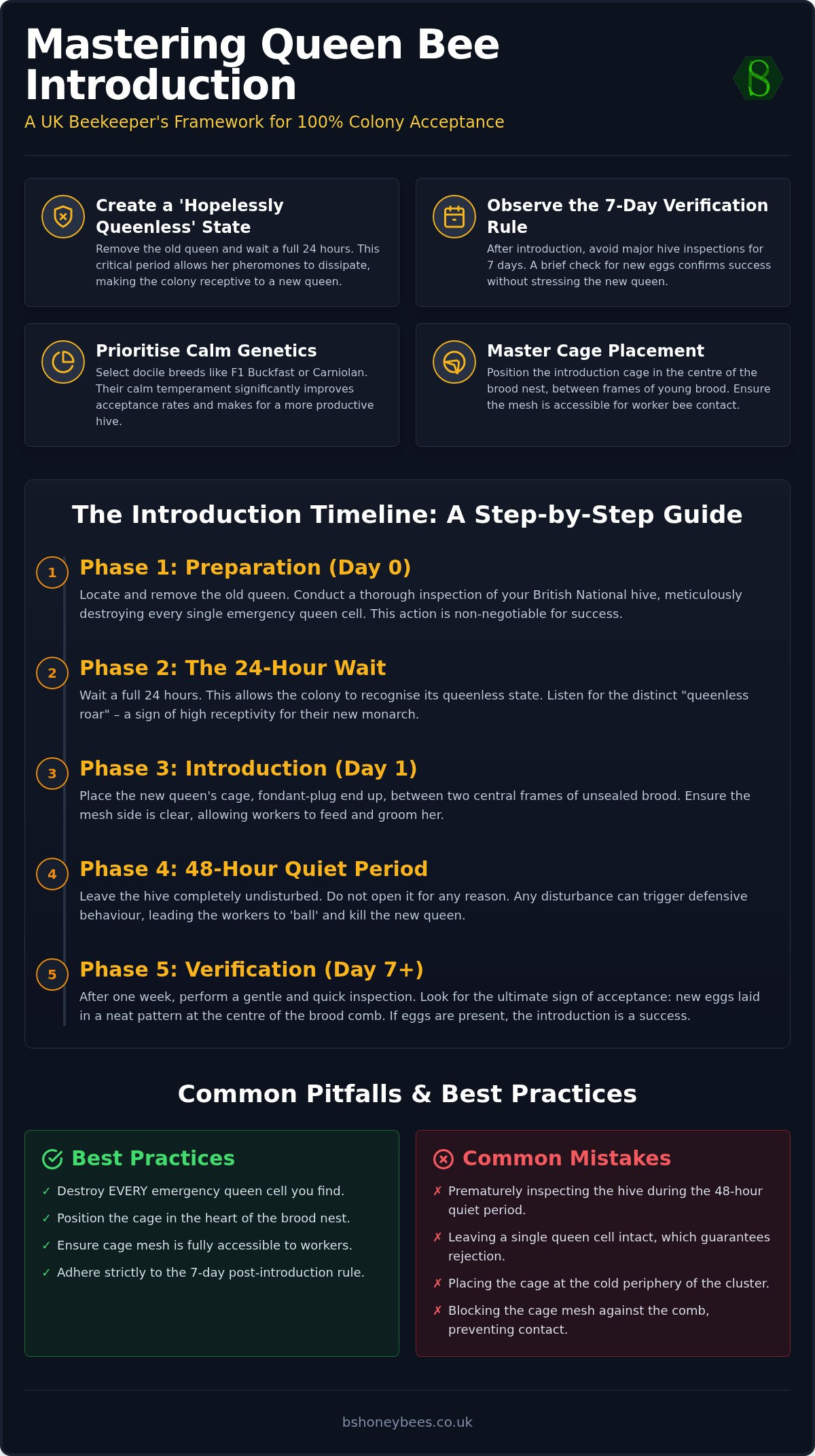
The 24-hour rule is your standard operational procedure. Once you've removed the old queen, you must wait a full day before introducing the new one. This window allows the old queen's pheromones to dissipate completely, leaving the workers in a state of high alert and receptivity. During this sensitive inspection of your British National hive, ensure you're wearing a high-quality BBWear bee suit. Bees can sense the lack of a queen and may display heightened defensive behaviour whilst they feel vulnerable. You must be methodical. Scrutinise every frame and destroy every emergency queen cell you find. Missing just one cell will almost certainly lead to the failure of the introduction.
Verifying Queenlessness in Your Hive
Listen to your colony. A queenless hive often emits a distinctive, mournful "roaring" sound when the crown board is lifted. You'll also notice a lack of fresh eggs, which is a fundamental aspect of Queen bee biology and pheromone absence. If you're unsure, use the "test frame" method. Insert a frame of unsealed brood from another hive; if the bees start building emergency cells on the edges within 24 hours, they're definitely queenless. Be careful to differentiate these from supersedure cells, which are typically found on the face of the comb and indicate the bees are trying to replace a failing queen themselves.
The Logistics of Queen Delivery
When your queen arrives, her survival depends on immediate care. Keep the cage in a dark, quiet place at room temperature. Use a tiny drop of water on the mesh to hydrate her, but don't drown the attendants. Timing is everything. The mated queen bees UK delivery window is designed to sync with your 24-hour preparation. Before heading to the apiary, check the mailing cage. Ensure the attendants are active and the fondant plug is intact. This preparation ensures the colony is ready to receive her the moment you arrive.
Step-by-Step Guide to Queen Introduction
Once your colony has reached that vital queenless state, the physical introduction begins. Success hinges on the transition from the transit cage to the comb. Most beekeepers in the UK utilise the mailing cage method, which relies on a slow release via a fondant plug. When you understand how to introduce a new queen bee uk correctly, you minimise the risk of the workers treating the new arrival as an intruder. For high-value F1 Buckfast queens, many professional breeders prefer the push-in cage method. This technique allows the queen to begin laying eggs immediately into a small patch of comb, which significantly increases her acceptance rate by establishing her pheromones more aggressively within the hive centre.
Manage the release speed by checking the candy plug. Most cages come with a plastic tab covering the fondant. Remove this tab only when you are ready for the bees to start eating through. If the colony seems particularly defensive, leave the tab on for an extra 24 hours to allow for more pheromone exchange before the countdown to release begins. This is particularly useful when introducing quality mated queens to a colony that has been queenless for an extended period.
Positioning the Queen Cage Correctly
Your goal is to place the cage where the workers are most concentrated and attentive. This is almost always the centre of the brood nest, specifically between two frames of young, unsealed brood. Ensure the mesh side of the cage is fully accessible to the workers. If the mesh is pressed against the comb, the bees cannot feed the queen or groom her, which leads to her starvation or stress. Secure the cage firmly so it does not slip. Always avoid placing her at the edges of the cluster; whilst the hive is queenless, the cluster may contract on cold nights, and a queen left in the periphery can easily become chilled and die.
The Release Timeline
Patience is your greatest asset. Once the cage is in place, you must observe a 48-hour quiet period. Do not open the hive to check on her. Any disturbance during this window can cause the workers to panic and ball the cage, killing the queen before she is even released. The workers will naturally eat through the fondant over two to three days, providing a slow, controlled introduction. If you notice bees biting the mesh or clinging tightly to the cage in a hard ball, they are showing signs of aggression. In these cases, you may need to wait longer or verify again that no virgin queens or emergency cells were missed during your initial inspection.
Common Introduction Mistakes and How to Avoid Them
Even the most experienced beekeepers can fail at queen introduction if they overlook the colony's internal state. One of the most frequent errors is the excessive use of smoke during the process. Whilst smoke is essential for general inspections, it masks the delicate pheromone signals the new queen emits. If the workers cannot "smell" their new leader, they won't begin the acceptance process. Similarly, opening the hive too early is the #1 cause of queen rejection in the UK. You must resist the urge to peek; any disturbance within the first few days can cause the bees to panic and ball the queen, leading to an expensive and frustrating loss.
Before you start, you must also ensure you aren't ignoring drone laying queen symptoms. If a colony has been without a viable queen for too long, they may have developed a drone-layer or, worse, laying workers. Dropping a new queen into this environment without corrective action is a recipe for immediate regicide. Understanding how to introduce a new queen bee uk involves recognising these biological red flags before committing your high-value queen to the hive.
The Danger of Laying Workers
A colony with laying workers is a significant challenge. Because these workers are producing brood, the colony "feels" queen-right, despite only producing drones. You'll identify this by multiple eggs haphazardly placed in a single cell and a "pepperbox" brood pattern. To fix this, you cannot simply add a queen. You must "shake out" the colony thirty metres away from the hive stand. The foragers will return, but the heavy laying workers often stay behind, allowing you to restart the introduction process with a more receptive population.
Pheromone Interference and Scent
Colony organisation relies heavily on the Nasonov gland, which workers use to orientate and signal "home". When you introduce a new queen, you are trying to harmonise her scent with the colony's existing profile. This is why calm genetics, such as those found in F1 Buckfast queens UK, are significantly easier to introduce. Their docile temperament leads to a more stable pheromone environment. If you're combining a nuc with a larger colony, always use the "newspaper method". Placing a single sheet of newspaper between the two boxes allows the scents to merge slowly as the bees chew through the barrier, ensuring a peaceful transition.
Post-Introduction: Verifying Acceptance and Brood Patterns
The 7-Day Rule is the gold standard for verifying how to introduce a new queen bee uk. Whilst some sources suggest checking the hive just 72 hours after release, this is a dangerous gamble that often leads to regicide. Opening the hive too early triggers a defensive stress response. The workers, still adjusting to the new pheromones, may panic and ball the queen. By waiting a full week, you allow the queen to establish her footprint and begin her laying cycle undisturbed. This patience is the difference between a thriving colony and a wasted investment.
When you finally perform that first inspection of your British National beehive, you don't need to find the queen herself to confirm success. Searching every frame is invasive and increases the risk of accidental injury. Instead, look for evidence of her work. A successful introduction is confirmed by the presence of fresh eggs and young larvae. Assessing the laying pattern is vital; a high-quality queen will produce a compact, solid area of brood rather than a scattered pattern.
What to Look for During the First Inspection
Focus your search on the centre frames where the cluster is densest. You are looking for "pearly white" larvae and eggs standing perfectly upright at the bottom of the cells. If you do spot the queen, observe the workers’ behaviour. They should be forming a "court" around her, facing her with their antennae extended to groom and feed her. If you find the queen but no eggs, don't panic immediately. A "stress-induced" pause can occur where a queen takes a few extra days to begin laying after the trauma of transit and introduction.
Troubleshooting a Failed Introduction
If you find the queen is missing or dead, you must act quickly. Check for new emergency queen cells. These are a definitive sign the colony rejected your introduction and is attempting to raise their own from existing larvae. If the colony has become significantly depleted or remains stubbornly aggressive, it is often more efficient to combine the remaining bees with one of our honey bee nucs. This provides the colony with a proven laying queen and a fresh boost of young workers to get the season back on track.
Why Breed Selection Dictates Introduction Success
Choosing the right genetics is the final piece of the puzzle when mastering how to introduce a new queen bee uk. The internal temperament of your existing colony often dictates how they receive a new leader. If you are attempting to requeen an aggressive "mongrel" colony, the transition is inherently more volatile. High-quality genetics, however, provide a predictable pheromone profile that workers recognise and accept more readily. Sourcing your queen from a specialist UK breeder ensures she hasn't suffered the stress of long-haul transit, which can degrade her pheromone strength and lead to immediate rejection.
Our DASH accreditation serves as your guarantee of logistical excellence and biological health. In the 2026 season, maintaining these high standards is vital for preventing the spread of notifiable diseases whilst ensuring the vigour of your new queen. A healthy, mated queen from a DASH accredited breeder arrives with a strong pheromone "footprint," making her far more likely to successfully navigate the introduction framework we've established in previous sections.
The Buckfast Advantage for UK Beekeepers
When comparing Buckfast vs Carniolan bees, the F1 Buckfast remains the gold standard for many commercial and hobbyist apiaries. These bees are prized for their exceptional docility. This "gentle" trait is not just a benefit for the beekeeper; it creates a calmer hive environment that simplifies the introduction process. F1 Buckfast queens also offer:
- Explosive Spring Buildup: They expand rapidly to meet early UK nectar flows.
- Low Swarming Instinct: This keeps the colony focused on honey production rather than queen replacement.
- Superior Genetics: F1 queens provide consistent performance that locally mated F2 alternatives simply cannot match.
Carniolan Queens: The Early Season Specialists
For beekeepers in more northerly or exposed regions of the UK, Carniolan queens offer distinct advantages. These bees are famous for their winter hardiness and frugal food consumption during the colder months. They respond with incredible speed to the first signs of spring, making them ideal for targeting early forage. Whilst they require slightly more diligent swarm management than Buckfasts, their calm behaviour on the comb makes them a favourite amongst those who value easy hive inspections. Selecting a Carniolan queen is a strategic decision for those prioritising resilience and early-season momentum in the UK climate. Regardless of your choice, ensuring the colony is "hopelessly queenless" remains the non-negotiable first step for how to introduce a new queen bee uk successfully.
Secure Your Colony’s Future with Professional Requeening
Successful requeening is a precision task that demands patience and strict adherence to biological timing. By following the 24-hour preparation rule and respecting the 7-day quiet period for verification, you eliminate the anxiety of colony rejection. Mastering how to introduce a new queen bee uk effectively relies on your ability to manage pheromone exchange whilst selecting queens with superior, calm genetics. This methodical approach ensures your hive remains productive and manageable throughout the season.
Don't leave your apiary's success to chance. As the UK’s leading queen breeder, we provide DASH Accredited health standards and a reliable next-day delivery service to ensure your new queen arrives in peak condition. Order your F1 Buckfast or Carniolan Queens from BS Honey Bees Ltd today to secure the highest standards of docility and vigour for your bees. With the right framework and premium stock, you can look forward to a thriving, gentle colony and a successful 2026 harvest.
Frequently Asked Questions
How long can a queen bee stay in her mailing cage?
A queen can survive for up to five days in her transit cage, provided she has attendants to care for her and a constant supply of fondant. You should keep her in a dark, room-temperature environment and provide a single drop of water on the mesh daily. However, her pheromone strength and vitality diminish the longer she is confined. For the best results, you should aim to introduce her within 24 to 48 hours of arrival.
Can I introduce a new queen to a colony that has queen cells?
No, you must never introduce a new queen if the colony still possesses queen cells. The workers will view your new queen as a rival and kill her immediately to protect their own developing royalty. Methodically inspect every frame in your British National hive and destroy all emergency or supersedure cells before starting the 24-hour waiting period. This ensures the colony is truly ready to accept a new leader without internal conflict.
What is the best time of year to requeen a hive in the UK?
The optimal window for requeening in the UK is between May and August. Late summer, specifically August after the honey harvest, is a favourite time amongst professionals. Requeening then allows the new queen to produce a strong population of winter bees, ensuring survival. Learning how to introduce a new queen bee uk during this period provides the colony with a fresh, vigorous leader just before the critical winter buildup begins.
Why did my bees kill the new queen I just introduced?
Failure often stems from a lack of patience or overlooked biological factors. The most common causes include opening the hive before the 7-day quiet period is over, missing existing queen cells, or the presence of laying workers. Using excessive smoke also masks pheromones. Mastering how to introduce a new queen bee uk involves eliminating these variables to ensure the colony remains calm and receptive to their new mated leader.
Should I remove the attendants from the queen cage before introduction?
Whilst some beekeepers prefer to remove attendants to prevent the colony from seeing them as intruders, it's generally unnecessary and risks injuring the queen. Most modern mailing cages are designed for introduction with attendants present. If you choose to remove them, do so in a closed room to prevent the queen from flying away. For most UK beekeepers, leaving them in place is the safest and most efficient method.
How do I know if my colony has accepted the new queen?
Success is confirmed by the presence of eggs and young larvae during your inspection one week after release. You'll also notice a change in the colony's temperament; the mournful "roaring" of a queenless hive will be replaced by a purposeful, calm hum. If the workers are grooming the queen and forming a court around her, it's a definitive sign of acceptance. Don't rush this verification; wait the full seven days.
Can I introduce a Buckfast queen to a Carniolan colony?
Yes, you can successfully introduce a Buckfast queen to a Carniolan colony, but it requires a methodical approach. Because the pheromone profiles differ slightly between breeds, ensuring the colony is hopelessly queenless is even more critical. Using a push-in cage can be particularly effective here, as it allows the Buckfast queen to establish her own scent on the comb before she is fully released to the Carniolan workers.
What is the "newspaper method" for queen introduction?
The newspaper method is used when combining a small nucleus colony containing a queen with a larger queenless colony. You place a single sheet of newspaper over the brood box of the queenless colony and set the nuc on top. The bees will slowly chew through the paper, allowing their scents to merge gradually. This controlled transition prevents fighting and is one of the most reliable ways to ensure acceptance in a large hive.