

One hive may seem like the simplest way to begin, but two colonies can make your first season easier to understand. If you’re asking how many beehives should a beginner start with, two is often a practical option, provided you have the time, space and equipment to manage both properly.
It’s sensible to consider the workload before you begin. Inspections need care, and without experience it can be difficult to tell whether a colony is thriving or struggling. A second hive adds work, but it also gives you a point of comparison. Differences in brood, stores and behaviour may be easier to notice when you assess two colonies side by side. One hive can still be the right choice if your time or apiary space is limited.
This guide helps you weigh up one, two or more hives against your routine, confidence and setup. You’ll see what each option offers and requires, and how to prepare your site and equipment before bees arrive. It also covers practical considerations when choosing suitable colonies and British National hives.
Key Takeaways
- When deciding how many beehives a beginner should start with, weigh the advantages of two colonies against the time and space you can commit.
- Compare brood, stores and behaviour across colonies to notice differences, but remember that comparison alone won’t identify every problem.
- Use the one-, two- and three-or-more-hive comparison to match your starting number to your workload and learning goals.
- Before choosing, assess your apiary site, support, equipment and ongoing costs. Include the extra inspections and records each colony requires.
- Plan in order: choose a manageable number, prepare the apiary and equipment, then select suitable colonies and hives.
How many beehives should a beginner start with? Why two is often sensible
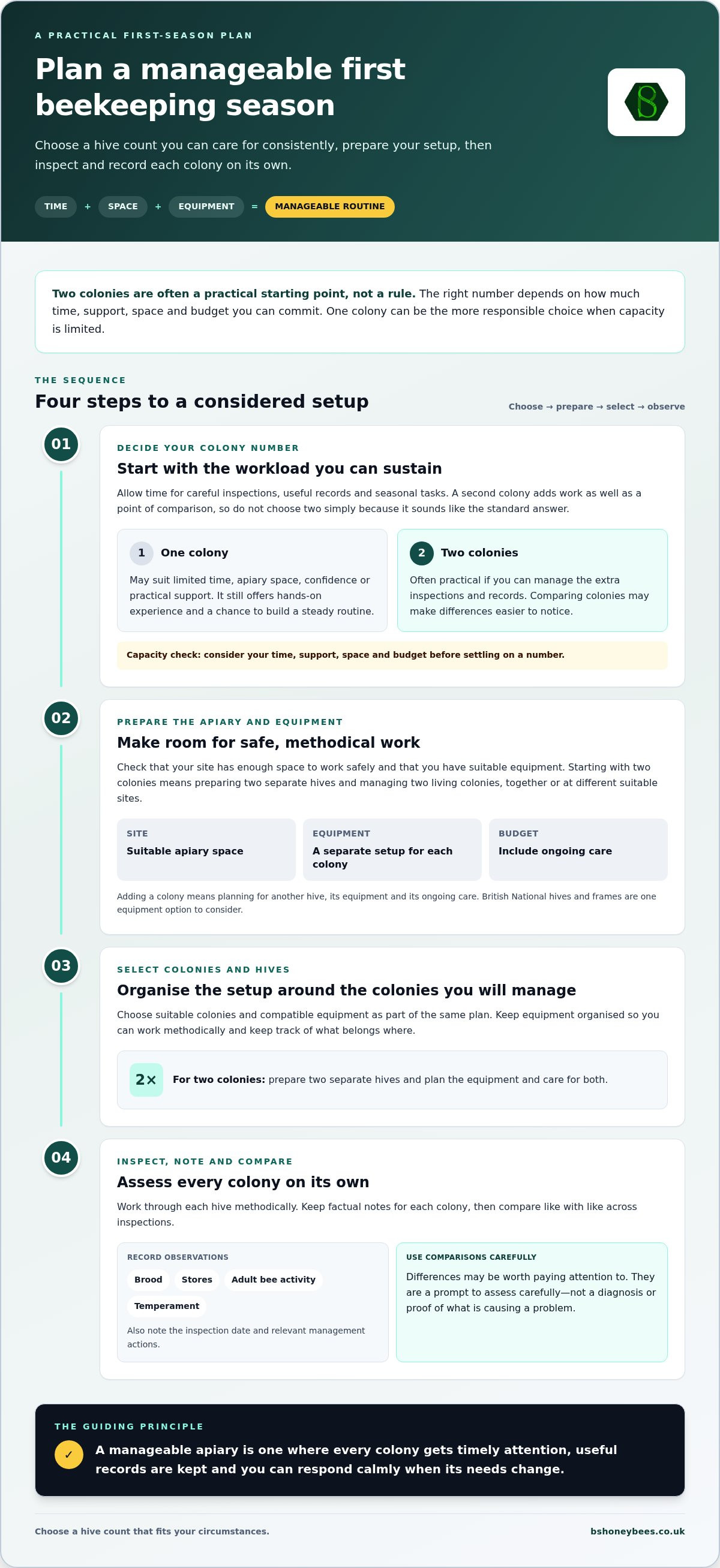
For many beginners, two colonies are a sensible starting point, but they aren’t a rule. Having two lets you compare colony development and may make differences easier to notice. The right number depends on what you can manage consistently, not on a target every new beekeeper must meet. Before choosing, assess your available time, support, space and budget.
Be clear about the terms. A hive is the physical structure and equipment; a colony is the living group of honey bees housed inside it. An apiary is a place where one or more hives are kept. Starting with two colonies means preparing two separate hives and managing two living colonies, whether they’re positioned together or at different suitable sites.
A manageable beginner apiary is one where you can give every colony timely attention, keep useful records and respond calmly when its needs change. This is a practical guide, not a promise of an easy season. Beekeeping involves observing bee behaviour, understanding colony needs and carrying out seasonal management. A general overview of beekeeping practices and history can help put these responsibilities in context. Your hive count still needs to suit your circumstances.
What does starting with two colonies mean in practice?
It means carrying out separate inspections and keeping records for each colony. Assess each one on its own, noting what you observe rather than assuming both will develop in the same way. Two colonies provide a useful point of comparison, but they don’t remove the need to learn colony care, recognise seasonal changes and make considered management decisions. Allow enough time to work through each hive methodically.
When might one colony be the more realistic choice?
One colony may suit you better if your time, apiary space, confidence or practical support is limited. It still gives you hands-on experience: you can learn to inspect a colony, follow its development and build a steady routine. You’ll have less opportunity to compare colonies directly, but that may be a worthwhile trade-off if it helps you give your bees consistent attention.
Consider the whole workload, not just the inspection itself. You’ll also need room to work safely, suitable equipment, time to keep records and capacity for seasonal tasks. Budget matters because adding a colony means planning for another hive, its equipment and its ongoing care. Don’t choose two simply because it sounds like the standard answer. A well-prepared start with one can be more responsible than stretching your time, space or support across more colonies than you can manage.
Why two beginner beehives make colony comparison easier
Two colonies give you a useful point of comparison during inspections. You can look at brood, stores and temperament in both, then record whether their development and activity appear similar or different. This can help you spot a change worth paying attention to, especially when you build a clear picture over several inspections.
Comparing colonies can sharpen your observations, but it doesn’t replace sound management or prove what’s causing a problem. A difference between hives is a prompt to assess each colony carefully, not a diagnosis. Colonies can progress differently even in the same apiary, so don’t assume one is automatically the right benchmark for the other.
What can a beginner learn by comparing colonies?
Keep consistent notes for both hives. Record what you observe about brood, stores, adult bee activity and temperament, along with the inspection date and any relevant management actions. Comparing the same details makes changes easier to track. For example, if one colony appears less active than it was previously, your records can help you tell whether this is a new difference or part of a longer pattern.
Keep your observations factual. Write down what you see rather than jumping to conclusions, and assess each colony according to its own condition and circumstances. Similarities can be reassuring, while differences may be a reason to seek informed guidance or investigate further. Neither outcome makes a second hive a substitute for learning to inspect and manage colonies responsibly.
How does a second colony affect resilience and workload?
A second colony may give you more context when one needs attention. You can compare what’s happening across the apiary and use those observations to inform your next steps. This can add practical value to your learning, but it doesn’t guarantee that either colony will thrive or that difficulties can always be resolved by having another hive.
There’s a clear trade-off. A second colony means another inspection, another set of records and additional follow-up when you identify something that needs attention. It also requires suitable equipment, organised so you can work methodically and keep track of what belongs where. The extra work is manageable only if you can give both colonies proper attention instead of rushing one to fit in the other.
So, how many beehives should a beginner start with if learning through comparison appeals? Two may be practical if you have capacity for the extra routine. Plan the hive count and compatible equipment together. British National hives and frames are one equipment option to consider as you organise your setup, alongside the colonies you intend to manage. British National hives and frames are available from BS Honey Bees Ltd.
One, two or three beehives: which starting point fits your situation?
The best starting number depends on the work you can sustain, not simply how quickly you want to expand. One colony means a smaller initial setup and inspection load. Two can offer a useful balance between manageable scale and direct comparison. Three or more may suit a beginner with thorough preparation and support, but every colony adds care and equipment needs.
| Starting number | Workload | Learning opportunity |
|---|---|---|
| One colony | Lower overall inspection and equipment commitment. | Hands-on learning, but no second colony for direct comparison. |
| Two colonies | More inspections, records and follow-up than one. | Compare development and observations between colonies. |
| Three or more | Higher demands on time, space, equipment and organisation. | More colonies to observe, but more information and management to handle. |
Starting with one hive: lower workload, fewer comparisons
With one colony, you need equipment for one hive and can focus your inspection routine on a single set of records. It’s a valid way to gain practical experience, especially if your time, space or support is limited. The trade-off is that there’s no second colony beside it for direct comparison, so you’ll rely on your observations over time and other appropriate sources of guidance.
Starting with two or more hives: more learning, more responsibility
Two colonies give you a way to compare what you observe. Three or more give you additional colonies to manage and learn from. Each needs suitable space, compatible equipment, inspections and follow-up. Choose a higher number only if you can keep care consistent across the whole apiary, including during busier seasonal periods.
For many beginners, two is a considered balance, not a universal recommendation. It may suit someone with enough time to inspect each colony properly and a site that can accommodate both. If your circumstances comfortably support only one, start there. If you’re considering three or more, be realistic about whether extra colonies will improve your learning or simply divide your attention.
Match the number of colonies to the equipment you can organise and manage. Planning a first apiary can include choosing suitable hives and frames, then deciding how many colonies you can care for well. For a two-colony setup, plan for two separate hives and ongoing care for both. Nucleus colonies, including 5- and 6-frame nucleus colonies, are one option to consider as you plan.
Check your time, apiary space and equipment before choosing hive numbers
Before settling on a colony count, check that your routine, site and setup can support it. Each additional colony brings its own inspections, records and seasonal tasks, so don’t plan only for the quietest part of the year. Use this readiness sequence to see whether your preferred number is practical.
- Assess your time. Make room for regular inspections, follow-up and seasonal management. Consider whether you can give each hive proper attention when several need checking.
- Review your site. Identify suitable placement for every hive, with safe access for inspections and enough working room. Consider how you’ll approach, open and manage each colony without crowding your work area.
- Plan your support. Think about who you can turn to for experienced guidance when you’re unsure what your observations mean. Support can help you build confidence, but it doesn’t replace learning each colony’s needs.
- List the equipment. Allow for suitable protective clothing, compatible hive components, a smoker and basic inspection tools. More colonies mean more hive equipment to prepare and keep organised.
- Allow for ongoing costs. Consider the continuing supplies and management needs of each colony, not just the initial setup. Choose a number you can sustain over the season.
How much time and space can you realistically commit?
Be realistic about the time available for inspections and seasonal work, including periods when other commitments are demanding. At the site, check that you can reach each hive safely and work around it without obstruction. Placement needs to suit your property and circumstances. Before establishing an apiary, check applicable local requirements and current UK beekeeping guidance rather than assuming the same arrangements suit every site.
What equipment and support should be ready first?
Prepare protective clothing that fits, hive parts that work together, a smoker and the basic tools you’ll use during inspections. Decide how you’ll record observations for each colony, too. When choosing a hive format, check that its components are compatible. The British National beehive guide can help you understand this common UK format. For protective clothing, use the bee suit sizing guide to plan for a suitable fit.
Use the checklist to answer the central question: how many beehives should a beginner start with, given the time, site, support and equipment available? If two colonies fit your capacity, plan for two complete setups and separate records. If not, adjust your starting number before bees arrive. Explore British National hives, frames and nucleus colonies as you plan equipment and suitable colonies for your apiary.
Plan your first beekeeping season around a manageable number of colonies
Turn your hive-count decision into a preparation plan before arranging for bees. Choose a number you can care for consistently, prepare the apiary and compatible equipment, then select colonies that fit your setup. Two colonies can be a useful option for comparison, but they aren’t the right answer for every beginner. A prepared start with one is better than taking on more colonies than you can manage.
- Set your starting number. Base it on your available time, space, support and learning goals.
- Prepare the site. Make sure the apiary is suitable and that you can access each hive safely for routine work.
- Organise equipment. Have the correct hive format and compatible components ready for every colony.
- Plan your routine. Decide how you’ll organise inspections, record observations and keep track of each colony’s needs.
- Choose colonies to suit your setup. Consider the colony format alongside the equipment and management you’ve prepared.
Prepare for colonies before choosing a delivery date
Don’t arrange for bees to arrive before your hive equipment and apiary site are ready. Plan timing around the season and your own preparedness, rather than choosing a date without a workable setup. If you’re considering nucleus colonies, the UK nucleus colony buyer’s guide can help you understand the format. BS Honey Bees Ltd supplies 5- and 6-frame nucleus colonies and British National hives, options to consider when matching colonies with your prepared setup.
Choose a sustainable first step and build experience
Choose one colony if that best fits your current capacity, or consider two if you’re prepared to manage both and value the opportunity to compare them. Neither choice locks you into a fixed apiary size. You can gain experience with a manageable start, review your routine and capacity, then decide later whether expanding makes sense. Build your skills and consistency before adding more work.
So, how many beehives should a beginner start with? Choose the number you can prepare for and care for well through the season. Two may provide a useful balance, but the right first step is the one that fits your circumstances. When you’re ready to plan your setup, explore suitable nucleus colonies and beekeeping equipment.
Make your first season a confident start
Your first apiary doesn’t need to reach a particular size to be worthwhile. Let your experience grow alongside your colonies. Ask yourself how many beehives should a beginner start with, then choose a number you can support with steady attention and a well-prepared setup. You can build experience first and expand when your time, space and confidence allow.
Once you’ve settled on a manageable number, match your colony choice to compatible equipment and your plans for the season. BS Honey Bees Ltd supplies live bees and beekeeping equipment, including 5- and 6-frame nucleus colonies and British National hives and frames. Explore these options as you organise your first apiary.
When you’re ready, explore nucleus colonies and beekeeping equipment to plan your first apiary. Start at a manageable pace, prepare carefully and give yourself room to learn.
Frequently Asked Questions
Can a beginner keep just one beehive?
Yes. If you’re asking how many beehives should a beginner start with, one colony can be a reasonable choice when time, space or confidence is limited. You’ll still need to learn regular inspections, seasonal care and how to monitor colony health, including noting changes between visits. With one hive, you can’t compare its development directly with another colony in your apiary. Choose the number you can manage consistently, not an idealised target.
Is it better to start beekeeping in spring or summer?
Neither spring nor summer is automatically best across the UK. The right timing depends on seasonal conditions, colony availability and how prepared you are. Before bees arrive, have your hive ready, protective equipment organised and apiary arrangements in place. If these aren’t ready, take time to prepare rather than rushing to meet a particular month. Check current, reputable UK beekeeping guidance for seasonal considerations relevant to your plans.
How much space do I need for two beehives?
There’s no single space measurement that suits every two-hive apiary. Requirements depend on the hive layout, the site and how much safe working access you need. Consider whether you can approach each hive, carry out inspections and work around it without obstruction. Also think about the bees’ flight paths in relation to people using the space. Check applicable local requirements and current guidance before deciding where to place colonies.
Do two beehives need twice as much equipment as one?
Each colony needs its own hive and suitable components, but not every tool must be duplicated. Some inspection tools may be shared, depending on your working method and how you organise them between hives. Your equipment list will also depend on the hive format you choose. Prepare the essentials for both colonies before they arrive. One complete hive setup cannot house or manage two separate colonies.
Can I add a second beehive after starting with one?
Yes. You can begin with one colony, learn its routine and consider adding another when you’re ready. Before expanding, reassess the time you can give inspections, the space available at your apiary, your equipment and your confidence managing colonies. A new hive needs its own preparation and ongoing care. Expansion is a choice, not a requirement, and a second colony won’t automatically resolve every challenge in your first.
What should a beginner learn before getting honey bees?
Start by learning safe inspection habits, basic bee behaviour, seasonal colony management and how to monitor colony health. Practise observing carefully and recording what you see, while recognising that learning continues once you’re responsible for live bees. Practical support can help you build confidence as questions arise. For relevant health information, consult the National Bee Unit’s current guidance and check that any advice you use is up to date.