

If you’re searching for “bees not taking syrup feeder”, a quiet feeder can be worrying. But it doesn’t automatically mean your bees are short of food. The syrup, timing or access may not suit the colony, or the bees may simply have other food available.
Low uptake can have several causes, from natural forage nearby to a blocked feeder, unsuitable syrup or a colony that doesn’t need extra feed. Changing the feed straight away may not solve the problem and could create avoidable risks, including robbing.
Start with what you can observe. Check the syrup and feeder, consider the colony and conditions, then decide whether to monitor, make one careful adjustment or ask an experienced beekeeper for advice.
Key Takeaways
- Low feeder activity is an observation, not a diagnosis. Look for more than one clue before deciding the colony needs intervention.
- Compare natural forage, colony need and possible stress before changing the feed.
- Check the syrup and feeder for freshness, clear access, leaks and cleanliness before rearranging the hive.
- Start by observing bee behaviour, then move on to closer inspection only if needed.
- Decide whether to monitor, adjust the setup or seek experienced advice based on colony condition, forage and current UK guidance.
Why Are Bees Not Taking Syrup from the Feeder? “Bees Not Taking Syrup Feeder” Explained
Low activity at a feeder doesn’t automatically mean a colony is failing. It tells you that bees aren’t visibly using the syrup when you check. It doesn’t diagnose hunger, illness or colony strength. The search phrase “bees not taking syrup feeder” describes an observation, and several explanations can overlap. Look for more evidence before changing the feed or opening the hive.
Bees may be gathering nectar from flowering plants instead of using syrup. They may also have enough stores, or the colony’s circumstances may make it unsuitable to take or store more feed. Beekeeping, or apiculture, involves managing colonies in changing conditions, so feeding decisions need to account for the bees and their surroundings, not just the feeder.
When bees may not need supplementary syrup
Available forage and stored food both affect whether syrup is useful. If nectar is readily available, bees may favour it. If stores are adequate, they may have little reason to collect more. A quiet feeder alone cannot confirm either explanation. Consider what is flowering, the weather, the colony’s condition and what you know about its stores. Avoid relying on a fixed calendar rule: forage and colony needs can vary, even at the same time of year.
Disinterest isn’t proof of a shortage, just as an active feeder doesn’t confirm that the colony has enough food. Assess the broader picture before deciding whether to continue feeding, adjust the setup or leave the bees undisturbed.
Why one quiet feeder visit is not enough evidence
Bee activity changes with the weather, time of day and conditions around the hive. A cool, wet or unsettled period may mean fewer bees are flying when you look. Observe activity from outside and check the feeder again under more suitable conditions, rather than repeatedly opening the hive. Frequent disturbance can add stress without giving you a clearer answer.
Take a closer look if the colony also appears unusually weak, activity has markedly reduced over time, or you have reason to suspect low stores. These signs need context and aren’t a diagnosis on their own. If you’re unsure how the colony is progressing, ask an experienced beekeeper to help assess it. Start with observation and act on the evidence, not the feeder reading alone.
How Syrup, Feeder Design and Colony Conditions Affect Feeding
Feeder access, syrup condition and colony need all matter. Bees may ignore fresh syrup if they can’t reach it easily, while a well-positioned feeder won’t help if the feed is unsuitable or the colony has little need for it. Check each factor before changing the setup.
Common designs include contact feeders, which bees access through small openings, and frame, rapid or hive-top feeders, which sit in or above the hive. Each works differently, and a design that suits one hive arrangement may be awkward in another. Start with visible access points and follow the feeder maker’s instructions for filling and placement. Don’t dismantle the hive just to investigate.
Check whether bees can reach the syrup
Look for blocked access points, a misplaced feeder or gaps that could let syrup leak. Leaks can make access difficult and may attract unwanted attention from other bees. Check that the feeder is seated as intended and that access channels are clear, without exposing the colony for longer than necessary. If you’re unsure how it should be fitted, follow the maker’s instructions rather than improvising.
Check syrup condition and colony strength
Check whether the syrup is fresh, clean and prepared for its intended purpose. Ratios can vary with the reason for feeding and the time of year, so consult current UK beekeeping guidance rather than relying on a generic recipe. Use clean equipment and follow trusted advice on preparing and storing feed. Don’t offer syrup that looks or smells spoiled.
Temperature can affect uptake, too. Honey Bee Suite discusses a colony that refuses to drink and notes that syrup around 10°C or colder may be too cool for bees to take readily. Treat this as a prompt to check current UK guidance and conditions at your hive, not as a universal threshold for every colony or feeder.
A small or unsettled colony may use feed differently from a strong, established one. Consider recent changes, whether the queen is present and laying as expected, and any concerns about disease or a declining population. These clues help frame the problem but don’t support a remote diagnosis. If low uptake continues alongside signs of poor colony condition, ask an experienced beekeeper to assess the situation.
After checking the setup and colony, avoid making several changes at once. Otherwise, it’s harder to tell what helped. If you’re reviewing hive equipment as part of a wider setup, you can also explore British National hives and frames.
Compare the Likely Causes of Bees Ignoring a Syrup Feeder
A quiet feeder may have a straightforward explanation, such as little need for extra food, or an access problem that needs correcting. Compare what you observe with the next sensible check. Low uptake is not a diagnosis: no single sign proves starvation, queenlessness or disease.
| Possible cause | What you may observe | Proportionate next check |
|---|---|---|
| Natural forage is available | Bees are flying and returning with pollen or nectar, whilst the syrup level changes little. | Observe forage and hive activity. Don’t assume extra feed is needed from feeder use alone. |
| The colony has limited need | Low uptake without an obvious access fault or change in general activity. | Consider the colony’s stores and circumstances before offering or increasing feed. |
| Syrup condition is poor | The feed looks dirty, smells unusual or has been left exposed. | Check freshness and preparation against current UK guidance. Replace questionable feed safely. |
| Access is difficult | Bees gather near the feeder but the level stays steady, or an entrance looks blocked. | Check visible openings, placement and leaks, following the feeder maker’s instructions. |
| Colony stress or weakness | Activity appears persistently low, or there are other concerning changes in behaviour. | Consider the whole-colony picture and seek experienced inspection if concerns persist. |
Is the colony choosing natural forage instead?
During a local nectar flow, bees may favour natural forage over supplied syrup. This depends on what is flowering and accessible near the apiary, not a fixed month or a weather pattern that predicts the same behaviour everywhere. Watch flight activity and nearby forage where practical. If bees are working naturally and the colony otherwise appears settled, low feeder use alone doesn’t show that feeding is necessary.
Could access, stress or colony condition explain it?
Watch whether bees enter the feeder and whether its level changes between observations. A stable level may point to a blocked route or awkward placement, but it may also mean the colony has little need for the feed. Recent disturbance, colony size and general activity provide useful context, not a definitive answer. Correct visible equipment problems first, and don’t treat one quiet visit or a single symptom as proof of a deeper issue.
If weakness persists or you notice unusual symptoms alongside poor uptake, don’t guess at the cause or make several changes at once. Ask an experienced beekeeper or beekeeping association for help assessing the colony. Feeder access may be corrected with a simple check, while signs of ongoing colony trouble need a broader inspection.
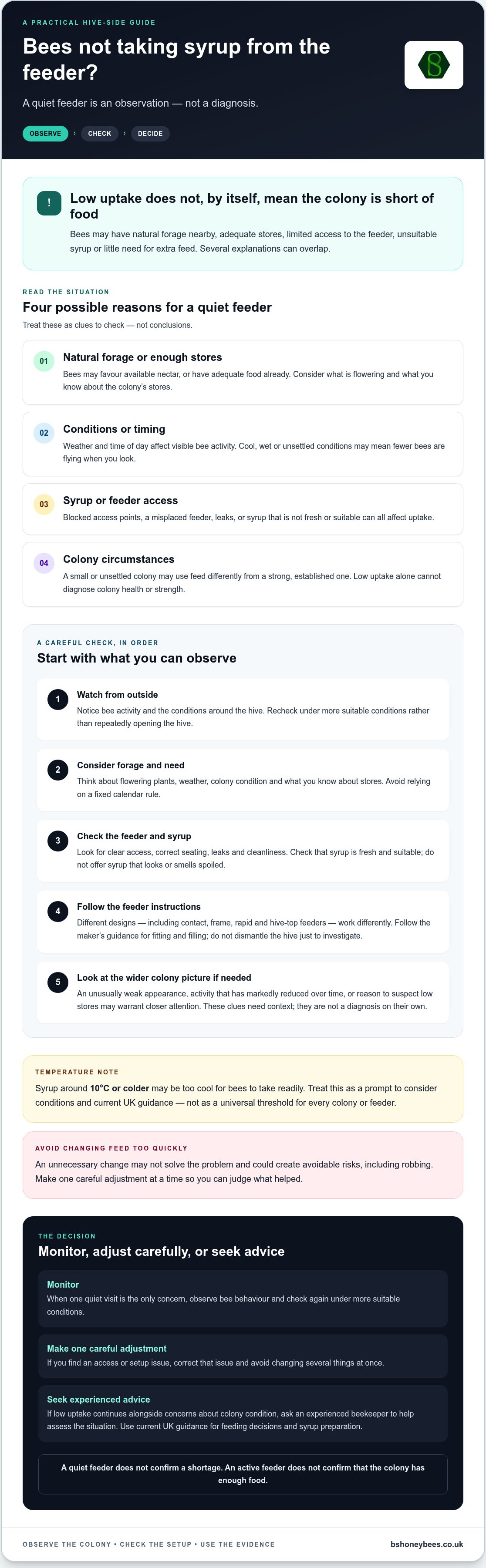
What to Check First When Bees Ignore Syrup
Take a low-disturbance approach. Observe from outside, note whether the syrup level changes, inspect visible feeder access and leaks, then check the feed’s condition. This order helps you investigate low uptake without repeatedly opening or rearranging the hive.
A simple feeder and syrup inspection sequence
- Observe first. Note when you offered the syrup and watch normal entrance activity without opening the hive. Compare the feeder level again after a reasonable interval, allowing for conditions that may affect bee activity.
- Check the visible setup. Look for blocked access points, poor positioning, loose fittings or leaks. Follow the feeder maker’s instructions for inspection, filling and placement. Don’t dismantle hive parts unnecessarily.
- Assess the feed. Check whether it appears clean and fresh. If it looks or smells unusual, don’t simply top it up. Follow current UK beekeeping guidance for preparing, replacing and storing syrup.
- Clean up spills. Remove leaked or spilled syrup promptly and avoid leaving feed exposed around the hive. Exposed syrup can attract other bees and increase the risk of robbing, so keep handling tidy and follow trusted guidance.
Make one careful correction at a time. If you change the feeder position, replace the syrup and alter other conditions together, you won’t know which factor affected uptake.
When to monitor and when to ask for help
If the colony appears settled and you’ve found no obvious feeder fault or other cause for concern, continue observing rather than making repeated changes. Keep a simple note of the feeder level and visible activity so you can compare observations over time. Avoid opening the hive just to confirm what you can monitor safely from outside.
Seek experienced advice if you suspect dwindling stores, persistent weakness or abnormal brood patterns. Feeder refusal alone doesn’t establish the cause, and it isn’t a sound basis for unsupported treatments. An experienced beekeeper or association can help assess the colony in context. If you’re reviewing hive equipment more broadly, explore British National hives and frames.
What to Do Next if Your Bees Still Avoid the Syrup Feeder
If you’ve checked the feeder and syrup but uptake remains low, use the colony’s overall condition to choose your next step. A settled colony with signs of accessible natural forage may simply have little interest in supplementary feed. If you find an access fault or questionable syrup, correct that specific issue. If the colony looks persistently weak or you’re concerned about its stores, get experienced advice rather than treating the feeder as a diagnosis.
A short decision guide for the next inspection
- Monitor if the colony appears settled, bees are active and natural forage is available. Record what you see and check again without repeatedly opening the hive.
- Correct the setup if access is blocked, placement is awkward or the syrup seems unsuitable. Follow the feeder maker’s instructions and current UK guidance for preparing and handling feed.
- Seek advice if weakness continues, stores may be dwindling or you notice concerning changes in the brood. An experienced beekeeper or beekeeping association can help assess the colony in context.
Keep feeding decisions grounded in colony need
Feed because the colony’s circumstances indicate a need, not simply because a feeder is available. Consider stores, local forage, the season and the colony’s condition together. Use UK seasonal guidance to inform whether to feed and what feed to use. Avoid applying a generic schedule without checking that it fits your circumstances.
Syrup isn’t a substitute for investigating a possible health or management problem. If you’re worried about queen status, disease or abnormal brood, feeder refusal alone can’t confirm the cause. Don’t add treatments or make repeated changes based only on low syrup uptake. If signs of a problem persist, seek an experienced assessment before deciding what to do next.
This is a practical guide to interpreting low syrup uptake, not a general autumn feeding plan or Varroa-treatment guide. Keep the decision focused: monitor when the colony appears settled, correct a clear feeder or feed issue, and ask for help when colony health remains uncertain. For a wider look at hive equipment, explore British National hives and frames.
Make Your Next Feeding Decision with Confidence
Low uptake alone doesn’t tell you whether the colony is short of food. Use your observations to decide whether to monitor, correct a clear feeder issue or ask an experienced beekeeper to assess the colony. A measured response is safer than changing several things at once.
Keep feeding decisions grounded in colony need, available forage, the season and current UK guidance. The right next step may be to leave a settled colony undisturbed. Persistent concerns about its condition call for more than a syrup adjustment.
BS Honey Bees supplies live bees and beekeeping equipment, including British National hives and frames. The equipment range may be useful when you’re planning a wider hive setup.
Frequently Asked Questions
Why are my bees not taking syrup from the feeder?
Bees may be ignoring syrup because natural nectar is available, the colony has enough stores or the feeder is difficult to access. Stale or unsuitable feed may also put them off. “Bees not taking syrup feeder” describes an observation, not a diagnosis. Check feeder access and syrup condition, then consider forage and the colony’s overall activity before deciding whether to change anything.
Is it normal for bees to ignore a syrup feeder?
Yes. Bees may show little interest in supplementary syrup when they’re finding natural forage or have no immediate need for extra food. Feeder activity varies with local conditions and the colony’s circumstances, so there’s no single seasonal rule that applies everywhere. Consider visible bee activity and what you know about the colony’s stores. Low uptake alone doesn’t prove the colony is in trouble.
Can cold or wet weather stop bees taking syrup?
Cold conditions can reduce bee activity and make liquid feed less accessible or harder for bees to process. Wet weather can also limit flying, so fewer bees may be seen at the feeder. Neither observation proves the syrup is the problem. Consider conditions around the hive and follow current UK guidance on feeding in colder weather. Don’t rely on a single temperature threshold without checking advice relevant to your setup.
How can I tell whether bees can reach the syrup?
Start by watching the feeder from outside the hive. Look for bees entering its access points and compare the syrup level over time. Check visible openings for blockages, and look for awkward placement, loose fittings or leaks. Follow the feeder maker’s instructions for safe inspection and positioning. Avoid dismantling the hive just to check access. If the design or setup is unclear, ask an experienced beekeeper for guidance.
What happens if bees still do not take syrup after I check the feeder?
Choose your next step based on the colony’s condition, not the feeder alone. If the colony appears settled and forage is available, continue monitoring without repeatedly opening the hive. If low uptake continues alongside persistent weakness, dwindling stores or unusual brood patterns, seek help from an experienced beekeeper or beekeeping association. Feeder refusal cannot confirm illness, queenlessness or starvation, so don’t treat it as a diagnosis.
Should I change the syrup if bees are not taking it?
Replace it if it appears dirty, spoiled or otherwise unsuitable, and prepare any replacement according to current UK beekeeping guidance. Don’t alter the recipe or add ingredients to attract bees without reliable advice. First check that the feed is clean and accessible. Bees may have little interest if forage is plentiful or the colony doesn’t need more. Make one considered change at a time.
Can a syrup feeder encourage robbing?
A feeder can contribute to robbing risk if syrup leaks or is left exposed where bees from other colonies can reach it. Keep filling tidy, clean up spills promptly and check for leaks. Follow the feeder maker’s instructions and trusted UK guidance on placement and use. A feeder doesn’t mean robbing will occur, but exposed feed can attract attention. Watch for unusual activity around the hive and respond promptly if concerned.
Explore BS Honey Bees’ beekeeping equipment, including British National hives and frames.